The Hidden Names Behind China's Greatest Writers
Imagine reading a novel that shaped an entire nation's identity, only to discover the author's name on the cover was never real. That's the case for many of the most celebrated Chinese authors in literary history. Lu Xun, Ba Jin, Lao She — these names are cultural monuments, yet none of them appeared on a birth certificate. The writers behind them chose these identities deliberately, encoding political beliefs, personal philosophies, and artistic ambitions into the very characters of their pseudonyms.
Chinese famous authors have practiced this art of self-naming for over two thousand years. It's a tradition far deeper than a Western pen name like Mark Twain or George Orwell. In Chinese culture, naming carries philosophical weight rooted in the Confucian principle of zhengming 正名 — the rectification of names.
If names are not correct, language will not be in accordance with the truth of things. — Confucius, The Analerta
Why Chinese Pen Names Matter to World Literature
For Western readers, understanding this naming tradition unlocks layers of meaning that translations alone cannot convey. It helps you navigate library catalogs where the same writer might appear under multiple names. It reveals political subtexts hidden in plain sight. And it connects you to a literary culture where identity itself became an act of creation.
What This Guide Covers
This guide traces the full arc of Chinese pen name history — from classical courtesy names used in imperial courts, through the revolutionary pseudonyms of twentieth-century activists, to the digital pen names adopted by millions of online writers today. Along the way, you'll meet the chinese authors famous for works that defined modern literature, and learn exactly how they built new identities from the raw material of language.
The story begins with a system of names far more complex than anything in the Western tradition — a taxonomy where a single person might carry five or more names across a lifetime, each serving a distinct social purpose.
A Taxonomy of Chinese Literary Names
A single Chinese writer could accumulate five or more names over a lifetime — and each one carried a different weight in society. When you encounter Chinese writers in translation, the name on the book cover might be a given name, a courtesy name, a literary name, or a modern pen name. Knowing which type you're looking at changes how you read the work behind it.
Ming, Zi, Hao, and Biming Explained
Chinese literary name types fall into distinct categories, each tied to specific social rituals and historical periods. Here's a breakdown of the five major types:
- Ming 名 (given name) — assigned at birth by parents, used only by elders and in official records.
- Zi 字 (courtesy name) — granted at the coming-of-age ceremony (around age 20), used by peers and colleagues as a sign of respect. The Chinese courtesy name tradition meant that calling someone by their ming directly was considered rude among equals.
- Hao 号 (literary or art name) — self-chosen, expressing personal philosophy or artistic identity. The hao literary name meaning often drew from nature imagery, Buddhist or Daoist concepts, or poetic allusion.
- Biming 笔名 (pen name) — the modern equivalent, adopted specifically for published writing, often carrying political or ideological significance.
- Shiming 谥名 (posthumous name) — bestowed after death by the court or scholarly community to summarize a person's legacy.
How Each Name Type Functioned in Society
Think of it this way: your ming was private, your zi was social, your hao was creative, and your biming was public. Each operated in a different sphere of life. The table below maps these distinctions clearly:
| Name Type | Chinese Characters | Function | Peak Historical Period | Example |
|---|---|---|---|---|
| Ming (given name) | 名 | Birth identity, used by family elders | All periods | Zhou Shuren 周树人 (Lu Xun's birth name) |
| Zi (courtesy name) | 字 | Social address among peers | Zhou dynasty through Qing dynasty | Li Bai's zi: Taibai 太白 |
| Hao (literary name) | 号 | Self-chosen artistic identity | Tang through Qing dynasty | Su Shi's hao: Dongpo Jushi 东坡居士 |
| Biming (pen name) | 笔名 | Published authorial identity | 1910s to present | Lu Xun 鲁迅 (Zhou Shuren's pen name) |
| Shiming (posthumous name) | 谥名 | Legacy summary after death | Zhou dynasty through Qing dynasty | Du Fu's shiming: Du Gongbu 杜工部 |
The critical through-line here is the evolution from hao to biming. Classical writers chose a hao to express inner identity within a small circle of literati. When modern publishing emerged in the early twentieth century, that same impulse — self-naming as self-creation — transformed into the pen name. The mechanism shifted from personal branding among scholars to public authorship for mass audiences, but the underlying cultural logic remained identical.
The scholarly reference work Zhongguo xiandai wenxue zuozhe biminglu (List of Pen-Names of Modern Chinese Authors), edited by Xu Naixiang and Qin Hong, catalogs thousands of these naming choices — a testament to how central pseudonym culture remained even as China modernized its literary institutions.
Knowing these categories is one thing. Understanding how Chinese writers actually constructed their pen names — selecting characters for sound, meaning, allusion, and hidden wordplay — reveals an entirely different layer of craft.
How Chinese Pen Names Are Built
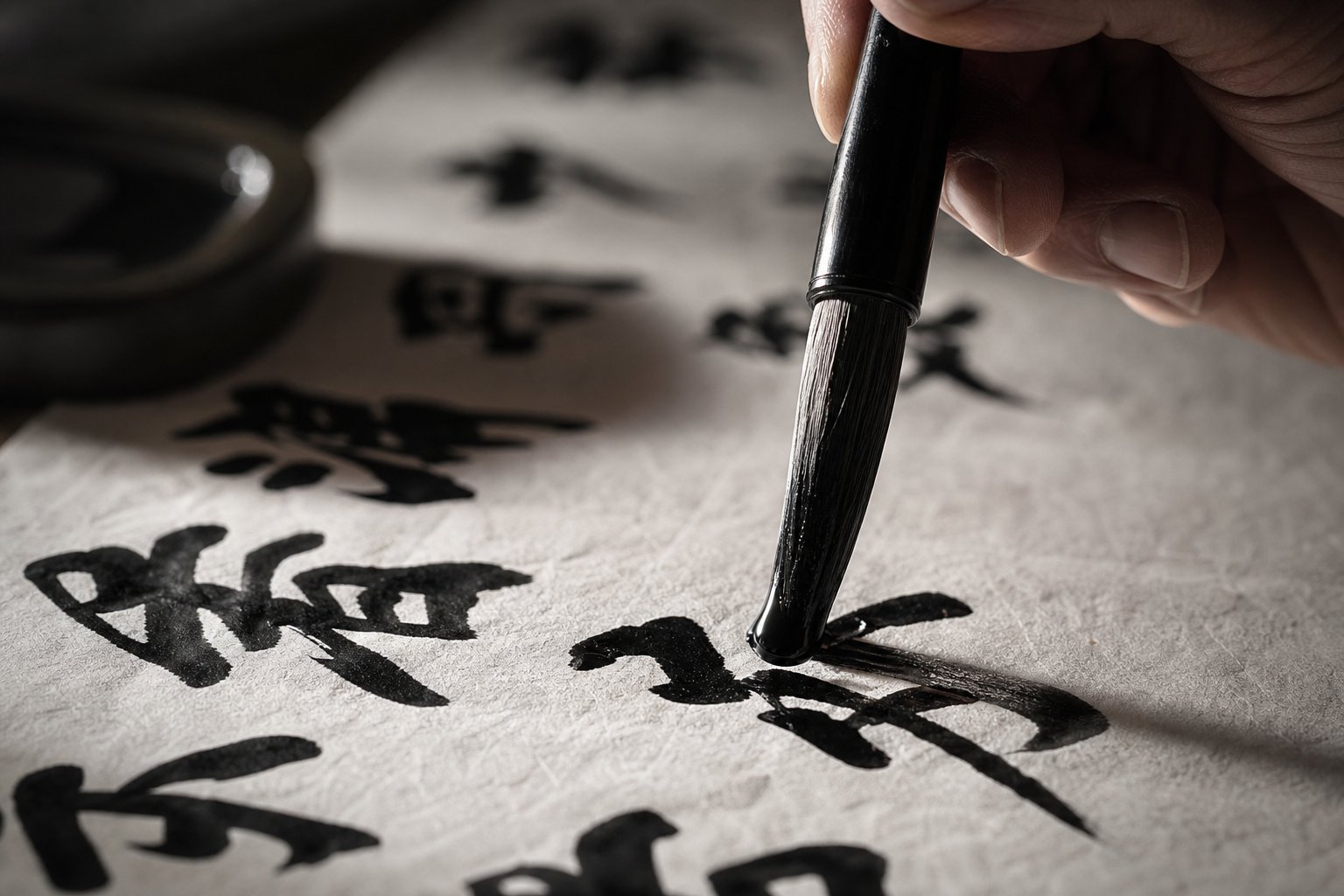
Choosing a pen name in Chinese isn't like picking a username. Every character in the Chinese writing system carries visual structure, tonal quality, and centuries of literary association. When a china author selects two or three characters for a pseudonym, they're composing a miniature poem — one that must work on multiple levels simultaneously. Understanding how chinese writers choose names means looking at the specific techniques they use to pack meaning into just a few syllables.
Character Selection and Semantic Layering
The most fundamental technique is semantic layering: choosing characters whose individual meanings combine to create something greater than the sum of their parts. Each Chinese character is built from radicals — smaller visual components that signal meaning categories like water, fire, wood, metal, or heart. This chinese character symbolism in names gives writers a toolkit for embedding hidden associations.
Consider the most famous example. Lu Xun 鲁迅, born Zhou Shuren 周树人, constructed his pen name from two deliberate choices:
- Lu 鲁 — his mother's maiden surname, an act of filial tribute that also referenced the ancient state of Lu, Confucius's homeland. By choosing this character, he simultaneously honored his mother and invoked China's philosophical heritage.
- Xun 迅 — meaning "swift" or "sudden," built from the radical 辶 (movement) combined with 卂. The character suggests urgency, speed, revolutionary momentum. Paired with the traditional weight of 鲁, it creates a tension between heritage and forward motion.
The chinese pen name meaning here operates on at least three levels: personal (maternal connection), cultural (classical allusion), and political (revolutionary speed). That's the power of semantic layering — a two-character name doing the work of an entire manifesto.
Tonal Beauty and Literary Allusion in Name Construction
Sounds complex? There's another dimension most Western readers never consider: tonal aesthetics. Mandarin Chinese has four tones, and skilled writers select characters partly for how they sound when spoken aloud. A pen name needs to roll off the tongue in conversation, sound dignified when announced at literary gatherings, and carry rhythmic balance.
Classical Chinese poetry follows strict tonal patterns — alternating level (ping 平) and oblique (ze 仄) tones. Many pen names echo this poetic structure. When you say "Lu Xun" aloud, you get a falling tone followed by a falling tone (both fourth tone in modern Mandarin), creating a sharp, decisive sound that mirrors the writer's personality.
Literary allusion adds yet another layer. Writers frequently embedded references to classical texts, Buddhist sutras, or Daoist philosophy within their chosen names. This technique signaled education and cultural positioning to readers who recognized the source. You'll notice this pattern across generations of Chinese literary culture — the pen name as a quiet declaration of intellectual lineage.
Wordplay and Hidden Meanings
The most inventive pen names use wordplay techniques unique to the Chinese language:
- Homophone substitution — choosing characters that sound like other words, creating double meanings. Mao Dun 茅盾 (born Shen Dehong 沈德鸿) sounds identical to maodun 矛盾, meaning "contradiction" — a direct reference to the ideological conflicts he felt between art and politics.
- Transliteration blending — Ba Jin 巴金 (born Li Yaotang 李尧棠) combined the first syllable of Bakunin (巴枯宁) with the last syllable of Kropotkin (克鲁泡特金), fusing two anarchist thinkers into a single Chinese name that most readers would never decode without explanation.
- Character decomposition — splitting a single complex character into its component parts to create a new name, or combining simple characters to hint at a hidden third character.
- Radical play — selecting characters that share a radical to create visual unity on the page. Since Chinese was traditionally written vertically with a brush, the visual appearance of a name mattered as much as its sound.
- Negation and irony — Lao She 老舍 (born Shu Qingchun 舒庆春) took the first character of his surname Shu 舒 and split it conceptually. "Lao" means old, and "She" means to abandon or a house. The name carried self-deprecating humor while preserving a link to his birth identity.
What connects all these techniques is intentionality. No element is accidental. A Western pen name like George Orwell might sound pleasant and English, but it rarely encodes political philosophy, family history, and literary ambition into its syllables the way a carefully constructed Chinese pseudonym does.
These construction methods didn't emerge in a vacuum. They developed across centuries of literary practice, refined by poets and novelists who faced very specific historical pressures — from imperial censorship to the collapse of dynasties — that made the choice of a new name not just artistic, but necessary for survival.
Pen Names in Classical and Imperial China
The construction techniques covered above — semantic layering, tonal aesthetics, literary allusion — didn't originate with twentieth-century revolutionaries. They were perfected across two thousand years of imperial literary culture, where alternative names served purposes ranging from social etiquette to artistic survival. Ancient chinese literature is filled with writers known primarily by names they were never given at birth.
Courtesy Names in the Classical Period
As far back as the Zhou dynasty (1046-256 BCE), Chinese scholars operated under a naming system that separated private identity from public persona. The zi 字 (courtesy name) was the earliest formalized alternative name, granted during a capping ceremony when a young man reached adulthood around age twenty. From that point forward, only parents and rulers could use his ming 名 (birth name). Everyone else addressed him by his zi — and using the ming directly was a serious breach of etiquette.
Pre-Qin philosophers illustrate this perfectly. Confucius himself was born Kong Qiu 孔丘, with the zi Zhongni 仲尼 (meaning "second son Ni"). His student Zhuangzi 庄子 was born Zhuang Zhou 庄周. These weren't pen names in the modern sense, but they established the cultural logic that a person's public identity could — and should — differ from their birth identity. The seed of the pen name tradition was planted here.
The beginning of wisdom is to call things by their proper names. — Confucius
Imperial Dynasty Poets and Their Literary Names
The Tang dynasty (618-907 CE) transformed this naming tradition into something more personal and artistic. Poets began adopting hao 号 (literary names) that expressed philosophical commitments, aesthetic sensibilities, or spiritual aspirations. Unlike the zi, which followed social convention, the hao was entirely self-chosen — a declaration of who the writer believed themselves to be.
Among the most famous chinese poets, Li Bai 李白 offers a layered example. Born with the ming Bai 白 and the courtesy name Taibai 太白 (literally "Great White," referencing the planet Venus), he also adopted the hao Qinglian Jushi 青莲居士 — meaning "Householder of the Green Lotus." This art name referenced the town of Qinglian in Sichuan where he spent his youth, while simultaneously invoking Buddhist lotus symbolism and the Daoist concept of the lay practitioner (jushi). A single hao, three layers of meaning.
The Song dynasty poet Su Shi 苏轼 (1037-1101) chose the hao Dongpo Jushi 东坡居士 ("Householder of the Eastern Slope") after being exiled to Huangzhou, where he farmed a plot of land on an eastern hillside. His tang dynasty poets pen names predecessor Du Fu 杜甫 was known by the hao Shaoling Yělǎo 少陵野老 ("Wild Old Man of Shaoling"), referencing the area near Chang'an where he lived in poverty. In each case, the hao encoded biography, geography, and philosophy into a handful of characters.
You'll notice a pattern: the jushi (householder) suffix appears repeatedly among Tang and Song literary names. It signaled a Buddhist lay identity — someone engaged with spiritual practice without taking monastic vows. For poets navigating between court ambition and contemplative withdrawal, this single word communicated an entire life philosophy.
Why Ming and Qing Novelists Hid Behind Pseudonyms
The Ming (1368-1644) and Qing (1644-1912) dynasties introduced a different pressure entirely. Fiction writing — novels and vernacular stories — was considered lowbrow by the Confucian literary establishment. Serious scholars wrote poetry, essays, and historical commentary. Writing novels could damage a family's reputation and disqualify a man from official appointments.
The result? Many of China's greatest novelists published under pseudonyms specifically to protect their social standing. The cao xueqin real name reveals this dynamic clearly. The author of Dream of the Red Chamber (红楼梦 Honglou Meng), widely considered the greatest Chinese novel ever written, was born Cao Zhan 曹霑. He wrote under the name Cao Xueqin 曹雪芹, where xueqin 雪芹 means "snow celery" — a plant associated with poverty and scholarly integrity. The name carried personal resonance: Cao's family had fallen from immense wealth to destitution, and the image of a delicate plant surviving winter cold mirrored his own artistic persistence through hardship.
Similarly, the author of The Scholars (儒林外史 Rulin Waishi), Wu Jingzi 吴敬梓, wrote under his own name but used the hao Wenmu Shanren 文木山人 ("Mountain Man of the Literary Tree"). The anonymous author of Jin Ping Mei (金瓶梅) hid behind the pseudonym Lanling Xiaoxiao Sheng 兰陵笑笑生 ("The Scoffing Scholar of Lanling") — and their true identity remains debated by scholars to this day.
This pattern — novelists concealing identity while poets displayed theirs — created a split in Chinese literary naming that persisted for centuries. Poetry names were badges of honor. Fiction names were shields. Both traditions fed into the explosive adoption of pen names that came when China's literary world was upended by revolution, foreign influence, and the birth of modern publishing in the early twentieth century.

Modern Pen Names Born from Revolution
The split between poetry names as badges and fiction names as shields collapsed entirely in the early twentieth century. When China's last imperial dynasty fell in 1912 and a fragile republic took its place, a generation of young writers faced a question their predecessors never had to answer: how do you build a new national literature from scratch? For many famous modern chinese authors, the answer started with building a new self — and that meant choosing a pen name that declared allegiance not to family lineage or Buddhist philosophy, but to political revolution and cultural transformation.
The May Fourth Movement of 1919 became the crucible. What began as student protests against the Treaty of Versailles grew into a sweeping cultural campaign to modernize Chinese language, thought, and literature. May fourth movement writers rejected classical Chinese in favor of vernacular writing, challenged Confucian hierarchies, and embraced Western ideas ranging from democracy to anarchism. In this atmosphere, adopting a pen name wasn't vanity — it was a declaration of rupture with the old world.
Lu Xun and the Revolution of Modern Chinese Pen Names
No figure embodies this transformation more completely than the man whose lu xun real name was Zhou Shuren 周树人. Born in 1881 in Shaoxing, Zhejiang province, Zhou grew up watching China humiliated by foreign imperialism and paralyzed by feudal tradition. He studied medicine in Japan, then abandoned it — concluding, as he later wrote, that Chinese people were in more need of spiritual therapy than of physical treatment.
The pen name "Lu Xun" first appeared in 1918 on his landmark short story "A Madman's Diary," published in the radical magazine New Youth. The story behind its adoption reveals how seriously this generation took the act of self-naming. Zhou's friend Qian Xuantong had urged him to write for the magazine, and Zhou initially resisted, comparing China to an indestructible iron house full of sleeping people about to suffocate. Qian replied that there was still hope — the hope that the iron house might one day be destroyed. Zhou chose his pen name at the moment he decided to pick up that fight.
As a chinese novelist, essayist, and critic, Lu Xun went on to use over one hundred different pen names throughout his career — a fact that speaks to both the political danger of his work and the creative energy he invested in naming. But "Lu Xun" remained the primary identity, the one that became synonymous with modern Chinese literature itself. After his death in 1936, Mao Zedong called him the "commander of China's cultural revolution" — a legacy built entirely under a chosen name.
Ba Jin, Mao Dun, and Lao She — Stories Behind the Names
Lu Xun was the pioneer, but he wasn't alone. The Republican period produced an entire constellation of writers who reinvented themselves through pseudonyms. Each name tells a different story about what drove its creator — ideology, contradiction, humor, or survival. Here are the most iconic profiles:
- Lu Xun 鲁迅
Birth name: Zhou Shuren 周树人 (meaning "tree of man" — a name suggesting growth and cultivation)
Pen name meaning: Lu 鲁 from his mother's maiden surname, also the ancient state of Confucius; Xun 迅 meaning "swift" or "sudden," suggesting revolutionary urgency
Motivation: Filial tribute fused with political commitment. The name bridged Chinese heritage and forward momentum — tradition mobilized for transformation.
Key works: "A Madman's Diary" (1918), "The True Story of Ah Q" (1921), Call to Arms (1922) - Ba Jin 巴金
Birth name: Li Yaotang 李尧棠 (a classical name referencing the sage-king Yao and the pear tree)
Pen name meaning: Ba 巴 from the first syllable of Bakunin (巴枯宁); Jin 金 from the last syllable of Kropotkin (克鲁泡特金)
Motivation: As a young anarchist deeply influenced by Russian political philosophy, Li encoded his ideological heroes directly into his identity. Most Chinese readers would never detect the foreign origin — the characters simply look like a normal Chinese name. That was the point: radical ideas wearing a familiar face.
Key works: Family (1933), Spring (1938), Autumn (1940) — the Torrent Trilogy - Mao Dun 茅盾
Birth name: Shen Dehong 沈德鸿 (also known by the name Shen Yanbing 沈雁冰)
Pen name meaning: Mao Dun 茅盾 literally means "thatch shield," but it is a deliberate homophone of maodun 矛盾, meaning "contradiction"
Motivation: Shen adopted the pen name in 1928 after fleeing political chaos when the Kuomintang broke with the Chinese Communist Party. Torn between revolutionary commitment and artistic independence, he chose a name that embodied his inner conflict. The substitution of 茅盾 (thatch shield) for 矛盾 (spear-shield, i.e., contradiction) added another layer — the literary man sheltering behind words while the world demanded action.
Key works: Midnight (1933), the Eclipse trilogy (1930), "Spring Silkworms" (1932) - Lao She 老舍
Birth name: Shu Qingchun 舒庆春 (meaning "celebrating spring" — he was born on the eve of the lunar new year)
Pen name meaning: Lao 老 means "old" or "venerable"; She 舍 is the first half of his surname Shu 舒 (which can be decomposed into 舍 and 予). Together, "Lao She" carries a self-deprecating warmth — something like "Old Abandon" or "Old House" — while maintaining a phonetic link to his family name.
Motivation: Unlike the overtly political names of his contemporaries, Lao She's pen name reflected his personality: humorous, grounded, connected to ordinary Beijing life. The name sounded like a neighbor, not a revolutionary — which suited a writer whose greatest works depicted the struggles of rickshaw pullers and common people.
Key works: Rickshaw Boy (1937), Teahouse (1957), Four Generations Under One Roof (1944-1950)
The League of Left-Wing Writers and Collective Pseudonyms
These individual choices didn't happen in isolation. By 1930, many of these writers had joined the League of Left-Wing Writers (中国左翼作家联盟), a Shanghai-based organization that united progressive authors against both Kuomintang censorship and Japanese imperialism. Mao Dun helped found the League in 1930, and Lu Xun served as its spiritual leader.
Within the League, pen names took on a collective dimension. Writers published under rotating pseudonyms to confuse government censors, shared pen names across multiple authors to protect individuals from arrest, and adopted new identities for each publication venue. Lu Xun's hundred-plus pen names weren't mere creative indulgence — they were survival tactics in an era when publishing the wrong essay under a known name could mean imprisonment or execution.
The League also established a pattern that would echo through later decades: the pen name as group membership signal. Choosing a politically charged pseudonym announced your allegiance to a literary community, not just a personal aesthetic. This collective function — names as badges of solidarity — distinguished the Republican-era pen name tradition from the individualistic hao of classical poets.
Yet political solidarity wasn't the only force shaping pen name choices in this period. Gender played an equally powerful role. While male writers used pseudonyms to signal ideology, female writers faced a different calculus entirely — one where a pen name could mean the difference between being published or being silenced, between literary freedom and family disgrace.

Female Writers and the Politics of Naming
For male writers of the Republican era, a pen name was a political statement. For women, it was often a prerequisite for being heard at all. The tradition of female chinese writers pen names carries a distinct weight — shaped not only by ideology and aesthetics, but by a literary culture that had spent centuries insisting women had no place in it. The old Confucian saying nuren wucai bian shi de 女人无才便是德 ("for women, lack of literary talent is a virtue") wasn't just a proverb. It was a gatekeeping mechanism that forced women to navigate publication through strategic self-naming in ways their male peers never had to consider.
Gendered Dimensions of Pseudonym Adoption
Women adopted pen names for reasons that overlapped with men's motivations but also diverged sharply. Three distinct patterns emerge across the early twentieth century:
- Concealment of gender — Some women wrote under male-sounding names or gender-neutral pseudonyms to bypass editors who refused to publish female authors. In a literary marketplace dominated by men, an ambiguous name could get a manuscript read on its merits rather than dismissed on sight.
- Assertion of feminine identity — Other women chose names that deliberately announced their gender and claimed literary space as women. These names often carried imagery of purity, strength, or natural beauty — reclaiming femininity as a source of artistic power rather than a disqualification.
- Protection of family honor — Publishing under any name carried social risk for women from respectable families. A pen name created distance between the writer's public literary life and her family's reputation, shielding parents and husbands from the perceived shame of having a woman in the household who wrote for public consumption.
These pressures produced some of the most resonant pen names in Chinese literary history. Each famous author in asia's modern canon who happened to be female carried a name that encoded not just personal philosophy, but a negotiation with patriarchal structures.
Ding Ling, Xiao Hong, and Bing Xin — Women Who Renamed Themselves
The generation of women writers who emerged during and after the May Fourth Movement transformed Chinese literature. Their pen names reflect the full spectrum of motivations — from quiet assertion to radical reinvention.
- Bing Xin 冰心
Birth name: Xie Wanying 谢婉莹
Pen name meaning: "Pure heart" or "heart of ice" — drawn from a line in a Tang dynasty poem by Wang Changling that reads "a heart like ice in a jade pot" (一片冰心在玉壶). The image suggests moral clarity untouched by worldly corruption.
Significance: The bing xin chinese author became one of the most prolific writers of the twentieth century, known for gentle, lyrical works written largely for young readers. Her pen name announced a feminine literary identity rooted in emotional purity rather than political combat — a deliberate contrast to the combative pseudonyms chosen by male contemporaries. Born in 1900 in Fujian province, she studied at Wellesley College in the United States and served as chairperson of the China Federation of Literary and Art Circles. - Ding Ling 丁玲
Birth name: Jiang Bingzhi 蒋冰之
Pen name meaning: The characters 丁玲 carry a crisp, bell-like sound — ding ling evokes the tinkling of jade ornaments. The name is phonetically striking but semantically light, offering no obvious political declaration.
Significance: Ding Ling's choice was strategic in its apparent simplicity. As a Communist Party member and author of boldly feminist works like Miss Sophia's Diary (1928), she let her writing carry the ideological weight while her name remained musically memorable. She was the first scholar to travel to Yan'an in 1936, joining Mao's revolutionary base. Her pen name's lightness belied a life of extraordinary political risk. - Xiao Hong 萧红
Birth name: Zhang Naiying 张迺莹
Pen name meaning: Xiao 萧 means "desolate" or "whistling autumn wind"; Hong 红 means "red." The combination creates a striking contrast — cold desolation paired with warm color, loneliness meeting vitality.
Significance: Xiao Hong fled an arranged marriage, lived in poverty, and died of illness in Hong Kong at just thirty-one. Her pen name captured the emotional landscape of her fiction — works marked by what scholars describe as a "mixed emotional tone" and a style that blended hardness with tenderness. She also wrote under the additional pen name Qiao Yin, demonstrating the same multiplicity of identity that characterized her male contemporaries.
Eileen Chang and Qiu Jin — Pen Names as Acts of Defiance
Two other women pushed the pen name tradition in directions that were explicitly confrontational — one through cosmopolitan reinvention, the other through martial self-fashioning.
- Eileen Chang / Zhang Ailing 张爱玲
Birth name: Zhang Ying 张煐
Pen name meaning: The eileen chang real name was Zhang Ying, but she reinvented herself as Zhang Ailing 张爱玲 — where Ailing is a Chinese transliteration of "Eileen," the English name her mother gave her during a Westernized upbringing in 1920s Shanghai. The character 爱 means "love" and 玲 means "tinkling jade."
Significance: Chang's naming strategy was unique among her generation. Rather than choosing a purely Chinese literary name, she bridged East and West — publishing in Chinese as Zhang Ailing and in English as Eileen Chang. This dual identity mirrored her literary project: writing about Shanghai's cosmopolitan world where Chinese and Western cultures collided. She is widely regarded as one of the most significant figures in modern Chinese literature, known for novels like The Red Rose and the White Rose that expanded the horizons of female literary criticism. - Qiu Jin 秋瑾
Birth name: Qiu Jin 秋瑾 (her birth name, but she adopted the hao 鉴湖女侠)
Hao meaning: Jianhu Nuxia 鉴湖女侠 — "Woman Knight of Mirror Lake." Jianhu (Mirror Lake) references her ancestral home of Shaoxing, while Nuxia (Woman Knight) deliberately claimed the martial heroism traditionally reserved for men.
Significance: Qiu Jin was a feminist revolutionary who unbound her feet, left her husband, studied in Japan, and organized armed resistance against the Qing dynasty. Her hao was an act of defiance compressed into four characters — insisting that a woman could be both knight and poet. Her final words before execution in 1907 played on her surname: "Autumn wind, autumn rain, fill one's heart with melancholy" — since Qiu 秋 means autumn. Even in death, the relationship between name and identity remained central.
What connects these five women is the refusal to let others define them. Whether through quiet assertion (Bing Xin's moral purity), sonic beauty (Ding Ling's bell-like clarity), emotional honesty (Xiao Hong's desolate red), cosmopolitan fusion (Zhang Ailing's East-West bridge), or martial defiance (Qiu Jin's Woman Knight), each pen name was an act of self-authorship in a culture that had long denied women that right.
Their naming choices also reveal something about the relationship between pseudonyms and power. When the state itself becomes hostile to writers — when censors hunt for specific names on manuscripts and blacklists circulate through publishing houses — the pen name transforms from personal expression into survival strategy. That political dimension, already visible in the League of Left-Wing Writers, would intensify dramatically as China moved deeper into the twentieth century.
Pen Names as Political Resistance
A pen name can be a poem, a philosophy, or a family tribute. But across centuries of chinese literary censorship history, it has also been something more urgent: a shield. When the state turns hostile toward writers — when publishing the wrong sentence under a known name invites imprisonment, exile, or death — the pseudonym becomes a survival tool. This political function runs like a thread from imperial literary inquisitions through Kuomintang-era crackdowns to the digital publishing controls of the present day.
Pen Names as Shields Against Censorship
The pattern is ancient. During the Qing dynasty's literary inquisitions (wenziyu 文字狱), scholars were executed for perceived slights against Manchu rule hidden in their writings. The anonymous author of Jin Ping Mei — who published under the pseudonym Lanling Xiaoxiao Sheng 兰陵笑笑生 — likely chose concealment because the novel's explicit content invited censure even by Ming-dynasty standards. Centuries later, the motivation shifted from moral scandal to political danger, but the mechanism remained identical: a false name between the writer and the consequences.
No writer chinese literary history has produced wielded this mechanism more aggressively than Lu Xun. His lu xun multiple pen names — over one hundred by most scholarly counts — weren't creative indulgence. They were tactical. As Liang Hong, a professor of Chinese literature at the China Youth University of Political Sciences in Beijing, explained: "He wrote under different pen names, in part to evade censors." Each time Kuomintang authorities identified and banned one pseudonym, Lu Xun simply published his next essay under a fresh name — turning the act of naming itself into guerrilla warfare against state control.
For Lu Xun, it was about individual creative freedom. It also had to do with the political climate at the time. — Liang Hong, China Youth University of Political Sciences
This wasn't paranoia. Writers associated with the League of Left-Wing Writers faced real violence. Several members were arrested and executed in the early 1930s. In that environment, rotating pseudonyms across publications, sharing pen names among multiple authors, and publishing under collective identities weren't literary games — they were the difference between continuing to write and disappearing entirely.
Political Commentary Hidden in Name Choices
Beyond evasion, pen names also encoded political commentary that censors couldn't easily flag. Imagine a writer chinese audiences would recognize instantly by reputation, publishing under a name that itself contained a critique — visible to literate readers but opaque to bureaucrats scanning for banned content. Mao Dun's name, as discussed earlier, literally sounded like "contradiction" — a quiet indictment of the ideological conflicts tearing China apart. The name passed censorship because its characters (茅盾, "thatch shield") were innocuous on paper. The subversion lived in the ear, not the eye.
During the Mao era (1949-1976), the calculus shifted again. Writers who had once used pen names to resist the Kuomintang now faced a Communist state that demanded ideological conformity. Some adopted new pseudonyms to publish work that deviated from socialist realist orthodoxy. Others abandoned writing altogether. The Anti-Rightist Campaign of 1957 and the Cultural Revolution (1966-1976) made any form of independent literary expression dangerous — pen name or not. Writers like Ding Ling, despite her revolutionary credentials, were silenced for decades. In this period, the pen name's protective power reached its limits: when the state controls all publishing channels, no pseudonym can hide you.
The post-Cultural Revolution period brought a remarkable resurgence. A generation of young poets who had come of age during the chaos — reading forbidden books in secret, writing poems in notebooks they shared among trusted friends — emerged in the late 1970s with a new literary voice and new names to match.
The most prominent among them was Bei Dao 北岛, born Zhao Zhenkai 赵振开. His pen name means "Northern Island" — an image of isolation, independence, and cold clarity that captured both his aesthetic and his political position. Bei Dao and his circle developed what critics derisively called "misty poetry" (menglong shi 朦胧诗), a style that used oblique imagery and personal subjectivity to reject the propaganda language of the Mao years. The misty poets pseudonyms were acts of artistic reinvention: by choosing new names, these writers signaled a complete break from the literary culture that had preceded them.
As Bei Dao later explained in a 1994 interview: "Our poetry was written in what amounted to a new language, which differed greatly from the official language." The pen name was part of that new language — a refusal to carry the identity assigned by a state that had demanded total obedience. Bei Dao's poems were read aloud by protesters at Tiananmen Square in 1989, and he was subsequently exiled from China. His pen name became inseparable from his political meaning: the Northern Island, unreachable by the mainland's authorities.
Other misty poets followed similar patterns. Shu Ting 舒婷 (born Gong Peiyu 龚佩瑜), Gu Cheng 顾城, and Mang Ke 芒克 (born Jiang Shiwei 姜世伟, where "Mang Ke" suggests a wheat grain — something small, essential, and rooted in the earth) all adopted names that prioritized poetic resonance over political declaration. Their naming choices reflected a shift in motivation: from resistance against a specific regime to the reconstruction of literary identity after collective trauma.
Three distinct motivations emerge across this history:
- Political resistance — Lu Xun's rotating pseudonyms, the League's shared identities, and the anonymous novelists of imperial China all used pen names to evade direct state punishment while continuing to publish dissenting work.
- Artistic reinvention — The Misty Poets and post-Cultural Revolution writers adopted new names to signal a clean break from the literary past, declaring through their very identities that a new kind of writing had arrived.
- Collective authorship — From the League of Left-Wing Writers sharing pseudonyms in the 1930s to underground literary magazines circulating under group pen names during the Cultural Revolution, pseudonyms enabled collaborative resistance that protected individuals within a group.
This centuries-long tension between writers and the state hasn't disappeared. In 2015, China's State Administration of Press, Publication, Radio, Film and Television issued guidelines requiring all online authors to register their real names with publishing platforms. Writers can still publish under pen names, but the platform — and by extension, the government — knows exactly who is behind each pseudonym. The writer known as Murong Xuecun 慕容雪村 (real name Hao Qun 郝群) called the measures "a small part of a series of measures intended to stifle the space for online creativity."
The real-name registration system represents a fundamental challenge to the pen name tradition. For centuries, the pseudonym's power depended on genuine anonymity — the state literally could not connect a dangerous text to a living person. Under real-name registration, the pen name becomes cosmetic rather than protective. You can still call yourself whatever you like on the cover, but the authorities hold the key to your identity. It's the difference between a mask and face paint.
Yet the cultural desire for literary pseudonyms persists, even under these constraints. Millions of writers continue choosing pen names on digital platforms — not always for political protection, but because the tradition itself carries meaning. The act of self-naming remains, for many, an essential part of becoming a writer in Chinese. That impulse, rooted in two thousand years of practice, has proven remarkably adaptable to new technologies and new forms of control.
Digital Age and the Evolution of Pen Names
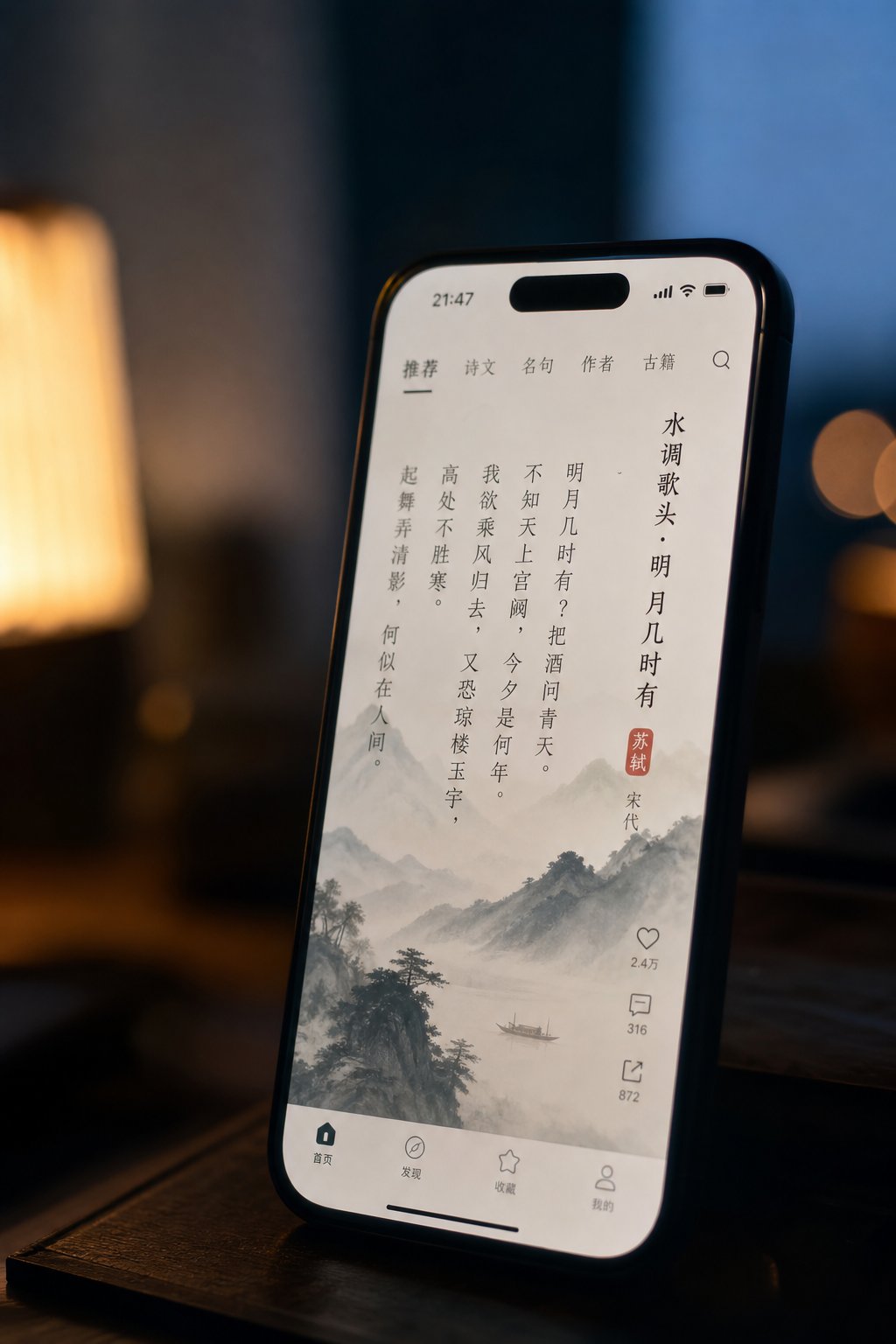
The impulse to self-name hasn't faded — it has multiplied. China's online literature industry hosts over ten million registered writers across platforms like Qidian (起点中文网) and Jinjiang Literature City (晋江文学城), each one publishing under a chosen pen name. What Lu Xun did with a single pseudonym in 1918, millions now do every day when they create an account and type their first chapter. The scale has changed. The cultural logic hasn't.
Digital Pen Names on Online Literature Platforms
Browse the bestseller lists on any major Chinese web fiction platform and you'll notice something striking: the pen names read like fragments of classical poetry. Names like Tian Can Tu Dou 天蚕土豆 ("Heavenly Silkworm Potato"), Tang Jia San Shao 唐家三少 ("Third Young Master of the Tang Family"), and Mao Ni 猫腻 ("Tricky Cat" or "Shady Dealings") use the same construction techniques that famous chinese authors employed centuries ago — semantic layering, tonal balance, literary allusion, and deliberate wordplay.
Consider the poetic phrase yuan shang bai yun jian 原上白云间 — meaning roughly "on the plains, among white clouds." This kind of naming draws directly from Tang dynasty landscape poetry, evoking the imagery of Wang Zhihuan's famous line "白云生处有人家" ("where white clouds rise, there are homes"). A digital author choosing such a name signals classical literacy, aesthetic sensibility, and a connection to the literary past — all within a five-character screen name on a smartphone app.
The techniques are remarkably consistent across two thousand years. Here's how modern digital pen names mirror classical conventions:
- Nature imagery — Classical poets chose hao like "Eastern Slope" or "Green Lotus." Digital writers select names referencing clouds, mountains, rivers, and seasons, maintaining the tradition of grounding literary identity in the natural world.
- Literary allusion — Where Su Shi referenced his exile farmland, web novelists reference famous poems, novels, or philosophical texts. Readers who catch the allusion feel a sense of shared cultural knowledge.
- Tonal aesthetics — Successful digital pen names still follow the ping-ze tonal patterns of classical poetry, creating names that sound balanced and memorable when read aloud or discussed in online forums.
- Semantic play and humor — Mao Dun hid "contradiction" inside innocuous characters. Today's writers embed jokes, puns, and self-deprecating humor into names that function on multiple levels — entertaining casual readers while rewarding those who look closer.
- Character visual harmony — Just as classical calligraphers considered how a hao looked when brushed vertically, digital authors think about how their names appear as profile text — favoring characters with balanced stroke counts and pleasing visual weight on screen.
Real-Name Policies and the Future of Chinese Pseudonyms
The tension is real. China's real-name registration requirements mean every digital pen name is tethered to a government ID in the platform's backend. The pseudonym no longer offers the protective anonymity that shielded Lu Xun from Kuomintang censors or kept the author of Jin Ping Mei hidden for centuries. In practical terms, the pen name has shifted from shield to costume — visible to readers, transparent to authorities.
Yet writers keep choosing them. They keep spending hours selecting characters, testing tonal combinations, and searching for names that haven't been claimed. Why? Because the pen name in Chinese culture was never only about hiding. It was about becoming. From the Zhou dynasty scholar receiving his zi at twenty, to the Tang poet declaring himself a "householder" of some beloved landscape, to the web novelist typing a five-character name into a registration form — the act of choosing who you will be as a writer remains a foundational ritual.
Famous authors from asia and around the world have adopted pseudonyms for countless reasons. But the Chinese tradition stands apart in its depth, continuity, and linguistic sophistication. A naming practice that began with Confucian courtesy rituals three thousand years ago now lives inside apps downloaded by hundreds of millions of readers. The characters change. The platforms change. The political pressures shift and reshape. But the core belief endures: that to write is to name yourself, and to name yourself is the first act of literature.
Frequently Asked Questions About Chinese Pen Names
1. Why did Chinese authors use pen names instead of their real names?
Chinese authors adopted pen names for multiple reasons that shifted across historical periods. In imperial China, novelists used pseudonyms because fiction writing was considered lowbrow and could damage family reputations. During the Republican era, writers like Lu Xun used pen names to evade government censors who targeted politically subversive content. Female writers often needed pseudonyms to bypass editors who refused to publish women. In each case, the pen name served as both a creative declaration and a practical survival tool within specific social and political constraints.
2. What is the difference between a Chinese pen name (biming) and a courtesy name (zi)?
A courtesy name (zi) was a formal social name granted during a coming-of-age ceremony around age twenty, used by peers as a sign of respect. It followed strict social conventions and was not self-chosen. A pen name (biming) is a modern concept — a self-selected identity adopted specifically for published writing. The biming evolved from the older hao (literary name) tradition, which was also self-chosen but used within small scholarly circles rather than for mass publication. The key distinction is that the zi was socially assigned while the biming represents personal creative choice.
3. What was Lu Xun's real name and why did he use over 100 pen names?
Lu Xun's birth name was Zhou Shuren (周树人), meaning 'tree of man.' He first used the pen name Lu Xun in 1918 when publishing 'A Madman's Diary.' The name combined his mother's maiden surname Lu (鲁) with the character Xun (迅) meaning 'swift,' blending filial tribute with revolutionary urgency. He accumulated over 100 pen names primarily as a tactical response to Kuomintang censorship — each time authorities identified and banned one pseudonym, he published under a new one, turning the act of naming into a form of guerrilla resistance against state control.
4. How did female Chinese writers use pen names differently from male writers?
Female Chinese writers faced unique pressures that shaped their pen name choices in three distinct ways. Some women wrote under male-sounding or gender-neutral names to get past editors who refused female authors. Others, like Bing Xin (meaning 'pure heart'), chose names that deliberately claimed feminine literary identity as a source of artistic power. A third group used pseudonyms to protect family honor, since publishing carried social risk for women from respectable households. Revolutionary figures like Qiu Jin took a different path entirely, adopting the martial title 'Woman Knight of Mirror Lake' as an act of open defiance against patriarchal norms.
5. Do modern Chinese writers still use pen names in the digital age?
Yes, millions of Chinese writers on platforms like Qidian and Jinjiang Literature City publish under self-chosen pen names that echo classical naming conventions. These digital pseudonyms use the same techniques as historical literary names — nature imagery, tonal aesthetics, literary allusion, and wordplay. However, China's real-name registration policies now require authors to link their identities to government IDs on the platform backend. This means modern pen names function more as creative identities than protective shields, since authorities can trace any pseudonym to its real owner.