Understanding Chinese Pen Names and Why They Carry Deep Meaning
When a Western author picks a pseudonym, they typically choose a name that sounds appealing or hides their identity. When a Chinese writer selects a pen name, they often encode an entire worldview into two or three characters. That difference is not accidental — it is built into the very structure of the Chinese writing system.
What Are Chinese Pen Names
Chinese pen names (笔名/bǐmíng) are self-chosen literary pseudonyms adopted by Chinese writers, in which each character carries independent semantic weight, enabling authors to embed political statements, philosophical beliefs, classical allusions, and wordplay within a compact name that functions simultaneously as identity, artistic manifesto, and cultural signal.
Think of a pen name meaning in English — Mark Twain, for instance, references a riverboat depth measurement. Clever, but singular in its reference. A Chinese bǐmíng can operate on three or four levels at once: phonetic echo, visual symbolism through character radicals, allusion to classical poetry, and political commentary. The definition of nom de plume barely scratches the surface when applied to this tradition.
Unlike a simple artist name chosen for aesthetic appeal, a Chinese pen name is a compressed literary act. The writer Lu Xun (鲁迅/Lǔ Xùn) packed his mother's maiden surname and a character meaning "rapid" into two syllables — a quiet tribute and a declaration of urgency rolled into one. Ba Jin (巴金/Bā Jīn) fused syllables from the names of two anarchist thinkers, turning his pen name into a political allegiance invisible to censors but legible to fellow radicals.
Why Chinese Pen Names Matter in Literary History
This tradition stretches back centuries, long before the modern concept of authorship existed. Imperial scholars adopted art names (号/hào) to signal their philosophical schools. Revolutionary writers of the twentieth century weaponized pseudonyms against state censorship. Today, millions of online novelists craft digital pen names that echo classical four-character patterns while functioning as brand identities on literature platforms.
Scholarly resources like the MCLC Pen Names project, which supplements the foundational Zhongguo xiandai wenxue zuozhe biminglu (List of Pen-Names of Modern Chinese Authors), catalog thousands of these names — evidence of just how central pseudonymous writing is to Chinese literary culture.
What you'll find in this guide is a bridge between that academic depth and practical understanding: a full taxonomy of pseudonym types, the linguistic mechanics that make these names so layered, decoded examples of the most famous pen names in Chinese history, and the political motivations that drove writers to adopt them. Whether you're a literature student, a translator, or simply curious about how meaning hides inside Chinese characters, the layers waiting beneath these names are worth uncovering.
A Taxonomy of Chinese Pseudonyms from Hao to Biming
English-language sources routinely lump every Chinese alternate name under the umbrella of "pen name" or "pseudonym." That flattening obscures real distinctions. A courtesy name given at a coming-of-age ceremony and a pen name chosen to dodge political censors are not the same thing — they emerged from different social rituals, carried different levels of formality, and operated under entirely different rules. Understanding these categories is the first step toward reading Chinese literary history without confusion.
Art Names and Courtesy Names in Classical China
Imagine turning twenty in imperial China. At that milestone, you would receive a courtesy name (字/zi) — an additional name bestowed upon you to mark adulthood. According to the Book of Rites, using someone's birth name after they reached adulthood was considered disrespectful among peers. The courtesy name became the polite standard for formal communication and writing. Confucius, born Kong Qiu (孔丘), was addressed by his courtesy name Zhongni (仲尼). The poet Du Fu went by Zimei (子美). These names were not self-chosen whims — they were typically given by a father or teacher and often reflected or complemented the meaning of the birth name through synonyms, antonyms, or classical allusions.
The art name (号/hao), by contrast, was entirely self-selected. Scholars, painters, and poets chose an artistic name to express personal philosophy, aesthetic ideals, or even humor. The poet Tao Yuanming called himself Wuliu Xiansheng (五柳先生) — "Mr. Five Willows" — after the trees near his home. Ouyang Xiu adopted Liuyi Jushi (六一居士), "The Hermit of Six Ones," referencing his collection of books, inscriptions, a lute, a board game, a pot of wine, and himself. A single scholar might accumulate several art names over a lifetime, each marking a different phase of thought or circumstance. There was no limit, no registration, and no social obligation — just creative self-expression.
Modern Pen Names Versus Traditional Pseudonyms
The modern literary pen name (笔名/biming) emerged as a distinct category in the early twentieth century, shaped by the collision of Western publishing conventions with Chinese literary culture. Unlike the hao, which supplemented a public identity everyone already knew, the biming often aimed to replace the birth name entirely. Lu Xun's legal name was Zhou Shuren (周树人), but he published under his pen name so consistently that most readers never learned the original. The same pattern holds for Mao Dun (real name Shen Dehong), Bing Xin (real name Xie Wanying), and dozens of other May Fourth-era writers.
This shift reflected new pressures. Modern pen names served political survival under censorship, gender concealment in patriarchal publishing environments, and the construction of a singular authorial brand — functions the classical hao rarely needed to perform. Revolutionary writer Jiang Guangci used at least eight different pen names across his short career, including Guang Chi (光赤), Hua Xili (华希理), and Wei Kete (魏克特), each serving different tactical purposes as political conditions shifted.
The fourth category — the online alias (网名/wangming) — belongs to the digital age. Web novelists on platforms like Qidian or Jinjiang choose screen names that function as brand identities, often echoing classical four-character patterns while operating under government real-name registration policies that tie the alias to a verified legal identity behind the scenes.
How to Distinguish Between Chinese Name Types
The confusion in English-language writing usually stems from treating these four categories as interchangeable. They are not. Each type operated under different conventions regarding who chose the name, when it was adopted, how publicly it was used, and what social function it served. The following comparison lays out the key differences:
| Chinese Term | Pinyin | English Equivalent | Era of Primary Use | Typical Purpose |
|---|---|---|---|---|
| 字 (zi) | zi | Courtesy name | Pre-20th century | Formal address among peers; given at adulthood by elders |
| 号 (hao) | hao | Art name / studio name | Imperial era through early 20th century | Self-chosen creative expression; signals philosophy or aesthetics |
| 笔名 (biming) | biming | Pen name / literary pseudonym | 20th century onward | Publishing identity; often replaces birth name for public use |
| 网名 (wangming) | wangming | Online alias / screen name | 21st century | Digital authorial brand; tied to platform identity |
You'll notice a clear historical arc in this table. The courtesy name was bestowed by others and governed by strict social etiquette. The art name was self-chosen but publicly known and celebrated. The modern pen name introduced concealment as a primary function. And the online alias merges branding with state-mandated traceability — a tension that would have been unimaginable to imperial scholars freely accumulating hao names at will.
Keeping these distinctions clear matters for anyone researching Chinese literary history. Misidentifying a hao as a biming — or conflating a courtesy name with a pseudonym — can lead to misattributed works, confused timelines, and flawed translations. The categories are not just academic labels; they reflect fundamentally different relationships between a writer, their name, and the society around them.
What makes these names truly remarkable, though, is not just their social function but the linguistic raw material they draw from. The Chinese writing system itself — with its homophones, decomposable radicals, and dense literary allusions — gives pen name creators a toolkit that alphabetic languages simply cannot match.
How Chinese Pen Name Traditions Evolved Across Centuries
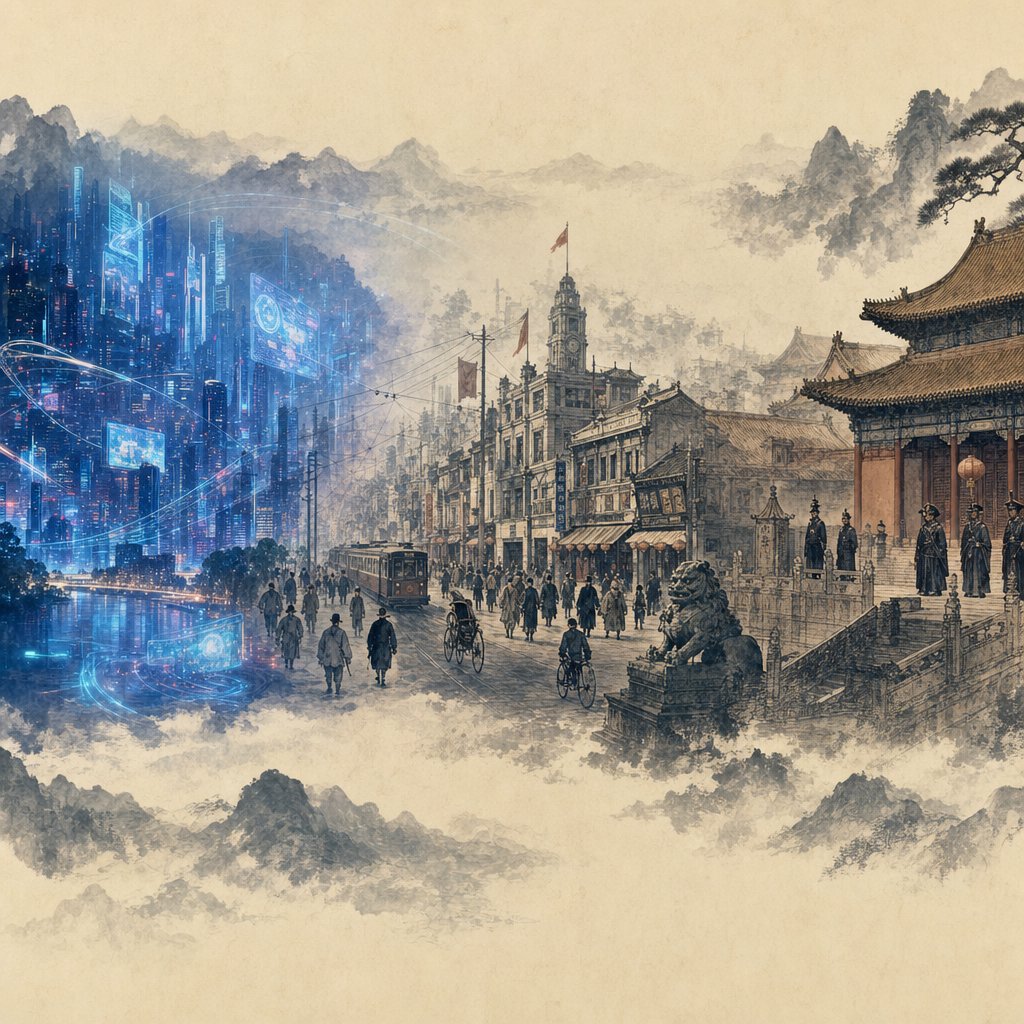
That linguistic toolkit did not emerge in a vacuum. It was shaped — and reshaped — by centuries of political upheaval, cultural revolution, and shifting relationships between writers and the state. Each era in Chinese history placed different pressures on authors, and those pressures directly influenced how and why they chose their names. Tracing that evolution reveals how the art naming tradition transformed from a leisurely act of self-expression into a survival strategy, and eventually into a digital branding exercise.
Here is how the tradition progressed across five distinct periods:
- Imperial era (pre-1840): Scholars freely adopted art names (号/hào) to signal philosophical affiliations, aesthetic tastes, or spiritual aspirations. No concealment was necessary — these names were public, celebrated, and often multiple.
- Late Qing period (1840–1911): Under intensifying political repression, reformers began using pseudonyms as shields against imperial censors. Names shifted from philosophical expression to coded political resistance.
- May Fourth era (1910s–1930s): A new generation of writers adopted pen names (笔名/bǐmíng) as deliberate acts of cultural rebellion, breaking from classical conventions and forging modern literary identities.
- Revolutionary period (1930s–1970s): Authors used pen names as political statements and tactical tools, cycling through multiple pseudonyms to evade shifting factional dangers.
- Digital age (1990s–present): Online writers navigate government real-name registration policies while crafting screen names that function as commercial brands on literature platforms.
Imperial Scholars and the Tradition of Art Names
During the imperial period, the name arts of Chinese literati were acts of creative leisure rather than necessity. A scholar might choose an art name referencing the landscape near his study, a favorite philosophical text, or a Buddhist concept he admired. The practice traces back to the Spring and Autumn and Warring States periods, with figures like Lao Dan and Guiguzi representing some of China's earliest recorded alternative names. By the Tang and Song dynasties, the custom had become widespread — Li Bai called himself Qinglian Jushi (青莲居士, "Green Lotus Lay Buddhist"), while Su Shi adopted Dongpo Jushi (东坡居士, "Eastern Slope Hermit").
The Yuan, Ming, and Qing dynasties saw this tradition reach its peak. A single individual could accumulate many art names over a lifetime. The Ming painter Chen Hongshou held four simultaneously, including "Old Lotus" and "Repentance of Delay." Each name marked a different mood, phase, or philosophical stance — and none required secrecy. The art name was a public performance of identity, not a mask.
Late Qing Reformers and Pen Names as Political Tools
The Opium War of 1840 shattered that leisurely tradition. As imperialist powers carved up Chinese territory and the Qing government proved incapable of resistance, intellectuals turned their art naming practices toward patriotic urgency. Tan Sitong adopted the name "Northern Flight" (壮飞). Qiu Jin chose "Competing Hero" (竞雄). Chen Tianhua called himself "Thinking of Huang" (思黄) — a reference to the Yellow Emperor and, by extension, to Chinese national identity itself.
These were no longer contemplative gestures. They were compressed political manifestos, chosen to rally like-minded reformers while remaining just oblique enough to avoid immediate prosecution. The name art name tradition had crossed a threshold: from self-expression to self-preservation.
May Fourth Writers and the Birth of Modern Bǐmíng
The May Fourth Movement of 1919 completed the transformation. Writers like Zhou Shuren did not simply add an art name to their existing identity — they constructed entirely new public selves. Zhou adopted "Lu Xun" (鲁迅) and joined the fight pioneered by New Youth magazine to build a modern Chinese literature on the ruins of classical tradition. The pen name was not a supplement to his birth name but a replacement — a declaration that the old self, shaped by feudal society, had been discarded.
This generation treated pen names as acts of cultural rebellion. They wrote in vernacular Chinese (白话) rather than classical literary language, and their chosen names reflected that rupture. The bǐmíng became a marker of modernity itself — a signal that the author belonged to the new world being built, not the old one being torn down.
Revolutionary-era writers pushed this logic further still. Under shifting political winds, a single author might cycle through a dozen pseudonyms, each calibrated to the dangers of the moment. The pen name became disposable, tactical, expendable — a far cry from the imperial scholar's lifelong hào, displayed proudly on paintings and poetry scrolls. And in today's digital landscape, where millions of web novelists publish under screen names tied to state-verified identities, the tension between creative freedom and government oversight has produced yet another mutation of this ancient practice — one where the name is public but the person behind it remains, paradoxically, both traceable and anonymous.
The Linguistic Art of Constructing Chinese Pen Names
Political motivations explain why writers adopted pseudonyms. But the Chinese writing system explains how those names could carry so much meaning in so few characters. When George Orwell chose his pen name, he picked two pleasant English words — a river and a common first name. The result is euphonic but semantically flat. A Chinese author working with the same number of syllables has access to a fundamentally different toolkit — one where every character is a self-contained unit of meaning, visually decomposable, and phonetically linked to dozens of homophones.
How Chinese Characters Enable Layered Pen Name Meanings
The key difference comes down to structure. English words are built from phonetic letters that carry no independent meaning — the letters in "Twain" don't individually signify anything. Chinese characters, by contrast, are logograms — each one represents a word or morpheme with its own semantic weight. A two-character pen name is not just a label; it is a compressed sentence, a miniature poem, or a coded argument.
Consider what this means in practice. Over 80% of Chinese characters are phono-semantic compounds (形声字/xingshengzi), meaning they contain both a semantic radical hinting at meaning and a phonetic component suggesting pronunciation. A writer choosing a pen name can exploit both layers simultaneously — selecting a character whose radical points toward one meaning while its phonetic echo suggests another entirely. The art name meaning unfolds differently depending on whether you read the character visually, phonetically, or through its literary associations.
This is why decoding a Chinese pen name often feels less like translation and more like name sketching — tracing the outlines of meaning across multiple dimensions at once. The writer is not just picking a word; they are composing a tiny, self-referential text.
Wordplay Techniques in Chinese Pen Name Construction
Chinese authors draw on five primary linguistic techniques when constructing pen names. Each exploits a different property of the writing system:
- Homophony (同音/tongyIn): Chinese has a limited number of syllables (roughly 400, multiplied by four tones), creating vast networks of homophones. A writer can choose a character that sounds identical to a politically dangerous word while appearing innocent on paper. The name reads one way aloud and another way in print — a built-in layer of deniability.
- Radical decomposition: Because characters are built from radicals (部首/bushou) — the 214 fundamental components that form Chinese characters — a pen name can embed hidden meaning inside its visual structure. Splitting a character into its constituent parts reveals secondary messages. The radical for "water" (氵) inside a name might signal fluidity or impermanence; the radical for "heart" (忄) might point toward emotion or conscience.
- Classical allusion: Educated readers recognize references to canonical texts — the Book of Songs, Tang poetry, Daoist philosophy. A pen name that quotes or echoes a famous line carries the weight of that entire literary tradition. Bing Xin's name (冰心, "ice heart") directly alludes to a Tang dynasty poem by Wang Changling about purity and incorruptibility.
- Semantic inversion or contradiction: Deliberately pairing characters with opposing meanings creates tension that signals inner conflict or irony. Mao Dun (矛盾, "contradiction") is the most famous example — a name that announces its own internal struggle. This technique turns the pen name into a philosophical statement rather than a simple identifier.
- Phonetic borrowing: Writers can transliterate foreign words or names into Chinese characters, selecting characters whose meanings add a secondary layer. Ba Jin (巴金) borrows syllables from "Bakunin" and "Kropotkin," but the characters themselves carry meanings (巴 can suggest "longing"; 金 means "gold") that create additional resonance beyond the transliteration.
These techniques are not mutually exclusive. Skilled writers layer two or three simultaneously, creating pen names that reward repeated analysis — sketching names that reveal new dimensions each time you look. A single name might use homophony to evade a censor, radical decomposition to signal philosophical allegiance, and classical allusion to claim literary lineage, all within two characters.
This density is what separates Chinese pen names from their Western counterparts. An alphabetic pseudonym can be clever, but it operates on one plane — sound, or cultural association, or meaning. The logographic system offers writers a three-dimensional canvas. And the most celebrated authors in Chinese literary history used every dimension available to them.
Famous Chinese Pen Names Decoded with Their Origins
Those five linguistic techniques are not abstract theory. They were deployed by real writers under real pressure — authors whose chosen names became more famous than the birth names their parents gave them. Decoding the stories behind these names reveals how political conviction, personal grief, philosophical conflict, and literary ambition can all compress into two characters.
Here are four of the most celebrated examples, each illustrating a different construction strategy:
| Pen Name (Characters) | Pinyin | Real Name | Meaning / Origin | Literary Period |
|---|---|---|---|---|
| 鲁迅 | Lu Xun | Zhou Shuren (周树人) | Mother's maiden surname + "rapid/swift"; self-mocking paradox of slowness needing speed | May Fourth era (1918-1936) |
| 巴金 | Ba Jin | Li Yaotang (李尧棠) | Syllables from Bakunin (巴枯宁) + Kropotkin (克鲁泡特金); anarchist tribute | 1920s-2005 |
| 茅盾 | Mao Dun | Shen Dehong (沈德鸿) | Homophone of 矛盾 ("contradiction"); inner conflict about revolutionary politics | 1927-1981 |
| 冰心 | Bing Xin | Xie Wanying (谢婉莹) | "Ice heart"; allusion to Tang poet Wang Changling's line about purity | 1919-1999 |
Lu Xun and the Meaning Behind China's Most Famous Pen Name
What is the artist name that towers above all others in modern Chinese literature? For most readers, the answer is immediate: Lu Xun (鲁迅). Born Zhou Shuren in Shaoxing, Zhejiang Province, he first used this pen name in 1918 when he published "A Madman's Diary" in the magazine New Youth — a story that launched modern Chinese fiction. He would go on to publish more than 500 pieces under this name, making it far more recognizable than his birth name.
The surname art embedded in "Lu Xun" operates on multiple levels simultaneously. According to Xu Shoushang, one of Lu Xun's closest friends, the author gave three reasons for choosing it. First, Lu (鲁) was his mother Lu Rui's maiden surname — a quiet tribute to the woman who raised him after his father's early death. Most people in her village bore the same surname, and the semi-fictional "Town of Lu" (鲁镇) recurs throughout his fiction as an archetypal setting.
Second, the ancient states of Zhou (周, his birth surname) and Lu (鲁) shared the same ancestral lineage — both descended from the Zhou imperial clan more than two thousand years ago. By adopting Lu, he was not abandoning his family identity but reaching back to a deeper, more ancient connection.
Third — and most revealing — Lu (鲁) carries a colloquial meaning of "slow-witted" or "dull," while Xun (迅) means "swift" or "rapid." Taken together, the name encodes a self-mocking paradox: being slow, he should take quick action. This tension between hesitation and urgency ran through Lu Xun's entire life and work. He was a man who agonized over China's stagnation while demanding immediate cultural revolution.
There is yet another layer. The historian Hou Wailu noted that in classical Chinese, xun can refer to a fierce wolf cub — an allusion from the ancient dictionary Er Ya. The name thus also suggests the author's determination to fight against a system that, as his Madman's Diary declared, "eats humans."
Lu Xun used more than 140 pseudonyms across his career — a number that surpasses even Voltaire's 137. During the White Terror of 1933-1934, when Kuomintang censorship was at its worst, he cycled through over 70 different names. Yet "Lu Xun" remained his favorite and most frequently used, the one that eventually replaced Zhou Shuren in public consciousness entirely.
Ba Jin's Anarchist Tribute Hidden in Two Characters
If Lu Xun's name encoded family loyalty and philosophical paradox, Ba Jin's (巴金) encoded political allegiance — hidden in plain sight. Born Li Yaotang in Chengdu, Sichuan, he developed his pen name by combining Chinese characters from the surnames of two Western anarchists: Ba (巴) from the Chinese transliteration of Michael Bakunin (巴枯宁/Ba-ku-ning), and Jin (金) from Peter Kropotkin (克鲁泡特金/Ke-lu-pao-te-jin).
This was phonetic borrowing at its most politically charged. To an uninformed reader, "Ba Jin" looks like an ordinary Chinese name — two common characters, nothing suspicious. But to anyone familiar with anarchist thought, the name announced its bearer as a committed revolutionary who considered Kropotkin his intellectual guide and Emma Goldman his "spiritual mother." The pen name functioned as a membership card for an international movement, legible only to those who knew the code.
The artist in Chinese literary history rarely wore ideology so openly in a name — yet so invisibly to outsiders. After 1949, when the Communist Party consolidated power, Ba Jin himself claimed he chose "Ba" in memory of a fellow Chinese student in France who had committed suicide. Scholars have noted this retreat likely reflected the Party's harsh condemnation of Bakunin, who was an open rival of Marx, in contrast to their relative tolerance of Kropotkin. The pen name's original meaning became politically dangerous, so its origin story was quietly revised.
Ba Jin lived to 101, dying in 2005 as one of China's six canonical modern writers — memorialized in the famous mnemonic phrase Lu, Guo, Mao; Ba, Lao, Cao. His pen name outlived the political movement it was designed to honor, becoming simply a literary brand. But the anarchist DNA remains embedded in those two characters for anyone who knows where to look.
Mao Dun and the Pen Name That Means Contradiction
Shen Dehong chose the most philosophically transparent pen name of the May Fourth generation. He wanted to call himself 矛盾 (Mao Dun) — literally "spear and shield," the Chinese word for "contradiction." The name expressed the tension he felt between conflicting revolutionary ideologies within China during the 1920s. As a founding member of the Chinese Communist Party who had participated in the Northern Expedition only to witness the violent Kuomintang-Communist split of 1927, he was a man genuinely torn.
But there was a practical problem. Publishing under a name that literally meant "contradiction" was too politically obvious — it would immediately attract censors' attention. His friend Ye Shengtao solved this by changing the first character from 矛 (spear) to 茅 (thatch grass), a common surname character. The result — 茅盾 — looked like an ordinary name on paper while remaining a perfect homophone of "contradiction" to anyone who heard it spoken aloud. This is homophony as camouflage: the written form passes inspection while the spoken form delivers the real message.
The name proved prophetic. Mao Dun's literary career was defined by contradictions — between his Communist Party membership and his artistic independence, between realist fiction and political propaganda, between his role as China's first Minister of Culture (1949-1965) and his eventual marginalization during ideological upheavals. The pen name did not just describe a moment of inner conflict; it described an entire life.
His most celebrated novel, Midnight (子夜, 1933), depicted the contradictions of Shanghai's capitalist world with a naturalistic precision that earned comparisons to Balzac and Zola. The Mao Dun Literature Prize, established after his death in 1981, remains one of China's most prestigious literary awards — proof that a name born from political anguish can outlast the politics that created it.
Bing Xin (冰心/Bing Xin), born Xie Wanying, rounds out this quartet with a name drawn not from politics but from classical poetry. "Ice heart" alludes directly to a line by Tang dynasty poet Wang Changling: "A heart like ice in a jade pot" (一片冰心在玉壶). The image conveys purity, transparency, and incorruptibility — qualities Bing Xin aspired to as a writer known for her gentle, crystalline prose about love, nature, and childhood. Where Lu Xun chose combat and Ba Jin chose ideology, Bing Xin chose aesthetic aspiration. Her pen name was a classical allusion functioning as artistic manifesto.
Each of these four names demonstrates a different facet of the construction techniques outlined earlier — family tribute and semantic paradox, phonetic borrowing of foreign names, homophonic camouflage, and classical literary allusion. Together, they illustrate why decoding Chinese pen names requires not just translation but interpretation: understanding the historical moment, the political pressures, and the personal psychology that shaped each choice. The question is never simply "what is the artist name" but rather what that name was designed to accomplish — and for whom its hidden meanings were intended.
Political and Cultural Reasons Behind Chinese Pen Name Adoption
Lu Xun's paradox of slowness and speed, Ba Jin's anarchist code, Mao Dun's camouflaged contradiction — each name was designed to accomplish something specific. But what drove these writers to adopt pseudonyms in the first place? The artistic name meaning embedded in each choice only makes sense when you understand the pressures that made a new identity necessary. Across Chinese history, those pressures fall into five distinct categories, each tied to a different kind of threat or aspiration.
- Evading censorship and literary inquisitions: Writers adopted pen names to survive state persecution for subversive content, from imperial-era book burnings to twentieth-century political purges.
- Concealing gender: Women writers used male-sounding or gender-neutral pseudonyms to bypass patriarchal gatekeeping in publishing and literary circles.
- Signaling political allegiance or dissent: A pen name could function as a coded membership card — legible to allies, invisible to enemies.
- Creating artistic separation: Authors used pseudonyms to distinguish their literary persona from their professional or personal identity, allowing creative freedom without social consequences.
- Protecting family from political persecution: When writing could endanger not just the author but their relatives, a pen name served as a firewall between dangerous words and vulnerable people.
These motivations were rarely isolated. A single nickname for artist use might serve two or three purposes simultaneously — hiding gender while also evading censors, or signaling dissent while shielding family members. The layering of motivations mirrors the layering of meaning inside the names themselves.
Censorship and Political Survival Through Pen Names
The most urgent motivation was simple survival. China's tradition of literary inquisition (文字狱/wenziyu) — the persecution of writers for content deemed subversive — stretches back to the Spring and Autumn period, when court historians were executed for recording inconvenient truths. The practice reached its most systematic form under the Qing Dynasty, which sentenced more than a hundred individuals to death in aggressive censorship campaigns aimed at maintaining Manchu legitimacy over a Han Chinese majority.
Imagine writing poetry that criticizes government policy, knowing that the penalty could be death — not just for you, but for your extended family. That was the reality facing Su Dongpo (苏东坡), the Song Dynasty poet sentenced to penal servitude in the famous "Wutai Poetry Case" for verses critical of the court. His indictment specifically cited the popularity of his writings as an aggravating factor: the more people read his criticism, the greater the threat to state authority.
Under these conditions, a pen name was not a creative luxury — it was a survival tool. Late Qing reformers like Liang Qichao published under multiple pseudonyms to keep their reform writings circulating even as the government hunted their authors. During the White Terror of the 1930s, Lu Xun cycled through over 70 different pen names in a two-year period, discarding each one as soon as censors identified it. The name for artist publication became disposable, tactical, expendable — a decoy that could be burned while the writer escaped to write again.
This pattern persisted through the twentieth century. During the Cultural Revolution, Zhang Yang was imprisoned and sentenced to death for his hand-copied novel The Second Handshake, charged with "promoting idealistic theories of human nature" and "glorifying bourgeois educational lines." The tradition of literary inquisition, officially condemned by the Communist Party as a feudal relic, continued under new ideological justifications.
Gender Concealment and Female Writers in Chinese History
For women writers, the pen name solved a different problem: access. In imperial and early modern China, the literary world was overwhelmingly male. Women who wanted to publish faced not just social disapproval but active exclusion from the networks — literary societies, publishing houses, editorial boards — that controlled what reached readers.
The solution was often a gender-neutral or male-sounding pseudonym. During the late Qing and early Republican periods, women writers frequently adopted names that concealed their gender entirely, allowing their work to be judged on its merits rather than dismissed on the basis of the author's sex. Qiu Jin (秋瑾), the revolutionary poet and feminist martyr, chose the masculine-coded art name "Competing Hero" (竞雄/Jingxiong) — a deliberate challenge to the assumption that heroism belonged exclusively to men.
Even Bing Xin, writing in the relatively progressive May Fourth era, initially published under her pen name partly because it was gender-ambiguous. The characters 冰心 ("ice heart") carry no gendered markers, allowing readers to encounter her prose without preconceptions. By the time her gender became widely known, her literary reputation was already established — the work had spoken for itself.
This motivation has not disappeared. Contemporary female web novelists writing in male-dominated genres like military fiction or political thrillers still frequently adopt masculine or neutral screen names. The nickname for artist identity online continues to serve the same gatekeeping-bypass function it served a century ago, even as the specific barriers have shifted from editorial boards to reader expectations and algorithm-driven recommendation systems.
From Imperial Censors to Internet Real-Name Policies
The tension between anonymity and accountability runs like a thread through every era of Chinese literary history. Imperial censors hunted authors by tracing pen names back to real identities. Revolutionary-era security services did the same. And today, China's internet real-name registration policies (网络实名制/wangluo shiming zhi) represent the latest iteration of this ancient dynamic.
Under current regulations, online authors must provide verified legal identities to publishing platforms — their real names are known to the company and, by extension, to the state. The pen name still faces the public, but the person behind it is fully traceable. This creates a paradox that would have been familiar to Qing-era scholars: you can choose any name you want, but the authorities always know who you really are.
The practical effect is a split-level system. Millions of web novelists publish under creative pseudonyms that function as brand identities — visible to readers, searchable, marketable. Behind each one sits a government-verified real name, invisible to the public but accessible to regulators. The artistic name meaning still matters for branding and reader recognition, but the protective function of the pen name — its ability to shield the writer from consequences — has been structurally undermined.
This represents a fundamental break from the historical tradition. When Lu Xun adopted a new pseudonym, he genuinely disappeared behind it. When a contemporary web novelist chooses a screen name, they are performing anonymity rather than achieving it. The name conceals them from readers but not from power — an inversion of the original purpose that would have struck earlier generations of pseudonymous writers as deeply unsettling.
Yet writers continue to adopt pen names anyway. The motivations have not vanished; they have shifted. Creative separation, brand identity, genre flexibility, and the psychological freedom of writing behind a chosen persona all persist as reasons to publish under something other than a birth name. The pen name tradition endures — but its relationship to power, privacy, and protection has been fundamentally renegotiated in the digital age.
Classical Art Names Versus Modern Literary Pen Names
That renegotiated relationship between writer and pseudonym did not happen overnight. It emerged from a deeper structural shift in how Chinese literature itself was produced, circulated, and consumed. The classical art name and the modern pen name may look similar on the surface — both are chosen identities used in literary contexts — but they operated under fundamentally different logics. Understanding that difference is essential for anyone studying art in Chinese literary traditions or translating works across periods.
Picture a Song Dynasty poet like Su Shi. Everyone in his social circle knew his birth name, his courtesy name (Zizhan/子瞻), and his art name (Dongpo Jushi/东坡居士, "Eastern Slope Hermit"). None of these were secrets. His art name added a layer of meaning — referencing the eastern slope where he farmed during exile — but it never replaced his identity. It supplemented it. Readers, officials, and fellow poets all knew exactly who Dongpo Jushi was. The name was a public performance, not a disguise.
Contrast that with Lu Xun. His legal name was Zhou Shuren. His pen name replaced that identity so completely that generations of Chinese readers grew up without ever learning the original. The pen name was not an addition to his public self — it was a substitution. This distinction marks the sharpest divide between classical and modern pseudonym conventions.
Art Names in Classical Literature as Public Identity
In classical Chinese literary culture, the art name (号/hao) functioned more like a title than a mask. A scholar might accumulate several over a lifetime, each marking a different philosophical phase, geographic relocation, or spiritual aspiration. The hao had no limit on characters used and could reference where you were from, what you did, or what you aspired to become. You chose it yourself, and you could have multiple ones simultaneously.
Li Bai held the art name Qinglian Jushi (青莲居士). Tao Yuanming called himself Mr. Five Willows (五柳先生). The Ming painter Zhu Da accumulated at least four art names across his career. None of these were concealed — they appeared on paintings, colophons, letters, and poetry collections alongside the author's known identity. When people addressed you by your hao, it added a layer of respect and distance, but it never obscured who you were.
This openness made sense within the social structure of imperial literati culture. Art names existed within a system where courtesy names (字/zi) handled formal peer address and birth names (名/ming) were reserved for intimates and superiors. The hao occupied a third register — public, self-chosen, and celebratory. It was closer to what a Japanese artist might call a gago (画号) — a studio name displayed proudly rather than hidden. The concept of a "japanese for artist" name equivalent, like the geimei used in traditional performing arts, shares this same quality of public creative identity rather than concealment.
Modern Pen Names as Replacement Identities
The May Fourth Movement shattered this model. When intellectuals like Chen Duxiu and Hu Shi championed vernacular Chinese (baihua/白话) as a replacement for classical literary language, they were not just changing how people wrote — they were changing who could write and what writing meant socially. The shift from wenyan (classical Chinese) to baihua (vernacular) democratized authorship, pulling it out of the exclusive domain of the educated gentry and into the hands of a broader public.
This linguistic revolution transformed pen name conventions in three ways. First, the new writers were not imperial scholars with established public identities — they were young radicals who often needed to hide from authorities. Second, the modern publishing industry (newspapers, magazines, book publishers) created a mass readership that knew authors only through their printed names. Third, the ideological break with tradition meant that many writers wanted to discard their birth names, which they associated with the feudal family system they were rebelling against.
The result was a new kind of pseudonym: singular, fixed, and designed to replace rather than supplement. Where a classical scholar might proudly display five art names on a single painting, a modern writer typically committed to one pen name and built an entire public identity around it. Shen Dehong became Mao Dun. Xie Wanying became Bing Xin. Jiang Wei became Ding Ling. In each case, the birth name receded into bureaucratic obscurity while the pen name became the "real" identity in every meaningful social sense.
The following table captures these structural differences across five key dimensions:
| Dimension | Classical Art Name (号/hao) | Modern Pen Name (笔名/biming) |
|---|---|---|
| Number per author | Multiple; accumulated over a lifetime | Typically one primary name; additional names used tactically |
| Public knowledge | Openly known; displayed on artworks and correspondence | Often the only name the public knows; birth name obscured |
| Social function | Supplements existing identity; adds a layer of respect or creative expression | Replaces birth name; becomes the author's primary public identity |
| Naming conventions | No character limit; often references place, philosophy, or aspiration | Usually two or three characters; compact, memorable, brand-like |
| Relationship to birth name | Coexists alongside birth name and courtesy name in a layered system | Displaces birth name; the two rarely appear together in public contexts |
You'll notice the pattern: classical art names were additive, while modern pen names were substitutive. A Song Dynasty reader encountering "Dongpo Jushi" on a poem already knew this was Su Shi — the art name enriched the reading experience by adding biographical context. A twentieth-century reader encountering "Lu Xun" on a story had no reason to think about Zhou Shuren at all — the pen name was the author, fully and completely.
This shift also changed how names were constructed. Classical art names tended toward the descriptive and philosophical — "Eastern Slope Hermit," "Mr. Five Willows," "The Hermit of Six Ones." They were miniature self-portraits. Modern pen names, by contrast, tended toward compression and coded meaning — two characters carrying political allegiance, personal paradox, or literary allusion in a form compact enough to function as a byline. The aho (雅号, elegant name) tradition in Japanese literary culture underwent a parallel compression during the Meiji modernization period, suggesting that the shift from leisurely self-expression to compact branding was driven by the demands of modern print culture rather than any uniquely Chinese factor.
What remained constant across both eras was the seriousness with which writers treated the act of naming. Whether accumulating art names over decades or committing to a single pen name for life, Chinese authors understood that a chosen name was never just a label. It was a statement — about who you were, what you believed, and how you wanted to be remembered. The difference lay in whether that statement was made openly, as part of a celebrated public identity, or covertly, as a shield against forces that might destroy you for what you wrote.
For researchers and translators working across these periods, the practical implications are significant. Misidentifying a classical hao as a modern biming — or assuming that a pre-twentieth-century author's alternate name was meant to conceal identity — leads to fundamental misreadings of both the text and its historical context. The tools and methods for tracing these names differ as sharply as the names themselves.

Chinese Pen Names in the Digital Age of Online Literature
Classical scholars accumulated art names over decades. May Fourth writers committed to a single pen name for life. But what happens when millions of authors need pseudonyms simultaneously — not for political survival or philosophical expression, but to publish serialized fantasy novels on commercial platforms? China's internet literature scene has answered that question by producing a new generation of pseudonymous writers whose nicknames for the pen function less like literary statements and more like brand logos. The tradition endures, but its shape has changed dramatically.
Internet Literature and the New Era of Chinese Pseudonyms
When you hear "internet literature" (网络文学/wangluo wenxue), imagine a publishing ecosystem unlike anything in the West. Literary websites in China have attracted over 40 percent of internet users since the early 2000s. Platforms like Qidian (起点, "Starting Point"), Jinjiang Literature City (晋江文学城), and Fragrant Red Sleeves (红袖添香) host hundreds of thousands of serialized novels, each published under a chosen screen name. The scale is staggering — this is not a niche subculture but a mainstream literary industry generating billions in revenue through pay-per-chapter models, film adaptations, and merchandise.
Every one of these authors writes under a pseudonym. Some early internet writers, like Anni Baobei (安妮宝贝) and Murong Xuecun (慕容雪村), became household names through their online aliases alone. Lu Jinbo published under the name Li Xunhuan (李寻欢) — borrowed from a martial arts novel character — before transitioning into publishing. Tangjia Sanshao (唐家三少, roughly "Third Young Master of the Tang Family") became the first internet writer admitted to the China Writers Association in 2010, and his pen name now carries more commercial weight than most traditional literary brands.
What's striking is how these modern artist nicknames echo classical naming patterns while serving entirely different purposes. Many web novelists choose four-character combinations that mimic the rhythm of imperial-era art names — Tangjia Sanshao, Nanpai Sanshu (南派三叔, "Third Uncle of the Southern School"), Tiancan Tudou (天蚕土豆, "Silkworm Potato"). The four-character structure gives these names a literary weight that two-character names lack, creating an impression of depth even when the meaning is playful or absurd. A name like "Silkworm Potato" carries no political allegiance or philosophical statement — it is memorable, searchable, and brandable. That is its entire purpose.
The shift from meaning to memorability represents a fundamental change in how pseudonyms function. Lu Xun's name rewarded analysis — the deeper you looked, the more layers you found. A modern web novelist's screen name rewards recognition — it needs to stand out in a list of thousands, stick in a reader's memory, and work as a search term. The construction logic has flipped from depth to distinctiveness.
Key differences between traditional literary pen names and modern online pseudonyms include:
- Purpose: Traditional pen names encoded meaning, political allegiance, or philosophical identity. Online pseudonyms prioritize brand recognition and searchability across platforms.
- Construction: Classical and modern literary names drew on homophones, radical decomposition, and allusion. Web novelist names often favor humor, absurdity, or pop culture references that make them memorable.
- Permanence: May Fourth writers committed to one name for life. Online authors sometimes rebrand or maintain multiple accounts across different platforms and genres.
- Concealment: Historical pen names could genuinely hide an author's identity. Online pseudonyms are tied to verified legal identities through platform registration — the concealment is performative rather than actual.
- Scale: Traditional pen names belonged to a small literary elite. Millions of web authors now choose pseudonyms simultaneously, creating pressure toward uniqueness that did not exist when only a few hundred scholars needed art names.
Real-Name Policies and the Future of Pen Name Culture
That last point — performative concealment — deserves closer attention. In 2015, China's Bureau of Press, Publication, Radio, Film and Television issued guidelines requiring all authors publishing online to register with their real names on publishing platforms. Authors could still use pen names publicly, but the platform — and by extension, the state — would know exactly who was writing what.
The writer Murong Xuecun (real name Hao Qun) described the intent bluntly: "It is very clear that the government is taking these measures with the intention of suppressing online creativity." Zhang Yu, secretary for Independent Chinese PEN, framed it as a tool of self-censorship: "The whole point of this system is to create a sense of threat, so that authors will censor themselves."
This policy did not emerge from nowhere. It extended a broader push toward real-name registration across Chinese internet platforms — social media, video hosting, instant messaging — that had been building since 2012. The stated goals were combating plagiarism, rumor-spreading, and low-quality content. The practical effect was to sever the protective function that pen names had served for centuries. When Lu Xun adopted a new pseudonym in the 1930s, he genuinely vanished behind it. When a contemporary web novelist registers on Qidian, their screen name faces the public while their government ID sits in a database.
Michel Hockx, author of Internet Literature in China, noted that the policy would most affect amateur writers who publish without contracts — particularly those working in genres "on the borderline of what is permissible," such as erotic fiction or politically sensitive commentary. Established authors with existing contracts were already registered. The new rules targeted the vast, uncontracted middle — the millions of hobbyist writers whose anonymity had previously been genuine rather than performative.
Yet the pen name tradition has not collapsed under these pressures. It has adapted. Modern Chinese web novelists still invest significant thought in their chosen names, treating them as commercial assets worth protecting. The artist nicknames they select must work across multiple media — novels, audiobooks, film adaptations, merchandise — creating naming pressures that Lu Xun never faced. A good online pen name needs to be unique enough to trademark, short enough to fit on a book spine, and distinctive enough to survive in a marketplace of millions.
The motivations have shifted from survival to branding, from political coding to commercial positioning. But the underlying impulse — the desire to face the world as a chosen self rather than a given one — remains unchanged. Chinese writers still reach for pseudonyms as naturally as their predecessors did, even when the names no longer protect them from power. The tradition has survived imperial inquisitions, revolutionary purges, and now digital surveillance. Its form keeps changing. Its persistence does not.
For anyone trying to trace these names — researchers, translators, genealogists — the digital era introduces new complications. An online pen name might be the only identity a reader ever encounters, yet behind it sits a verified legal name accessible only through platform records or government databases. The question of attribution, always central to Chinese literary scholarship, has acquired an entirely new technical dimension.
How to Research and Verify Chinese Pen Name Attributions
Tracing a pseudonym back to its real-name author sounds straightforward until you try it. Multiple writers shared identical or near-identical pen names across different decades. A single author might have used dozens of pseudonyms across different publications. And the line between a classical art name, a modern pen name, and a casual one-time alias is not always clear from the text alone. Whether you are translating a Republican-era short story, building a genealogical record, or simply trying to figure out what a particular name for art or literature actually refers to, you need a reliable methodology.
Essential Reference Tools for Chinese Pen Name Research
Start with the dedicated pen name dictionaries. The foundational print resource is the Zhongguo xiandai wenxue zuozhe biminglu (中国现代文学作者笔名录, "List of Pen-Names of Modern Chinese Authors"), which catalogs thousands of pseudonyms used by twentieth-century writers alongside their verified legal names. For broader biographical context, the China Biographical Database Project (CBDB) at Harvard provides freely accessible records on approximately 370,000 individuals from the 7th through 19th centuries — useful for tracing classical-era art names and courtesy names.
The MCLC Resource Center (Modern Chinese Literature and Culture) at Ohio State University maintains curated bibliographies covering modern Chinese literature, including resources for identifying pen name attributions across the Republican and contemporary periods. This is your best English-language scholarly starting point for twentieth-century pseudonyms.
For Qing-era figures, Eminent Chinese of the Ch'ing Period and the Biographical Dictionary of Republican China both cross-reference art names, courtesy names, and birth names in their entries. The Han yu da ci dian (汉语大词典) — the most comprehensive dictionary of classical and modern Chinese — is invaluable for verifying whether a particular character combination carried specific literary associations during the period in question.
Common Challenges in Pen Name Attribution and Verification
Sounds simple enough — look up the name in a reference work and find the match. In practice, several complications make this harder than it appears:
- Name duplication: Common two-character combinations were used by multiple unrelated authors. Without publication date, venue, and genre context, you cannot assume a pen name points to a single person.
- Category confusion: Researchers unfamiliar with the taxonomy sometimes mistake a classical hao for a modern biming, or treat a courtesy name (zi) as a self-chosen pseudonym. Each type follows different conventions and appears in different documentary contexts — what is this art style called matters less than what naming style is being used.
- Incomplete records: Many pen names were used only once or twice in obscure periodicals. If the publication itself has not been digitized or indexed, the attribution may exist only in scattered footnotes of literary histories.
- Deliberate obfuscation: Some authors — particularly those evading censorship — intentionally made their pseudonyms untraceable. Lu Xun's 140-plus pen names were designed to be disposable, and many were never publicly linked to him during his lifetime.
A step-by-step approach reduces the risk of misattribution. When you encounter an unfamiliar pen name in a Chinese text, follow this sequence:
- Record the full bibliographic context: Note the publication title, date, city, and genre. A pen name appearing in a 1932 Shanghai literary magazine operates in a completely different universe than the same characters appearing on a Ming Dynasty painting colophon.
- Check dedicated pen name dictionaries: Consult the Biminglu and its supplements first. If the name appears, verify that the dates and publication venues match your source.
- Cross-reference biographical databases: Use CBDB for pre-modern figures and the Modern China Biographical Database (MCBD) for modern-era individuals. Look for alternate names listed in biographical entries.
- Consult literary histories and period-specific scholarship: MCLC bibliographies, the Columbia Companion to Modern East Asian Literature, and Gibbs and Li's Bibliography of Studies and Translations of Modern Chinese Literature, 1918-1942 all provide contextual information that can confirm or rule out attributions.
- Verify through publication patterns: If you suspect a pen name belongs to a specific author, check whether other works published under that name share stylistic features, thematic concerns, or publication venues consistent with the candidate author's known output.
- Distinguish the name type: Confirm whether you are dealing with a hao, zi, biming, or wangming. This determines which reference tools are appropriate and what level of concealment was likely intended.
This process is not foolproof — some attributions remain permanently uncertain, and scholars still debate the identities behind certain pseudonyms. But following a systematic methodology prevents the most common errors: assuming a name is unique when it is not, conflating name types that serve different functions, or accepting a single secondary source without cross-verification. The art called "pen name research" is ultimately a form of literary detective work — patient, methodical, and always aware that the writer may have designed the trail to go cold.
Frequently Asked Questions About Chinese Pen Names
1. What is the difference between a Chinese pen name and a courtesy name?
A courtesy name (zi) was given by elders at adulthood and used for formal address among peers, while a pen name (biming) is self-chosen by the writer for publishing purposes. Courtesy names supplemented a person's identity within a social etiquette system, whereas modern pen names often replace the birth name entirely in public consciousness. The two belong to different historical periods and serve fundamentally different social functions.
2. Why did Lu Xun choose his pen name?
Lu Xun chose his pen name for multiple layered reasons. The surname Lu (lu) honored his mother's maiden name, while also connecting to the ancient state of Lu, which shared ancestral lineage with his birth surname Zhou. The character Xun means swift or rapid, creating a self-mocking paradox with Lu's colloquial meaning of slow-witted. Together the name expressed his urgency to act despite personal hesitation. He used over 140 pseudonyms throughout his career but kept Lu Xun as his primary identity.
3. How do Chinese characters make pen names more meaningful than Western pseudonyms?
Chinese characters are logograms where each character carries independent semantic weight, unlike alphabetic letters that have no individual meaning. Writers exploit five key properties: homophones that let a name sound like one thing while appearing as another, radical decomposition that hides meaning in visual components, classical allusions to canonical texts, semantic inversion that creates philosophical tension, and phonetic borrowing that transliterates foreign words while adding Chinese meaning layers. A two-character name can operate on three or four planes simultaneously.
4. Do modern Chinese online writers still use pen names?
Yes, millions of web novelists on platforms like Qidian and Jinjiang publish under chosen pseudonyms. However, since 2015 real-name registration policies require authors to provide verified legal identities to platforms. The pen name still faces readers, but the state can trace it to a real person. Modern online pen names function primarily as commercial brands rather than protective shields, prioritizing memorability and searchability over encoded political or philosophical meaning.
5. How can I research and verify a Chinese pen name attribution?
Start by recording the full bibliographic context including publication date, venue, and genre. Then consult dedicated resources like the Zhongguo xiandai wenxue zuozhe biminglu for modern authors, the China Biographical Database Project (CBDB) for pre-modern figures, and the MCLC Resource Center for twentieth-century pseudonyms. Cross-reference biographical databases, verify through publication patterns, and always distinguish whether you are dealing with a hao, zi, biming, or wangming, as each type requires different research tools.