What Chinese Radicals Mean and Why They Matter
When you encounter an unfamiliar Chinese character, it can look like an impenetrable block of strokes. But what if you could crack it open and find a meaningful clue hiding inside? That is exactly what Chinese radicals let you do.
What Are Chinese Radicals
A radical, called bushou (部首) in Chinese, is a recurring component within a character that signals its general meaning category. Think of radicals as the DNA of Chinese characters. They are the semantic root elements that tell you what conceptual family a character belongs to.
Radicals are the semantic root components that categorize Chinese characters by meaning and serve as the primary indexing system for dictionary lookup.
Every Chinese character has one officially assigned radical. That radical performs a dual function: it hints at what the character means, and it determines where the character is filed in a traditional dictionary. The character 妈 (ma, "mother"), for example, carries the radical 女 ("woman") on its left side, immediately placing it in a meaning category related to females.
Over 80% of Chinese characters are phono-semantic compounds, pairing a semantic component with a phonetic one. In most cases, the radical is that semantic component. So when you learn chinese radicals and their meanings, you gain a shortcut into the logic behind thousands of characters.
Why Radicals Matter for Learning Chinese
Imagine spotting the three-dot water radical (氵) on the left side of a character you have never seen before. You can immediately guess the character relates to water, liquid, or flowing. That single insight narrows your interpretation before you even reach for a dictionary.
This is what makes a chinese radicals meaning list so practical. Rather than memorizing characters as isolated pictures, you start recognizing patterns. You notice that characters with 忄 (heart radical) tend to describe emotions, characters with 扌 (hand radical) involve actions, and characters with 口 (mouth radical) connect to speech or eating.
Understanding chinese radicals and what they mean transforms vocabulary acquisition from brute-force memorization into logical deduction. Each new radical you learn multiplies your ability to decode unfamiliar characters, making reading feel less like guesswork and more like detective work.
The goal of this guide is not just to hand you a static reference. It is to show you how radical meanings connect to the characters they build, so you can actively use that knowledge every time you encounter something new. The meaning of chinese radicals becomes your lens for reading, and the system clicks into place one pattern at a time.
The History Behind the 214 Chinese Radicals
Every classification system has an origin story, and the 214 chinese radicals meaning we use today did not appear overnight. They are the product of nearly two thousand years of refinement, shaped by scholars who needed a practical way to organize an ever-growing writing system.
From 540 to 214 Radicals
The first person to systematically classify Chinese characters by shared components was the Han dynasty scholar Xu Shen. Around 100 CE, he completed the Shuowen Jiezi (说文解字), a dictionary that analyzed over 9,000 characters and organized them under 540 radicals. This was a monumental leap. Before Xu Shen, dictionaries grouped characters loosely by topic with no structural logic for looking them up. His innovation was to sort characters by their shared graphical components, creating the first navigable index of the Chinese writing system.
Sounds like a lot of radicals? It was. Many of Xu Shen's 540 categories were redundant or overly specific. For instance, he listed 炎 ("flame") and 熊 ("bear") as separate radicals, even though modern dictionaries file both under the single fire radical 火. His system also included all the Heavenly Stems and Earthly Branches as radicals, and 34 of his radical categories had zero characters listed beneath them.
The consolidation came in 1716 with the Kangxi Dictionary (康熙字典), commissioned by Emperor Kangxi during the Qing dynasty. Editors streamlined the system down to 214 radicals, organized by stroke count from one stroke (一) to seventeen strokes (龠). This stroke-count ordering gave learners a clear, predictable path: identify the radical, count its strokes, and flip to the right section. The Kangxi system struck a balance between being comprehensive enough to classify all chinese characters radicals meaning and compact enough to be practical for daily reference.
Those 214 Kangxi radicals remain the international standard. Modern simplified Chinese dictionaries sometimes trim the working set to around 189-201 radicals, but the underlying framework has not changed in over three centuries. In practice, about 50-80 radicals cover the vast majority of characters you will encounter in everyday reading.
Radicals vs Components in Chinese Characters
Here is where many beginners get tripped up. A character can contain multiple components, but it has only one official radical for dictionary classification purposes. Understanding this distinction is essential for anyone working through all chinese radicals and meanings.
A component (部件, bujian) is any reusable building block within a character. A radical (部首, bushou) is the specific component designated as the character's dictionary key. Think of it this way: every radical is a component, but not every component is a radical.
Consider the character 清 (qing, "clear"). It contains two visible components: 氵 on the left and 青 on the right. Both are recognizable pieces. But only 氵 (water) is the radical. The component 青 serves as the phonetic hint, suggesting the pronunciation "qing." If you mistakenly searched for 清 under a radical related to 青, you would never find it in a traditional dictionary.
How do you tell which part is the radical? A reliable rule of thumb: in left-right characters, the left component is usually the radical. In top-bottom characters, the top component often holds that role. The radical tends to be the part that provides a semantic clue about meaning, while the phonetic component suggests pronunciation. For 清, the water radical tells you the character relates to liquid or clarity, and 青 tells you it sounds like "qing." Understanding what a chinese character radical is, and distinguishing it from a stroke or phonetic component, saves you from confusion as characters grow more complex.
This radical-versus-component distinction also explains why the same piece can play different roles in different characters. The element 马 (horse) functions as the radical in characters like 骑 (qi, "to ride") and 驾 (jia, "to drive"), where the meaning connects to horses or transport. But in 妈 (ma, "mother"), that same 马 is merely the phonetic component, while 女 (woman) serves as the radical. Context and position determine the role.
With this historical and structural foundation in place, the next question becomes practical: how does a radical actually change its appearance depending on where it sits inside a character?
How Radicals Change Shape by Position
You have probably noticed something odd. The radical for water is 水 when it stands alone, but inside a character like 河 (he, "river"), it looks completely different: 氵. Same radical, different shape. This is not a quirk or an exception. It is a core feature of how Chinese characters are built.
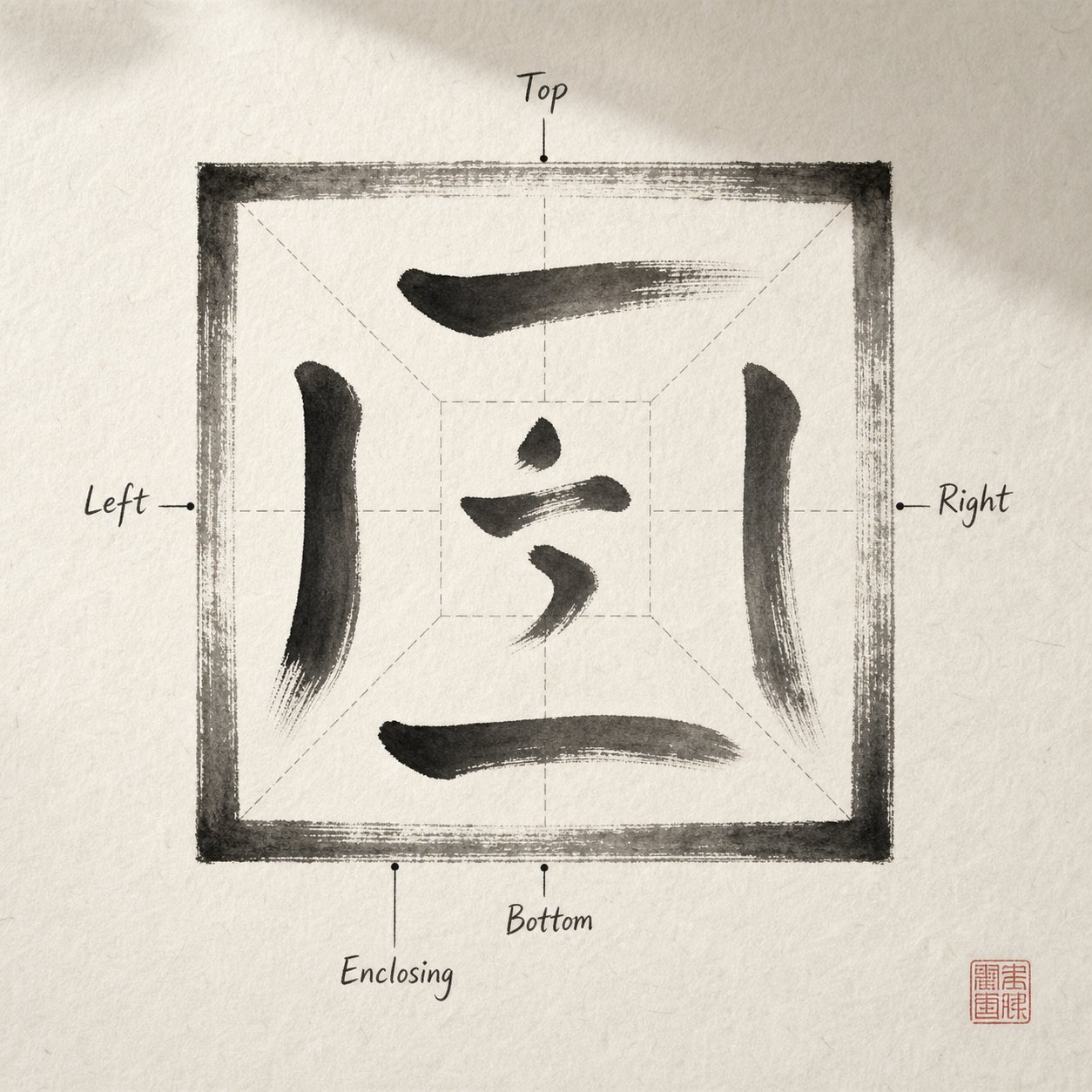
Radicals routinely change form depending on where they sit within a character. The Chinese term for these positional components is pianpang (偏旁), and understanding how they shift is what separates someone who can read a chinese radical meaning from someone who gets lost staring at unfamiliar strokes. Once you see the pattern, characters that looked completely unrelated suddenly reveal themselves as members of the same family.
Left-Side Radicals and Their Variants
The left-side position, called pang (旁), is the most common spot for a radical to appear. When a radical moves to the left, it typically gets compressed or simplified to make room for the component beside it. This is where you will encounter the most dramatic shape changes.
Here are the key transformations you need to recognize:
- 水 → 氵 (water): The full character 水 (shui) becomes three dots stacked vertically. You will see this in 河 (he, "river"), 洗 (xi, "to wash"), 汤 (tang, "soup"), 海 (hai, "sea"), and 泪 (lei, "tears"). Every one of these connects to liquid.
- 人 → 亻 (person): The standalone character 人 (ren) narrows into a single vertical stroke with a leftward tick. Look for it in 他 (ta, "he"), 休 (xiu, "to rest"), 住 (zhu, "to live"), 信 (xin, "trust"), and 作 (zuo, "to do"). These characters all relate to people or human activity.
- 手 → 扌 (hand): The character 手 (shou) compresses into a form resembling a vertical line with a horizontal cross and a rising stroke. It appears in 打 (da, "to hit"), 找 (zhao, "to search"), 拉 (la, "to pull"), 把 (ba, "to hold"), and 推 (tui, "to push"). Each involves an action performed with the hands.
- 心 → 忄 (heart): The full form 心 (xin) becomes two dots and a vertical stroke when placed on the left. You will find it in 快 (kuai, "happy/fast"), 情 (qing, "emotion"), 忙 (mang, "busy"), 怕 (pa, "afraid"), and 悟 (wu, "to realize"). The radical meaning in chinese here points directly to feelings and mental states.
- 犬 → 犭 (dog/beast): The character 犬 (quan, "dog") transforms into a narrow curved form on the left. It shows up in 狗 (gou, "dog"), 猫 (mao, "cat"), 狼 (lang, "wolf"), 猪 (zhu, "pig"), and 独 (du, "alone"). Characters with this radical in chinese meaning typically relate to animals or animal-like qualities.
Notice the logic: each variant is a compressed version of the original, redesigned to share horizontal space with another component. The meaning stays identical. Only the shape adapts.
Top, Bottom, and Enclosing Positions
Left-side placement is not the only option. Radicals also appear above, below, or wrapped around other components. Each position has its own name and its own set of shape changes.
When a radical sits on top, it is called tou (头, "head"). When it sits at the bottom, it is called di (底, "base"). And when it wraps around other elements on two or more sides, it is called kuang (框, "frame"). These positions produce their own distinct variant forms.
Consider the radical 竹 (zhu, "bamboo"). As a standalone character, it has six strokes. But when it sits on top of another component, it compresses into ⺮, a shorter form with just the upper portion visible. You will see this in 笔 (bi, "pen"), 筷 (kuai, "chopsticks"), and 篮 (lan, "basket"), all objects historically made from bamboo.
Or take 火 (huo, "fire"). When it drops to the bottom of a character, it spreads into four dots: 灬. This appears in 热 (re, "hot"), 煮 (zhu, "to cook"), 照 (zhao, "to shine"), and 黑 (hei, "black," originally linked to soot from fire). The chinese radical meaning stays the same, but the visual form adapts entirely to its position.
The enclosing position is particularly interesting. Radicals like 囗 (wei, "enclosure") wrap around the entire inner component, as in 国 (guo, "country"), 园 (yuan, "garden"), and 图 (tu, "picture"). The radical 门 (men, "gate") similarly frames what sits inside it: 问 (wen, "to ask"), 间 (jian, "between"), 闻 (wen, "to hear").
The table below maps out the five main position types with their variant forms and example characters:
| Position Name | Chinese Term | Example Radical (Full Form) | Variant Form | Example Characters |
|---|---|---|---|---|
| Left side | 旁 (pang) | 水 (water) | 氵 | 河, 洗, 海 |
| Left side | 旁 (pang) | 人 (person) | 亻 | 他, 休, 住 |
| Left side | 旁 (pang) | 言 (speech) | 讠 | 说, 语, 话 |
| Right side | 旁 (pang) | 刀 (knife) | 刂 | 刻, 别, 到 |
| Top | 头 (tou) | 竹 (bamboo) | ⺮ | 笔, 筷, 篮 |
| Top | 头 (tou) | 草 (grass) | 艹 | 花, 茶, 药 |
| Bottom | 底 (di) | 火 (fire) | 灬 | 热, 煮, 照 |
| Bottom | 底 (di) | 心 (heart) | ⺗ | 思, 想, 忘 |
| Enclosing | 框 (kuang) | 囗 (enclosure) | 囗 | 国, 园, 图 |
| Enclosing | 框 (kuang) | 门 (gate) | 门 | 问, 间, 闻 |
One more detail worth noting: the shape 阝 represents two completely different radicals depending on which side it appears on. On the left, it is a compressed form of 阜 (fu, "mound" or "hill"), appearing in characters like 陆 (lu, "land") and 院 (yuan, "courtyard"). On the right, it represents 邑 (yi, "city"), showing up in 都 (du, "metropolis") and 部 (bu, "section"). Same visual shape, different radical, different meaning. Position is everything.
The chuo radical (辶), meaning "walk" or "move forward," offers another useful example. It wraps around the bottom and left side of characters like 道 (dao, "road"), 过 (guo, "to pass"), and 远 (yuan, "far"). Recognizing the chuo radical chinese meaning as movement-related instantly tells you these characters involve travel or distance.
This positional system is what makes Chinese characters so space-efficient. Rather than stacking full-size components side by side, the writing system compresses and reshapes radicals to fit neatly into a square block. Once you internalize these variant forms, characters that once looked like random tangles of strokes start revealing their internal architecture, and the radical meaning in chinese becomes visible at a glance.
Common Chinese Radicals and Their Meanings Grouped by Category
Most radical references sort everything by stroke count. That is great for dictionary lookup, but terrible for memory. Your brain does not store information by counting lines on a page. It stores information by meaning, by association, by category. So instead of listing radicals from one stroke to seventeen, let's organize them the way your mind actually works: by what they represent.
Grouping chinese radicals and their meanings into semantic clusters lets you build mental networks. When you learn the water radical, you immediately connect it to fire, earth, wood, and metal. When you learn the mouth radical, your brain links it to eye, ear, hand, and foot. These associative chains make recall faster and recognition almost automatic.
Nature and Elements Radicals
The natural world gave ancient Chinese scribes their earliest inspiration. Many of these radicals began as simple drawings of what they represented, and even in their modern forms, you can trace the pictographic logic if you know where to look.
- 水/氵 (shui, "water") - The original pictograph depicted flowing streams with a central current and side ripples. Today the standalone form 水 still hints at that flow, while the left-side variant 氵 reduces it to three drops. Characters built on this radical all connect to liquid or fluidity:
- 河 (he, "river") - water flowing between banks
- 海 (hai, "sea") - the vast body of water
- 湖 (hu, "lake") - an enclosed body of water
- 洗 (xi, "to wash") - using water to clean
- 泡 (pao, "bubble/to soak") - something formed by water
- 火/灬 (huo, "fire") - The ancient form showed flames rising from a base, with tongues of fire reaching upward. The bottom variant 灬 spreads those flames into four dots. Fire-radical characters relate to heat, burning, or light:
- 烧 (shao, "to burn") - direct combustion
- 灯 (deng, "lamp") - a source of firelight
- 热 (re, "hot") - the sensation fire produces
- 烤 (kao, "to roast") - cooking with fire
- 然 (ran, "to ignite/so") - originally meant setting fire to dog meat as an offering
- 土 (tu, "earth") - The pictograph was a mound of soil on the ground, a lump rising from a flat surface. Characters with this radical relate to land, ground, or construction from earth:
- 地 (di, "ground/earth")
- 城 (cheng, "city wall/city") - built from packed earth
- 场 (chang, "field/place")
- 块 (kuai, "lump/piece") - a chunk of earth
- 坐 (zuo, "to sit") - settling onto the ground
- 木 (mu, "wood/tree") - One of the most recognizable pictographs. The oracle bone form showed a trunk with branches above and roots below. The modern character still preserves that vertical symmetry. Wood-radical characters connect to trees, timber, or objects made from wood:
- 林 (lin, "forest") - two trees side by side
- 森 (sen, "dense forest") - three trees together
- 桌 (zhuo, "table") - furniture made of wood
- 椅 (yi, "chair") - another wooden object
- 树 (shu, "tree") - the living plant itself
- 金/钅 (jin, "metal/gold") - The original character depicted nuggets of metal buried in the earth, with dots representing ore. The simplified left-side variant 钅 is a compressed form used in mainland China. Metal-radical characters involve metallic objects, money, or sharp implements:
- 钱 (qian, "money") - originally metal coins
- 铁 (tie, "iron")
- 银 (yin, "silver")
- 锁 (suo, "lock") - a metal device
- 钟 (zhong, "bell/clock") - cast from metal
- 日 (ri, "sun/day") - The earliest form was a circle with a dot in the center, representing the sun disk. Over centuries it squared off into the rectangle we write today. Sun-radical characters relate to time, light, or celestial phenomena:
- 明 (ming, "bright") - sun and moon together
- 早 (zao, "early") - the sun just rising
- 晚 (wan, "evening") - the sun descending
- 暖 (nuan, "warm") - heat from sunlight
- 时 (shi, "time") - measured by the sun's movement
- 月 (yue, "moon/month") - The pictograph was a crescent moon. Interestingly, this radical does double duty. In many characters it represents the moon or time periods, but it also serves as the variant form of 肉 (rou, "flesh/meat") when used as a component. Context tells you which meaning applies:
- 朋 (peng, "friend") - moon-related origin
- 肝 (gan, "liver") - flesh/body organ
- 脑 (nao, "brain") - body part
- 胖 (pang, "fat") - relating to flesh
- 期 (qi, "period") - a cycle of the moon
- 山 (shan, "mountain") - The oracle bone inscription depicted three peaks rising from a base, and the modern form preserves that silhouette clearly. Mountain-radical characters relate to terrain and elevation:
- 岛 (dao, "island") - land rising from water
- 峰 (feng, "peak")
- 崖 (ya, "cliff")
- 岸 (an, "shore/bank") - the edge where land rises
- 雨 (yu, "rain") - The pictograph showed drops falling from a cloud beneath the sky. The modern form still displays a horizontal line (sky) with dots (raindrops) beneath it. Rain-radical characters connect to weather and atmospheric phenomena:
- 雪 (xue, "snow")
- 雷 (lei, "thunder")
- 霜 (shuang, "frost")
- 零 (ling, "zero/to fall as rain")
- 雾 (wu, "fog")
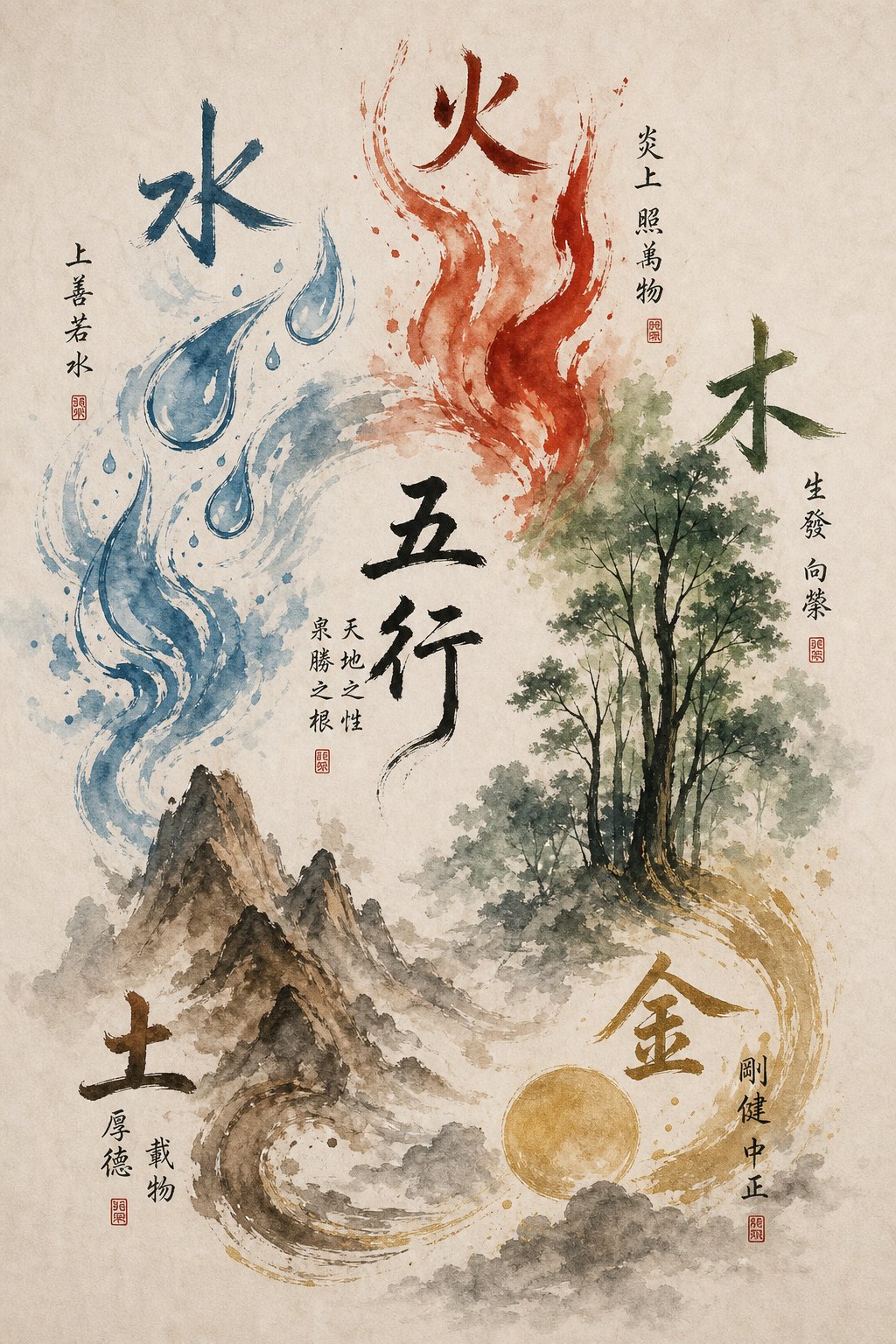
You will notice a pattern here. The chinese radicals english meaning often maps directly to the Five Elements (五行) system: water, fire, earth, metal, and wood. Ancient Chinese philosophy organized the natural world into these categories, and the writing system reflects that worldview. Learning these five radicals alone gives you a foothold in hundreds of characters.
Body Parts and Human Radicals
The human body provided another rich source of pictographic inspiration. These radicals started as simplified sketches of body parts, and the characters they generate consistently relate to physical actions, sensory experiences, or social interactions tied to that part of the body.
- 人/亻 (ren, "person") - The oracle bone form looked like a side profile of a standing figure, legs apart. The left-side variant 亻 compresses this into a single stroke with a leftward tick. Person-radical characters relate to human beings, social roles, or human activity:
- 他 (ta, "he")
- 们 (men, plural marker for people)
- 做 (zuo, "to do/make")
- 住 (zhu, "to live/reside")
- 休 (xiu, "to rest") - a person leaning against a tree
- 口 (kou, "mouth") - A simple square representing an open mouth. This is one of the most productive radicals in Chinese, appearing in characters related to speaking, eating, sounds, or anything involving the mouth:
- 吃 (chi, "to eat")
- 叫 (jiao, "to shout")
- 听 (ting, "to listen") - receiving spoken words
- 吗 (ma, question particle) - something spoken
- 呢 (ne, modal particle) - used in speech
- 心/忄 (xin, "heart") - The ancient form depicted the physical organ with its chambers. As a radical, it signals emotions, thoughts, and psychological states. The left-side variant 忄 appears far more frequently than the bottom form:
- 想 (xiang, "to think/miss")
- 快 (kuai, "happy/fast")
- 情 (qing, "emotion")
- 忙 (mang, "busy")
- 怕 (pa, "afraid")
- 手/扌 (shou, "hand") - The pictograph showed five fingers spread from a palm. The compressed variant 扌 appears on the left in characters describing manual actions, grasping, or manipulation:
- 打 (da, "to hit")
- 找 (zhao, "to look for")
- 拉 (la, "to pull")
- 把 (ba, "to hold/grasp")
- 推 (tui, "to push")
- 目 (mu, "eye") - Originally a vertical oval with a pupil inside, this radical evolved into the rectangular form we see today. Its pictographic origin is clearly visible in oracle bone inscriptions. Eye-radical characters relate to vision, observation, or appearance:
- 看 (kan, "to look")
- 眼 (yan, "eye")
- 睡 (shui, "to sleep") - eyes closed
- 盲 (mang, "blind") - eyes that cannot see
- 相 (xiang, "appearance/to observe")
- 耳 (er, "ear") - The ancient form resembled the outer ear with its curves. Characters with this radical connect to hearing, listening, or auditory perception:
- 聪 (cong, "clever") - originally meant sharp hearing
- 闻 (wen, "to hear/smell")
- 聊 (liao, "to chat")
- 职 (zhi, "duty") - what one is told to do
- 足/⻊ (zu, "foot") - The pictograph depicted a foot with toes and an ankle. The left-side variant ⻊ compresses it for use in characters about walking, running, or leg movements:
- 跑 (pao, "to run")
- 跳 (tiao, "to jump")
- 路 (lu, "road") - where feet travel
- 踢 (ti, "to kick")
- 蹲 (dun, "to squat")
What makes this semantic grouping powerful is the way it mirrors real-world categories. You already know that running, jumping, and kicking are leg actions. You already know that emotions live in the heart. The radicals chinese meaning system simply encodes what you intuitively understand about the world into the structure of written characters. That is why learning common chinese radicals and their meanings by category sticks better than memorizing them by stroke count. Your existing knowledge does half the work.
These two groups, nature and body, cover a huge portion of everyday vocabulary. But the natural world extends beyond elements and anatomy. Animals, plants, materials, and human actions each have their own radical families, and those clusters round out the full picture of how Chinese characters organize meaning.
Animals, Actions, and Materials Radical Groups
Characters describing the living world and the materials humans work with form some of the most intuitive radical families in Chinese. When you see a character tagged with the insect radical, you know it involves a crawling creature. When you spot the silk radical, you know thread or fabric is involved. These connections are direct, logical, and surprisingly consistent across thousands of characters.
This section rounds out the chinese radicals list and meaning by covering two major clusters: living creatures and the actions or materials that define daily life.
Animals and Living Things Radicals
Ancient Chinese scribes drew what they saw in the world around them. Animals were everywhere, so naturally they became radicals. Each animal radical generates a family of characters related to that creature type, its behaviors, or things associated with it.
- 鱼/魚 (yu, "fish") - The traditional form 魚 clearly shows a fish body with scales and tail. The simplified 鱼 retains the basic outline. Characters with this radical connect to aquatic life and seafood:
- 鲜 (xian, "fresh") - originally meant fresh fish
- 鲸 (jing, "whale") - a large sea creature
- 鲤 (li, "carp") - a specific fish species
- 鳍 (qi, "fin") - part of a fish's body
- 鸟/鳥 (niao, "bird") - The traditional form 鳥 depicted a bird with feathers and claws. The simplified 鸟 keeps the essential shape. Bird-radical characters name specific species or relate to flight:
- 鸡 (ji, "chicken")
- 鸭 (ya, "duck")
- 鹰 (ying, "eagle")
- 鹊 (que, "magpie")
- 鸦 (ya, "crow")
- 虫 (chong, "insect") - The original pictograph showed a snake or worm-like creature. Over time, this radical expanded to cover all small creatures: insects, reptiles, and even some aquatic animals. Its scope is broader than the English word "insect" suggests:
- 蛇 (she, "snake") - a crawling creature
- 蚊 (wen, "mosquito")
- 蝴蝶 (hudie, "butterfly") - both characters carry the insect radical
- 蜜蜂 (mifeng, "bee") - again, both characters use 虫
- 蛋 (dan, "egg") - produced by creatures
- 马/馬 (ma, "horse") - The traditional form 馬 was a detailed pictograph of a horse with mane and legs. The simplified 马 streamlines it dramatically. Horse-radical characters relate to riding, speed, or equine activities:
- 骑 (qi, "to ride")
- 驰 (chi, "to gallop")
- 驾 (jia, "to drive") - originally meant driving a horse-drawn vehicle
- 驴 (lv, "donkey") - a related animal
- 骇 (hai, "to frighten") - like a startled horse
- 犬/犭 (quan, "dog") - The standalone form 犬 shows a dog in profile. The left-side variant 犭 compresses it into three quick strokes. Despite being called the "dog" radical, it covers mammals and beast-like creatures broadly:
- 狗 (gou, "dog")
- 猫 (mao, "cat")
- 狼 (lang, "wolf")
- 猴 (hou, "monkey")
- 狮 (shi, "lion")
- 牛/牜 (niu, "cow") - The pictograph depicted a cow's head with two horns. The left-side variant 牜 appears in characters related to cattle, livestock, or bovine qualities:
- 牧 (mu, "to herd/pasture")
- 物 (wu, "thing/object") - originally referred to livestock as property
- 牲 (sheng, "livestock/sacrifice")
- 特 (te, "special") - originally meant a prime bull
- 羊 (yang, "sheep") - The ancient form showed a sheep's head with curving horns. Sheep were symbols of goodness and beauty in Chinese culture, which is why this radical appears in some unexpected characters:
- 美 (mei, "beautiful") - a large sheep was considered beautiful
- 群 (qun, "group/flock")
- 羚 (ling, "antelope")
- 鲜 (xian, "fresh") - combines fish and sheep, two fresh foods
- 艹 (cao, "grass/plants") - This top-position radical represents vegetation broadly. The 艹 chinese radical meaning covers flowers, herbs, vegetables, and anything that grows from the ground. It is one of the most frequently appearing radicals in Chinese:
- 花 (hua, "flower")
- 草 (cao, "grass")
- 茶 (cha, "tea") - made from plant leaves
- 药 (yao, "medicine") - herbal remedies
- 苗 (miao, "seedling")
A question that comes up often: what does the radical rice mean in chinese? The radical 米 (mi) represents rice or grain, and it generates characters like 粮 (liang, "grain/food"), 粉 (fen, "powder/flour"), 糖 (tang, "sugar"), and 类 (lei, "type/category"). Rice was so central to Chinese life that it became a building block for concepts about food, fine particles, and even classification.
Actions, Materials, and Abstract Concept Radicals
Not every radical depicts a physical object. Some represent actions, materials, or abstract ideas. These radicals are especially useful because they tag characters with functional meaning: this character involves movement, that one involves speech, another involves fabric.
- 走/辶 (zou/chuo, "walk") - The radical 走 means "to walk" or "to run" in its standalone form. Its variant 辶 (the "walking" radical, sometimes called the chuo radical) wraps around the bottom-left of characters. The chinese radical che meaning, referring to the cart radical 车, is sometimes confused with this movement radical, but 辶 specifically signals walking or traveling on foot:
- 远 (yuan, "far") - a great walking distance
- 过 (guo, "to pass")
- 运 (yun, "to transport/luck")
- 道 (dao, "road/way")
- 送 (song, "to send/deliver")
- 言/讠 (yan, "speech") - The yan radical meaning in chinese points to anything involving spoken or written language. The traditional form 言 has seven strokes, while the simplified variant 讠 compresses it to just two. This is the chinese radical that means writing and speaking, generating a massive family of communication-related characters:
- 说 (shuo, "to speak")
- 话 (hua, "speech/words")
- 语 (yu, "language")
- 读 (du, "to read")
- 记 (ji, "to record/remember")
- 糸/纟 (si, "silk") - The traditional form 糸 depicted twisted silk fibers. The simplified variant 纟 is one of the most common left-side radicals. Characters in this family relate to thread, weaving, fabric, or anything involving fine strands:
- 红 (hong, "red") - originally a color of dyed silk
- 线 (xian, "thread/line")
- 织 (zhi, "to weave")
- 纸 (zhi, "paper") - early paper was made from silk fibers
- 绿 (lv, "green") - another dye color
- 竹/⺮ (zhu, "bamboo") - When placed on top of a character, bamboo compresses into ⺮. Bamboo was the material of everyday life in ancient China, used for writing, building, and cooking. Characters with this radical connect to bamboo products or qualities:
- 笔 (bi, "pen/brush") - originally a bamboo writing tool
- 筷 (kuai, "chopsticks") - bamboo eating utensils
- 篮 (lan, "basket") - woven from bamboo
- 笛 (di, "flute") - a bamboo instrument
- 管 (guan, "tube/pipe") - a hollow bamboo section
- 石 (shi, "stone") - The pictograph showed a piece of rock beneath a cliff. Stone-radical characters relate to minerals, hardness, or objects made from rock:
- 破 (po, "to break")
- 砖 (zhuan, "brick")
- 矿 (kuang, "mine/ore")
- 硬 (ying, "hard")
- 碗 (wan, "bowl") - originally made from stone or clay
- 巾 (jin, "cloth/towel") - This radical depicted a piece of fabric hanging from a rack. Characters with 巾 relate to textiles, garments, or cloth items:
- 布 (bu, "cloth")
- 帆 (fan, "sail") - a cloth catching wind
- 帐 (zhang, "tent/curtain")
- 帽 (mao, "hat")
- 币 (bi, "currency") - originally cloth used as money
One radical worth noting separately is 方 (fang, "square/direction"). When exploring chinese radical meanings, 方 generates characters related to direction, place, or method: 旅 (lv, "travel"), 旗 (qi, "flag"), 旁 (pang, "beside"), and 施 (shi, "to carry out"). It is radical number 70 in the Kangxi system and carries four strokes.
The table below consolidates these action and material radicals into a quick-reference format:
| Radical | Pinyin | English Meaning | Variant Form | Example Characters |
|---|---|---|---|---|
| 走 | zou | Walk/Run | 辶 | 远, 过, 运, 道, 送 |
| 言 | yan | Speech | 讠 | 说, 话, 语, 读, 记 |
| 糸 | si | Silk/Thread | 纟 | 红, 线, 织, 纸, 绿 |
| 竹 | zhu | Bamboo | ⺮ | 笔, 筷, 篮, 笛, 管 |
| 石 | shi | Stone | - | 破, 砖, 矿, 硬, 碗 |
| 巾 | jin | Cloth/Towel | - | 布, 帆, 帐, 帽, 币 |
| 方 | fang | Square/Direction | - | 旅, 旗, 旁, 施, 放 |
| 车 | che | Cart/Vehicle | - | 轮, 轨, 转, 轻, 辆 |
| 米 | mi | Rice/Grain | - | 粮, 粉, 糖, 类, 籽 |
| 艹 | cao | Grass/Plants | - | 花, 草, 茶, 药, 苗 |
Notice how this combined approach works on two levels. For beginners, the semantic grouping makes each radical memorable because it connects to a real-world category you already understand. For more advanced learners, the table serves as a compact reference you can scan when decomposing unfamiliar characters. You spot 纟 on the left side of something new, check the table, and immediately know the character involves thread, fabric, or connection.
Knowing what radicals represent is one thing. Knowing how to use that knowledge in real time, when you encounter a character you have never seen before, is another skill entirely. The next step is learning to work like a detective: breaking a character apart, identifying its radical, and using that radical to approximate meaning before you ever open a dictionary.
How to Decode Characters Using Radicals
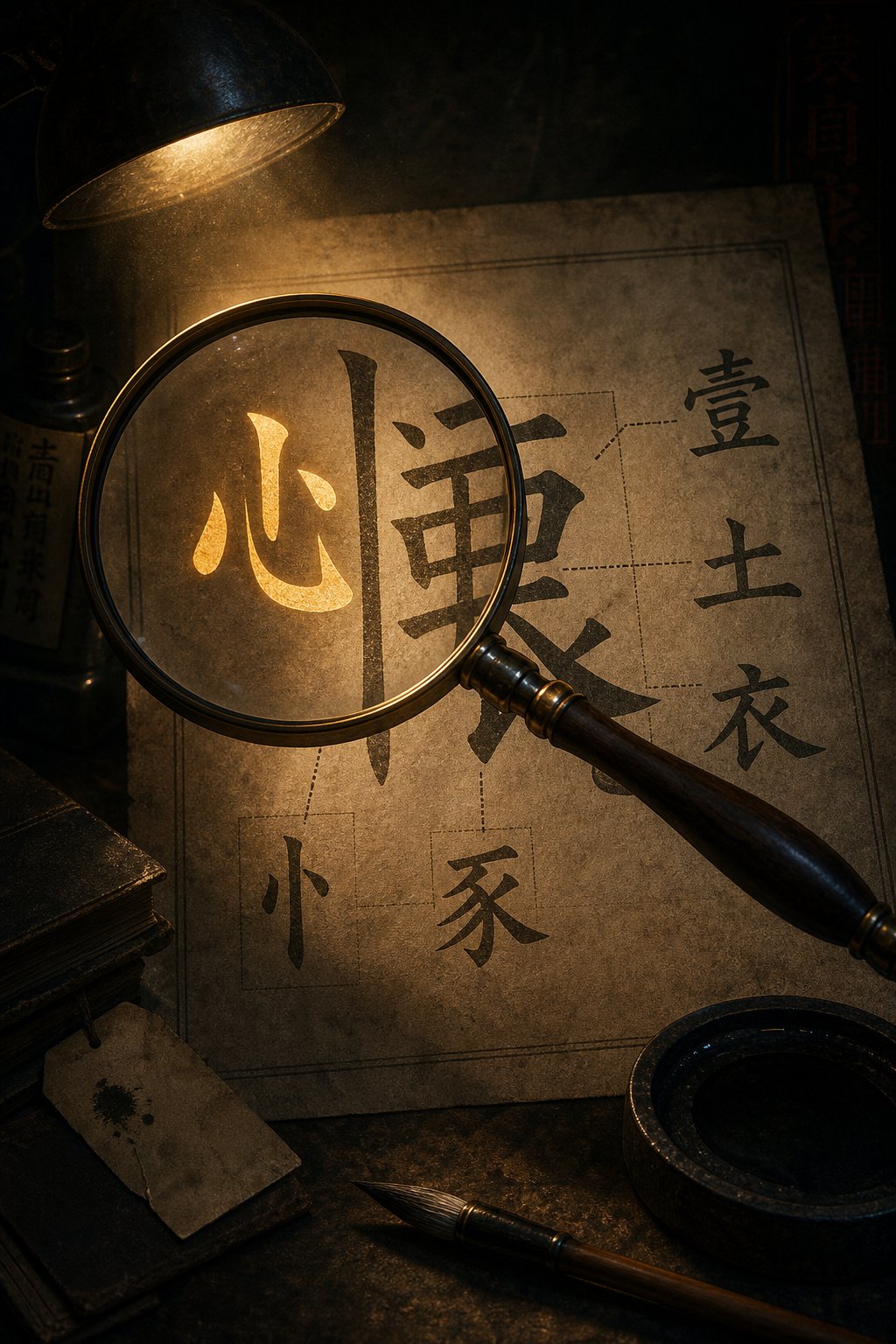
Knowing what radicals mean is useful. Knowing how to spot them inside an unfamiliar character is powerful. Imagine you are reading a Chinese text and you hit a character you have never studied. Instead of reaching for a dictionary immediately, you can decompose it, identify the radical, and make an educated guess about its meaning category. This is where the meaning of chinese radicals becomes a practical skill rather than abstract knowledge.
The process works like detective work. You examine the evidence (the strokes), identify the suspect (the radical), and build a theory (the meaning category). Let's walk through exactly how to do this.
How to Identify the Radical in Any Character
The biggest question beginners ask: when a character has multiple components, how do you know which one is the radical? Here are the position-based rules that resolve most cases:
- In left-right characters, the left component is usually the radical.
- In top-bottom characters, the top or bottom component that carries semantic weight is typically the radical.
- In enclosing characters, the outer frame is often the radical.
- When in doubt, the component that provides a meaning clue (rather than a sound clue) is your best candidate.
Let's apply these rules to five characters you might encounter in the wild:
1. 湖 (hu, "lake") - This character has two visible parts: 氵 on the left and 胡 on the right. Rule one says the left component is likely the radical. And 氵 is the water radical, which makes perfect semantic sense. A lake is a body of water. The right component 胡 provides the pronunciation hint (hu). Radical: 氵 (water).
2. 惊 (jing, "to be startled") - The left side shows 忄 and the right side shows 京. The left component 忄 is the heart radical, signaling an emotional state. Being startled is indeed a feeling. The component 京 (jing, "capital city") contributes the sound. Radical: 忄 (heart).
3. 铜 (tong, "copper") - Left side: 钅. Right side: 同. The left component 钅 is the metal radical. Copper is a metal, so the chinese radical and meaning align perfectly. The right component 同 (tong, "same") gives the pronunciation. Radical: 钅 (metal).
4. 花 (hua, "flower") - This is a top-bottom character. The top shows 艹 (grass radical) and the bottom shows 化. A flower is a plant, so the top component provides the semantic clue. The bottom component 化 (hua, "to change") hints at the sound. Radical: 艹 (grass/plants).
5. 问 (wen, "to ask") - An enclosing structure. The outer frame is 门 (gate) and the inner component is 口 (mouth). Here is a tricky case. You might think 口 (mouth) makes more semantic sense for "asking." But the official radical is actually 口, not 门. The mouth is what you use to ask questions. This is one of those cases where the enclosed component, not the frame, serves as the radical. When position rules conflict with semantic logic, dictionaries sometimes surprise you, so checking a reference confirms your detective work.
The pattern across these examples is clear: identify all components, check which one connects logically to the character's meaning, and use position as your tiebreaker. With practice, this becomes instinctive.
Using Radicals to Guess Unknown Character Meanings
Here is where the real payoff lives. You do not need to know a character's exact definition to get useful information from it. Recognizing the radical alone narrows the possibilities dramatically.
Try this exercise. Imagine you encounter these characters for the first time:
- 溺 - You spot 氵 on the left. Water radical. Before looking anything up, you know this character relates to water or liquid. (It means "to drown.")
- 惭 - You see 忄 on the left. Heart radical. This character involves an emotion or mental state. (It means "ashamed.")
- 锋 - You notice 钅 on the left. Metal radical. Something metallic or sharp. (It means "blade" or "cutting edge.")
- 蝶 - You recognize 虫 on the left. Insect radical. A creature of some kind. (It means "butterfly.")
- 诉 - You identify 讠 on the left. Speech radical. Something involving communication. (It means "to tell" or "to accuse.")
In every case, the radical gave you the correct meaning category without any prior knowledge of the specific character. That is what understanding the meaning of radicals in chinese does for your reading ability. You go from total confusion to an informed guess in seconds.
This skill compounds over time. The more radicals you internalize, the fewer truly "unknown" characters exist. Even complex, multi-stroke characters become partially readable the moment you identify their chinese radical and meaning connection. You might not know the exact definition or pronunciation, but you know the neighborhood the character lives in, and that is often enough to follow the context of a sentence.
What does radical mean in chinese reading practice? It means you are never completely lost. Every character carries a built-in hint about its meaning category, and learning to read that hint is the single most transferable skill in Chinese literacy.
This detective approach works identically whether you are reading simplified or traditional characters. The forms may differ, but the underlying logic of pairing a semantic radical with a phonetic component stays constant across both systems.
Simplified vs Traditional Chinese Radicals Compared
The forms may look different, but the logic underneath is identical. That distinction trips up many learners who encounter both simplified and traditional characters and wonder whether they need to learn two entirely separate systems. The short answer: you do not. The radicals and meaning in chinese traditional and simplified systems share the same semantic roots. What changed during China's 1950s simplification campaign was stroke count, not conceptual function.
Radicals That Differ Between Simplified and Traditional
When the Chinese government simplified characters to boost literacy, many radicals were streamlined in a standardized way. A radical like 言 (seven strokes) became 讠 (two strokes), and that change cascaded across every character containing it. Only about 30% of the most commonly used characters were affected, but the radicals that did change appear so frequently that you will notice them immediately.
Here are the most important radical pairs to recognize:
| Traditional Form | Simplified Form | Meaning | Traditional Examples | Simplified Examples |
|---|---|---|---|---|
| 言 | 讠 | Speech | 說, 語, 話 | 说, 语, 话 |
| 金 | 钅 | Metal | 銀, 鐵, 錢 | 银, 铁, 钱 |
| 食 | 饣 | Food/Eat | 飯, 餓, 餅 | 饭, 饿, 饼 |
| 糸 | 纟 | Silk/Thread | 線, 織, 紅 | 线, 织, 红 |
| 門 | 门 | Gate | 問, 間, 聞 | 问, 间, 闻 |
| 貝 | 贝 | Shell/Money | 財, 賣, 貴 | 财, 卖, 贵 |
| 車 | 车 | Cart/Vehicle | 輪, 轉, 較 | 轮, 转, 较 |
| 馬 | 马 | Horse | 騎, 駕, 驗 | 骑, 驾, 验 |
| 魚 | 鱼 | Fish | 鮮, 鯨, 鯉 | 鲜, 鲸, 鲤 |
| 鳥 | 鸟 | Bird | 雞, 鴨, 鷹 | 鸡, 鸭, 鹰 |
| 頁 | 页 | Page/Head | 題, 額, 頭 | 题, 额, 头 |
| 心 | 忄 | Heart | 懷, 慣, 憶 | 怀, 惯, 忆 |
Notice the pattern. The traditional chinese radical meanings are preserved completely in their simplified counterparts. 言 and 讠 both mean "speech." 金 and 钅 both mean "metal." The radicals and meaning in chinese traditional heart radical 心 still signals emotions whether you write 懷 or 怀. The semantic signal never changed. Only the packaging did.
This standardized approach to simplification is actually good news for learners. Once you memorize these radical pairs, you can read characters in either system by recognizing the same meaning clue in a different visual wrapper.
Which Radical System Should You Learn
Your choice depends on where and how you plan to use Chinese:
- Simplified characters are standard in mainland China, Singapore, and Malaysia. If your goal is business communication, modern media consumption, or HSK exam preparation, start here.
- Traditional characters remain the norm in Taiwan, Hong Kong, and Macau. They are also essential for reading classical texts, calligraphy, and historical documents.
The practical reality? Learning chinese radicals and meanings simplified gives you the fastest path to reading modern content from the world's largest Chinese-speaking population. But understanding simplified chinese radicals meaning also builds a bridge to traditional forms, because the underlying logic is shared. A learner who knows 钅 means metal will instantly recognize 金 as the same radical in its traditional dress.
Many experienced learners eventually familiarize themselves with both systems. The effort is smaller than it appears, since the radical pairs follow predictable patterns and the semantic connections remain constant. Whichever system you begin with, your radical knowledge transfers directly to the other.
With the visual differences between systems clarified, the practical question becomes: which radicals should you prioritize first, and how do you lock them into long-term memory?
A Practical Study Path for Learning Chinese Radicals with Meaning
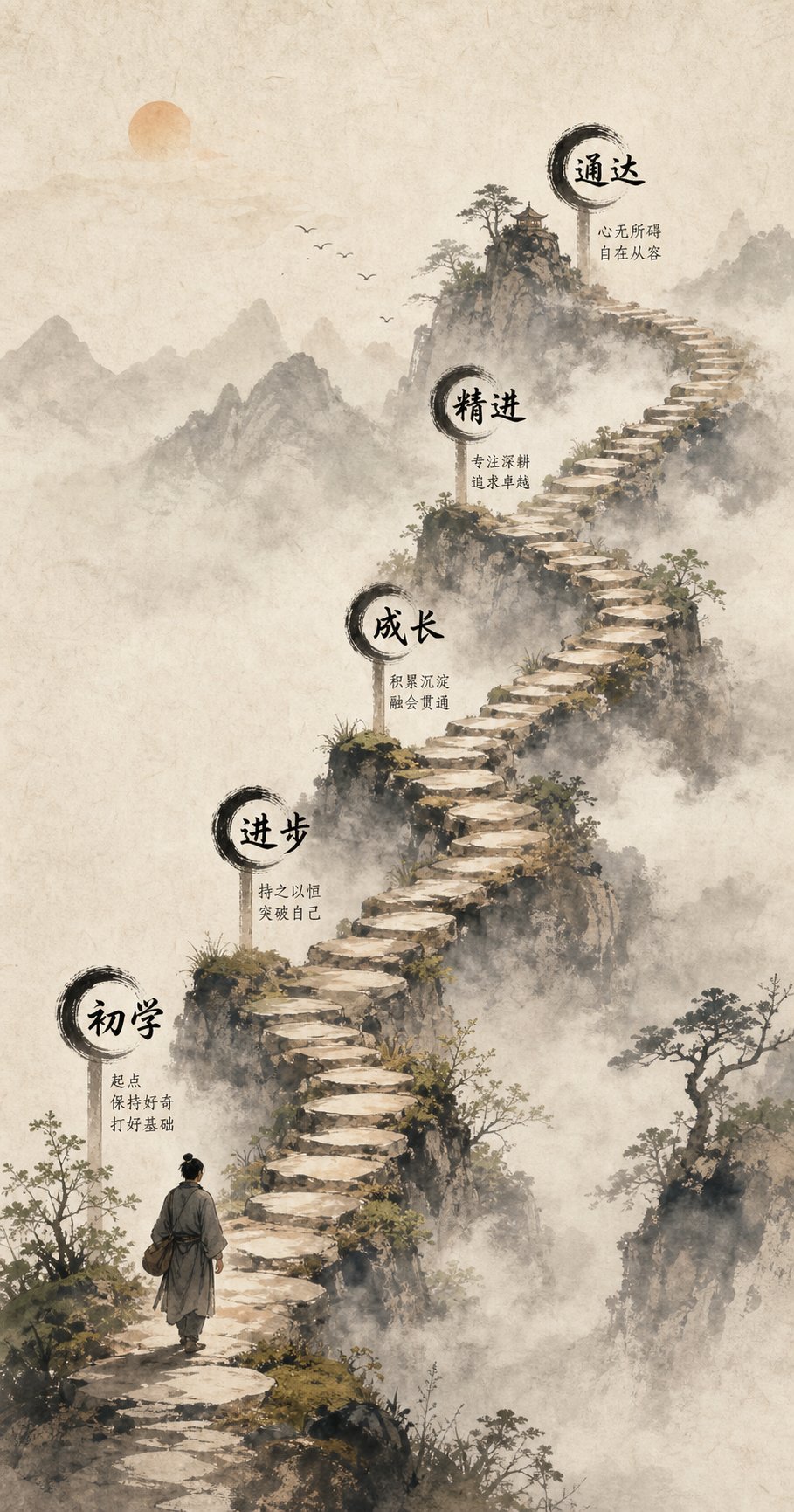
Knowing that radicals exist and understanding how they work are two different things from actually internalizing them. You could read every section above and still feel unsure about where to start when you sit down to study. The gap between knowledge and fluency is bridged by strategy, not just exposure.
The most common mistake? Trying to memorize all 214 radicals as an isolated exercise before learning any real characters. That approach is tedious, disconnected from context, and almost guaranteed to fail. A better path combines frequency-based prioritization with the semantic grouping you have already seen, layered into your existing character study rather than bolted on as a separate task.
The 30 Most Frequent Radicals to Learn First
Not all radicals carry equal weight. Some appear in hundreds of everyday characters, while others show up only in rare or literary vocabulary. Research into radical frequency among the 2,000 most commonly used characters reveals that roughly 30 radicals account for a disproportionate share of what you will actually read. Mastering these gives you a foothold in thousands of characters encountered at HSK 1 through HSK 4 levels.
Here are the 30 highest-frequency radicals, ordered by how often they appear in common characters:
- 人/亻 (ren, "person") - appears in 他, 你, 们, 做, 作
- 口 (kou, "mouth") - appears in 吃, 叫, 听, 吗, 呢
- 水/氵 (shui, "water") - appears in 河, 海, 洗, 没, 法
- 手/扌 (shou, "hand") - appears in 打, 把, 拿, 找, 拉
- 心/忄 (xin, "heart") - appears in 想, 思, 快, 情, 忙
- 言/讠 (yan, "speech") - appears in 说, 话, 请, 谢, 认
- 日 (ri, "sun/day") - appears in 明, 时, 早, 晚, 暖
- 木 (mu, "wood/tree") - appears in 树, 林, 桌, 椅, 本
- 土 (tu, "earth") - appears in 地, 场, 块, 城, 坐
- 女 (nv, "woman") - appears in 她, 妈, 好, 姐, 妹
- 金/钅 (jin, "metal") - appears in 钱, 银, 铁, 锁, 钟
- 火/灬 (huo, "fire") - appears in 热, 烧, 灯, 烤, 然
- 月 (yue, "moon/flesh") - appears in 朋, 肝, 脑, 胖, 期
- 门 (men, "gate") - appears in 开, 关, 间, 闻, 问
- 食/饣 (shi, "food") - appears in 饭, 饿, 饱, 馆, 饮
- 草/艹 (cao, "grass/plants") - appears in 花, 草, 药, 菜, 茶
- 足/⻊ (zu, "foot") - appears in 跑, 跳, 路, 踢, 蹲
- 刀/刂 (dao, "knife") - appears in 切, 到, 刻, 别, 刮
- 衣/衤 (yi, "clothing") - appears in 被, 裤, 补, 袜, 裙
- 目 (mu, "eye") - appears in 看, 眼, 睡, 相, 盲
- 山 (shan, "mountain") - appears in 岛, 峰, 崖, 岸, 岁
- 石 (shi, "stone") - appears in 砖, 硬, 确, 碗, 碎
- 雨 (yu, "rain") - appears in 雪, 雷, 零, 霜, 需
- 竹/⺮ (zhu, "bamboo") - appears in 笔, 筷, 算, 答, 篇
- 车 (che, "vehicle") - appears in 轮, 转, 辆, 轻, 较
- 马 (ma, "horse") - appears in 骑, 验, 驾, 妈, 吗
- 虫 (chong, "insect") - appears in 蛇, 蚂, 蜂, 蝴, 蝶
- 贝 (bei, "shell/money") - appears in 财, 贵, 赚, 购, 贷
- 糸/纟 (si, "silk/thread") - appears in 红, 线, 织, 纸, 绿
- 走/辶 (zou/chuo, "walk") - appears in 起, 过, 远, 道, 还
How does this connect to your study level? If you are working through HSK 1-2 vocabulary (roughly 300-600 characters), the first 15 radicals on this list will appear constantly. By HSK 3-4 (around 600-1,200 characters), you will encounter all 30 regularly. The english meaning of chinese radicals in this top tier maps directly to the most fundamental categories of human experience: people, body parts, elements, nature, and communication. That is not a coincidence. The characters you need earliest are built from the radicals that describe everyday life.
A practical benchmark: once you can recognize these 30 radicals on sight, including their variant forms, you will be able to identify the radical in roughly 60-70% of characters you encounter in daily reading. That single skill transforms your relationship with unfamiliar text.
Memorization Strategies for Radical Meanings
Recognizing a radical on a list is easy. Spotting it instantly inside a complex character during real reading is harder. The gap closes with deliberate practice, and certain techniques accelerate the process dramatically.
Trace pictographic origins to create visual stories. Many radicals started as simple drawings. The water radical 水 depicted flowing streams. The mountain radical 山 showed three peaks. The fire radical 火 illustrated flames rising. When you learn a radical's origin story, you create a visual anchor that makes the modern form memorable. You are not memorizing an abstract shape. You are remembering a picture that evolved over three thousand years. Even radicals that look nothing like their meaning today, like 心 (heart), become sticky once you see the oracle bone form that clearly depicted a physical organ.
Group radicals by semantic category for associative memory. This is the approach we have used throughout this article, and cognitive science backs it up. Your brain retrieves information faster when it is stored in meaningful clusters rather than arbitrary sequences. Learning 水, 火, 土, 木, 金 together as "the five elements" is far more effective than encountering them scattered across a stroke-count list. Each radical reinforces the others through contrast and association.
Learning chinese radicals with meaning organized by semantic category is more effective than memorizing by stroke count, because your brain stores and retrieves information through meaningful associations, not numerical order.
Practice identifying radicals in every new character you study. This is the habit that compounds fastest. Every time you learn a new vocabulary word, spend three seconds asking: what is the radical here, and how does it connect to the meaning? When you learn 情 (qing, "emotion"), note the heart radical 忄 and the connection to feelings. When you learn 铁 (tie, "iron"), spot the metal radical 钅. This micro-habit takes almost no extra time but builds radical recognition into your muscle memory. After a few weeks, you will start seeing radicals automatically without conscious effort.
Review by radical family, not by textbook chapter. Periodically pull all the characters you know that share the same radical and review them as a group. Take every character with 氵 you have learned: 河, 海, 洗, 没, 法, 汤, 泪. Seeing them together reinforces the pattern and often reveals connections you missed studying them individually. This technique works especially well with spaced repetition systems, where you can tag cards by radical and create focused review sessions.
Use the english meaning of chinese radicals as your entry point, then build outward. Start with the English gloss ("water," "fire," "hand") and connect it to the radical's visual form. Then connect that form to three or four characters you already know. Finally, use those known characters as anchors when you encounter new ones with the same radical. This layered approach builds a web of associations rather than isolated facts.
The key insight across all these strategies: radical learning should never be a standalone activity divorced from real characters. The chinese radicals meaning you internalize most deeply is the meaning you encounter repeatedly in context, attached to words you actually use. Study radicals through characters, not before them, and the system locks into place naturally.
Putting Your Chinese Radical Meaning List Into Practice
All the radical knowledge in the world stays theoretical until you use it in real situations. Reading about semantic categories and variant forms is one thing. Sitting down with an unfamiliar character and working through it systematically is where the learning actually happens. The list of chinese radicals and their meanings you have built up across this guide becomes a living tool the moment you apply it to texts, dictionaries, and daily study.
Using Radicals for Dictionary Lookup
Radicals were invented for exactly this purpose: finding characters when you do not know their pronunciation. The system is centuries old, but it still works in both physical and digital dictionaries.
Here is the step-by-step process for looking up an unknown character by radical:
- Identify the radical. Use the position rules you have learned. In a left-right character, check the left side first. In a top-bottom character, examine the top or bottom for a recognizable semantic component.
- Count the radical's strokes. The radical 氵 has three strokes. The radical 木 has four. The radical 言 has seven (or two in its simplified form 讠). This stroke count tells you where to find the radical in the dictionary's index.
- Locate the radical section. Physical dictionaries and online radical lookup tools like MDBG organize radicals by stroke count. Find your radical in the index, then follow the reference to its character list.
- Count the remaining strokes. Subtract the radical from the full character and count the strokes in whatever is left. For 样 (yang), the radical 木 has four strokes, and the remaining component 羊 has six. Look under the six-stroke section within the 木 radical group.
- Find your character. Scan the entries at that stroke count until you spot the one you need.
Digital tools have made this process faster without eliminating it. Apps like Pleco offer radical-based search alongside handwriting recognition and OCR scanning. Even when you use handwriting input or camera lookup, understanding radicals helps you confirm you have found the right character. And when digital tools fail, perhaps because a character is handwritten poorly or printed in an unusual font, the radical lookup method remains your reliable fallback.
The chinese radicals and english meanings you have memorized double as a navigation system. Every radical you recognize is a shortcut to the right section of any dictionary, physical or digital.
Building Long-Term Character Recognition
Radical knowledge compounds. That is the single most important thing to understand about this system. The first ten radicals you learn help you decode dozens of characters. The first thirty help you decode hundreds. By the time you have internalized fifty or sixty radicals with their variant forms, the majority of characters you encounter in everyday reading contain at least one piece you already recognize.
To keep this momentum building, adopt these daily habits:
- Decompose every new character. When you encounter an unfamiliar character in a text, a flashcard, or a street sign, pause for three seconds. Identify the radical. Connect it to a meaning category. Then look up the full definition. This micro-habit trains your brain to see structure rather than chaos.
- Keep a printable radical reference nearby. A chinese radical meanings list organized by semantic category, rather than stroke count, works as a quick-check tool during reading sessions. Print one out or save a PDF version on your phone for moments when you need to confirm a radical's identity.
- Review by radical family weekly. Pull all the characters you know that share a radical and look at them together. Seeing 河, 海, 洗, 没, 法, 泪 grouped under 氵 reinforces the pattern and often reveals connections you missed studying them individually.
- Trust the system when reading. You will not always guess a character's exact meaning from its radical alone. But you will always narrow the possibilities. A character with 忄 involves emotion. A character with 钅 involves metal. That partial knowledge keeps you oriented in a sentence even when full comprehension is still developing.
Radical knowledge transforms Chinese from thousands of random symbols into a logical system where every character carries a built-in hint about what it means. The more radicals you recognize, the fewer truly unknown characters exist.
Chinese literacy is not about memorizing thousands of unrelated pictures. It is about recognizing a finite set of meaningful building blocks and understanding how they combine. The chinese radical meaning list you have worked through here is your decoder ring. Use it actively, apply it to every new character you meet, and watch the writing system shift from overwhelming to navigable, one radical at a time.
Frequently Asked Questions About Chinese Radicals and Their Meanings
1. How many Chinese radicals are there and do I need to learn all of them?
The standard Kangxi system contains 214 radicals, but you do not need to memorize all of them to start reading effectively. About 30 high-frequency radicals appear in the majority of everyday characters. Mastering these 30 first, including their variant forms, lets you identify the radical in roughly 60-70% of characters you encounter in daily reading. The remaining radicals become useful as you advance to literary or specialized vocabulary.
2. What is the difference between a radical and a component in a Chinese character?
Every Chinese character has one officially assigned radical used for dictionary classification, but it may contain multiple components. A component is any reusable building block within a character, while the radical is the specific component designated as the dictionary key. For example, the character 清 contains both 氵 (water) and 青, but only 氵 is the radical. The radical typically provides a semantic clue about meaning, while other components often hint at pronunciation.
3. Why do some radicals look different inside characters than when written alone?
Radicals change shape based on their position within a character to fit neatly into a square block. The water radical 水 becomes 氵 (three dots) on the left side, the fire radical 火 becomes 灬 (four dots) at the bottom, and the bamboo radical 竹 becomes ⺮ when placed on top. These variant forms carry the same meaning as the full radical. Learning these positional changes is essential for recognizing radical families across different characters.
4. Should I learn simplified or traditional Chinese radicals first?
Choose based on your goals. Simplified radicals are standard in mainland China and used for HSK exams, making them the faster path to modern reading. Traditional radicals are used in Taiwan, Hong Kong, and classical texts. The underlying meanings are identical between systems, so knowledge transfers directly. About 30% of common characters differ visually, but the radical pairs follow predictable patterns like 言 becoming 讠 and 金 becoming 钅.
5. How can I use radicals to guess the meaning of an unknown Chinese character?
Identify the radical using position rules: in left-right characters, check the left side first; in top-bottom characters, look for the semantic component on top or bottom. Once you recognize the radical, you know the character's meaning category. Spotting 氵 tells you the character relates to water or liquid. Seeing 忄 signals an emotion. Recognizing 钅 points to metal or sharp objects. This narrows your interpretation before you even open a dictionary, making reading far less intimidating.