Are He and Ho Actually the Same Surname
You found a relative's old immigration papers listing the surname Ho, but your own passport reads He. Same family, different spelling. So which one is correct, and are these actually the same name?
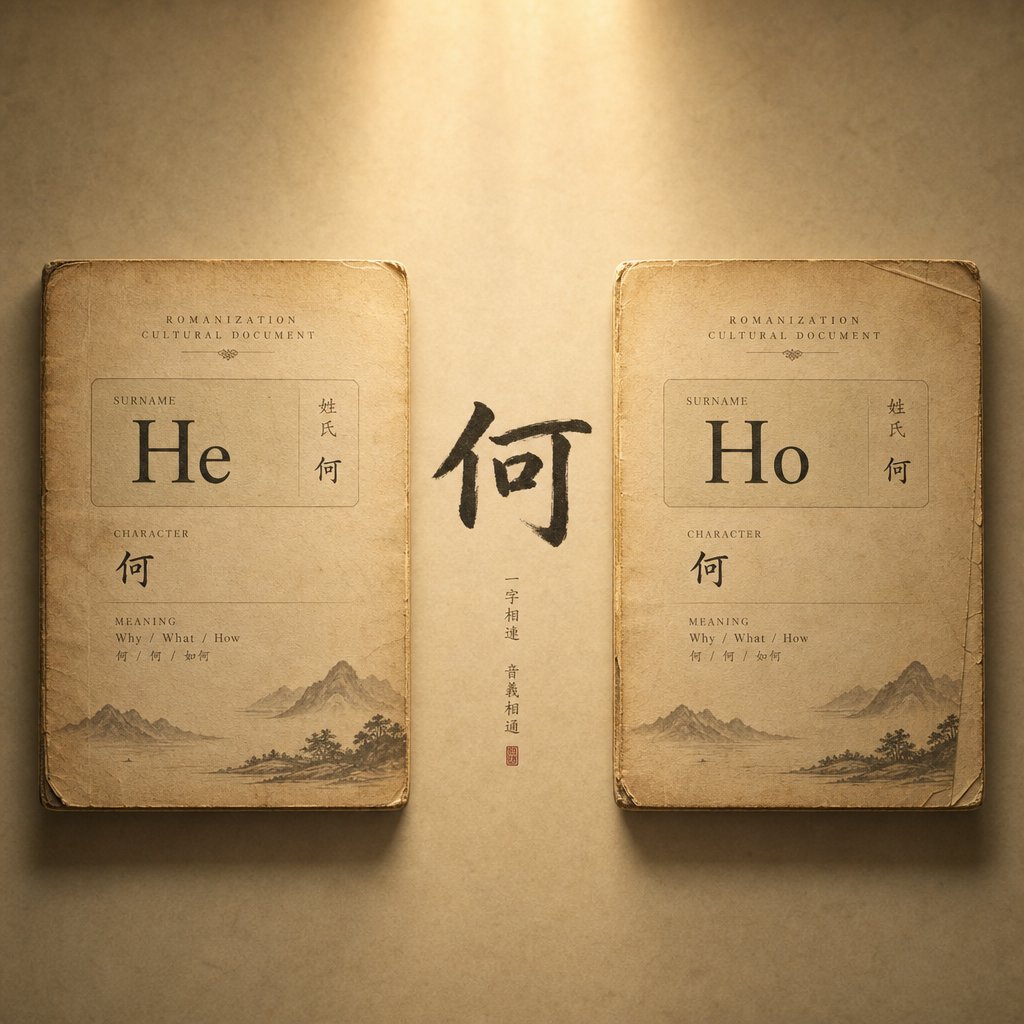
The short answer: it depends. He and Ho can absolutely refer to the same Chinese character, specifically 何, which ranks as the 17th most common surname in mainland China with roughly 14 million bearers. The difference in spelling comes down to which romanization system was used to convert the character into English letters. Mandarin Pinyin produces "He" while Wade-Giles and Cantonese romanization both produce "Ho."
But here is where it gets layered. The ho surname can also represent entirely different Chinese characters like 贺 (meaning "congratulate") or even a completely unrelated Vietnamese surname Hồ derived from the character 胡. Meanwhile, the he surname in English might trace back to 何, 河, 和, or 赫, each with its own meaning and ancestral lineage.
He and Ho can refer to the same ancestral surname or completely different ones depending on dialect, romanization system, and ethnic origin.
Why This Confusion Exists Across Diaspora Communities
The Chinese language splits into multiple dialect groups, each pronouncing the same written character differently. A single surname character like 何 sounds closer to "huh" in Mandarin but "hoh" in Cantonese, Hokkien, Teochew, and Hakka. When families emigrated to different countries across different decades, immigration officials transcribed whatever sounds they heard into the local alphabet. No standardized system existed for most of that history, so the same surname character could end up with wildly different English spellings depending on the port of arrival, the dialect spoken, and the era of migration.
The result? Two cousins descended from the same 何 ancestor might carry different romanized surnames today. One family that left Guangdong for Hong Kong in the 1950s carries the surname Ho. Another branch that stayed in mainland China and obtained passports after 1958 carries He. Both are correct. Neither is a misspelling.
This article breaks down every key difference between these two spellings, from the romanization systems that created the split, to the dialect and regional factors, to the cross-ethnic origins that make the surname Ho appear in Vietnamese and Korean contexts with entirely different roots. By the end, you will know exactly how to determine which character and which lineage your own spelling connects to.
How We Evaluated These Surname Differences
Sorting out the last name He from the last name Ho requires more than a quick dictionary lookup. Multiple writing systems, dialect groups, and ethnic origins overlap in ways that demand a structured approach. Here is how we built this comparison.
Sources and Data Behind This Comparison
The analysis draws on several authoritative references. The Dictionary of American Family Names, 2nd edition (Oxford University Press) provides etymological context for both He and Ho as they appear in U.S. records. Large-scale demographic datasets tracking over 18,764,180 bearers globally help quantify how each spelling distributes across countries. Linguistic scholarship on Pinyin and Wade-Giles romanization clarifies the phonological mechanics behind the split. Finally, genealogical databases including clan association records and zupu (family tree books) ground the comparison in real-world lineage documentation.
Criteria for Ranking Each Difference
Every difference between the ho family name and its He counterpart was evaluated against four criteria:
- Phonological basis - Which sound system or romanization standard produces each spelling, and how reliably does it map to a specific Chinese character?
- Geographic distribution - Where in the world does each form dominate, and what historical factors explain that pattern?
- Historical documentation - How far back can each spelling be traced in official records, immigration files, and colonial-era documents?
- Genealogical relevance - How useful is the distinction for someone actively tracing family connections across different branches?
Differences that affect the largest number of bearers and carry the most genealogical weight rank highest. The single biggest factor, romanization systems, sits at the top because it alone accounts for the majority of cases where He and Ho point to the exact same ancestral character.
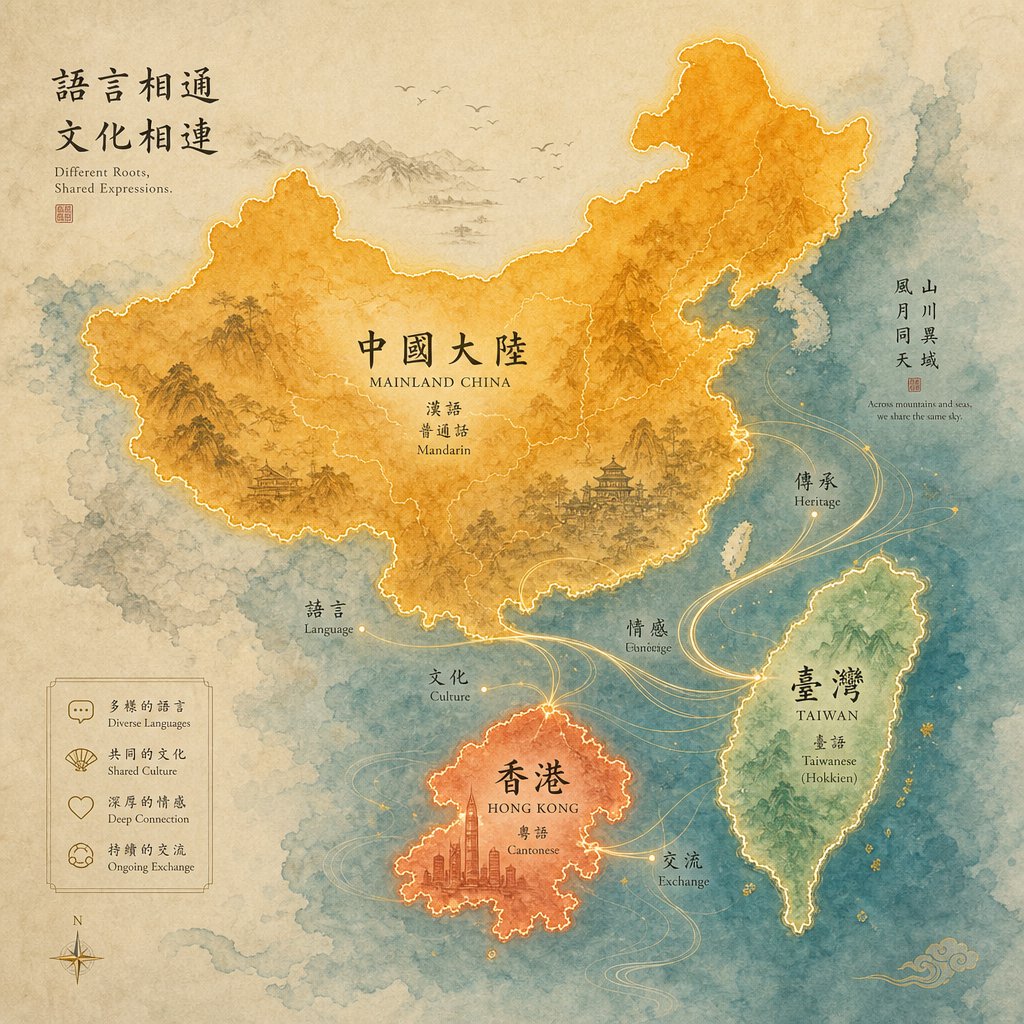
Romanization Systems That Split One Name in Two
Imagine two siblings born in the same family, carrying the same ancestral character 何 on their household registration. One emigrates to Beijing and gets a passport. The other settles in Hong Kong. When they meet years later, their official documents show two different surnames: He and Ho. Neither made a mistake. The difference traces entirely to which romanization system converted their shared character into Latin letters.
Pinyin vs Wade-Giles and Cantonese Jyutping
Three major romanization systems have shaped how Chinese surnames appear in English, and each handles the character 何 differently.
Hanyu Pinyin became the official romanization standard for mainland China in 1958. It was designed by Chinese linguists to reflect Mandarin pronunciation as closely as possible using the Latin alphabet. Under Pinyin, 何 is written as "He" (pronounced closer to "huh" with a rising tone). This is the system used on all mainland Chinese passports, academic publications, and international communications from the People's Republic of China.
Wade-Giles, developed by British diplomats Thomas Wade and Herbert Giles in the late 19th century, was the dominant system for romanizing Mandarin before Pinyin took over. It renders 何 as "Ho." Taiwan continued using Wade-Giles for official documents well into the 2000s, and many Taiwanese passport holders still carry the ho last name spelling today. The Library of Congress Pinyin Conversion Project documents how Wade-Giles place names like "Ho-nan" map directly to Pinyin equivalents like "Henan," illustrating the systematic nature of these differences.
Cantonese Jyutping (and earlier informal Cantonese romanization) also produces "Ho" for 何. According to Wiktionary's entry for 何, the Cantonese pronunciation in Guangzhou and Hong Kong is "ho4" in Jyutping notation. Since Hong Kong's civil registration system was built on Cantonese pronunciation during British colonial rule, the ho surname origin in that region is phonetically Cantonese rather than a Wade-Giles artifact.
| Romanization System | Primary Region | Output for 何 | Era of Adoption |
|---|---|---|---|
| Hanyu Pinyin | Mainland China | He | 1958 (official standard) |
| Wade-Giles | Taiwan, older Western texts | Ho | 1892 (widely used until ~2000s) |
| Cantonese Jyutping | Hong Kong, Macau | Ho | 1993 (formalized), but Cantonese romanization predates it |
| Hokkien POJ | Southeast Asia, Fujian | Ho | Mid-1800s (missionary-developed) |
| Teochew Peng'im | Chaoshan region, Southeast Asia | Ho | 20th century |
How One Character Gets Two Spellings
The mechanics are straightforward once you see the pattern. Pinyin maps Mandarin sounds to letters using conventions that sometimes surprise English speakers. The Pinyin "He" does not rhyme with the English pronoun "he." It sounds more like "huh" with a rising second tone. Wade-Giles chose "Ho" to represent a very similar Mandarin sound, using a different phonetic logic. And Cantonese speakers genuinely pronounce 何 with a rounder vowel that English ears naturally hear as "ho."
So the ho last name and the He last name can be the exact same character, the exact same family, and the exact same ancestral lineage. The only variable is which government bureau or immigration office processed the paperwork, and which system they followed.
You'll notice this pattern repeats across many Chinese surnames. The Wikipedia article on Chinese surnames documents how 何 appears as "He" in Pinyin (mainland China), "Ho" in Wade-Giles (Taiwan), and "Ho" in Cantonese (Hong Kong, Macau, Singapore, Malaysia). The same table shows this is not unique to 何. The character 张 becomes Zhang in Pinyin but Chang in Wade-Giles. The character 许 becomes Xu in Pinyin but Hsu in Wade-Giles. The romanization system, not the family origin, determines the English spelling.
Practical Impact on Official Documents
Where this gets complicated is in real life. A person born in mainland China with the surname 何 will have "He" on their passport, their university transcripts, and their published research papers. If that same person had been born in Hong Kong, every official document would read "Ho" instead. Move to Taiwan before the recent shift toward Pinyin, and the passport would also say "Ho" but through Wade-Giles rather than Cantonese romanization.
Consider the case of the famous Hong Kong billionaire Stanley Ho (何鸿燊). His surname appears as "Ho" because his documents follow Cantonese romanization. Had he been born in Shanghai and obtained a mainland passport, he would be "He Hongsen" in official records. Same character, same meaning, entirely different English presentation.
This creates tangible headaches for families. Marriage certificates, property deeds, immigration applications, and genealogical records may show different spellings for people who share the same 何 ancestor. Banks and government agencies sometimes treat He and Ho as unrelated names, requiring legal documentation to prove they connect to the same lineage.
The ho surname origin question, then, often has a deceptively simple answer: it originates from the same place as He. The split is administrative, not ancestral. But romanization only explains part of the picture. The dialect a family speaks, and the region they call home, adds another layer to why certain communities overwhelmingly favor one spelling over the other.
Dialect and Regional Pronunciation Differences
Romanization systems do not operate in a vacuum. They encode actual spoken sounds, and those sounds vary dramatically depending on which Chinese dialect a family speaks. When you see the surname He in Chinese contexts, you are almost certainly looking at a Mandarin-based transcription. When you encounter Ho in Chinese diaspora communities, a southern dialect is usually behind it.
Mandarin vs Cantonese Pronunciation
Say the character 何 out loud in Mandarin, and it sounds roughly like "huh" with a rising tone. The vowel is short, open, and central. Pinyin captures this as "He" (specifically "He" with a second-tone accent mark: He). English speakers often mispronounce it to rhyme with "he" or "she," but the actual Mandarin sound sits closer to the "u" in "hut."
Switch to Cantonese, and the same character sounds distinctly like "hoh" with a falling tone. The vowel is rounder, longer, and sits further back in the mouth. English speakers hear it and naturally write "Ho." This is not a romanization quirk. It reflects a genuine phonological difference between the two dialect groups.
The pattern extends beyond Cantonese. Hokkien, Teochew, Hakka, and Hainanese speakers all pronounce 何 as "Ho" as well. Southern Chinese dialects share this rounder vowel quality for the character, which is why the surname He appears almost exclusively in Mandarin-speaking populations while Ho dominates everywhere else.
Regional Distribution Across Asia and the Diaspora
Where a family settled, and when they settled there, determines which spelling stuck. The Asia Media Centre notes that in territories with a sizeable Chinese diaspora, the way a family name is spelled acts as a signifier of the region a person's ancestors come from. The same logic applies to the surname He versus Ho.
| Region | Dominant Spelling | Dialect Basis | Notes |
|---|---|---|---|
| Mainland China | He | Mandarin | Pinyin standard on all official documents since 1958 |
| Hong Kong | Ho | Cantonese | Colonial-era Cantonese romanization remains standard |
| Macau | Ho | Cantonese | Portuguese-era records also used Cantonese pronunciation |
| Taiwan | Ho (shifting to He) | Mandarin via Wade-Giles | Older passports use Ho; newer ones may use He |
| Singapore | Ho or Hoe | Hokkien / Cantonese | Dialect group of ancestors determines spelling |
| Malaysia | Ho or Hoe | Hokkien / Cantonese / Hakka | Similar to Singapore; varies by state and community |
| Indonesia | Ho | Hokkien / Teochew | Some families adopted Indonesian-style spellings |
| Western diaspora (post-2000) | He | Mandarin | Recent mainland emigrants carry Pinyin passports |
| Western diaspora (pre-1980) | Ho | Cantonese / Hokkien | Earlier waves came predominantly from southern China |
You'll notice a clear generational divide. Older Chinese communities in San Francisco, Vancouver, Sydney, and London overwhelmingly carry the Ho spelling because their ancestors emigrated from Cantonese and Hokkien-speaking regions during the 19th and early 20th centuries. Newer arrivals from Beijing, Shanghai, or other Mandarin-speaking cities carry He. Both groups may trace their lineage to the same 何 character, yet their surnames look unrelated on paper.
This regional dimension also explains why the surname He is relatively rare in Southeast Asian Chinese communities. Mandarin was not the dominant language of early Chinese migration to that part of the world. Fujian and Guangdong provinces supplied the vast majority of emigrants, and those communities spoke Hokkien, Teochew, Cantonese, or Hakka. All four dialects produce Ho for 何, which is why Ho in Chinese diaspora communities across Southeast Asia vastly outnumbers He.
The character behind the name has not changed. What changed is the mouth that pronounced it and the hand that wrote it down. And those mouths belonged to specific communities rooted in specific places, which brings up a deeper historical question: how did colonial governance and national policy lock these dialect-based spellings into permanent official records?
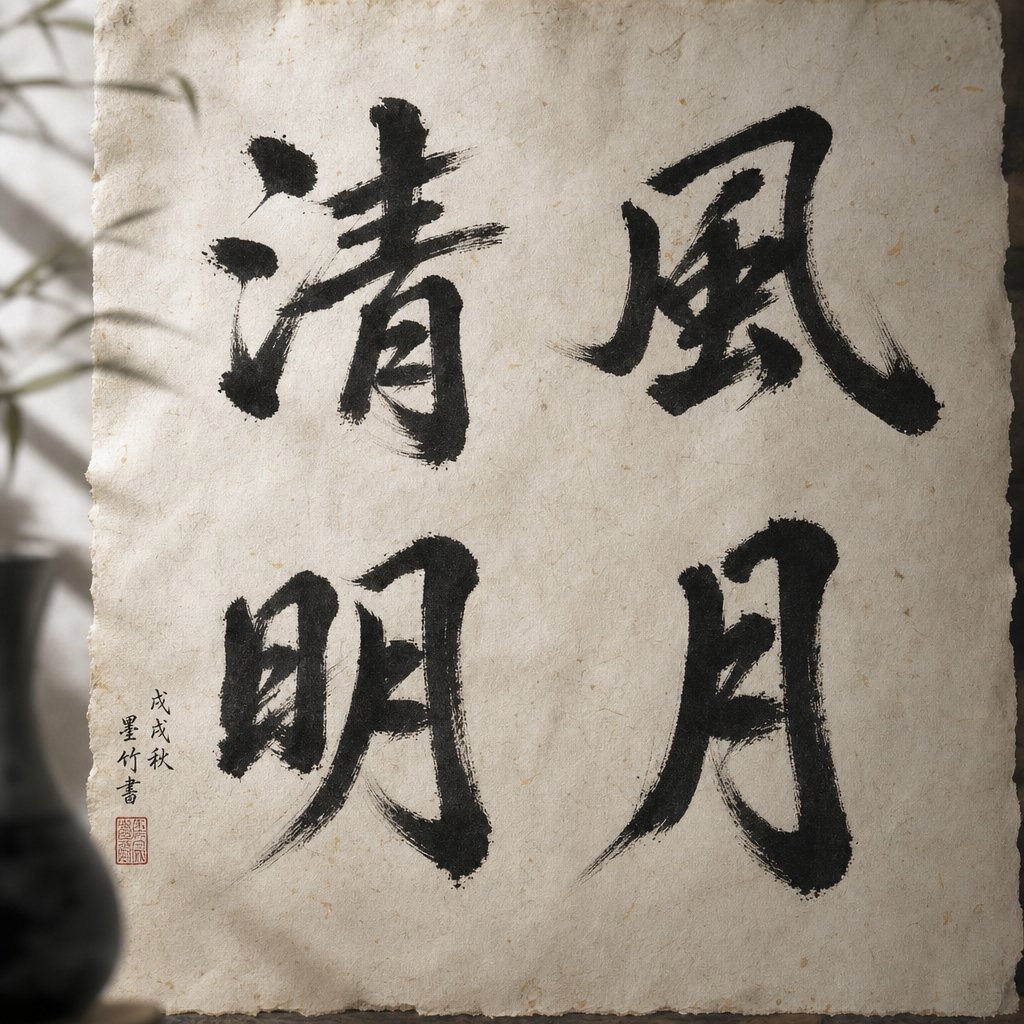
Every Chinese Character Behind He and Ho
Dialects and regions explain why the same character gets different spellings. But what if the character itself is different? This is the part that trips up most people researching the name He or the surname Ho. Multiple distinct Chinese characters, each with its own meaning, history, and ancestral lineage, can produce the exact same English spelling. Two families both named "Ho" in English might share zero genealogical connection because their surnames trace to entirely different written characters.
Here is a complete breakdown of every major character that romanizes as He or Ho, along with the structural details that help you tell them apart.
| Character | Pinyin | Cantonese (Jyutping) | Meaning | Radical | Stroke Count | Approximate Bearers |
|---|---|---|---|---|---|---|
| 何 | He (second tone) | Ho4 | What, which, how | 亻 (person) | 7 | ~14 million (mainland China) |
| 贺 / 賀 | He (fourth tone) | Ho6 | Congratulate, celebrate | 贝 / 貝 (shell/treasure) | 9 (simplified) / 12 (traditional) | ~2.74 million |
| 和 | He (second tone) | Wo4 | Harmony, peace | 口 (mouth) | 8 | Rare as surname |
| 河 | He (second tone) | Ho4 | River | 氵 (water) | 8 | Very rare as surname |
| 赫 | He (fourth tone) | Haak1 / Hak1 | Bright, grand, awe-inspiring | 赤 (red) | 14 | Rare as surname |
何 He — The Most Common Character
When someone says their last name is He or Ho in a Chinese context, the odds overwhelmingly favor this character. A 2012 survey found roughly 14 million people in mainland China alone carrying 何 as their surname, making it the 17th most common family name in the country. It held that same ranking in 2019.
The character 何 belongs to the person radical (亻) and carries seven strokes. Its literal meaning translates to "what," "which," or "how," functioning as an interrogative word in classical Chinese. As a surname, though, it has nothing to do with asking questions. The name He traces its origin to the ancient state of Han during the Warring States period and connects to the Jiang clan of the legendary Yan Emperor. Later, after the Xianbei people assimilated into Han Chinese culture, a group originally surnamed Heba adopted 何 as their family name.
In Cantonese, Hokkien, Teochew, and Hakka, this character consistently produces "Ho." In Mandarin Pinyin, it produces "He." This single character is responsible for the vast majority of cases where the name He and the surname Ho refer to the same family.
贺 He — The Congratulatory Surname
Here is where confusion deepens. The character 贺 (traditional: 賀) is a completely different surname from 何, yet it also romanizes as "He" in Pinyin and "Ho" in Cantonese. The only phonetic difference in Mandarin is the tone: 何 carries a second (rising) tone while 贺 carries a fourth (falling) tone. In English transliteration, that tonal distinction vanishes entirely.
The he chinese character 贺 means "congratulate" or "celebrate." It ranks as the 86th most common surname in mainland China, shared by approximately 2,740,000 people according to a 2013 study. The province with the highest concentration is Hunan.
Its origin story is distinct from 何. The surname 贺 began as a semantic variant of Qing (庆), traceable to Qing Feng, the great-grandson of Duke Huan of Qi. During the Eastern Han dynasty, a descendant named Qing Chun changed his surname to 贺 because "Qing" happened to be the given name of the emperor's father, triggering a naming taboo. Since 贺 and 庆 share the meaning of "celebration," the swap preserved the family's semantic identity while avoiding political trouble.
Another branch of the 贺 surname originated from Xianbei ethnic groups who shortened disyllabic surnames like He Lan (贺兰), He Lai (贺赖), and He Dun (贺敦) during cultural fusion with Han Chinese in the Northern and Southern dynasties.
The practical problem? In Cantonese romanization, 贺 becomes "Ho" (Jyutping: Ho6), identical to how 何 appears (Jyutping: Ho4). Two people both surnamed "Ho" in Hong Kong could descend from entirely unrelated lineages, one tracing to 何 and the other to 贺. Only the original Chinese character reveals the difference.
和 and 河 — Less Common Variants
Beyond the two major characters, several rarer surnames also produce He or Ho in English.
The character 和 (He, second tone) means "harmony" or "peace." You encounter it constantly in Chinese vocabulary: 和平 (peace), 和谐 (harmony), 温和 (gentle). As a surname, it is uncommon but documented. Its radical is 口 (mouth), and it carries eight strokes. In Cantonese, 和 typically romanizes as "Wo" rather than "Ho," which means it is less likely to cause confusion with the Ho surname in southern Chinese communities. However, in Mandarin Pinyin, it produces the same "He" spelling as 何, making it indistinguishable in mainland Chinese contexts without seeing the character.
The character 河 (He, second tone) means "river" and appears in words like 河流 (river) and 黄河 (Yellow River). Its radical is 氵 (water), and it carries eight strokes. As a surname, 河 is very rare. In Cantonese, it romanizes as "Ho" (Jyutping: Ho4), identical to 何. Someone researching a Ho ancestor would need to check original documents to rule out this uncommon variant.
Finally, 赫 (He, fourth tone) means "bright," "grand," or "awe-inspiring." It carries the red radical (赤) and has 14 strokes. In Cantonese, it romanizes as "Hak" rather than "Ho," so it rarely causes confusion in southern Chinese communities. But in Pinyin, it shares the "He" spelling with 何, 和, and 河.
The MyChinaroots database also lists 胡 (Hu in Pinyin) as a character that can produce the "Ho" spelling in certain dialect romanizations, particularly in Korean contexts. And 夏 (Xia in Pinyin) occasionally appears as "Ho" in specific Hokkien sub-dialects. These edge cases reinforce a critical point: the English spelling alone tells you almost nothing about which character, which meaning, or which ancestral line sits behind the name.
Identifying your specific character is the essential first step in any genealogical search. And for many diaspora families, that identification depends heavily on understanding when and where their ancestors left China, because colonial-era naming conventions and migration waves permanently stamped certain spellings onto official records.
Migration Patterns and Colonial Naming Conventions
British administrators in 19th-century Hong Kong did not ask residents which romanization system they preferred. They listened to Cantonese pronunciation and wrote what they heard. That administrative decision, repeated across birth registries, land deeds, and identity cards for over 150 years, permanently locked the Ho spelling into millions of official records. The same logic applies to other surnames: 许 became Hsu under colonial-era conventions rather than the Pinyin "Xu," which is why the hsu last name remains common among Taiwanese and older diaspora families today. Understanding the hsu name origin helps illustrate how a single bureaucratic choice echoes across generations.
Colonial Hong Kong and the Cantonese Standard
When Britain took control of Hong Kong after the First Opium War in 1842, the territory's population spoke Cantonese almost exclusively. Colonial record-keepers transcribed surnames based on local pronunciation, and for 何, that meant "Ho." No formal system governed these transcriptions at first. As one scholar at the University of Toronto documented in research on colonial naming practices, a century-plus of education and government systems designed by Anglo-speaking colonial powers shaped norms around name use and official identity in Hong Kong. The Cantonese pronunciation of surnames became the only recognized English form on identity cards, passports, and civil records. By the time Hong Kong developed its own standardized romanization conventions, "Ho" for 何 was already embedded in every institutional layer of the territory.
This was not unique to the Ho surname. Every Cantonese-speaking family had their name fixed in English based on how colonial clerks heard it. The hou last name, for instance, represents 侯 in Cantonese romanization, a completely different character from 何 but one that also got permanently stamped into Hong Kong records through the same colonial process.
Mainland China's Pinyin Standardization
Mainland China took the opposite approach. Rather than letting foreign administrators decide how Chinese names should look in English, the People's Republic developed its own system from scratch. Hanyu Pinyin was approved in 1958 and designed by Chinese linguists to represent Mandarin pronunciation systematically. Under Pinyin, 何 became "He," and that spelling appeared on every passport, academic transcript, and international document issued by the mainland government.
The shift was absolute within China's borders but had no retroactive effect on diaspora communities. Families who had already emigrated kept whatever spelling their destination country had recorded. Beginning with the normalization of Sino-American diplomatic relations in 1979, Pinyin gained popularity in the United States and gradually became the dominant system in mass media and scholarship. But older records, library catalogs, and family documents still carried Wade-Giles or dialect-based spellings.
How Migration Era Determines Your Spelling
Picture two families sitting in the same American city, both descended from 何 ancestors. One family arrived in San Francisco in the 1880s from Guangdong province. The NJ State Library's research on 19th-century Chinese immigrants notes that despite Wade-Giles being in use by 1859, many record takers simply wrote names phonetically as they heard them. For Cantonese speakers, that meant "Ho." Dialects further affected these spellings, and at least some immigration officials created different name spellings for a single individual among contemporary records.
The other family arrived from Beijing in 2005 carrying a Pinyin passport that reads "He." Same character, same ancestral village if you trace back far enough, but entirely different English surnames on their documents. The era of migration functioned as a sorting mechanism, channeling earlier southern Chinese emigrants into the Ho column and later Mandarin-speaking arrivals into the He column.
This pattern repeats across every major destination country. In Australia, Canada, the United Kingdom, and the United States, older Chinatown communities overwhelmingly carry Ho, Hoe, or other southern dialect spellings. Post-1980 arrivals from mainland China carry He. The same split affects dozens of other surnames: families with the hsu last name arrived during the Wade-Giles era, while their relatives who emigrated later carry "Xu" on newer documents.
The result is a diaspora where spelling functions as a timestamp. Tell someone your surname is Ho, and they can reasonably guess your family left southern China before Pinyin became the global standard. Say your name is He, and the assumption shifts toward a mainland origin or a more recent migration. Neither assumption is guaranteed, but the correlation holds strongly enough to serve as a starting point for genealogical research.
What complicates matters further is that not every "Ho" in the diaspora traces to Chinese origins at all. Vietnamese and Korean communities also carry the surname Ho, but their characters, histories, and ancestral lines have nothing in common with 何.
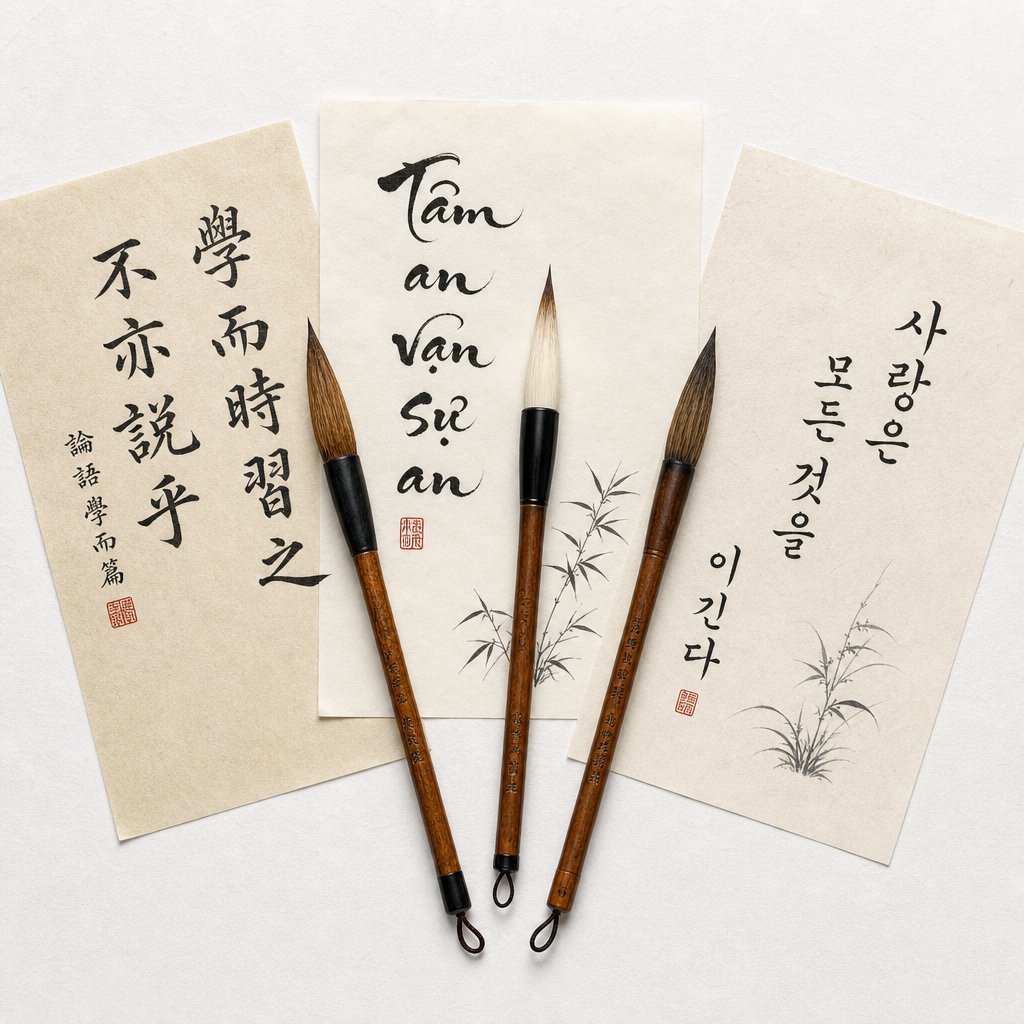
Vietnamese and Korean Ho Are Not the Same
A person named Ho in Houston might be Chinese, Vietnamese, or Korean. All three ethnic groups carry this surname in English, yet the characters behind them share no genealogical connection whatsoever. This is the cross-ethnic layer that catches many researchers off guard: identical English spelling, completely different ancestral roots.
Vietnamese Ho — A Completely Different Origin
The Vietnamese surname Ho (written with the diacritical mark as Ho) derives from the Chinese character 胡, not 何. In Mandarin Pinyin, 胡 romanizes as "Hu" — the hu last name you see on mainland Chinese passports. But in Vietnamese, the same character became Ho, creating a direct collision with the Chinese surname 何 once both are anglicized.
The character 胡 originally meant "barbarian" or "foreign" in classical Chinese, referring to non-Han peoples from the northern steppes. As a surname, it has its own deep lineage entirely separate from 何. The Ho 胡 clan that founded Vietnam's Ho dynasty (1400-1406) traced its origins to Zhejiang province in China, but the family had been established in Vietnam for generations by that point. Notable bearers include Ho Quy Ly, who seized the Vietnamese throne, and in modern times, the name is most famously associated with Ho Chi Minh (born Nguyen Sinh Cung, who adopted the name Ho later in life).
The hom surname origin question sometimes arises in Vietnamese diaspora communities as well, where "Hom" can be an alternate transcription or a distinct family name depending on regional dialect. But the core Vietnamese Ho surname consistently maps to 胡, never to 何.
Korean Ho and Its Hanja Roots
The ho korean last name adds yet another layer. In Korean, the surname romanized as Ho (or more precisely Ho) is written 허 in hangul and corresponds to the hanja character 許, which means "to permit" or "to allow." This is completely unrelated to both the Chinese 何 and the Vietnamese 胡.
The Dictionary of American Family Names records a fascinating origin legend: in AD 48, a sixteen-year-old Indian princess reportedly arrived by boat on the shores of Changwon county in Kyongsang South province. The Karak kingdom's King Suro married her and, out of respect for her origins, allowed the second of their ten sons to take his mother's surname Ho (許). All bearers of this surname in Korea are traditionally considered descendants of this single ancestor, with four clan seats associated with the name.
You will also encounter variant romanizations of the same Korean surname: Heo, Her, Huh, and Hur all represent 허/許 depending on which romanization convention was used. The McCune-Reischauer system produces "Ho," while Revised Romanization produces "Heo." This means a Korean person surnamed "Ho" in older documents might appear as "Heo" in newer ones, paralleling the He/Ho split in Chinese contexts but involving an entirely different character and culture.
How to Tell Them Apart
When you encounter someone with the surname Ho and need to determine its ethnic and character origin, these markers help narrow it down:
- Given name structure: Vietnamese names typically have three syllables (Ho Ngoc Ha, Ho Tan Quyen), Chinese names usually have two or three (Ho Wing-keung, Ho Iat-seng), and Korean names follow a two-syllable given name pattern (Ho Jun, Ho Yeon).
- Diacritical marks: Vietnamese Ho carries a dot-below and hook-above diacritic (Ho) in proper Vietnamese script. If original documents show these marks, the surname is Vietnamese and maps to 胡.
- Accompanying characters: If you can access any document showing the original script, 何 (seven strokes, person radical) is Chinese, 胡 (nine strokes, moon/flesh radical) is Vietnamese or the Chinese surname Hu, and 許 (eleven strokes, speech radical) is Korean.
- Country of origin: A Ho family from Vietnam almost certainly carries 胡. A Ho family from Korea carries 許. A Ho family from Hong Kong, Macau, Singapore, or Malaysia most likely carries 何 or possibly 贺.
- Clan associations: Vietnamese Ho families may belong to Ho clan associations that reference the Ho dynasty or Zhejiang origins. Korean Ho families reference the Gimhae or Yangcheon clan seats. Chinese Ho families connect to 何 clan halls tracing back to the ancient state of Han.
The takeaway is blunt: the English spelling "Ho" is shared by at least three completely unrelated surname systems across three different cultures. Without knowing the underlying character, you cannot determine whether two people named Ho share any ancestral connection at all. A Vietnamese Ho and a Chinese Ho are no more related than an English Smith and a German Schmidt happen to be — similar sounds, independent origins.
This cross-ethnic overlap makes genealogical research both more challenging and more rewarding. Tracing your specific lineage requires moving past the English spelling entirely and identifying the original character, the ancestral dialect, and the migration path your family followed.

Steps to Trace Whether Your He or Ho Share a Lineage
Knowing that He and Ho can represent the same character, different characters, or entirely different ethnic origins is useful background. But if you are actively trying to connect your family's spelling to a specific clan or ancestor, you need a concrete research plan. The English spelling on your driver's license will not get you far. What matters is recovering the original Chinese character and tracing it back to a specific place and lineage.
Here is a step-by-step process that moves from the most accessible evidence to deeper archival research.
Check Original Documents for Chinese Characters
Your first and most reliable move is finding any document that shows the actual Chinese character behind your family's surname. Immigration papers, old passports, birth certificates from the home country, or even a gravestone inscription can reveal whether your family carries 何, 贺, 胡, or something else entirely.
- Search immigration case files. If your ancestors entered the United States between 1882 and 1943, Chinese exclusion case files likely exist for them. These files often contain the person's name in Chinese characters alongside physical descriptions, village of origin, and even family member lists. Over 200,000 individual case files are held at regional branches of the National Archives and Records Administration, organized by port of entry. The National Archives at San Bruno, California holds an index for San Francisco arrivals, while Seattle files are gradually being digitized.
- Check Canadian head tax records. Chinese immigrants arriving in Canada between 1885 and 1949 were registered in certificates that include information such as age, place of birth, occupation, and date of arrival. These records are searchable in the free Immigrants from China, 1885-1949 database at Library and Archives Canada.
- Look at family gravestones and ancestral tablets. Older Chinese cemeteries often include the deceased's surname in Chinese characters carved into the headstone. Ancestral tablets kept in family homes or clan halls also preserve the original character.
- Examine old correspondence or business records. Letters sent between family members, shop signage, or business partnership documents from earlier generations may include Chinese characters that confirm which surname your family actually carries.
Even a single document showing the character settles the question immediately. If you see 何, you know your Ho or He connects to the most common lineage. If you see 贺, you are dealing with the congratulatory surname. If you see 胡, your family's origin story is different from what you might have assumed.
Identify Your Ancestral Dialect Region
When no original-character document survives, your next best clue is figuring out where your emigrating ancestor came from and what dialect they spoke. The dialect determines the romanization, and the region narrows down which character is most likely.
- Ask living relatives about the ancestral village. Older family members may remember the name of the village, county, or province. Even partial information like "somewhere near Guangzhou" or "a village in Fujian" helps enormously. A Guangdong origin strongly suggests Cantonese pronunciation and the Ho spelling for 何. A Hunan origin might point toward 贺 instead.
- Identify the dialect your grandparents spoke. Did they speak Cantonese, Hokkien, Teochew, Hakka, or Mandarin at home? If the family language was Cantonese and the surname is Ho, the character is almost certainly 何. If they spoke Mandarin and the surname is He, same conclusion. But if they spoke Hokkien and the surname is Ho, you are still likely looking at 何 since Hokkien also produces "Ho" for that character.
- Cross-reference with immigration records for village names. Chinese exclusion files in the United States frequently included the name of the village and province where the person was born. According to genealogist Patricia Hackett Nicola, these files sometimes contain lists of family members with cross-references to their own files, return-certificate applications, and even drawings or descriptions of a home or village in China.
Once you have a village name, you can map it to a specific dialect region and confirm which character your family most likely carried. Village names have changed over the past century, so you may need to consult local Chinese government offices or historical gazetteers to match an old name to its current equivalent.
Connect With Clan Associations
Chinese clan associations, sometimes called tong or huiguan, have operated in diaspora communities for over a century. They organize around shared surnames and ancestral origins, and many maintain genealogical records that can bridge the gap between your English spelling and your Chinese character.
- Search for your family's jiapu (genealogy book). A jiapu or zupu is the ultimate prize in Chinese genealogy research. These clan-compiled books can contain detailed lineage going back several hundred to several thousand years, prominent ancestors' biographies, clan histories tracing migration patterns, and generation poems that guided naming conventions. If your family's jiapu survives, it will definitively show which character your surname uses and where your branch fits in the larger clan tree.
- Check FamilySearch's Chinese genealogy database. FamilySearch maintains a searchable collection of Chinese genealogy images that can be browsed by surname (in Pinyin), province, and county. Sign in, navigate to the Records section, search by place for China, and look under the Collection of Chinese Genealogy Images. You can type your surname in the Surname field and filter by province and county to find relevant jiapu records.
- Contact clan associations in Southeast Asia. In Malaysia, Singapore, and other countries with established Chinese communities, local clan associations sometimes collect and preserve family zupus for their members. A Ho clan association in Penang or Singapore may hold records connecting your family to a specific village and character.
- Reach out to the ancestral village directly. If you know the village name, contacting village leadership with photographs and information about your ancestor — their Chinese name, when they left, who they were related to — can yield results. Village leaders can advise whether your zupu still exists locally and verify that your ancestor's name appears inside.
Keep in mind that jiapu were compiled by clans to glorify their ancestors, so contents should be treated as compiled family history sources rather than primary records. Compilers were sometimes selective about who they included, and the heavily patrilineal tradition means wives, sisters, and daughters often received only scant mention.
Two people named He and Ho respectively can share the same 何 ancestor if their families emigrated from different dialect regions at different times. The spelling difference is administrative, not genealogical.
The genealogical process ultimately circles back to one goal: identifying the Chinese character. Once you have it, the He versus Ho question resolves itself. You will know whether your family's spelling reflects a Mandarin transcription, a Cantonese one, or an entirely different surname altogether. And with that character in hand, you can place your branch on the larger family tree with confidence rather than guesswork.
Side-by-Side Comparison of He and Ho Surnames
Every difference explored so far — romanization mechanics, dialect pronunciation, character variants, colonial history, ethnic overlap — can feel scattered when you are trying to answer one practical question: does my spelling connect me to the same family as someone using the other spelling? This section pulls everything into a single reference you can scan in under a minute.
Complete He vs Ho Comparison at a Glance
The table below covers every major dimension of the he vs ho surname difference. Each row represents a category of distinction, and the columns show how He and Ho behave within that category.
| Category | He | Ho |
|---|---|---|
| Primary romanization system | Hanyu Pinyin (mainland China standard since 1958) | Wade-Giles (Taiwan, pre-2000s), Cantonese romanization (Hong Kong, Macau), Hokkien POJ (Southeast Asia) |
| Dialect basis | Mandarin pronunciation (vowel sounds like "uh" in "hut") | Cantonese, Hokkien, Teochew, Hakka pronunciation (vowel sounds like "oh") |
| Most common character | 何 (He, second tone) — 14 million bearers in mainland China | 何 (Ho4 in Jyutping) — same character, same lineage |
| Other possible characters | 贺/賀 (congratulate), 和 (harmony), 河 (river), 赫 (bright) | 贺/賀 (Ho6 in Cantonese), 胡 (Vietnamese Ho, meaning "foreign"), 許 (Korean Ho, meaning "permit") |
| Geographic strongholds | Mainland China, post-2000 Western diaspora | Hong Kong, Macau, Taiwan (older documents), Singapore, Malaysia, Indonesia, pre-1980 Western diaspora |
| Ethnic origins | Chinese (Han) | Chinese (Han), Vietnamese (胡), Korean (許) |
| Historical period of dominance | Post-1958 (Pinyin era); dominant in international contexts after 1979 | Pre-1958 for Wade-Giles; continuous for Cantonese communities regardless of era |
| Passport appearance | All mainland Chinese passports issued after Pinyin adoption | Hong Kong, Macau, older Taiwanese passports, Southeast Asian identity documents |
| Genealogical implication | Likely traces to Mandarin-speaking ancestor or recent mainland emigrant | Likely traces to Cantonese/Hokkien-speaking ancestor, earlier migration wave, or non-Chinese ethnic origin |
| Can they be the same family? | Yes — if both trace to 何, they share the same ancestral lineage regardless of spelling | |
| Can they be unrelated? | Yes — if one traces to 何 and the other to 贺, 胡, or 許, they have no genealogical connection | |
Is Ho a Chinese last name? Absolutely — in most cases it represents the character 何, one of the oldest and most widespread Chinese surnames. The MyChinaroots database confirms that Ho is a transliteration of several different Chinese surnames found among overseas Chinese communities worldwide, with 何 being the most common among Hakka and Cantonese speakers across the United States, Singapore, Indonesia, Macau, Malaysia, Taiwan, and beyond. But Ho can also be Vietnamese or Korean in origin, which is why the character behind the spelling matters more than the spelling itself.
Which Spelling Applies to You
If you are trying to determine which column you fall into, three quick questions usually resolve it:
- What dialect did your oldest known ancestor speak? Mandarin points to He. Cantonese, Hokkien, Teochew, or Hakka points to Ho.
- When and where did your family emigrate? Pre-1980 departure from southern China almost always means Ho. Post-1980 departure from mainland China almost always means He.
- What is your ethnic background? Vietnamese ancestry means Ho likely maps to 胡. Korean ancestry means it likely maps to 許. Chinese ancestry means it most likely maps to 何 or possibly 贺.
The ho chinese surname meaning depends entirely on which character sits behind it. For 何, the literal meaning is "what" or "which." For 贺, it means "congratulate." For the Vietnamese 胡, it means "foreign" or "barbarian" in its original classical Chinese usage. These are not subtle differences — they represent entirely separate family histories stretching back thousands of years.
The spelling difference between He and Ho is primarily a product of romanization and dialect, not necessarily a different ancestral origin. Identify the Chinese character first, and the spelling question answers itself.
This comparison works as a diagnostic tool, but it cannot replace the deeper genealogical work of recovering your specific character and tracing your branch. What it can do is tell you whether the person across the table with a different spelling might actually be a distant relative — or whether you are looking at a completely separate surname that just happens to sound the same in English.
Final Verdict on Whether He and Ho Are the Same
So, are He and Ho the same surname? In the majority of cases, yes. Both spellings most commonly represent the character 何, the 17th most common surname in China with roughly 14 million bearers in mainland China alone. The he ho chinese name difference is administrative rather than ancestral — a product of Pinyin versus Cantonese or Wade-Giles romanization applied to the same written character, the same family history, and the same clan lineage.
But "most cases" is not "all cases." The ho surname meaning chinese can also point to 贺 (congratulate), while Vietnamese Ho traces to 胡 (a completely unrelated character meaning "foreign") and Korean Ho maps to 許 (meaning "permit"). Two people who both spell their name Ho might share a common ancestor in 何, or they might belong to entirely separate ethnic and genealogical traditions with zero overlap.
The Definitive Answer to He vs Ho
The English spelling tells you which romanization system or dialect shaped the paperwork. It does not tell you which character your family carries, which clan you belong to, or whether another person with the alternate spelling is a distant relative. Only the original Chinese character answers those questions definitively. Once you identify whether your family carries 何, 贺, 胡, or 許, the spelling debate becomes irrelevant.
He and ho same surname? For the vast majority of Chinese families bearing either spelling — yes, same character, same ancestors, same clan halls. The split happened at the immigration desk, not at the family altar.
What to Do Next
If you are still uncertain about your own family's connection, here are the action items that matter most:
- Recover the original character. Check immigration files, gravestones, old passports, or ancestral tablets for the Chinese character behind your English spelling.
- Identify your ancestral dialect and village. Ask older relatives what language was spoken at home and where the family originated. Dialect determines romanization.
- Search genealogical databases. Use FamilySearch's Chinese genealogy collection or MyChinaroots to find zupu records and clan association listings connected to your surname and region.
- Do not assume two Ho or two He families are related without confirming the character. Shared spelling across different ethnic origins means nothing genealogically.
- Do not assume two families — one He, one Ho — are unrelated. If both trace to 何, they may share a common ancestor separated only by dialect and migration timing.
The spelling on your documents is a historical artifact. The character behind it is your actual identity. Start there, and everything else falls into place.
Frequently Asked Questions About He vs Ho Surname
1. Is Ho a Chinese last name?
Yes, Ho is one of the most common Chinese surnames. It typically represents the character 何, which ranks as the 17th most common surname in mainland China with approximately 14 million bearers. The Ho spelling comes from Cantonese, Hokkien, Teochew, or Wade-Giles romanization of this character. However, Ho can also represent the character 贺 (meaning congratulate) in Cantonese contexts. In non-Chinese contexts, Ho may be Vietnamese (derived from 胡) or Korean (derived from 許), both of which are genealogically unrelated to the Chinese 何.
2. Why is the same Chinese surname spelled He and Ho?
The difference comes down to romanization systems and dialect pronunciation. Mainland China adopted Hanyu Pinyin in 1958, which renders 何 as He based on Mandarin pronunciation. Hong Kong, Macau, and Southeast Asian communities use Cantonese or Hokkien-based romanization, which produces Ho for the same character. Taiwan historically used Wade-Giles, which also outputs Ho. A person with a mainland Chinese passport will have He, while someone from Hong Kong with the identical ancestral character will have Ho on their documents.
3. How can I tell if my Ho surname is Chinese, Vietnamese, or Korean?
Look at three key markers. First, check the given name structure: Vietnamese names typically have three syllables, Chinese names have two or three, and Korean names follow a two-syllable given name pattern. Second, if original documents show Vietnamese diacritical marks (Hồ), the surname maps to the character 胡, not 何. Third, identify your ethnic background and country of origin. Vietnamese Ho traces to 胡 (meaning foreign), Korean Ho traces to 許 (meaning permit), and Chinese Ho most commonly traces to 何 (meaning what/which). These are entirely separate lineages with no genealogical connection.
4. Can two people named He and Ho be from the same family?
Absolutely. If both surnames trace back to the character 何, they share the same ancestral lineage regardless of the English spelling. This commonly happens when one branch of a family emigrated from Cantonese-speaking southern China (producing Ho) while another branch stayed in or emigrated from Mandarin-speaking regions (producing He). The split is purely administrative, created by different romanization systems applied at different immigration desks or passport offices. Confirming the connection requires identifying the original Chinese character through immigration documents, gravestones, or family genealogy books.
5. How do I find out which Chinese character my He or Ho surname represents?
Start by checking original documents that show Chinese characters, such as immigration case files, old passports, ancestral tablets, or gravestones. In the United States, over 200,000 Chinese exclusion case files at the National Archives often contain surnames in Chinese characters. If no documents survive, identify your ancestral dialect region by asking older relatives where the family originated and what language was spoken at home. You can also search FamilySearch's Chinese genealogy collection or contact clan associations in Southeast Asia that maintain zupu (family genealogy books) organized by surname and region.