Why Xu and Tsui Look Nothing Alike but Share the Same Origin
Imagine you are at a family reunion and your cousin's last name is Tsui, while yours is Xu. You grew up hearing the same stories about your grandfather's village, yet your passports tell two completely different stories. Are you even related? The short answer: yes, almost certainly. The longer answer involves dialect, geography, and over a century of competing spelling systems.
Why One Chinese Character Has So Many Spellings
The Chinese character 徐 is a single surname with deep historical roots. But Chinese is not one language spoken one way. Mandarin speakers in Beijing, Cantonese speakers in Hong Kong, and Hokkien speakers in Singapore all pronounce this same character differently. When governments and immigration offices needed to write those sounds in Latin letters, they each picked a different system. The result? One family name, scattered across a dozen spellings that look completely unrelated to each other on paper.
The tsui surname you see on a Hong Kong ID card and the Xu on a mainland Chinese passport both point back to the exact same character. The tsui pronunciation reflects Cantonese speech patterns, while Xu follows modern Mandarin Pinyin rules. Neither spelling is wrong. They simply capture different spoken realities of the same written word.
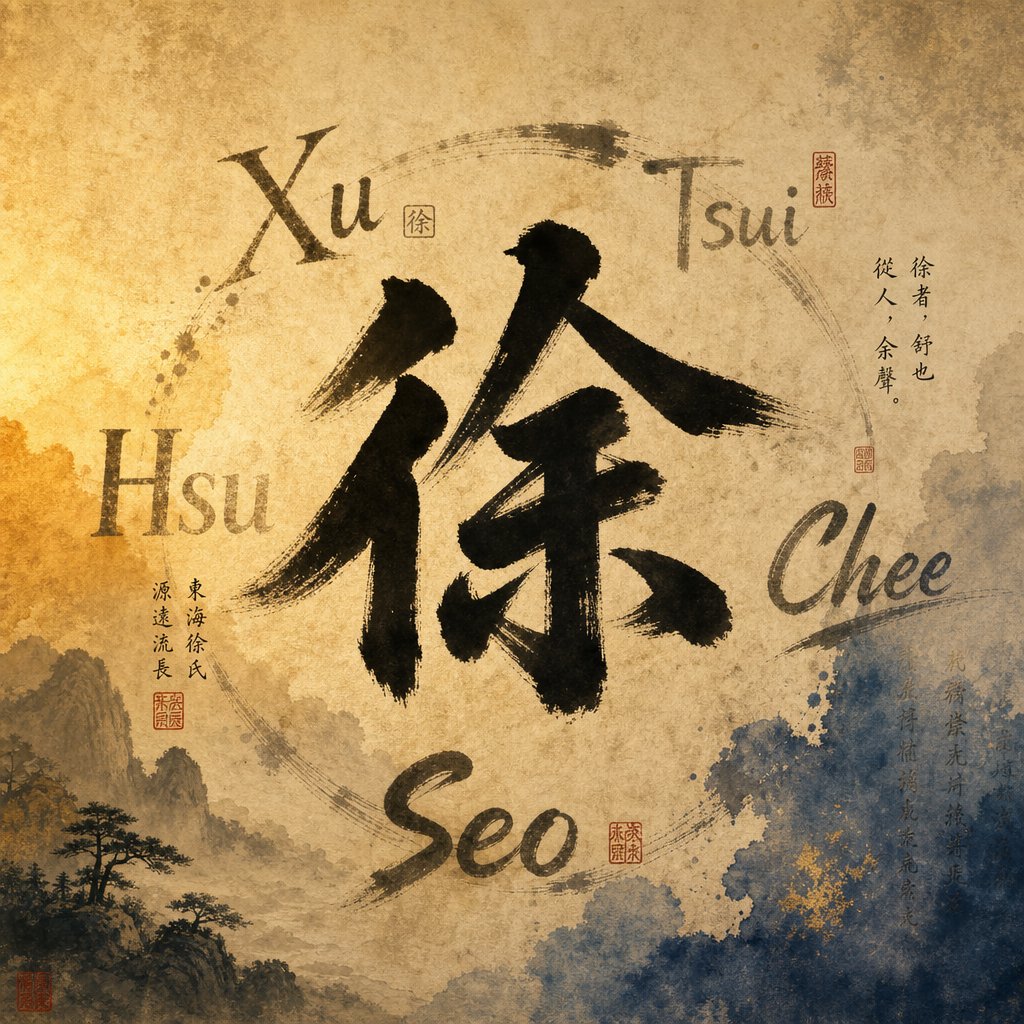
Xu and Tsui are romanizations of the same character 徐, produced by different dialect pronunciations and romanization systems.
What This Guide Covers
This guide walks through every major romanization variant of 徐, from the internationally standard Xu to the last name Tsui used in Cantonese communities, plus Hsu, Chee, Choo, See, and even Korean and Vietnamese equivalents. For each variant, you will find its dialect origin, the romanization system behind it, a clear pronunciation guide, and the regions where it appears most often. Whether you are researching genealogy, reconnecting with distant relatives, or simply curious about why your family spells it the way they do, the explanations ahead will make those differences finally make sense.
The key to understanding these spelling differences lies in the specific romanization system each family encountered when their name was first written in English. That system depended on when they emigrated, where they settled, and which dialect they spoke at home.
How Romanization Systems Create Different Surname Spellings
Every spelling variant of 徐 exists because a specific romanization system converted a specific dialect pronunciation into Latin letters. Sounds simple? In practice, at least five major systems have been used across different eras and regions, each applying its own rules. Knowing which system produced a spelling tells you where and when a family's name was first written in English.
Romanization Systems That Shape Chinese Surnames
Here are the major chinese surname romanization systems you will encounter when tracing the character 徐:
- Hanyu Pinyin - Adopted by the People's Republic of China in 1958 and now the international standard. It produces the spelling Xu for Mandarin speakers.
- Wade-Giles - The dominant system before Pinyin, still common in Taiwan and older academic texts. It produces Hsu for the same Mandarin pronunciation.
- Hong Kong Government Romanization - An informal system used on identity cards and passports in Hong Kong for decades. It produces Tsui from the Cantonese pronunciation.
- Jyutping - A modern standardized system for Cantonese that renders 徐 as Ceoi4, though it rarely appears on personal documents.
- Hokkien POJ (Pe̍h-ōe-jī) - A romanization system for Southern Min dialects, producing spellings like Chee or See depending on the sub-dialect.
Each system was designed for a different audience and a different spoken language. That is why xu vs tsui same name questions come up so often. The two spellings look nothing alike because they capture entirely different sounds from entirely different dialects, filtered through entirely different spelling rules.
Criteria for Evaluating Each Variant
In the sections ahead, each romanization variant is evaluated across four factors: the system that produced it, the dialect it represents, the geographic region where it appears most frequently, and how common it is in diaspora communities today. This framework helps you move from a spelling on a document to a specific place, time, and language.
One critical issue deserves attention upfront: disambiguation. The tsui last name does not always trace back to 徐. According to Wikipedia's entry on the Tsui surname, the spelling is an alternative transcription of two separate Chinese surnames: Cuī (崔), meaning "lofty," which originated from a fief in the state of Qi, and Xú (徐), which traces its tsui surname origin to the ancient state of Xu. In Cantonese, these two characters are nearly homophonous, differing only in tone. Similarly, Xu in Pinyin can represent either 徐 or 許 (a completely different surname pronounced Xǔ with a different tone).
This means spelling alone cannot confirm a shared lineage. You need to know the original Chinese character behind the romanization. As Legacy Tree Genealogists note, one surname can be romanized in completely different ways depending on dialect, and narrowing down the correct character is crucial for accurate genealogy research. The sections that follow break down each variant individually, starting with the most globally recognized spelling and working through regional alternatives.
Xu as the Mandarin Pinyin Standard for 徐
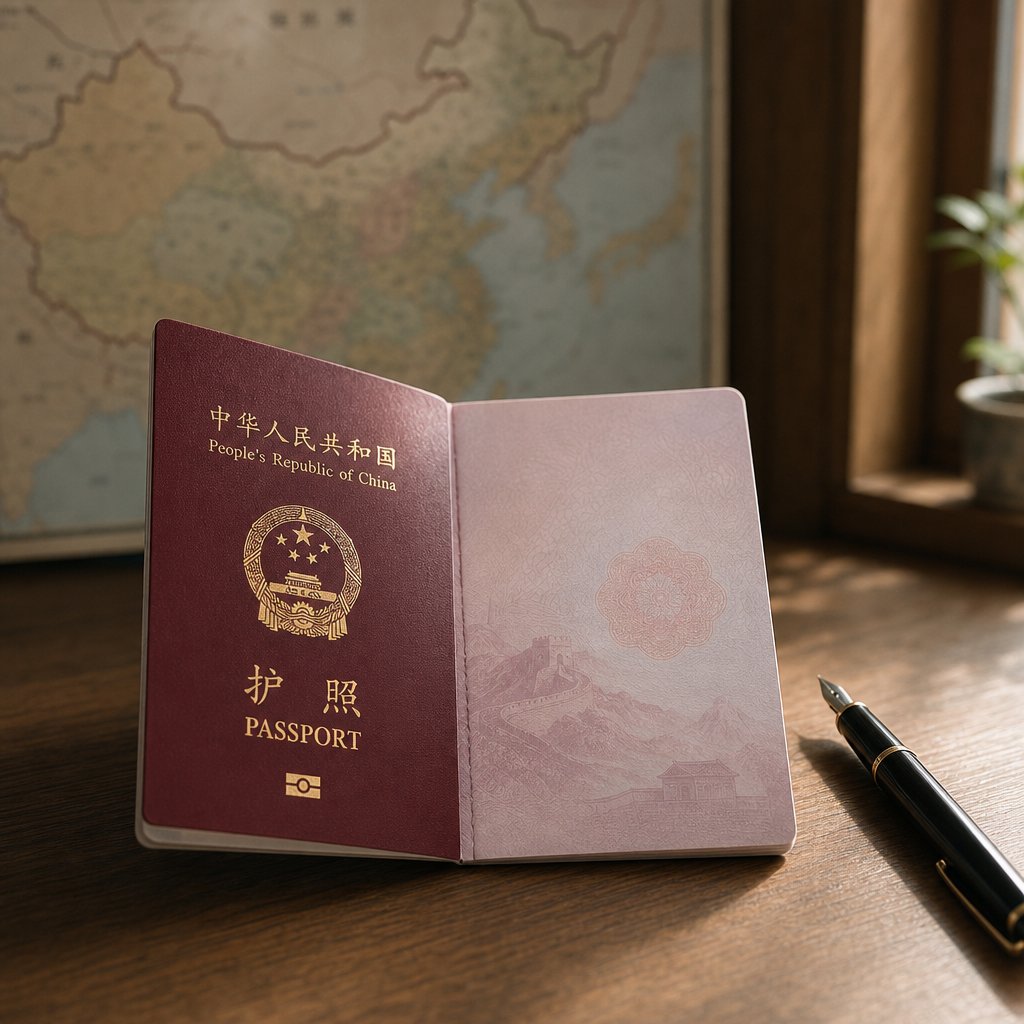
If you search for the xu chinese last name in any modern database, library catalog, or international news outlet, you will almost always find it spelled Xu. This two-letter combination is the official Hanyu Pinyin romanization of 徐, and it has become the default spelling across most of the world. But how did two letters that baffle English speakers become the global standard?
How Xu Became the International Standard
China's National People's Congress approved the Pinyin system on February 11, 1958, creating a unified method for spelling Mandarin sounds in Latin letters. By 1982, Pinyin had been adopted as the international standard under ISO 7098, which governs how Chinese is transcribed into Roman alphabets worldwide. This meant that every mainland Chinese passport, official document, and international publication issued after standardization uses Xu for the surname 徐.
The xu surname meaning traces back thousands of years. According to legend, Boyi's son Ruomu was appointed King of the land of Xu after Boyi helped Yu the Great resolve the Great Flood. The state of Xu endured for over a thousand years with 44 monarchs before being conquered by the state of Wu. Descendants then adopted their country's name as their surname, making 徐 one of China's oldest family names. Today it ranks as the 11th most common surname in mainland China, with the highest concentration in Jiangsu province.
Pronouncing Xu Correctly in Mandarin
So how to pronounce xu surname correctly? Forget everything the English spelling suggests. The Mandarin pronunciation of xú sounds approximately like "shoo" but with the tongue positioned further forward, just behind the teeth. Imagine saying "she" and "sue" at the same time, with a rising tone that lifts your pitch upward. The "x" in Pinyin represents a sound that does not exist in English, sitting somewhere between "sh" and "s." This is why English speakers who have never studied Mandarin often default to saying "ex-you," which is completely wrong.
Interestingly, if you already know how to pronounce tsui in Cantonese, you will notice the two sounds share almost nothing in common. The Mandarin and Cantonese pronunciations of 徐 are so different that without knowing the character, you would never guess they represent the same surname.
Where You Will Encounter the Xu Spelling
You will find Xu on mainland Chinese passports, in academic citations, on international news bylines, and across any context where Pinyin is the default system. Notable bearers include the painter Xu Beihong, filmmaker Xu Zheng, and geneticist Lap-Chee Tsui, who uses the Cantonese spelling despite sharing the same character.
Pros
- Internationally recognized as the standard romanization
- Consistent across all official mainland Chinese documents
- Easy to look up in databases and search engines
- Unambiguous within the Pinyin system when tone marks are included
Cons
- English speakers frequently mispronounce it as "ex-you" or "zoo"
- The spelling gives no intuitive pronunciation clue to non-Chinese speakers
- Without tone marks, it can be confused with 許 (Xǔ), a completely different surname
The clarity Pinyin brings to Mandarin speakers becomes opacity for everyone else. And for families who left China before 1958, or who spoke Cantonese rather than Mandarin, a different system captured their name entirely. Hong Kong families, in particular, ended up with a spelling that looks nothing like Xu but points to the same ancestral character.
Tsui as the Cantonese Romanization of 徐
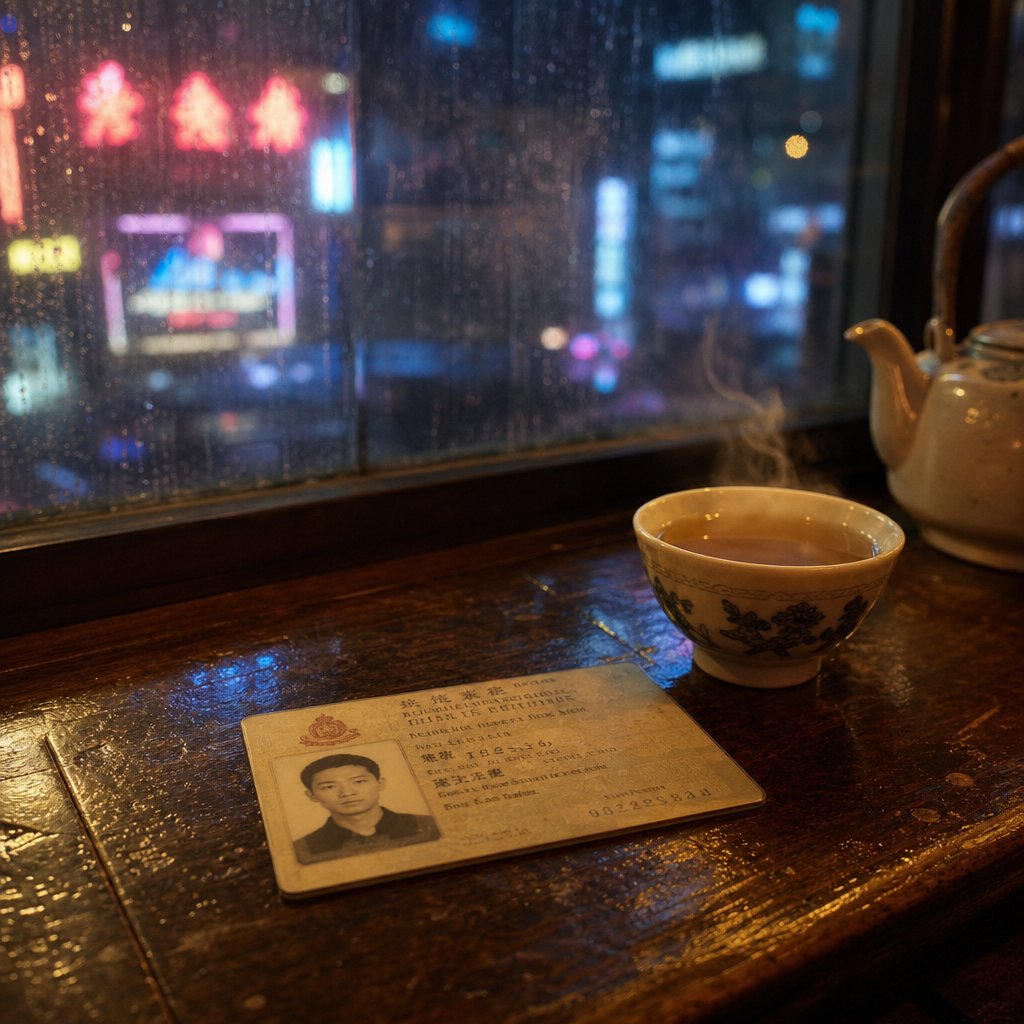
The tsui hong kong last name is everywhere in Cantonese-speaking communities. You will find it on Hong Kong identity cards, in film credits, on restaurant signs across Kowloon, and in phone directories throughout the diaspora. Yet if you only know the Mandarin spelling Xu, encountering Tsui for the first time feels like meeting a completely different surname. It is not. The gap between these two spellings is the gap between two spoken languages that share a single writing system.
Why Hong Kong Families Use Tsui
In Cantonese, the character 徐 is pronounced ceoi4 in Jyutping, the modern standardized romanization for Cantonese. But Jyutping was not developed until 1993. Long before that, Hong Kong's government had been assigning romanized spellings to streets, places, and personal names using its own informal system. The Hong Kong Government Cantonese Romanisation is an unpublished system based on an 1888 standard, and it has been broadly consistent in its approach for well over a century.
Under this system, the Cantonese sound ceoi4 maps to the spelling Tsui. The "ts" captures the initial consonant, while "ui" approximates the vowel and final glide. Tones are omitted entirely, which is standard practice for Hong Kong government romanization of personal names. When residents applied for identity cards or passports, the Registration of Persons Office assigned this spelling by default, though individuals could choose their own alternative.
The result? Generations of Hong Kong families had Tsui stamped on their official documents before anyone thought to question whether a different system might be clearer. Once a spelling appears on a birth certificate or passport, it tends to stick. Children inherit it, emigration paperwork locks it in, and the spelling becomes inseparable from the family's identity abroad. This is why the tsui cantonese surname meaning is so deeply tied to Hong Kong itself. It is not just a phonetic transcription. It is a marker of where and when a family's name was first written in English.
Famous bearers illustrate the point. Film director Tsui Hark (徐克), legendary singer Paula Tsui (徐小鳳), and actress Kate Tsui (徐子珊) all carry the same character 徐 rendered through Hong Kong's romanization conventions.
How to Pronounce Tsui Correctly
So how do you pronounce tsui? The English spelling is misleading if you try to read it phonetically. Forget the "ts" as you might say it in "cats." In Cantonese, the initial sound is closer to a soft "ch" blended with a "ts," produced with the tongue near the front of the mouth. The vowel portion sounds roughly like "oy" as in "boy," but rounder and slightly longer.
A practical English approximation: imagine saying "choy" (as in bok choy) with a gentle rising tone that lifts your pitch from low to mid. Some speakers describe it as closer to "tsoy" with a slightly rounded lip position. The rising tone is important in Cantonese because it distinguishes 徐 (ceoi4, rising tone) from 崔 (ceoi1, high level tone), though this tonal difference disappears completely in the written romanization.
If you have heard someone say the place name Tsim Sha Tsui, you already have a feel for how "ts" works in Cantonese romanization. The "ts" in Tsui uses the same initial consonant sound as the "ts" in that famous Kowloon district name. The vowel is different, but the mouth position for the opening consonant is identical.
For English speakers encountering this name for the first time, saying "CHOY" with a rising intonation will get you close enough to be understood. Saying "SOO-ee" or "TSOO-ee" (as many English speakers guess) will not.
The Disambiguation Challenge With Tsui
Here is where things get complicated. Not every person with the last name Tsui shares the character 徐. The surname 崔 (meaning "lofty" or "towering") is also romanized as Tsui in Cantonese. According to Wikipedia's entry on the Tsui surname, these two characters are nearly homophonous in Cantonese, differing only in tone: 徐 is ceoi4 (rising) while 崔 is ceoi1 (high level). Since Hong Kong government romanization omits tones entirely, both characters produce the identical spelling on paper.
This creates a real genealogical problem. When you meet someone named Tsui, you cannot know from the spelling alone whether their ancestral character is 徐 (descended from the state of Xu and the Boyi lineage) or 崔 (descended from a fief in the state of Qi, tracing back to Jiang Ziya's grandson). These are completely unrelated family lines with different origins, different ancestral homelands, and different clan histories. The only way to distinguish them is to ask about the Chinese character directly or to check family documents that include the character.
Nobel Prize-winning physicist Daniel C. Tsui, for example, carries the character 崔, not 徐. He shares a romanized spelling with director Tsui Hark but belongs to an entirely different surname lineage. Without seeing the Chinese character, you would never know.
Pros
- Reflects the actual Cantonese pronunciation of 徐 as spoken in Hong Kong
- Deeply tied to Hong Kong identity and community recognition
- Immediately signals Cantonese-speaking heritage to those familiar with the system
- Consistent with decades of Hong Kong government documentation
Cons
- Easily confused with 崔 (Tsui), a completely different surname with a different origin
- Unfamiliar to Mandarin speakers who would not recognize it as 徐
- No tone marking means the critical tonal distinction between 徐 and 崔 is invisible
- English speakers often mispronounce it as "SOO-ee" rather than the correct Cantonese sound
- Multiple valid romanization alternatives exist (Chui, Tsoi, Choi), creating further inconsistency even within Cantonese-speaking families
The ambiguity built into the Tsui spelling highlights a broader truth about Cantonese romanization: it was never designed as a rigorous linguistic system. It evolved organically through colonial-era bureaucracy, and its inconsistencies are now permanently embedded in millions of identity documents worldwide. For families who left Hong Kong before Pinyin became dominant, or who simply never had reason to switch, Tsui remains the spelling that connects them to home.
Taiwan-based families faced a parallel situation with a different system entirely. Their version of 徐 looks nothing like Tsui or Xu, yet it captures the exact same Mandarin pronunciation that Pinyin does, just with an extra letter that confuses everyone.
Hsu as the Wade-Giles and Taiwanese Variant of 徐
If Xu is the modern standard and Tsui is the Cantonese alternative, where does Hsu fit? This three-letter spelling represents the same Mandarin pronunciation as Xu, yet it predates Pinyin by nearly a century. For millions of Taiwanese families and older diaspora communities, Hsu is not an outdated relic. It is the spelling on their passport, their diploma, and their grandmother's immigration papers. Understanding the hsu taiwanese last name means understanding a romanization system that shaped how the Western world encountered Chinese for over a hundred years.
The Wade-Giles System and Taiwanese Identity
The wade giles chinese surname system traces back to 1892, when British diplomat Herbert Giles published a completed romanization framework building on earlier work by Thomas Wade. For decades, Wade-Giles was the dominant method for converting Mandarin sounds into Latin letters across the English-speaking world. Academic journals, library catalogs, diplomatic correspondence, and news reports all used it. Under this system, the Mandarin pronunciation of 徐 becomes Hsu (sometimes written Hsü with an umlaut in strict academic usage).
When the Republic of China government retreated to Taiwan in 1949, it brought Wade-Giles along as the de facto standard for romanizing personal names. According to Wikipedia's overview of romanization in Taiwan, most people in Taiwan romanize their names using a simplified version of Wade-Giles that drops diacritics, tone marks, and apostrophes. This was not a conscious personal choice for most families. Government offices used Wade-Giles reference materials when issuing documents, and the spelling assigned at birth simply stuck.
Taiwan's relationship with romanization has been complicated. The island officially adopted Hanyu Pinyin for signage and place names in 2009, but personal names remain a different matter. Taiwan's Ministry of Education guidelines state that while Hanyu Pinyin is the officially adopted system, "the choice of the concerned party shall override" standard principles when romanizing personal names. This means Taiwanese citizens can choose Hsu, Xu, or even an idiosyncratic spelling on their passport. In practice, many families keep Hsu because changing a surname spelling on official documents creates cascading complications with bank accounts, property records, and international identification.
Pronouncing Hsu and Its Regional Context
Here is the key fact about hsu surname pronunciation: it sounds exactly like Xu. Both spellings represent the same Mandarin sound, xú, which approximates "shoo" with the tongue positioned forward behind the teeth and a rising tone. The "H" in Hsu is completely silent. It exists only because Wade-Giles uses "hs" to represent the Mandarin "x" sound, distinguishing it from "s" (which maps to a different Chinese consonant). English speakers who have never seen this convention naturally try to pronounce the H, producing something like "h-sue" or "huh-sue." Both are wrong.
Think of it this way: hsu vs xu same name, same sound, different spelling system. If you can say one correctly, you can say the other. The only difference is which romanization convention captured the pronunciation. A person named Hsu and a person named Xu sitting in the same room would pronounce their surnames identically in Mandarin. The divergence is purely orthographic, a product of which government issued their documents and when.
This identical pronunciation is what separates the Hsu/Xu situation from the Xu/Tsui situation. Xu and Tsui sound completely different because they represent different dialects. Hsu and Xu sound the same because they represent the same dialect through different spelling rules. For genealogical purposes, this distinction matters: if your family uses Hsu and your cousin uses Xu, you almost certainly share the same character, the same dialect background, and the same ancestral line. The spelling difference is purely administrative.
Why Hsu Persists in Taiwan and Older Diaspora Communities
Beyond Taiwan's passport offices, Hsu appears frequently in older diaspora communities across North America, particularly among families who emigrated before Pinyin became the international standard in the 1980s. For these families, the spelling was locked in by the era of their arrival.
Consider the historical context. The Chinese Exclusion Act of 1882 banned Chinese laborers from legally entering the United States, prompting tens of thousands to use forged papers with assumed names. When the law was finally repealed in 1943 and immigration restrictions loosened further in 1965, Chinese families arriving from Taiwan brought names romanized in Wade-Giles because that was the system their government used. Immigration officials recorded whatever spelling appeared on the travel documents, and that spelling became permanent.
As NPR's Code Switch reported, many Chinese-American descendants are still uncovering the true histories behind their family names. Some families carried "paper son" names that bore no relation to their actual surname. Others had their names transliterated by immigration clerks who used whatever romanization system was familiar to them at the time. For Taiwanese families arriving in the 1960s through 1980s, that system was almost always Wade-Giles, which meant Hsu rather than Xu.
The result is a generational split visible in many Taiwanese-American families today. Grandparents and parents carry the Hsu spelling from their original immigration documents. Their children or grandchildren, educated in an era where Pinyin dominates, sometimes switch to Xu for simplicity. Others keep Hsu out of respect for family continuity or because the administrative burden of changing a legal name outweighs the convenience of a more recognizable spelling.
Pros
- Familiar in Taiwanese academic, diplomatic, and professional contexts
- Recognized by older diaspora communities and pre-Pinyin Western scholarship
- Carries historical weight and connection to family immigration stories
- Still valid on Taiwanese passports and official documents
Cons
- The silent H confuses English speakers who attempt to pronounce it phonetically
- Declining in global usage as Pinyin becomes universal
- Younger generations and international databases increasingly default to Xu
- Can be confused with other Wade-Giles surnames that begin with Hs-
The persistence of Hsu alongside Xu illustrates how romanization is never just a technical question. It carries identity, history, and belonging. For Taiwanese families, choosing to keep or change the spelling is a quiet negotiation between heritage and practicality that plays out every time they fill out a form. Meanwhile, families from Fujian and Guangdong who spoke neither Mandarin nor Cantonese at home ended up with spellings that look nothing like Xu, Tsui, or Hsu, because their dialects produced entirely different sounds from the same character.
Chee and Choo as Hokkien and Southeast Asian Variants
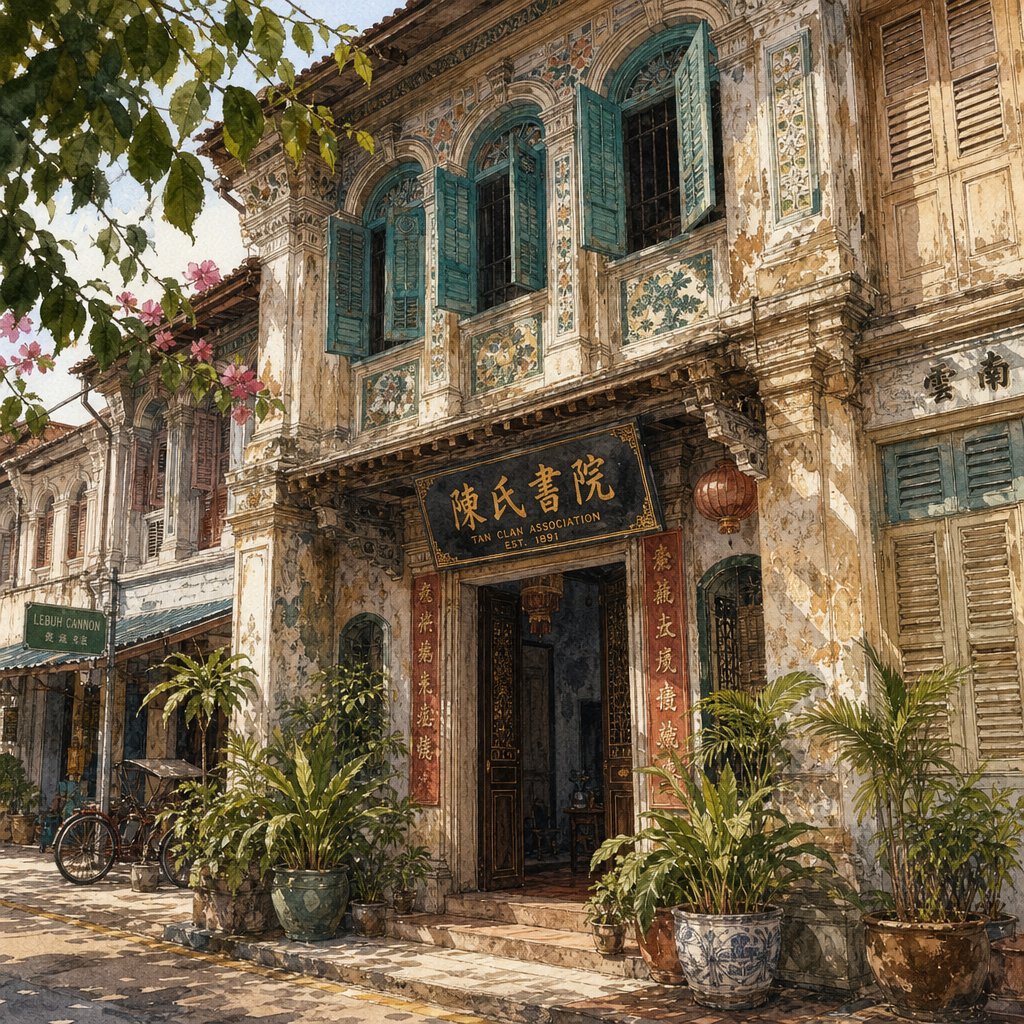
Xu, Tsui, Hsu. All three are recognizable to anyone who has spent time researching the character 徐. But what about Chee? Or See? Or Choo? These spellings look like they belong to entirely different surnames, yet they trace back to the same ancestral character. The explanation lies in Southeast Asia, where millions of Chinese diaspora families speak dialects that produce sounds nothing like Mandarin or Cantonese. If your family roots run through Singapore, Malaysia, Indonesia, or the Philippines, the chee chinese surname origin story is likely yours too.
Hokkien and Teochew Pronunciations of 徐
The majority of Chinese immigrants who settled in Southeast Asia between the 17th and early 20th centuries came from Fujian and eastern Guangdong provinces. They spoke Southern Min dialects, primarily Hokkien and Teochew, which are mutually unintelligible with both Mandarin and Cantonese. When these speakers say the character 徐, the sound that comes out bears no resemblance to "shoo" (Mandarin) or "choy" (Cantonese).
According to Wikipedia's entry on the Xu surname, the hokkien surname romanization of 徐 in Pe̍h-ōe-jī (the standard Hokkien romanization system) includes three distinct readings: Chhî, Sû, and Sîr. Each reflects a different sub-dialect or literary versus colloquial register within Hokkien itself. The variant forms listed for Hokkien include Su, Chi, Chee, Swee, and Shui, while Teochew produces Sher and Ser.
Imagine you speak Hokkien and someone asks your surname. Depending on whether your family comes from Quanzhou, Zhangzhou, or Xiamen, and whether you use the literary or vernacular pronunciation, you might say something close to "chee," "sir," "soo," or "swee." These are all legitimate pronunciations of the same character in different branches of the same dialect family. The variation within Hokkien alone is staggering, and it explains why southeast asian chinese last names derived from 徐 scatter across so many unrelated-looking spellings.
- Chee - From Hokkien Chhî (vernacular reading, common in Singapore and Malaysia)
- Choo - A variant transcription of the Hokkien vernacular, sometimes reflecting a more rounded vowel in certain sub-dialects
- See / Ser / Sher - From Teochew Sîr or Sher, common among Teochew-speaking communities in Thailand, Cambodia, and parts of Malaysia
- Su / Soo - From Hokkien Sû (literary reading), occasionally found in older Singaporean documents
- Swee / Shui - Less common variants reflecting specific sub-dialect pronunciations within Hokkien
- Chi / Sy / Djie / Tjhie - Indonesian adaptations based on Hokkien or Hakka pronunciations filtered through Dutch spelling conventions
The see surname chinese meaning is identical to Xu, Tsui, and Hsu. It is the same character 徐, the same ancient lineage from the state of Xu, the same Boyi ancestry. Only the sound and its transcription differ.
Southeast Asian Spelling Conventions
The specific spelling a family ended up with depended heavily on which colonial power administered their region. As the South China Morning Post reported, Chinese names in Singapore and Malaysia are romanized based on the pronunciation in a person's ancestral dialect. The naming convention for people of Chinese descent in these countries differs fundamentally from that in China, where Pinyin now standardizes everything.
In British Malaya (covering modern Malaysia and Singapore), colonial administrators recorded Chinese names using English phonetic approximations. A Hokkien speaker whose surname sounded like "chee" would have that spelling written on their birth certificate by a British clerk. The result was reasonably intuitive for English readers but entirely disconnected from any formal romanization system. As the Wikipedia article on Chinese Indonesian surnames explains, British Malaya and the Dutch East Indies used different spelling conventions for identical sounds because English and Dutch employ distinct orthographic rules.
In the Dutch East Indies (modern Indonesia), administrators applied Dutch phonetic conventions to Hokkien pronunciations. Where a British clerk might write "Chee," a Dutch clerk would write "Tjhie" or "Chi" for the same spoken sound. The Dutch "tj" represents the same consonant that English spells "ch." This is why Indonesian Chinese families with the surname 徐 might carry spellings like Djie, Tjhie, or Sy, none of which look remotely like their Malaysian or Singaporean counterparts despite representing the same character spoken in the same dialect.
The Indonesian situation grew even more complex after 1966, when the Suharto government pressured Chinese Indonesians to adopt Indonesian-sounding names. Some families with the surname 徐 modified their Hokkien-derived spelling into something that blended with local naming patterns, making the connection back to the original character nearly invisible without family knowledge.
Connecting Chee or See Back to 徐
For genealogical researchers, these Southeast Asian variants present a genuine challenge. If you encounter someone named Chee in Singapore, you cannot immediately assume they share the character 徐. The spelling "Chee" could also represent 朱 (Zhū in Mandarin), 徐 (Xú), or even 志 as part of a given name, depending on the dialect and context. Similarly, "See" might represent 施 (Shī) or 薛 (Xuē) in certain Teochew or Hokkien sub-dialects.
The key to connecting these spellings back to 徐 lies in knowing the family's specific dialect group and region of origin within Fujian or Guangdong. A Hokkien-speaking family from Quanzhou whose surname is Chee is very likely 徐. A Teochew-speaking family from Shantou whose surname is Ser or Sher is also likely 徐. But confirmation requires checking the Chinese character directly, either through family documents, ancestral tablets, or older relatives who remember the written form.
Notable bearers help illustrate the pattern. Singaporean politician Chee Soon Juan (徐顺全) carries the Hokkien romanization of 徐. Martial arts grandmaster Chee Kim Thong (徐金棟) used the same convention. Singaporean academic Su Guaning (徐冠林), former president of Nanyang Technological University, uses the literary Hokkien reading "Su" for the same character. And New Zealand merchant Choie Sew Hoy (徐肇開), a prominent 19th-century gold dredger, carried yet another Hokkien-derived variant. All four share the character 徐 despite their surnames looking completely unrelated on paper.
Pros
- Reflects authentic dialect pronunciation as spoken by the family
- Strong community recognition within specific Southeast Asian Chinese communities
- Preserves linguistic heritage from Hokkien and Teochew traditions that predate Mandarin standardization
- Carries historical depth tied to centuries of migration and settlement
Cons
- Very difficult to connect back to 徐 without specific dialect knowledge
- Rarely recognized outside the specific community that uses the spelling
- Multiple characters can produce the same romanized spelling, creating disambiguation problems
- No standardized system governs these spellings, so even families from the same village may spell it differently
- Younger generations educated in Mandarin may not recognize the connection to their own surname character
These Hokkien and Teochew variants represent the furthest linguistic distance from the Pinyin standard Xu. A person named Chee and a person named Xu would never guess they share a surname from pronunciation alone. Yet the written character on their ancestral tablets is identical. This same phenomenon extends beyond the Chinese-speaking world entirely. The character 徐 traveled across East Asia centuries ago, taking root in Korean, Japanese, and Vietnamese naming traditions with pronunciations that add yet another layer to the story.
Seo, Jo, and Từ as Korean, Japanese, and Vietnamese Variants
The character 徐 did not stay within China's borders. Centuries of cultural exchange, migration, and shared writing systems carried it across East Asia, where it took root in Korean, Japanese, and Vietnamese naming traditions. Each language assigned its own native pronunciation to the same written character, producing surnames that sound nothing like Xu, Tsui, or Chee, yet trace back to the identical origin. If you are exploring the xu surname in other languages, the connections run deeper than most people realize.
Seo in Korean and Jo in Japanese
In Korean, the character 徐 is written 서 in Hangul and romanized as Seo under the Revised Romanization of Korean. Older romanization systems produce alternative spellings like Suh, Seo, or So. The seo korean surname meaning is identical to Xu in Chinese: it traces back to the same ancient state of Xu and the same Boyi lineage. Korean families bearing this surname may share a common ancestor with Chinese families named Xu, Tsui, or Hsu, though the connection stretches back thousands of years to a period when the character first crossed into the Korean peninsula.
According to Wikipedia's entry on the Xu surname, the historical figure Xu Fu (徐福), a Qi-dynasty alchemist and explorer from the 3rd century BC, is recorded in Korean sources as Seo Bok (서복). This cross-referencing of the same historical person under different national romanizations illustrates how a single character carries parallel lives across languages. Korean families named Seo who trace their clan origins to Chinese ancestry are likely connected to the same 徐 lineage, though centuries of separate development mean the genealogical link is ancient rather than recent.
In Japanese, 徐 has two readings. The on'yomi (Sino-Japanese reading borrowed from Chinese) is Jo, while the kun'yomi (native Japanese reading) is Omomuro. In practice, when 徐 appears as a surname in Japan, it is almost always read as Jo and typically belongs to ethnic Korean or Chinese residents rather than ethnically Japanese families. You will encounter it most often in the context of Korean-Japanese individuals (known as Zainichi Koreans) who use the character's Japanese reading for their legal name while maintaining their Korean identity.
Từ in Vietnamese
The vietnamese surname tu origin follows the same pattern of character borrowing. In Vietnamese, 徐 is written as Từ using the Latin-based Vietnamese alphabet with a diacritical mark indicating tone. The pronunciation sounds roughly like "tuh" with a falling tone, bearing no phonetic resemblance to any of the Chinese dialect pronunciations.
Vietnamese naming conventions adopted Chinese characters (known as chữ Hán) for centuries before switching to the Latin-based quốc ngữ script in the early 20th century. Families who carried the surname 徐 during the character-based era had their name converted to Từ when the new writing system became standard. As Wikipedia notes, some Vietnamese families with this surname use the spelling Sy when migrating to English-speaking countries, particularly the United States, creating yet another variant that obscures the connection to the original character.
A vivid example of this cross-linguistic identity: Hong Kong film director Tsui Hark (徐克) was born in Vietnam to a Chinese family. His Vietnamese name is Từ Khắc. His Cantonese professional name is Tsui Hark. In Mandarin Pinyin, he would be Xu Ke. Three completely different spellings, three different languages, one person, one character.
How Shared Characters Connect East Asian Surnames
The Sinosphere, the cultural region historically influenced by Chinese writing, encompasses China, Korea, Japan, and Vietnam. Within this sphere, thousands of characters traveled between languages, each acquiring a local pronunciation while retaining the same written form and meaning. For surnames, this means families across national boundaries may share an ancestral character without sharing a spoken sound or a romanized spelling.
You can see this principle at work in geographic names too. The famous Hong Kong district Tsim Sha Tsui (尖沙咀) demonstrates how Cantonese romanization appears in contexts familiar to international travelers. The tsim sha tsui pronunciation follows the same Hong Kong government romanization conventions that produced the surname spelling Tsui for 徐. If you have ever navigated the Kowloon waterfront, you have already encountered the romanization system that shaped millions of Cantonese surnames, even if you did not realize it at the time.
For diaspora families trying to trace connections across national boundaries, these shared characters offer a powerful research tool. A Korean family named Seo, a Vietnamese family named Từ, and a Hong Kong family named Tsui might all discover they share the character 徐 when they compare their ancestral records. The spoken surnames sound completely different. The romanized spellings share no letters in common. But the written character, preserved in clan genealogies, ancestral tablets, and historical documents, reveals the link.
Pros
- Reveals deep historical connections across East Asian cultures spanning millennia
- Opens genealogical research pathways beyond a single country or dialect
- Demonstrates the shared cultural heritage of the Sinosphere through a single character
- Helps diaspora families understand why relatives in different countries carry unrecognizable surname spellings
Cons
- Requires knowledge of multiple writing systems (Hangul, kanji, quốc ngữ) to verify the connection
- The ancestral link is often ancient, making direct genealogical confirmation difficult
- Different clan origins within the same character exist across countries, so shared character does not guarantee shared lineage
- Few accessible databases cross-reference surnames across Chinese, Korean, Japanese, and Vietnamese records simultaneously
These international variants complete the full picture of how far a single Chinese character can travel. From Xu in Beijing to Tsui in Hong Kong, Hsu in Taipei, Chee in Singapore, Seo in Seoul, Jo in Tokyo, and Từ in Hanoi, the character 徐 has generated at least a dozen distinct surname spellings across languages and romanization systems. Seeing them all side by side, with their dialect origins and pronunciation guides mapped clearly, makes the relationships between these variants far easier to grasp.
Complete Comparison of Every 徐 Romanization Variant
You have seen each variant in detail. Now imagine placing them all on a single page, side by side, stripped down to the essentials. That is what this section delivers: a quick-reference map showing all spellings of xu surname variants, the systems behind them, and how they sound. Whether you are cross-checking a relative's passport or scanning a genealogical database, these tables give you the answers at a glance.
Complete Romanization Map for 徐
The table below covers every major romanization of the character 徐 discussed in this guide. You will notice that xu tsui hsu same character is the thread connecting entries that otherwise share no visual resemblance.
| Spelling | Dialect / Language | Romanization System | Region of Common Use | Approximate English Pronunciation |
|---|---|---|---|---|
| Xu | Mandarin | Hanyu Pinyin | Mainland China, international standard | "shoo" (rising tone) |
| Tsui | Cantonese | HK Government Romanization | Hong Kong, Cantonese diaspora | "choy" (rising tone) |
| Hsu | Mandarin | Wade-Giles | Taiwan, older diaspora communities | "shoo" (rising tone, silent H) |
| Chee | Hokkien / Teochew | Informal English phonetic | Singapore, Malaysia, Philippines | "chee" as in "cheese" |
| Choo | Hokkien (rounded sub-dialect) | Informal English phonetic | Singapore, Malaysia | "choo" as in "choose" |
| See / Ser | Teochew | Informal English phonetic | Thailand, Cambodia, Malaysia | "sir" or "see" |
| Seo (서) | Korean | Revised Romanization of Korean | South Korea, Korean diaspora | "suh" (short vowel) |
| Jo | Japanese (on'yomi) | Hepburn romanization | Japan (ethnic Korean/Chinese residents) | "joe" |
| Từ | Vietnamese | Quốc ngữ | Vietnam, Vietnamese diaspora | "tuh" (falling tone) |
Nine spellings, one character. The chinese surname spelling differences you see here are entirely products of dialect and system, not of meaning or lineage.
Key Differences at a Glance
A second problem lurks beneath the surface: some of these spellings can represent entirely different surnames. The tsui vs cui surname confusion is the most common example, but it is not the only one. The disambiguation table below shows where overlap creates potential misidentification.
| Romanized Spelling | Possible Chinese Characters | Pinyin of Each Character | Meaning | How to Distinguish |
|---|---|---|---|---|
| Tsui | 徐 | Xú | Slowly, gradually (State of Xu lineage) | Cantonese ceoi4, rising tone |
| Tsui | 崔 | Cuī | Lofty, towering (State of Qi lineage) | Cantonese ceoi1, high level tone |
| Xu | 徐 | Xú | Slowly, gradually (State of Xu lineage) | Second tone (rising) |
| Xu | 許 | Xǔ | To permit (State of Xu/許 lineage) | Third tone (dipping) |
| Chee | 徐 | Xú | Slowly, gradually | Hokkien vernacular reading |
| Chee | 朱 | Zhū | Vermilion (Zhu royal lineage) | Different Hokkien initial sound |
Notice the pattern: tones and dialect-specific phonetic details that are perfectly clear in speech vanish completely once a name is written in Latin letters. A romanized spelling flattens the information that native speakers rely on to tell these surnames apart.
Spelling alone cannot confirm shared ancestry. You need to know the original Chinese character and the family's dialect origin to determine whether two people with similar romanized surnames actually share a lineage.
This is the single most important takeaway from the entire comparison. A person named Tsui might be 徐 or 崔. A person named Xu might be 徐 or 許. A person named Chee might be 徐 or 朱. Without the character, the romanization is ambiguous. With the character, every variant in the first table collapses back to one shared origin.
So how do you actually determine which character sits behind your family's spelling? The answer involves a few practical steps that combine dialect knowledge, family history, and documentary evidence.
How to Determine If Your Surname Connects to the Same Lineage
Tables and pronunciation guides are useful, but they do not answer the question that brought most readers here: are xu and tsui related surnames in my specific family? The answer depends on evidence, not assumptions. Spelling similarities or differences alone prove nothing. What matters is the Chinese character behind the romanization and the dialect history that produced it. Here is how to trace chinese surname origin back to its source, step by step.
Steps to Trace Your Surname Back to Its Chinese Character
Think of this as a detective process. Each step narrows the possibilities until you can confirm or rule out a shared character. You do not need to read Chinese fluently to follow this path, but you do need to ask the right questions.
- Identify your family's dialect and region of origin. Ask older relatives what language was spoken at home. Was it Mandarin, Cantonese, Hokkien, Teochew, or Hakka? Which province, city, or village did the family come from? A family from Hong Kong almost certainly speaks Cantonese. A family from Fujian likely speaks Hokkien. This single piece of information eliminates most ambiguity because it tells you which sound the character would have produced.
- Determine which romanization system was likely used when the spelling was established. When did your family emigrate, and where did they settle? A family arriving in the United States from Taiwan in the 1970s would have carried Wade-Giles spellings. A family registered in colonial Singapore would have received an informal English phonetic transcription. The era and destination narrow down which system produced the spelling on your documents.
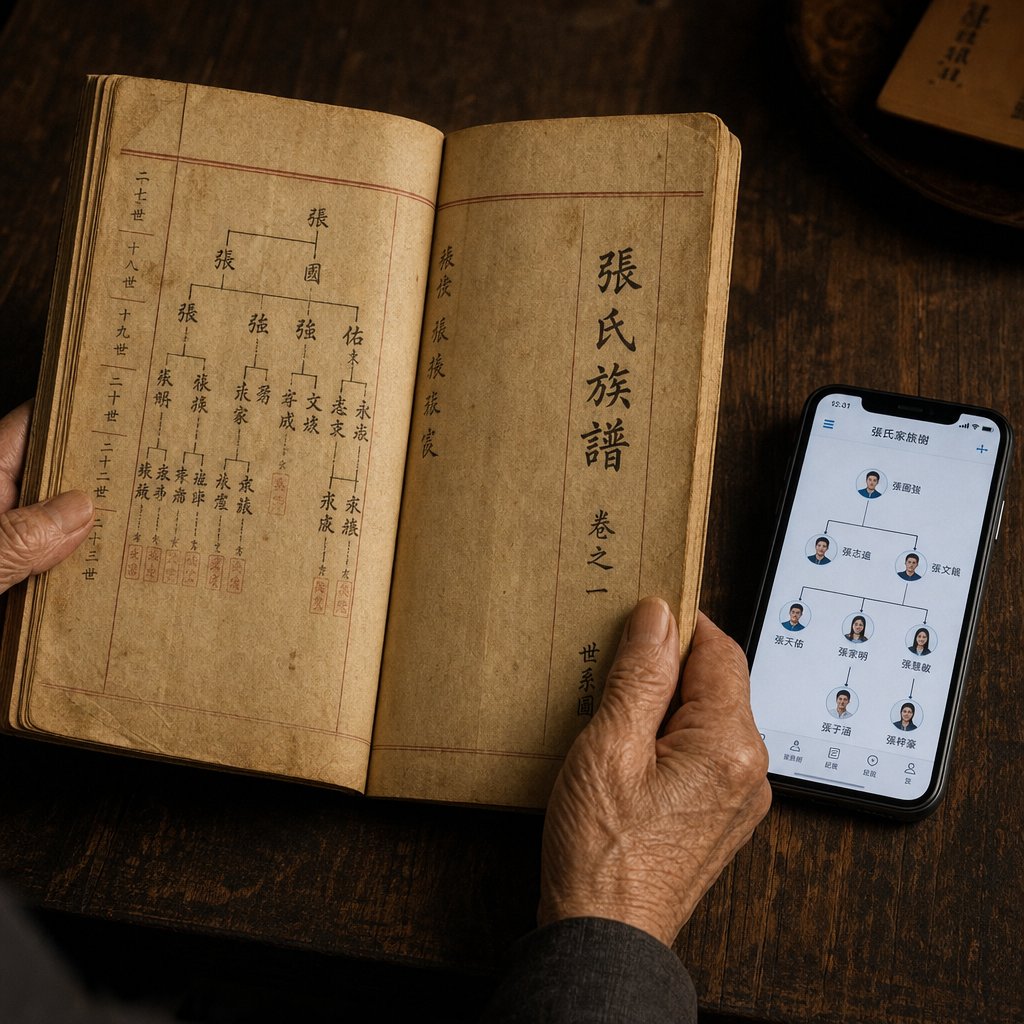
- Verify the original Chinese character through family documents or older relatives. This is the critical step. Look for any document that includes Chinese characters: ancestral tablets, old letters, tombstone inscriptions, clan association membership cards, immigration papers, or even a grandmother's handwritten notes. As the SF Genealogy Chinese research guide emphasizes, "a romanized English name is not much use as there will be no trace of that name back in China." The character is what connects you to genealogical records.
- Cross-reference with genealogical records. Once you have the character confirmed, you can search clan genealogies (jiapu 家谱) and online databases. FamilySearch's Chinese research collection holds millions of compiled genealogies organized by surname, province, and county. The Shanghai Library and My China Roots database together cover over 200 million individuals in mainland Chinese collections and over 5 million in overseas Chinese collections.
If you get stuck at step three, do not give up. Cemetery headstones often preserve Chinese characters even when all paper records have been lost. Clan associations in cities with historic Chinatowns frequently maintain archived membership lists in Chinese. And if your ancestor entered the United States during the Exclusion Act era (1882-1943), the National Archives holds extensive immigration case files that sometimes include Chinese characters alongside romanized names.
When Different Spellings Mean the Same Family
For many diaspora Chinese, the moment of confirmation carries real emotional weight. You grew up thinking your cousin's family spelled their name differently because they were a different branch, a different lineage, maybe not even related. Then you see the character on a great-uncle's old passport, and it matches. The same 徐 that sits behind your Xu also sits behind their Tsui. The distance was never genealogical. It was linguistic.
Here is the practical rule of thumb: if one branch of your family uses Xu and traces its roots to mainland Mandarin-speaking regions, while another branch uses Tsui and traces its roots to Hong Kong or Cantonese-speaking Guangdong, they most commonly represent the same character 徐. The spelling divergence reflects dialect and geography, not a split in the family tree. The same logic applies to Hsu (Taiwanese Mandarin speakers), Chee (Hokkien speakers in Southeast Asia), and Seo (Korean families with the character 서/徐).
The exception, and it is an important one, is when the character itself differs. A Tsui who carries 崔 and a Tsui who carries 徐 are not related despite sharing a romanized spelling. This is why how to find original chinese character for surname matters more than comparing romanizations. The character is the anchor. Everything else is surface.
Resources for Chinese Surname Research
Chinese surname genealogy research has become significantly more accessible in recent years. These resources can help you move from a romanized spelling to a confirmed character and ancestral lineage:
- FamilySearch Chinese Research - Free access to compiled genealogies (jiapu), immigration records, and a dedicated Chinese research community forum.
- My China Roots - A Chinese surname database covering over 400 surnames and 9,400 recorded spelling variants, plus an ancestral village database with 700,000 place names across 31 regions of China.
- U.S. National Archives - Chinese Exclusion Act case files, immigration records, and ship manifests from 1882 to 1943.
- Clan and native-place associations - Organizations like the Chinese Consolidated Benevolent Association and surname-specific clan halls often maintain genealogical records in Chinese characters.
- Cemetery records and tombstone inscriptions - Chinese burial markers typically include the deceased's surname in characters, providing confirmation when paper records are unavailable.
Start with family conversations. Move to documents. Confirm the character. Then let the databases do the rest. The path from a romanized spelling back to 徐 is shorter than most people expect, and the connection it reveals, between relatives who spell their name Xu, Tsui, Hsu, Chee, or Seo, is as real as the character itself.
Frequently Asked Questions About Xu vs Tsui Surname
1. Are Xu and Tsui the same surname?
Yes, in most cases. Both Xu and Tsui are romanizations of the Chinese character 徐. Xu comes from the Mandarin Pinyin system used in mainland China, while Tsui reflects the Cantonese pronunciation used in Hong Kong government romanization. They represent the same ancestral lineage from the ancient State of Xu. However, confirmation requires verifying the original Chinese character, since Tsui can also represent 崔, a completely different surname.
2. How do you pronounce the surname Tsui correctly?
Tsui in Cantonese sounds approximately like 'choy' (as in bok choy) with a gentle rising tone. The 'ts' represents a soft consonant blending 'ch' and 'ts,' produced with the tongue near the front of the mouth. Common mispronunciations like 'SOO-ee' or 'TSOO-ee' are incorrect. If you have heard the Hong Kong place name Tsim Sha Tsui, the initial 'ts' consonant uses the same mouth position.
3. Why is the Chinese surname 徐 spelled so many different ways?
The character 徐 has multiple romanized spellings because Chinese encompasses many dialects that pronounce the same character differently. Mandarin speakers say 'xú' (spelled Xu in Pinyin or Hsu in Wade-Giles), Cantonese speakers say 'ceoi4' (spelled Tsui), and Hokkien speakers say 'chhî' (spelled Chee or See). Each spelling was also shaped by the era of emigration, the colonial power administering the region, and the specific romanization system in use at the time.
4. What is the difference between Hsu and Xu as a surname?
There is no pronunciation difference. Both Hsu and Xu represent the identical Mandarin sound 'xú,' which approximates 'shoo' with a rising tone. The H in Hsu is completely silent. The spelling difference exists because Hsu uses the older Wade-Giles romanization system common in Taiwan and pre-1980s diaspora communities, while Xu uses the modern Hanyu Pinyin system adopted internationally. Families using either spelling almost certainly share the same character 徐 and the same ancestral line.
5. How can I find out if my surname Tsui means 徐 or 崔?
Since Hong Kong government romanization omits tones, both 徐 (ceoi4, rising tone) and 崔 (ceoi1, high level tone) produce the identical spelling Tsui on paper. To determine which character your family carries, check ancestral documents that include Chinese characters such as old passports, tombstone inscriptions, clan association records, or ancestral tablets. Asking older relatives who remember the written form is often the fastest method. The two characters represent completely unrelated lineages with different origins.