What Are Hokkien Chinese Surnames
Hokkien Chinese surnames are romanized spellings of Chinese family names based on the Hokkien (Min Nan) dialect rather than standard Mandarin. Hokkien originates from southern Fujian province in China and has approximately 34 million native speakers worldwide. Because Hokkien pronounces Chinese characters differently from Mandarin, the same surname character produces entirely different-sounding romanizations depending on which system was used during registration.
If your last name is Tan, Lim, Ong, or Goh, you likely carry a Hokkien surname spelling. Millions of people across Southeast Asia, Taiwan, and diaspora communities bear these chinese last names without necessarily knowing why their spelling looks nothing like the Mandarin version their relatives in mainland China might use.
What Makes Hokkien Surnames Different
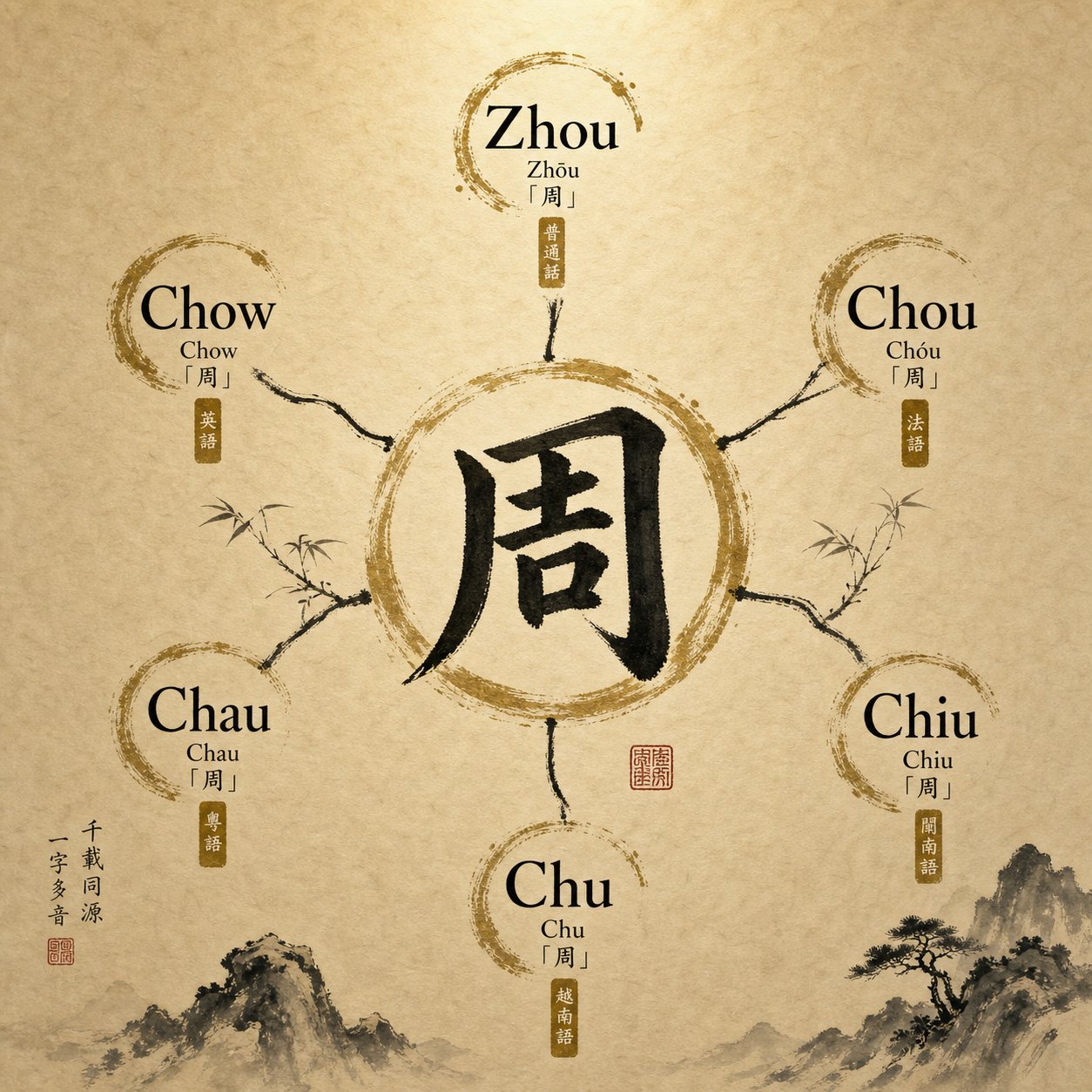
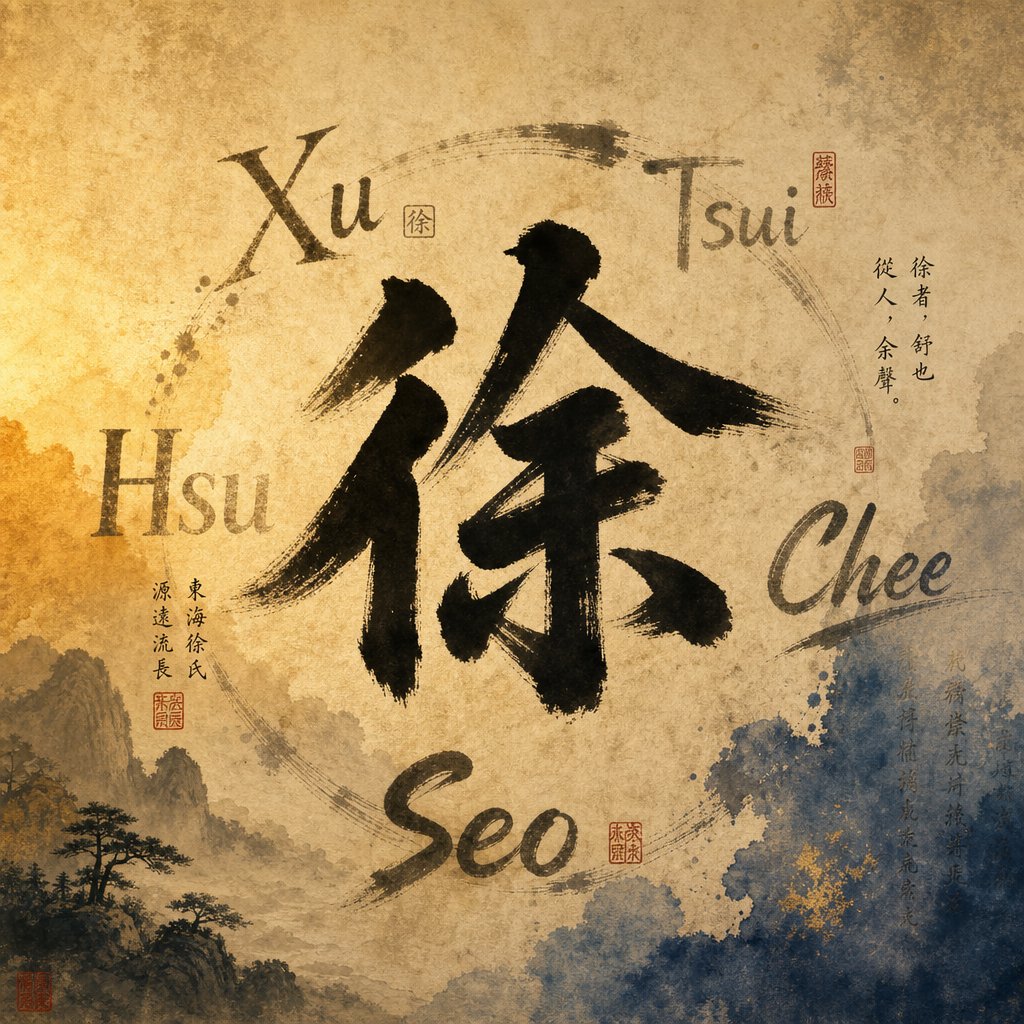
The core distinction is simple: same Chinese characters, completely different pronunciation systems. Mandarin and Hokkien diverged from each other centuries ago, and each preserved different layers of ancient Chinese phonology. When these pronunciations were written down in the Roman alphabet, the results looked like unrelated names entirely.
Consider how the character 黄 sounds like "Huang" in Mandarin but becomes "Ng" or "Ooi" in Hokkien. Or how 吴 is "Wu" in Mandarin but "Goh" in Hokkien. These are not different chinese surnames or separate chinese family names. They represent the exact same lineage, the same ancestral character, filtered through a different spoken tradition.
A surname like "Tan" in Hokkien and "Chen" in Mandarin represent the identical character 陈. They point to the same clan, the same ancestry, and the same 3,000-year-old lineage tracing back to the ancient State of Chen in Henan Province.
Why Hokkien Spellings Persist Today
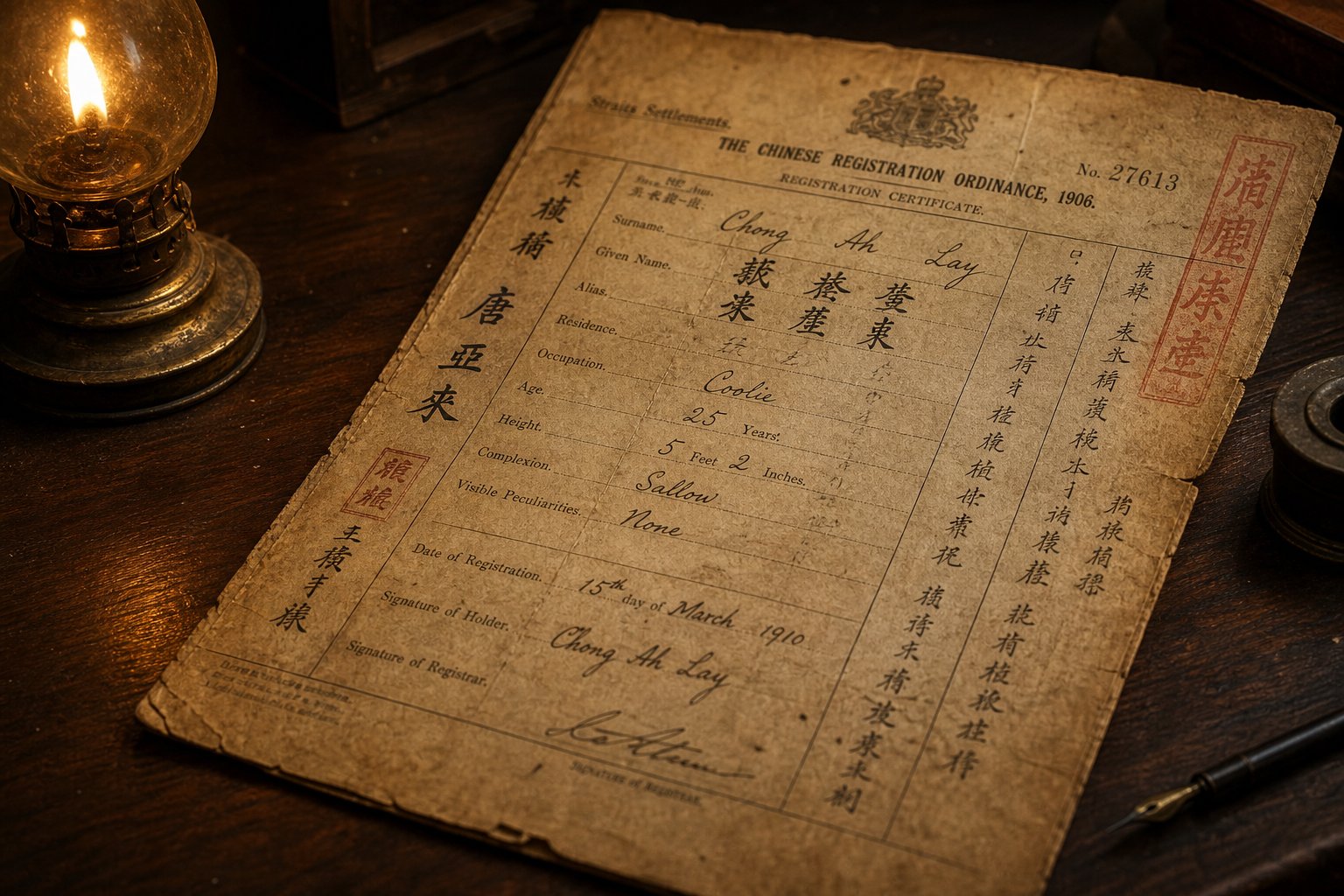
When Hokkien-speaking migrants settled across Southeast Asia, colonial administrators recorded their names phonetically. British clerks in Malaya, Spanish officials in the Philippines, and Dutch registrars in Indonesia each transcribed what they heard into local spelling conventions. These registrations became permanent legal documents, locking Hokkien pronunciations into passports, birth certificates, and property deeds for generations.
That is why common chinese names in Singapore, Malaysia, and the Philippines look so different from the Mandarin pinyin spellings now standard in mainland China. Among asian names in these regions, Hokkien spellings like Tan, Lim, and Ong are far more recognizable than their Mandarin equivalents Chen, Lin, and Wang. The dialect your ancestors spoke at the moment of registration determined the spelling your family carries permanently.
The question, then, is how this happened. What drove so many Hokkien speakers out of Fujian in the first place, and why did they concentrate so heavily in specific parts of Southeast Asia?
How Fujian Migration Shaped Surname Distribution
Fujian province sits on China's southeastern coast, hemmed in by mountains on three sides and facing the open sea on the fourth. Limited farmland and rugged terrain made agriculture difficult, but the coastline offered something else entirely: direct access to maritime trade routes stretching across the South China Sea. This geographic reality pushed Hokkien communities toward the ocean for centuries, and the surnames they carried traveled with them.
Fujian Maritime Trade and Early Migration
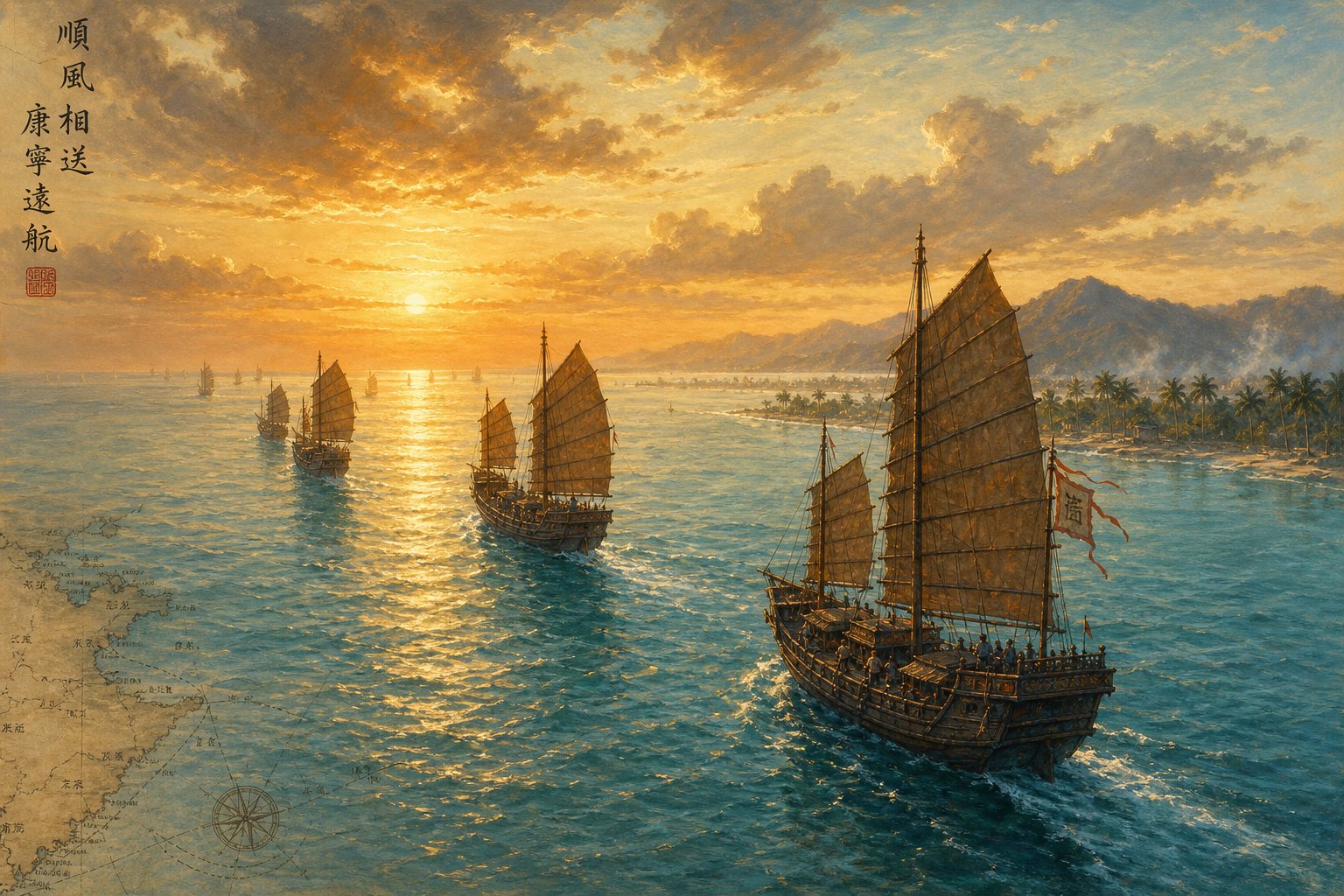
Hokkien maritime activity was not a sudden event. It built gradually over more than a thousand years. Regular maritime traffic between Fujian and Southeast Asia was well-established as early as the 6th century, and by the 8th century, a Hokkien merchant named Lin Luan from Dongshi, Jinjiang, had already led a group of clansmen to Borneo.
The real turning point came during the Song Dynasty in the 12th and 13th centuries. Quanzhou rose as China's most important seaport for foreign trade and its most famous shipbuilding center. Hokkien merchants dominated trade with emporia across Southeast Asia, frequenting ports in Champa, Annam, and Java. Some began settling permanently among local Javanese and Muslim traders in eastern Java, planting the earliest roots of what would become massive diaspora communities.
Between the 15th and 17th centuries, three pivotal events accelerated the outflow. Zheng He's seven maritime expeditions (1403-1433) expanded Chinese awareness of southern sea routes. The lifting of the Ming ban on private maritime trade in 1567 opened the floodgates for Hokkien merchants. And the Qing dynasty's reopening of coastal trade in 1683 brought yet another surge. By the 1610s, several hundred junks were involved in the South Seas trade, with Manila becoming one of the most frequented ports. The silk-for-silver trade between Fujian and the Philippines in the 1580s proved particularly profitable, drawing ever more Hokkien traders southward.
Settlement Patterns Across Southeast Asia
Imagine thousands of merchants, miners, and planters fanning out across the region over several centuries. They did not scatter randomly. Hokkien speakers concentrated in specific areas based on trade routes, colonial opportunities, and existing community networks. Each destination developed its own cluster of dominant surnames in asia that reflected the particular clans and villages those migrants came from.
Here are the major destination regions and their characteristic Hokkien surname clusters:
- Philippines (Manila) - Among the earliest major destinations after 1567. Hokkien merchants from Quanzhou and Zhangzhou dominated. Common asian last names here include Tan, Lim, Ong, Chua, and Go, often combined into compound surnames under Spanish conventions.
- Dutch East Indies (Indonesia) - Batavia attracted Hokkien merchants from the 1620s onward. By 1632, Chinese residents constituted 45% of the free adult male population, most of them Hokkien. Surnames like Oei (黄), Tan, and Lim became deeply rooted. The Oei family from Jinjiang, Fujian, later built one of Indonesia's largest conglomerates.
- Malaya and Singapore - Penang drew Hokkien merchants from the 1780s, followed by Singapore after 1819. The five great clan associations in Penang, Khoo, Cheah, Yeoh, Lim, and Tan, reflect the dominant asian names and surnames that shaped the region's Chinese community.
- Siam (Thailand) - Ayutthaya hosted 3,000 to 4,000 Chinese residents by the 1680s, mostly Hokkien. Surnames were later transliterated into Thai script, sometimes becoming unrecognizable.
- Taiwan - Received massive Hokkien migration from both Quanzhou and Zhangzhou, making it the largest concentration of Hokkien speakers outside Fujian itself. Surnames here retained closer ties to original Fujian pronunciations.
The 18th century brought a critical shift. Earlier settlements had been primarily trading communities, but growing demand for minerals and tropical products in China and Europe pushed Hokkien merchants to invest in mines and plantations in the interior. This transformed temporary sojourning into permanent settlement. Chinese populations surged: Batavia reached 14,800 Chinese inhabitants by 1739, Bangka's tin-mining population hit 30,000 in the 1770s, and pepper planters on Bintan numbered 25,000 by 1780.
Political violence periodically disrupted these communities, including the 1740 massacre of thousands of Chinese in Batavia and the 1755 expulsion of non-Christian Chinese from the Philippines. These upheavals triggered secondary migrations to smaller ports along the Malay Peninsula and Sumatra, further dispersing Hokkien surnames across the region. When the British established Penang in 1786, Hokkien merchants already present in nearby ports like Kedah quickly relocated, bringing their asian second names and clan networks with them.
This pattern explains why you will find concentrations of specific Hokkien surnames in particular countries today. The Tan and Lim clans dominate in Malaysia and Singapore. The Ong and Chua families are heavily represented in the Philippines. Indonesian Chinese communities carry distinctive spellings like Oei and Kwik that reflect Dutch colonial transliteration of those same Hokkien pronunciations. Each spelling variation is a fossil record of when and where a family's ancestor first had their name written down by a foreign clerk.
Sound Changes That Create Different Surname Spellings
Every spelling difference between a Hokkien and Mandarin surname traces back to a specific, predictable sound shift. These are not random variations. They follow systematic phonological rules that transformed how entire categories of consonants and vowels are pronounced. Once you understand a handful of these patterns, you can decode why a chinese last name like "Tan" maps to "Chen" or why the family name Ng corresponds to "Huang" without needing to memorize each case individually.
Key Sound Shifts Between Mandarin and Hokkien
Hokkien and Mandarin split from a common ancestor over a thousand years ago, and each language evolved its consonant system in different directions. The result is a set of regular correspondences that apply across dozens of surnames. Here are the major shifts that matter most for understanding names in chinese and meanings:
Mandarin retroflex initials (zh-, ch-, sh-) become dental stops (t-, ts-) in Hokkien. This is the single biggest source of confusion. Mandarin developed a set of retroflex consonants, sounds made with the tongue curled back, that Hokkien never adopted. Where Mandarin says "Chen" (陈) with a retroflex ch-, Hokkien uses a plain dental t-, producing "Tan." The same pattern turns "Zhang" (张) into "Teo" or "Tio," and "Zheng" (郑) into "Teh" or "Tee."
Mandarin h- corresponds to Hokkien ng- or zero initial. This shift produces some of the most dramatic-looking differences. The character 黄 is "Huang" in Mandarin, but in Hokkien the initial h- disappears entirely or becomes the velar nasal ng-. That gives us "Ng," "Ooi," or "Wee" depending on the sub-dialect and romanization convention. Similarly, 洪 is "Hong" in Mandarin but "Ang" in Hokkien, where the h- drops away completely.
Mandarin w- becomes g- in Hokkien for certain characters. The character 吴 is "Wu" in Mandarin but "Goh" in Hokkien. This happens because Hokkien preserves an older velar initial /g/ that Mandarin weakened into a glide /w/ centuries ago. You'll notice this pattern in other chinese names and meanings as well: 魏 is "Wei" in Mandarin but "Ngui" or "Gui" in some Hokkien readings.
Final consonants are preserved in Hokkien but lost in Mandarin. Mandarin dropped all final stop consonants (-p, -t, -k) over the centuries, while Hokkien kept them. This is why 林 stays relatively similar, "Lin" in Mandarin versus "Lim" in Hokkien, the -m ending preserved in Hokkien reflects the original pronunciation. The surname 郭 ("Guo" in Mandarin) becomes "Kwek" or "Quek" in Hokkien, retaining that final -k sound.
Vowel shifts create additional variation. Even when consonants stay similar, vowel differences produce distinct spellings. The character 李 is "Li" in both systems, but 蔡 shifts from "Cai" in Mandarin to "Chua" in Hokkien, reflecting a different vowel evolution path. The surname 许 goes from "Xu" to "Koh" or "Khoh," where both the initial consonant and the vowel have shifted.
Why the Same Character Gets Different Spellings
Here is the key insight that most surname lists miss: Hokkien is not a "corrupted" version of Mandarin. It is a separate branch of Chinese that preserves features of Middle Chinese, the prestige language of the Tang Dynasty (618-907 AD). Mandarin evolved away from that older system, while Hokkien retained many of its sounds.
The Wikipedia article on Middle Chinese notes that "with the exception of Min varieties, which show independent developments from Old Chinese, modern Chinese varieties can be largely treated as divergent developments from Middle Chinese." This means Hokkien did not descend from Middle Chinese the way Mandarin did. It branched off even earlier, preserving elements of Old Chinese that predate the Tang Dynasty entirely.
What does this mean for surnames? When you see "Tan" instead of "Chen," you are hearing a pronunciation closer to how that character sounded over a thousand years ago. The dental initial t- in Hokkien reflects an older layer of Chinese phonology that Mandarin later shifted to a retroflex ch-. Similarly, the preserved final consonants in names like "Lim" (林) and "Quek" (郭) echo the stop endings that were standard in classical Chinese poetry but vanished from Mandarin by the Song Dynasty.
Hokkien's phonological inventory supports this antiquity. According to research on Hokkien phonology, the language uses around 2,250 to 2,450 total toned syllables, far more than Mandarin's approximately 1,350. This richer sound system preserves distinctions that Mandarin collapsed, which is precisely why the same character can sound so radically different between the two languages.
The table below shows how these sound shifts play out across common surnames. Each row represents a single Chinese character, one ancestral lineage, spelled differently depending on whether Mandarin or Hokkien pronunciation was recorded:
| Chinese Character | Mandarin Pinyin | Hokkien Romanization | Key Sound Shift |
|---|---|---|---|
| 陈 | Chen | Tan | Retroflex ch- becomes dental t- |
| 林 | Lin | Lim | Final -n becomes -m (nasal preserved) |
| 黄 | Huang | Ng / Ooi / Wee | Initial h- becomes ng- or drops |
| 吴 | Wu | Goh | Glide w- reflects older velar g- |
| 张 | Zhang | Teo / Tio | Retroflex zh- becomes dental t- |
| 王 | Wang | Ong / Heng | Initial w- becomes vowel; -ang shifts to -ong |
| 蔡 | Cai | Chua / Tsua | Vowel -ai shifts to -ua |
| 郭 | Guo | Quek / Kwek | Final stop -k preserved; vowel shifts |
| 许 | Xu | Koh / Khoh | Palatal x- reverts to velar kh- |
| 郑 | Zheng | Teh / Tee | Retroflex zh- becomes dental t-; vowel shifts |
Notice the patterns repeating. Every surname with a Mandarin retroflex initial (zh-, ch-, sh-) maps to a Hokkien dental (t-, ts-, s-). Every surname where Mandarin lost a final consonant shows Hokkien preserving it. These are not coincidences. They are the fingerprints of systematic linguistic divergence playing out across hundreds of family names.
Understanding these rules also explains why some surnames barely change between systems. The character 李 ("Li" in Mandarin, "Lee" or "Li" in Hokkien) uses an initial l- and a simple vowel that both languages handle similarly. The divergence only becomes dramatic when a surname's pronunciation hits one of the major consonant or vowel shift zones.
These phonological rules operated uniformly across the language, but the way they were written down varied enormously depending on who was doing the writing. Colonial administrators in different countries heard the same Hokkien sounds and transcribed them using completely different spelling conventions, multiplying the variations even further.
How Colonial Rule Created Permanent Spelling Variations
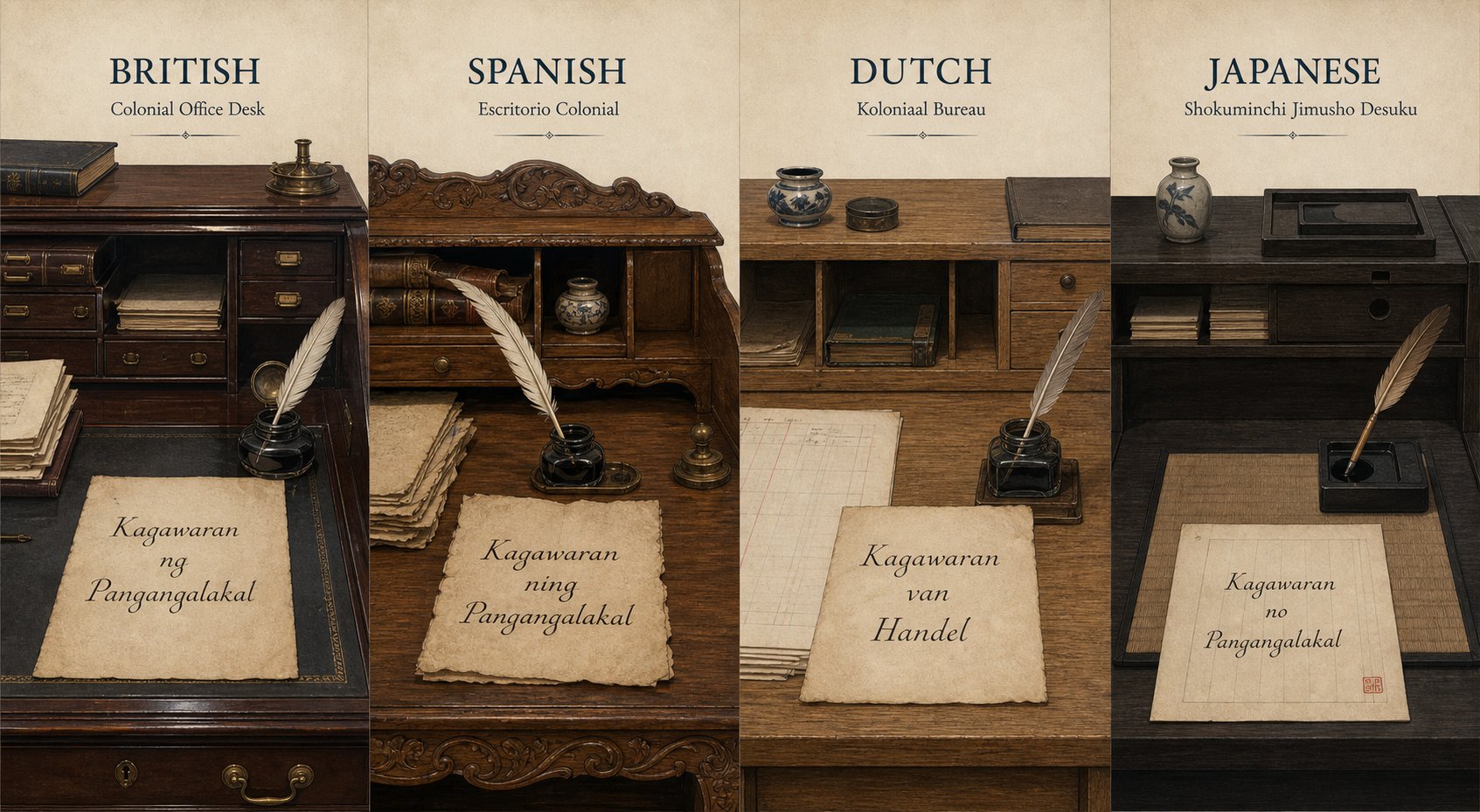
A Hokkien speaker saying the surname 黄 in 1850 sounded essentially the same whether they stood in Penang, Manila, Batavia, or Tainan. But the clerk writing it down did not. British officials reached for English spelling habits. Spanish friars applied Castilian orthography. Dutch registrars used their own vowel conventions. Japanese administrators filtered everything through katakana. The result? A single chinese surname fractured into half a dozen legal spellings, each permanently locked into a different country's civil records.
This was not a deliberate policy of differentiation. It was the inevitable outcome of multiple colonial bureaucracies independently transcribing the same spoken sounds using incompatible writing systems. And because these registrations became the basis for passports, land titles, and citizenship records, the spellings became irrevocable. A chinese family carrying the name 黄 could end up as Ng in Malaysia, Uy in the Philippines, and Oei in Indonesia, all within a single generation of cousins.
British Malaya and Straits Settlements Spellings
When the British established administrative control over Penang (1786), Singapore (1819), and Malacca, they needed to register Chinese residents for tax collection, land ownership, and census purposes. The clerks handling these registrations were typically English-speaking officials or locally trained scribes who wrote down Hokkien pronunciations using intuitive English phonetics.
This produced the spellings most familiar across Malaysia and Singapore today: Tan, Lim, Ong, Goh, Chua, Koh, Teo, and Ng. These romanizations feel natural to English readers because they were designed by English ears. A British clerk hearing the Hokkien pronunciation of 陈 would naturally write "Tan" since that combination of letters closely approximates the sound in English. Similarly, 林 became "Lim," 王 became "Ong," and 吴 became "Goh."
The British system was informal and inconsistent. No standardized romanization guide existed for Hokkien the way pinyin would later standardize Mandarin. Different clerks in different offices sometimes spelled the same surname differently. You'll find "Quek" and "Kwek" for 郭, or "Khor" and "Koh" for 许, depending on which registration office processed the paperwork. Once a spelling appeared on an official document, though, it stuck. Subsequent generations inherited whatever the original clerk chose to write.
Colonial Registration in the Philippines and Indonesia
Spanish colonial conventions in the Philippines produced some of the most dramatically different-looking Hokkien surname spellings. Spanish orthography uses different letter-sound mappings than English, so the same Hokkien pronunciation came out looking entirely unfamiliar.
The most striking feature of Filipino-Chinese surnames is the compound naming convention. Spanish administrators often recorded full Hokkien names, sometimes combining given names and surnames into single hyphenated or fused forms. The surname Cojuangco derives from the Hokkien "Ko Hwan-ko" (许玉寰), while Tanlimco fuses what were originally separate name elements. The prefix "Co-" (from 许 or 柯), "Tan-" (from 陈), and suffixes like "-co" or "-go" appear frequently in Filipino-Chinese taiwanese last names and reflect Spanish transcription of Hokkien syllables. The character 黄 became "Uy" or "Ooi" under Spanish conventions, looking nothing like the British "Ng" or the Mandarin "Huang."
In the Dutch East Indies, a different set of conventions took hold. Dutch orthography treats vowels differently from English, producing spellings like "Oei" for 黄 (where English would write "Ooi" or "Wee") and "Kwik" for 郭. The prominent Kwik family in Indonesian business history illustrates this pattern. Names like Kwik Hang Ie and other members of the Kwik family demonstrate how Dutch spelling conventions transformed Hokkien pronunciations into forms that look neither English nor Chinese. The "oe" digraph in Dutch represents the sound English writes as "oo," which is why 黄 appears as "Oei" in Indonesian records rather than the "Ooi" found in Malaysian documents.
Dutch administrators also imposed surname registration requirements at specific historical moments, freezing whatever Hokkien pronunciation variant was current at the time. This created a permanent record that subsequent generations could not easily alter, even as pronunciation continued to evolve in spoken communities.
Taiwanese Romanization Under Japanese Rule
Taiwan presents a different case entirely. When Japan took control of Taiwan in 1895, the island already had a massive Hokkien-speaking population descended from centuries of Fujian migration. Japanese colonial administrators needed to register these residents but approached the task through Japanese phonological categories.
Japanese uses katakana to transcribe foreign sounds, and the syllable structure of Japanese (consonant-vowel pairs) does not map cleanly onto Hokkien's more complex sound system. Taiwanese last names under Japanese rule were often recorded in kanji (the same Chinese characters) but pronounced using Japanese readings. The character 陈 would be read as "Chin" in Japanese on-yomi, 林 as "Rin" or "Hayashi," and 黄 as "Ko" or "Ou." This created yet another layer of romanization when these names later needed to be written in the Latin alphabet.
After 1945, the Kuomintang government imposed Mandarin-based romanization in Taiwan, but many families retained older spellings on existing documents. This is why you encounter Taiwanese individuals whose passport romanization does not match standard Mandarin pinyin. A person surnamed 黄 might appear as "Ng" (Hokkien), "Huang" (Mandarin pinyin), or "Ko" (Japanese-influenced) depending on when and how their family's documents were first created.
The table below shows how a single character, 黄, appears across different colonial registration systems. Each spelling represents the same ancestral lineage filtered through a different bureaucratic lens:
| Country | Colonial Power | Spelling of 黄 | Romanization Logic |
|---|---|---|---|
| Malaysia / Singapore | British | Ng, Ooi, Wee | English phonetic approximation of Hokkien sub-dialect variants |
| Philippines | Spanish | Uy, Ooi | Spanish vowel conventions applied to Hokkien sound |
| Indonesia | Dutch | Oei, Ong | Dutch "oe" digraph for /u/ sound; variant readings |
| Taiwan | Japanese | Ko, Ng, Huang | Japanese on-yomi reading or later Mandarin overlay |
| Mainland China | N/A (modern) | Huang | Standard Mandarin pinyin |
Five spellings, one character, one bloodline. Every variation is an artifact of which colonial administration happened to control the registration office when an ancestor first needed official paperwork. The linguistic content, the actual Hokkien pronunciation, was largely the same across all these locations. Only the transcription differed.
This colonial fragmentation also explains why reuniting family records across countries can be so difficult. A Tan in Singapore, a Tanlimco in Manila, and a Oei in Jakarta might all descend from the same Fujian village, but their paperwork offers no obvious connection. Recognizing these colonial spelling patterns becomes essential for anyone trying to piece together a complete picture of their family's diaspora history, and it starts with knowing which specific Hokkien surnames are most common and what their characters actually mean.
Most Common Hokkien Surnames and Their Meanings
Knowing the colonial spelling history is one thing. Knowing which names actually dominate Hokkien communities worldwide is another. Whether you are researching chinese last names and meanings for genealogy purposes or simply curious about why certain spellings appear so frequently in Southeast Asia, this reference covers the most common chinese surnames carried by the Hokkien diaspora today.
The Ten Most Common Hokkien Surnames
These ten surnames account for the vast majority of Hokkien-speaking families across Singapore, Malaysia, the Philippines, Indonesia, and Taiwan. Ranked by estimated global frequency among diaspora communities, they represent the most popular chinese last names in the Hokkien world:
- Tan (陈) - "Arrange" or "display." Traces to the ancient State of Chen in Henan. The single most common Hokkien surname across nearly every diaspora community.
- Lim (林) - "Forest" or "woods." Originated from the Shang Dynasty prince Bi Gan's descendants who hid in a forest. Dominant in Malaysia and Singapore.
- Ng (黄) - "Yellow." Also romanized as Ooi or Wee depending on sub-dialect. Linked to the ancient Huang kingdom in Henan.
- Lee (李) - "Plum tree." One of the most common chinese names globally, shared across all Chinese dialect groups. The Tang Dynasty imperial surname.
- Ong (王) - "King" or "monarch." Descended from various royal lineages across Chinese history. Extremely prevalent in the Philippines as well.
- Goh (吴) - Named after the ancient State of Wu in the Yangtze Delta region. The initial g- preserves an older pronunciation lost in Mandarin's "Wu."
- Chua (蔡) - Named after the State of Cai during the Zhou Dynasty. The distinctive "-ua" ending immediately signals Hokkien origin.
- Koh (许) - "Permit" or "allow." Traces to the ancient State of Xu. Also appears as Khoh or Hee in variant spellings.
- Teo (张) - "Draw a bow" or "stretch." One of China's largest surname groups overall. The Hokkien "-eo" ending distinguishes it from Mandarin "Zhang."
- Sim (沈) - "Sink" or "submerge." Originated from the State of Shen during the Zhou Dynasty. Less globally common but strongly represented in Hokkien communities.
Together, these ten surnames cover a remarkable share of the most common chinese last names found in Hokkien-speaking populations. You will encounter them on business directories, school rosters, and government records throughout Southeast Asia.
Less Common but Distinctive Hokkien Surnames
Beyond the top ten, a second tier of surnames is instantly recognizable as Hokkien due to unique spelling patterns that no other Chinese dialect produces. These are not rare last names in the sense of being obscure within Hokkien communities, but they appear less frequently than the dominant ten and carry highly distinctive romanizations.
| Hokkien Spelling | Chinese Character | Literal Meaning | Mandarin Equivalent |
|---|---|---|---|
| Quek / Kwek | 郭 | Outer city wall | Guo |
| Phua | 潘 | Water, pool | Pan |
| Beh | 马 | Horse | Ma |
| Yeo | 杨 | Poplar tree | Yang |
| Seah | 佘 | Surplus (rare character) | She |
| Tay / Teh | 郑 | Solemn, serious | Zheng |
| Chia | 谢 | Gratitude, thanks | Xie |
| Heng | 王 | King (variant reading) | Wang |
Notice how spellings like Quek, Phua, and Seah look nothing like their Mandarin counterparts. That final "-k" in Quek, the "-ua" diphthong in Phua, and the "-ah" ending in Seah are telltale markers. If you spot these patterns in a surname, you are almost certainly looking at a Hokkien-origin name.
Understanding chinese surnames and meanings at this level reveals something deeper than spelling trivia. Each character carries a story, whether it references an ancient feudal state, a natural element, or a royal title. The Hokkien romanization simply adds another layer: it tells you not just which clan someone belongs to, but which dialect community preserved their family's pronunciation across generations of migration.
These spelling patterns are not arbitrary, though. They follow sub-dialect rules that vary between Quanzhou, Zhangzhou, and Amoy traditions, which is why the same character sometimes produces multiple Hokkien spellings even within a single country.
Sub-Dialect Variations in Hokkien Surname Romanization
Hokkien is not a single, uniform language. It is a cluster of closely related sub-dialects that share grammar and vocabulary but diverge on specific vowel sounds, tones, and initial consonants. Two families from different parts of Fujian might both speak "Hokkien," yet pronounce the same surname character differently enough to produce distinct romanized spellings. This internal variation is why you encounter multiple Hokkien romanizations for a single character, like the ooi surname and "Ng" both representing 黄, without any colonial interference involved.
Quanzhou vs Zhangzhou Pronunciation Differences
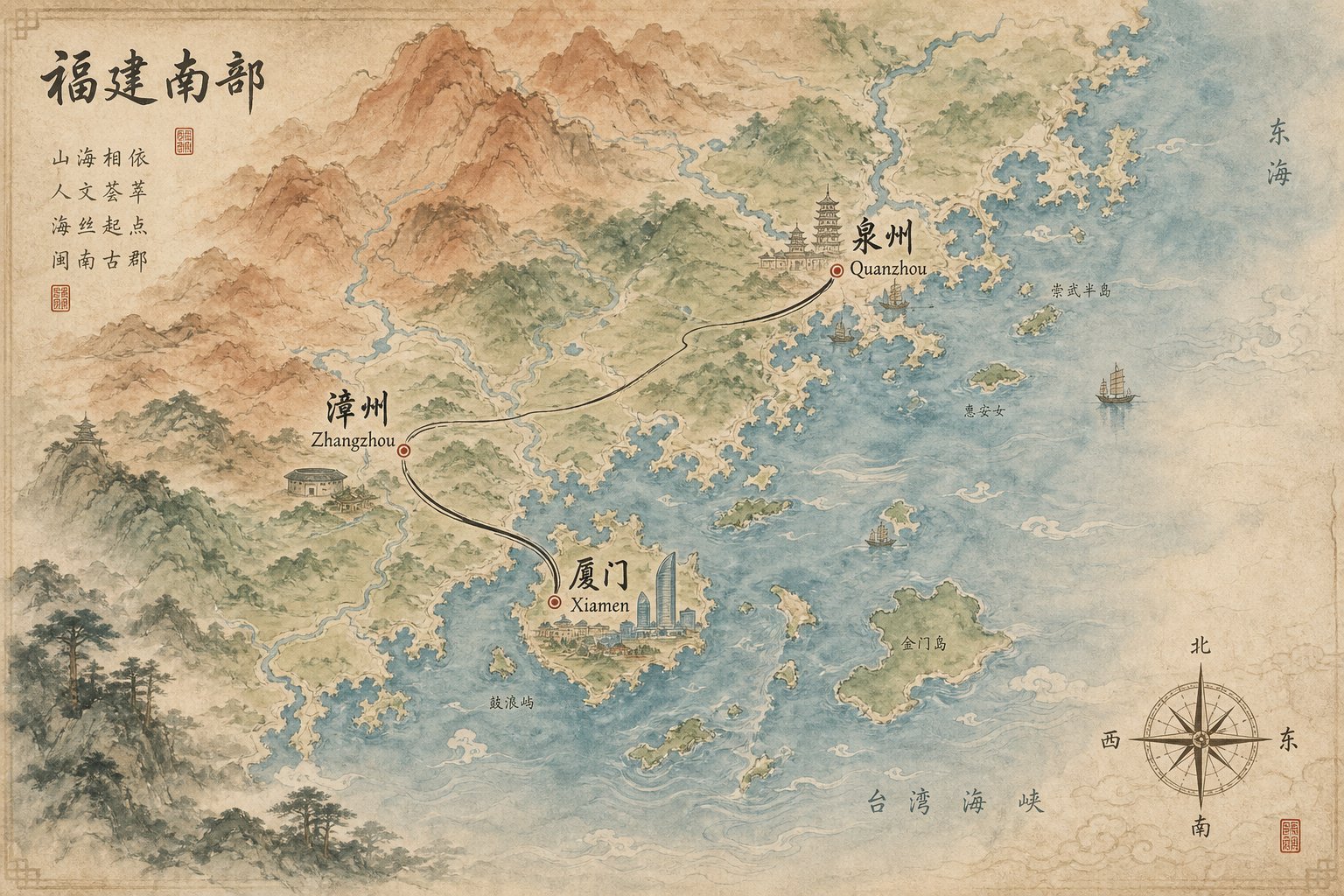
The two dominant sub-dialect branches within Hokkien trace to Quanzhou (泉州) and Zhangzhou (漳州), neighboring prefectures in southern Fujian that developed audibly different speech patterns over centuries of separation. When migrants from these two regions settled in the same overseas city, their surname pronunciations diverged in predictable ways.
Here are the major sub-dialect groups, their geographic origins, and the pronunciation features that affect surname spellings:
- Quanzhou (泉州) - Northern Fujian coast. Tends toward the velar nasal initial "ng-" for characters like 黄, producing the spelling "Ng." Preserves certain older vowel qualities, such as a centralized "e" sound. Dominant influence in the Philippines and parts of northern Taiwan.
- Zhangzhou (漳州) - Southern Fujian coast. Shifts the same character 黄 toward a diphthong, producing "Ooi" or "Wee" instead of "Ng." Uses different vowel patterns for several common surname characters. Dominant influence in parts of Malaysia and southern Taiwan.
- Xiamen / Amoy (厦门) - A port city between Quanzhou and Zhangzhou that developed a blended prestige dialect combining features of both. Many diaspora communities, especially in Singapore, reflect this mixed Amoy standard.
- Taiwanese Hokkien - Descended from both Quanzhou and Zhangzhou settlers who arrived between the 17th and 19th centuries. Taiwanese surnames reflect a mixture of both traditions, with regional variation across the island. Northern Taiwan leans toward Quanzhou features while southern Taiwan preserves more Zhangzhou characteristics.
Consider the lim last name origin as an example of relative stability. The character 林 comes out as "Lim" across virtually all Hokkien sub-dialects because its phonetic structure (simple initial l- plus nasal final -m) does not hit any of the vowel or consonant zones where Quanzhou and Zhangzhou diverge. But a character like 黄, which involves a complex initial and diphthong, splits dramatically: "Ng" in Quanzhou tradition versus "Ooi" in Zhangzhou tradition. Both are equally valid Hokkien readings of the same character.
Pe̍h-oe-ji and Modern Romanization Systems
Given all this variation, you might wonder whether anyone ever tried to standardize Hokkien spelling. The answer is yes, but it came too late to affect most diaspora surnames.
Pe̍h-oe-ji (POJ), meaning "vernacular writing," was developed by Presbyterian missionaries in the 19th century as a systematic romanization for Hokkien. It uses diacritics to mark tones and follows consistent spelling rules for every sound in the language. Under POJ, the surname 陈 is always written "Tan," 黄 is "Ng" (Quanzhou) or "Ui" (Zhangzhou variant), and 林 is "Lim." The system is precise and unambiguous.
Taiwan's Ministry of Education built on this foundation. Since 2006, the Taiwanese Romanization System (Tai-lo) has served as an officially promoted phonetic notation system. It is derived directly from Pe̍h-oe-ji, using 16 basic Latin letters, 7 digraphs (including "Ng"), and 6 diacritics to represent tones. The system handles the full complexity of Hokkien phonology, including nasalized vowels and tone sandhi patterns that informal spellings ignore entirely.
The problem? Most diaspora taiwanese surnames were registered decades or centuries before either system existed. Colonial clerks used ad-hoc English, Spanish, or Dutch phonetics rather than any standardized framework. This means the surname "Ng" on a Malaysian identity card is not POJ or Tai-lo. It is an informal British-era approximation that happens to coincide with the standardized spelling. Other informal spellings, like "Ooi" or "Wee," have no equivalent in any formal system at all.
This creates a particularly confusing overlap: the spelling "Ng" can represent Hokkien 黄 (Huang in Mandarin) or Cantonese 吴 (Wu in Mandarin). These are completely different characters, different lineages, and different meanings. A person surnamed Ng in Singapore most likely carries the character 黄 via Hokkien pronunciation. A person surnamed Ng in Hong Kong almost certainly carries 吴 via Cantonese pronunciation. Same two letters, entirely unrelated families. Without knowing the dialect background or the underlying Chinese character, the romanized spelling alone cannot tell you which clan someone belongs to.
This ambiguity is precisely why pattern recognition matters. Knowing whether a surname follows Hokkien, Cantonese, or Teochew spelling conventions helps you decode what the romanization actually represents, and that recognition depends on understanding the telltale markers each dialect leaves behind.
How to Recognize Hokkien Surname Spelling Patterns
You do not need to memorize every Hokkien surname individually. Once you learn a handful of spelling markers, you can spot a Hokkien-origin name at a glance, even if you have never encountered that specific surname before. Think of it like recognizing a language by its visual rhythm. French has its accents and silent consonants. German has its compound words and umlauts. Hokkien surnames have their own fingerprints too.
Telltale Spelling Patterns of Hokkien Surnames
Hokkien surnames tend to be short. Most are one syllable last names, just three or four letters long: Tan, Lim, Goh, Koh, Ng. This brevity is a strong first signal. When you see a 3 letter chinese name like "Goh" or "Koh" as a surname, the odds favor Hokkien origin. Cantonese surnames, by contrast, frequently run to four or five letters (Wong, Leung, Cheung), and Mandarin pinyin spellings often stretch longer still (Huang, Zhang, Chen).
Beyond length, specific letter combinations act as reliable markers. Here are the patterns worth watching for:
- Endings in "-ua" or "-ah" - Surnames like Chua (蔡) and Phua (潘) use diphthongs that are distinctly Hokkien. The "-ua" ending does not appear in Cantonese or Mandarin romanizations. If you see it, the name is almost certainly Hokkien.
- Endings in "-eo" or "-eoh" - Teo (张), Neo (梁), and Teoh (张, variant) carry this vowel pattern. It signals a Hokkien reading of characters that Mandarin renders with entirely different vowels.
- Initial "Ng-" or "Oo-/Ooi" - The velar nasal "Ng" standing alone as a complete surname, or vowel-initial forms like Ooi and Oei, point to Hokkien pronunciation of 黄. These forms look unusual to English readers precisely because English lacks a syllable-initial "ng" sound.
- Initial "Qu-" or "Kw-" - Quek and Kwek (郭) preserve a consonant cluster that neither Cantonese nor Mandarin romanization produces. This combination is a strong Hokkien indicator.
- Final "-oh" or "-ok" - Goh (吴), Koh (许), and Kok (郭, variant) use these endings. The preserved stop consonant or the "-oh" rounding is characteristic of Hokkien's retention of older final sounds.
Imagine you encounter the surname "Seah" on a business card. You have never seen it before. But the "-ah" ending, the brevity, and the vowel pattern all match Hokkien conventions. You can confidently guess this person has Hokkien heritage, and you would be right: Seah represents 佘, a relatively uncommon character that Mandarin romanizes as "She."
Distinguishing Hokkien from Cantonese and Teochew Spellings
The real challenge is not identifying Hokkien surnames in isolation. It is distinguishing them from Cantonese and Teochew spellings, which sometimes look superficially similar. Each dialect group leaves different orthographic traces, and knowing these differences helps you identify which tradition a surname belongs to among asian common last names.
Cantonese surnames favor "-ng" endings and longer syllable structures. Wong, Leung, Cheung, Cheng, and Fung all carry that nasal "-ng" tail. Cantonese also uses "Ch-" initials heavily (Chan, Cheung, Chow), while Hokkien almost never starts a surname with "Ch-" except in the case of Chia (谢). When you see a surname ending in "-ung" or "-eung," you are looking at Cantonese, not Hokkien.
Teochew is trickier because it belongs to the same Min language family as Hokkien. The two share many features, and as LearnDialect.sg notes, surnames like Tan (陈) and Lim (林) are spelled identically in both Hokkien and Teochew. The divergence shows up in specific characters. Teochew uses "Tay" for 郑 where Hokkien uses "Teh" or "Tee." Teochew renders 王 as "Heng" while Hokkien produces "Ong." And for k last names like 郭, Teochew tends toward "Kuek" while Hokkien favors "Quek" or "Kwek."
The table below puts these differences side by side for five common surnames. You will notice how each dialect group produces a distinct visual signature for the same characters:
| Chinese Character | Hokkien | Cantonese | Teochew |
|---|---|---|---|
| 陈 (Chen) | Tan | Chan | Tan |
| 黄 (Huang) | Ng / Ooi / Wee | Wong | Ng |
| 王 (Wang) | Ong | Wong | Heng |
| 林 (Lin) | Lim | Lam / Lum | Lim |
| 郑 (Zheng) | Teh / Tee | Cheng | Tay |
A few quick rules emerge from this comparison. If the surname is "Wong," it is Cantonese. If it is "Ong," it is Hokkien. If it is "Heng," it is Teochew. If you see "Lam," think Cantonese; "Lim" means Hokkien or Teochew. And if you encounter "Chan," that is Cantonese for the same character that Hokkien and Teochew both spell "Tan."
These pattern-recognition skills do more than satisfy curiosity. They become genuinely practical when you are trying to trace ancestry, connect with distant relatives, or simply understand the heritage behind a name on a document. Recognizing the dialect behind a spelling is often the first step toward unlocking a family's migration story.
Using Hokkien Surnames for Ancestry and Heritage Research
Recognizing dialect patterns is satisfying on an intellectual level, but for many people the real question is personal: what can my surname actually tell me about where my family came from? If you have ever wondered "what is my chinese name" in its original character form, or tried to connect relatives scattered across different countries with different surname spellings, the knowledge built across this article becomes a practical research tool rather than just linguistic trivia.
Tracing Your Hokkien Ancestry Through Your Surname
Your Hokkien surname does more than identify your clan. It can point you toward a specific region within Fujian province, sometimes narrowing your ancestral origin down to a handful of villages. Different clans originated from different counties, and the sub-dialect features embedded in your surname spelling offer geographic clues.
Consider the surname 黄. If your family spells it "Ng," that Quanzhou-style pronunciation suggests ancestors from the northern Fujian coast, possibly from Jinjiang or Nan'an county. If your family uses "Ooi" or "Wee," the Zhangzhou-style vowel points toward southern Fujian origins, perhaps Longhai or Zhangpu. These are not guarantees, but they narrow the search considerably when you are trying to build a chinese family tree that stretches back to a specific ancestral village.
Clan associations remain one of the most valuable resources for this kind of research. Organizations like the Tan clan association, Lim clan association, or Ng clan association exist in nearly every Southeast Asian city with a significant Chinese population. Many maintain genealogical records, ancestral hall registries, and even direct connections to origin villages in Fujian. Some have digitized their membership rolls going back over a century, providing a bridge between your modern surname spelling and the original Chinese characters your ancestors carried.
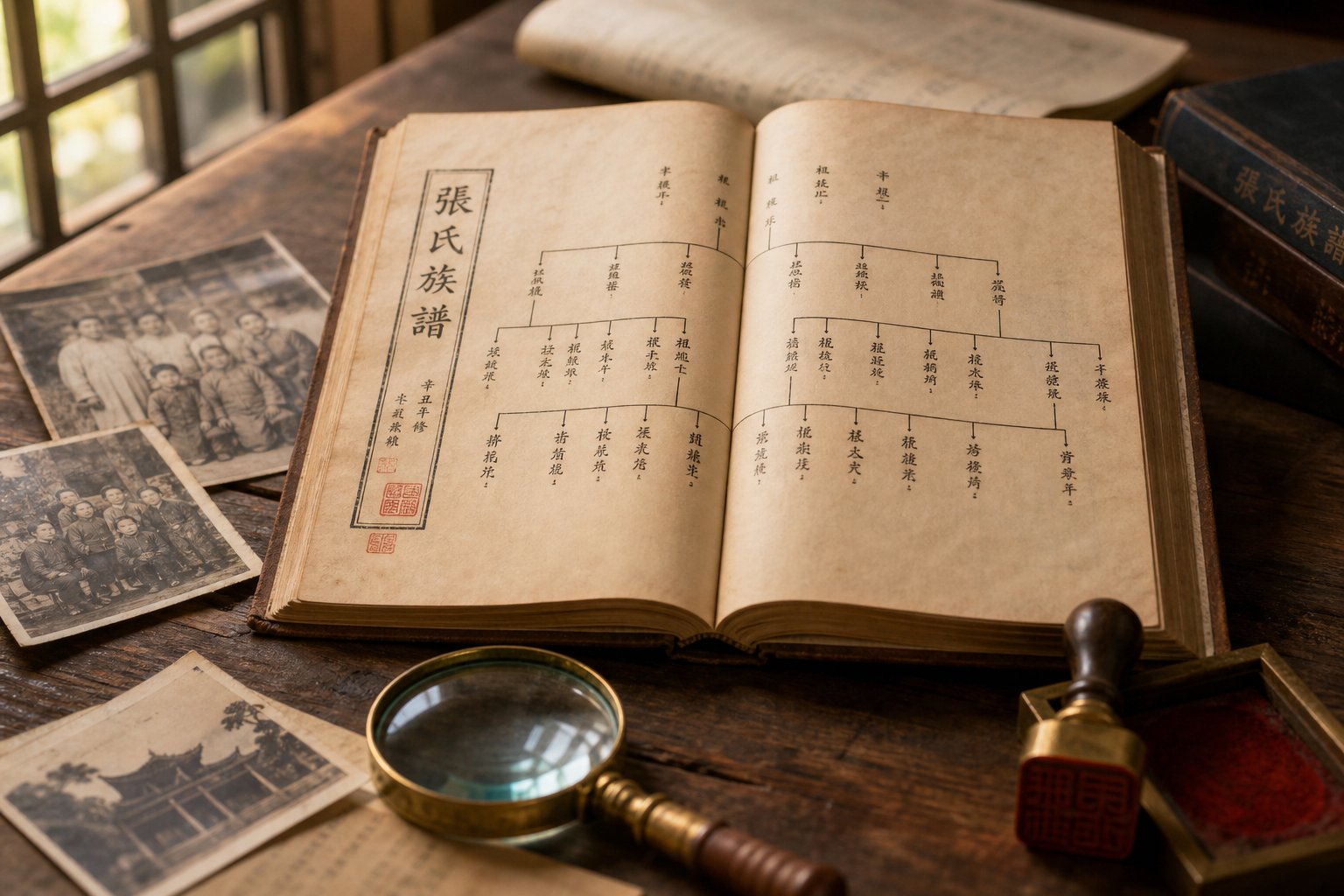
The tradition of jiapu (家谱), or Chinese clan genealogy books, offers another path. As FamilySearch notes, these family books record lineages from father to son, sometimes stretching back thousands of years. If you can identify your surname's Chinese character and your family's ancestral county, searching for your clan's jiapu becomes possible through databases like FamilySearch's Chinese Jiapu collection or through direct contact with relatives still in Fujian.
Resolving Surname Discrepancies in Official Records
Diaspora families frequently encounter a frustrating practical problem: surname spellings that do not match across documents from different countries. A grandfather registered as "Ng" in Malaysia might have siblings recorded as "Oei" in Indonesia and cousins listed as "Uy" in the Philippines. Immigration officials, banks, and government agencies sometimes treat these as entirely different families, creating bureaucratic headaches for people trying to prove kinship or claim inheritance.
Understanding the romanization history explained in earlier sections helps resolve these discrepancies. When you can demonstrate that "Ng," "Oei," "Uy," and "Huang" all represent the character 黄 filtered through different colonial spelling conventions, you provide the explanatory framework that officials need. Some families have successfully used linguistic expert testimony or clan association documentation to bridge these gaps in legal proceedings.
The forebears surname database and similar online tools can help you assess name rarity and distribution patterns across countries. If your surname appears concentrated in specific regions, that geographic clustering often confirms the dialect origin and helps you identify which spelling variants belong to the same lineage. A surname showing high frequency in Penang and Singapore but absent from Hong Kong, for instance, almost certainly reflects Hokkien rather than Cantonese heritage.
Chinese genealogy research benefits enormously from understanding these dialect-specific readings. As Legacy Tree Genealogists explains, the first major challenge in Chinese genealogy is figuring out your ancestor's name in Chinese characters. Since the surname 陈 can appear as Chen, Chin, Chan, Tan, Dan, Tin, Tjin, or Ting depending on dialect and romanization system, knowing that your family spoke Hokkien immediately narrows "Tan" to 陈 rather than the dozens of other possibilities a researcher might otherwise need to consider.
Here are practical steps you can take to research your own Hokkien surname origins:
- Identify your Chinese character. Use the surname tables in this article or Wikipedia's List of Common Chinese Surnames to match your romanized spelling to its original character. This is the essential first step for any further research.
- Determine your sub-dialect branch. Check whether your family's pronunciation aligns with Quanzhou, Zhangzhou, or Amoy traditions. Ask older relatives how they pronounce the surname, or note which country your family was first registered in.
- Contact your clan association. Search for your surname's clan association in your country. Many maintain genealogical records, organize ancestral village visits, and can connect you with researchers who specialize in Fujian lineages.
- Search for your jiapu online. FamilySearch offers free access to digitized Chinese genealogy books. Input your surname character and ancestral province to search their image collections for your clan's records.
- Check tombstone inscriptions. Older family graves often include Chinese characters, ancestral county names, and generation poems that provide direct links to your Fujian origins. Even if you cannot read Chinese, photographing these inscriptions allows others to translate them.
- Examine old identity documents. Colonial-era registration papers, certificates of residence, and immigration records sometimes include Chinese characters alongside the romanized spelling, giving you the original name directly.
- Cross-reference with migration records. Ship manifests, port records, and colonial census data from the 19th and early 20th centuries often list Chinese residents with both romanized names and additional identifying details like home village or dialect group.
The last name rarity of your particular spelling can also guide research. Common spellings like Tan and Lim connect to enormous clan networks with well-documented histories. Less common spellings like Seah, Quek, or Phua point to smaller, more tightly defined lineages where tracing a specific ancestral village becomes easier simply because fewer origin points exist.
Whatever your starting point, the key insight is this: your Hokkien surname is not just a name. It is a compressed record of your family's dialect, their region of origin in Fujian, the colonial system that first wrote them down, and the migration route that carried them to where you are today. Every letter encodes a piece of that history, waiting to be read.
Frequently Asked Questions About Hokkien Chinese Surnames
1. Why is Tan a Hokkien surname for Chen?
Tan and Chen both represent the Chinese character 陈, but they come from different pronunciation systems. Mandarin developed retroflex consonants (like ch-) that Hokkien never adopted. Hokkien preserved an older dental stop (t-), which is closer to how the character sounded over a thousand years ago in Middle Chinese. When colonial clerks in Southeast Asia wrote down what they heard from Hokkien speakers, they recorded 'Tan' rather than 'Chen.' Both spellings point to the same 3,000-year-old lineage tracing back to the ancient State of Chen in Henan Province.
2. What is the difference between Hokkien and Cantonese surname spellings?
Hokkien surnames tend to be short, often just three or four letters (Tan, Lim, Goh, Ng), and feature distinctive endings like '-ua' (Chua), '-eo' (Teo), or '-oh' (Goh). Cantonese surnames are typically longer and favor '-ng' endings such as Wong, Leung, and Cheung. A quick rule: if you see 'Ong' it is Hokkien, while 'Wong' is Cantonese, yet both represent the character 王. Similarly, 'Tan' is Hokkien and 'Chan' is Cantonese for the same character 陈.
3. Why does the surname Ng represent different characters in different dialects?
The spelling 'Ng' creates a common point of confusion because it represents 黄 (Huang) in Hokkien but 吴 (Wu) in Cantonese. These are completely unrelated characters with different meanings and separate ancestral lineages. The overlap happens because both dialects independently produce an 'ng' sound for different characters. Context matters: an Ng from Singapore or Malaysia most likely carries 黄 via Hokkien, while an Ng from Hong Kong almost certainly carries 吴 via Cantonese.
4. How can I find the Chinese character for my Hokkien surname?
Start by consulting surname reference tables that map Hokkien romanizations to their original Chinese characters. Ask older family members how they pronounce the surname and whether they know the character. Check old family documents like birth certificates or tombstone inscriptions, which often include Chinese characters alongside romanized spellings. Clan associations in Southeast Asian cities maintain genealogical records and can help identify your character. Online resources like Wikipedia's List of Common Chinese Surnames also cross-reference dialect spellings.
5. Why do Hokkien surnames have different spellings in different countries?
Colonial administrators in each country used their own language's spelling conventions to transcribe the same Hokkien sounds. British clerks in Malaya wrote 黄 as 'Ng' or 'Ooi' using English phonetics. Spanish officials in the Philippines recorded it as 'Uy.' Dutch registrars in Indonesia spelled it 'Oei' following Dutch vowel rules. These registrations became permanent legal documents, locking each country's version into passports and birth certificates for generations. The spoken Hokkien pronunciation was essentially the same everywhere; only the written transcription differed.