Understanding Chinese Radicals Before You Start
Imagine you encounter an unfamiliar Chinese character. It looks like a tangle of strokes with no obvious entry point. Where do you even begin? The answer lies in finding the radical, a smaller component hidden inside that character acting as a semantic key. Learning how to find the radical of a Chinese character gives you a reliable method to decode meaning and look up any character in a dictionary, even one you have never seen before.
What Is a Chinese Radical and Why Does It Matter
So what is a Chinese radical? In simple terms, it is the core component within a character that hints at meaning and serves as a classification tag. The Chinese term for it is 部首 (bushou), literally meaning "section head," because it determines which section a character belongs to in a dictionary. Every Chinese character has one and only one radical assigned to it for indexing purposes.
Chinese radicals primarily do two things for you. First, they provide a semantic clue. Characters containing the water radical (氵) like 河 (river), 湖 (lake), and 洗 (to wash) all relate to liquid. Characters with the hand radical (扌) like 打 (to hit) and 推 (to push) connect to actions performed with hands. Second, radicals enable dictionary lookup when you do not know a character's pronunciation, giving you a structured path to find it among thousands of entries.
Radicals are the semantic anchors that categorize every Chinese character, turning a seemingly chaotic writing system into a navigable, structured library.
The Kangxi System and Modern Radical Sets
How many Chinese radicals are there? The standard answer traces back to the Kangxi Dictionary, published in 1716, which organized all characters under 214 radicals. This Kangxi radicals system became the foundation that dictionaries worldwide still reference. The original classification work actually started in the 2nd century CE when the scholar Xu Shen grouped characters under 540 radicals, but the Kangxi edition streamlined that number into a more practical set.
Modern dictionaries sometimes trim the list further. The most recent edition of the Xiandai Hanyu Cidian, for example, uses 201 radicals. Simplified Chinese character sets may adjust certain radical forms, but the underlying logic remains the same. You do not need to memorize all 214 before you start identifying radicals in the wild.
What you need instead is a repeatable decision-tree method, a step-by-step process you can apply to any unfamiliar character regardless of whether you recognize its radical on sight. The chinese radical definition stays constant across systems: it is the component chosen to index and classify a character by meaning category. The steps ahead will teach you exactly how to isolate that component by reading a character's structure, checking expected positions, and separating meaning from sound.
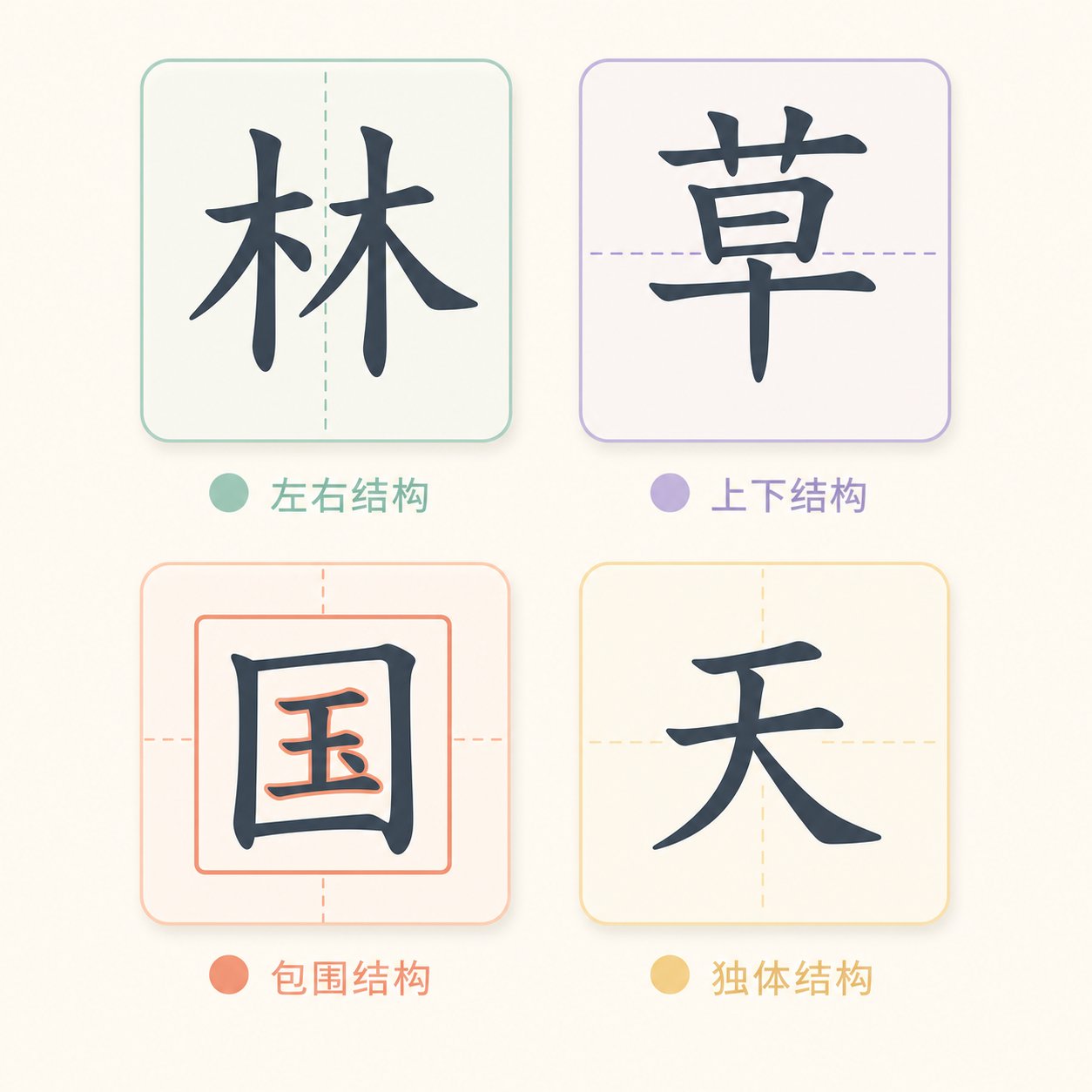
Step 1 Identify the Character Structure Type
Every Chinese character falls into one of a handful of spatial configurations. Recognizing which configuration you are looking at is the fastest way to narrow down where the radical hides. Think of it like reading a map: before you search for a street, you need to know which district you are in.
Single-Component Characters That Are Their Own Radical
Some characters cannot be broken down into smaller meaningful parts. They are the atomic units of the writing system. Characters like 山 (mountain), 火 (fire), and 田 (field) started as simple pictographs thousands of years ago and remain indivisible today. When you encounter a radical character like this, the identification task is already done: the character itself is its radical.
You will find these single-component characters scattered across any chinese character list aimed at beginners. They also serve as the building blocks that combine to form more complex compounds. Recognizing them on sight saves you from overthinking, because there is no hidden radical to hunt for.
Compound Character Structures You Must Recognize
Most characters you encounter in the wild are compounds, meaning two or more components occupy distinct spatial positions within the same square frame. The structural patterns of Chinese characters are limited and predictable. Once you identify the layout, you immediately know which zones to check for the chinese character radical.
Here are the four main structural types with an example for each:
- Left-right (⿰) - Two components side by side. Example: 明 (bright) = 日 + 月
- Top-bottom (⿱) - One component stacked above another. Example: 想 (to think) = 相 + 心
- Enclosing (⿴ / ⿵ / ⿸ / ⿺) - One component wraps around another. Example: 国 (country) = 囗 enclosing 玉
- Three-part (⿲ / ⿳) - Three components arranged horizontally or vertically. Example: 做 (to do) = 亻+ 古 + 攵
The left-right and top-bottom patterns account for the vast majority of radical chinese characters you will encounter. A radical chart organized by structure type can help you visualize these patterns, but the real skill is training your eye to spot the layout instantly when you meet an unfamiliar character.
You can think of this structural awareness as a chinese character tree: the trunk is the whole character, and the branches split according to spatial arrangement. Every compound divides along predictable seams. Identifying those seams is the prerequisite for the next step, which answers a more precise question: given the structure type, exactly which position does the radical typically occupy?
Step 2 Learn Where Radicals Appear by Position
Structure type tells you how a character is divided. Position rules tell you which piece to grab. Radicals in Chinese follow predictable placement patterns tied directly to the character's spatial layout, and learning these patterns turns radical identification from guesswork into a quick visual scan.
Left-Right Characters and the Left-Side Rule
The single most useful rule for finding a radical in Chinese is this: in left-right compound characters, the radical almost always sits on the left. The right component typically serves as the phonetic hint. You will see this pattern in characters like 说 (to speak), where the speech radical 讠 occupies the left side, or 河 (river), where the water radical 氵 sits on the left while 可 provides the pronunciation clue.
This left-side rule holds for the majority of left-right compounds, making it your default assumption whenever you spot a character split vertically down the middle. However, exceptions exist. Some mandarin radicals appear on the right side instead. The knife radical 刂 shows up on the right in characters like 到 (to arrive) and 刻 (to carve). The city radical 阝 sits on the right in 都 (city/all) and 部 (section). When you encounter a right-side radical, it is usually one of a small, memorizable set.
Top-Bottom and Enclosing Position Patterns
For top-bottom characters, the radical is more often on top. The grass radical 艹 crowns characters like 花 (flower) and 茶 (tea). The rain radical 雨 sits above in 雪 (snow) and 雷 (thunder). Yet bottom-position radicals are common too: 心 anchors the bottom of 想 (to think), and 灬 (the fire variant) sits beneath 热 (hot). Top-bottom structures require a bit more judgment than left-right ones.
Enclosing characters follow a straightforward principle: the outer frame is the radical. In 国 (country), the enclosure radical 囗 wraps around the interior. In 道 (road), the walking radical 辶 sweeps along the left and bottom. Radicals in mandarin enclosing structures are easy to spot because they visually dominate the character's perimeter.
The following radical table summarizes these position patterns at a glance:
| Structure Type | Typical Radical Position | Example Character | Radical |
|---|---|---|---|
| Left-right | Left side | 河 (river) | 氵 (water) |
| Left-right (exception) | Right side | 到 (arrive) | 刂 (knife) |
| Top-bottom | Top | 花 (flower) | 艹 (grass) |
| Top-bottom (exception) | Bottom | 想 (think) | 心 (heart) |
| Enclosing | Outer frame | 国 (country) | 囗 (enclosure) |
| Wrapping | Left-bottom wrap | 道 (road) | 辶 (walk) |
Use this table of radicals as a quick-reference cheat sheet. When you face an unfamiliar character, identify the structure, check the expected position, and you will land on the correct radical most of the time. The exceptions are few enough to memorize individually.
Position rules get you to the right component, but there is a catch: many radicals do not look the same when squeezed into a specific slot. A radical crammed onto the left side or tucked along the bottom often changes shape entirely, which is exactly why the next step matters.
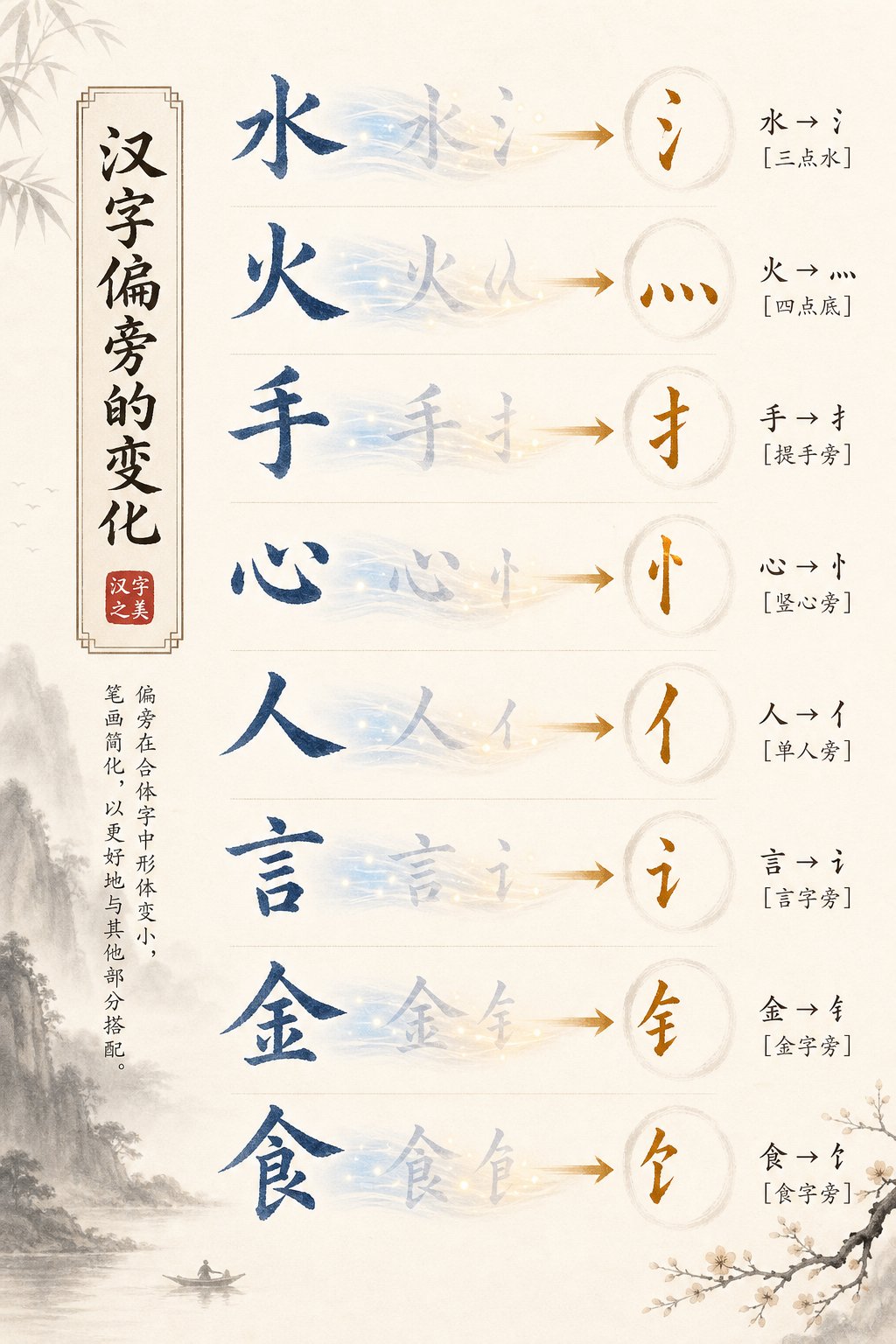
Step 3 Recognize Radicals That Change Shape
Here is where many learners hit a wall. You know the position rules, you can spot the structure type, and yet the component sitting in the expected radical slot looks nothing like any radical you have studied. That is because many of the most common Chinese radicals disguise themselves when squeezed into a specific position. The standalone form you memorized from a radical chart transforms into a compressed, abbreviated, or entirely redrawn variant once it shares space with another component.
This shape-shifting is not random. It follows consistent rules tied to position, and once you learn the major transformations, you will stop second-guessing yourself every time a familiar radical appears in unfamiliar clothing.
Common Radicals That Transform on the Left Side
The left slot in a left-right character is narrow. Radicals crammed into that space get squeezed horizontally, and several of them adopt entirely different stroke configurations to fit. Consider 水 (water). As a standalone character it has four strokes spreading outward. On the left side of a compound, it becomes 氵, three short dots stacked vertically. You see this in 河 (river), 洗 (wash), and 湖 (lake). If you only recognize the full 水 form, you will never connect 氵 to water meaning.
The same logic applies to 人 (person). Standing alone, it is two strokes forming an inverted V. Tucked onto the left, it becomes 亻, a single vertical stroke with a short leftward tick. Characters like 他 (he), 你 (you), and 做 (to do) all carry this variant. The meaning of chinese radicals stays intact through the transformation: 亻 still signals "person" just as clearly as 人 does, once you know to look for it.
The heart radical 心 undergoes a similar compression. On the left side it becomes 忄, three strokes arranged vertically. You will find it in 忙 (busy), 情 (emotion), and 快 (fast/happy). Meanwhile, the speech radical 言 shrinks to 讠 in simplified Chinese, appearing in 说 (speak) and 话 (speech). These left-side variants are among the most common chinese radicals you will encounter in daily reading.
Bottom and Right Position Variant Forms
Position changes on the bottom and right produce their own set of transformations. The fire radical 火 flattens into four dots 灬 when it sits beneath another component. Characters like 热 (hot), 照 (shine), and 煮 (cook) all carry this bottom variant. If you are scanning the bottom of a character and see four evenly spaced dots, think fire.
On the right side, 刀 (knife) stretches into 刂, a vertical stroke with a hook. You will spot it in 到 (arrive), 刻 (carve), and 别 (separate). The radical 130 simplified, which represents 肉 (flesh/meat), takes the form 月 when it appears as a component, making it visually identical to the moon radical. Context and chinese radical meanings help you distinguish them: body-related characters like 脑 (brain) and 腿 (leg) use the flesh variant, while time-related characters use the actual moon radical.
The table below maps the most important transformations you need to internalize:
| Standalone Form | Variant Form | Position | Meaning | Example Characters |
|---|---|---|---|---|
| 水 (shuǐ) | 氵 | Left | Water | 河, 洗, 湖 |
| 人 (ren) | 亻 | Left | Person | 他, 你, 做 |
| 心 (xīn) | 忄 | Left | Heart/mind | 忙, 情, 快 |
| 手 (shǒu) | 扌 | Left | Hand | 打, 推, 拉 |
| 言 (yan) | 讠 | Left | Speech | 说, 话, 语 |
| 火 (huǒ) | 灬 | Bottom | Fire | 热, 照, 煮 |
| 刀 (dāo) | 刂 | Right | Knife | 到, 刻, 别 |
| 足 (zu) | ⻊ | Left | Foot | 跑, 踢, 跳 |
You do not need to memorize every variant across all radicals mandarin learners might encounter. Focus on these high-frequency transformations first. They cover the vast majority of compound characters in everyday text. Once your eye learns to connect 氵 back to 水 and 忄 back to 心 automatically, identifying radicals becomes dramatically faster.
Recognizing variant forms solves the visual puzzle, but it raises a deeper question. In a character with two components that both look like they could carry meaning, how do you determine which one is the actual radical and which one is just hinting at pronunciation? That distinction is the key to handling the roughly 80% of Chinese characters built on a meaning-plus-sound logic.
Step 4 Separate the Semantic Radical From the Phonetic Component
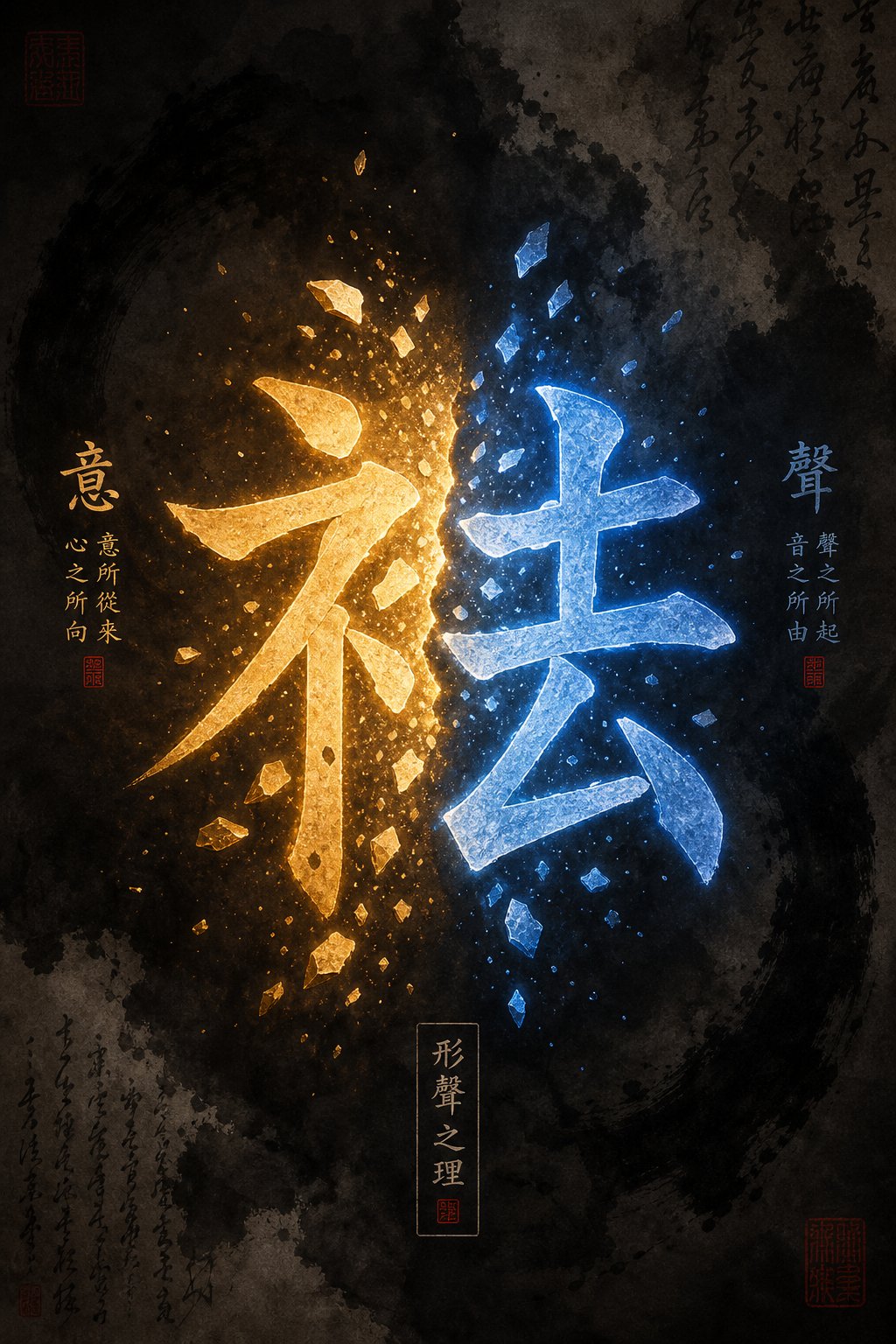
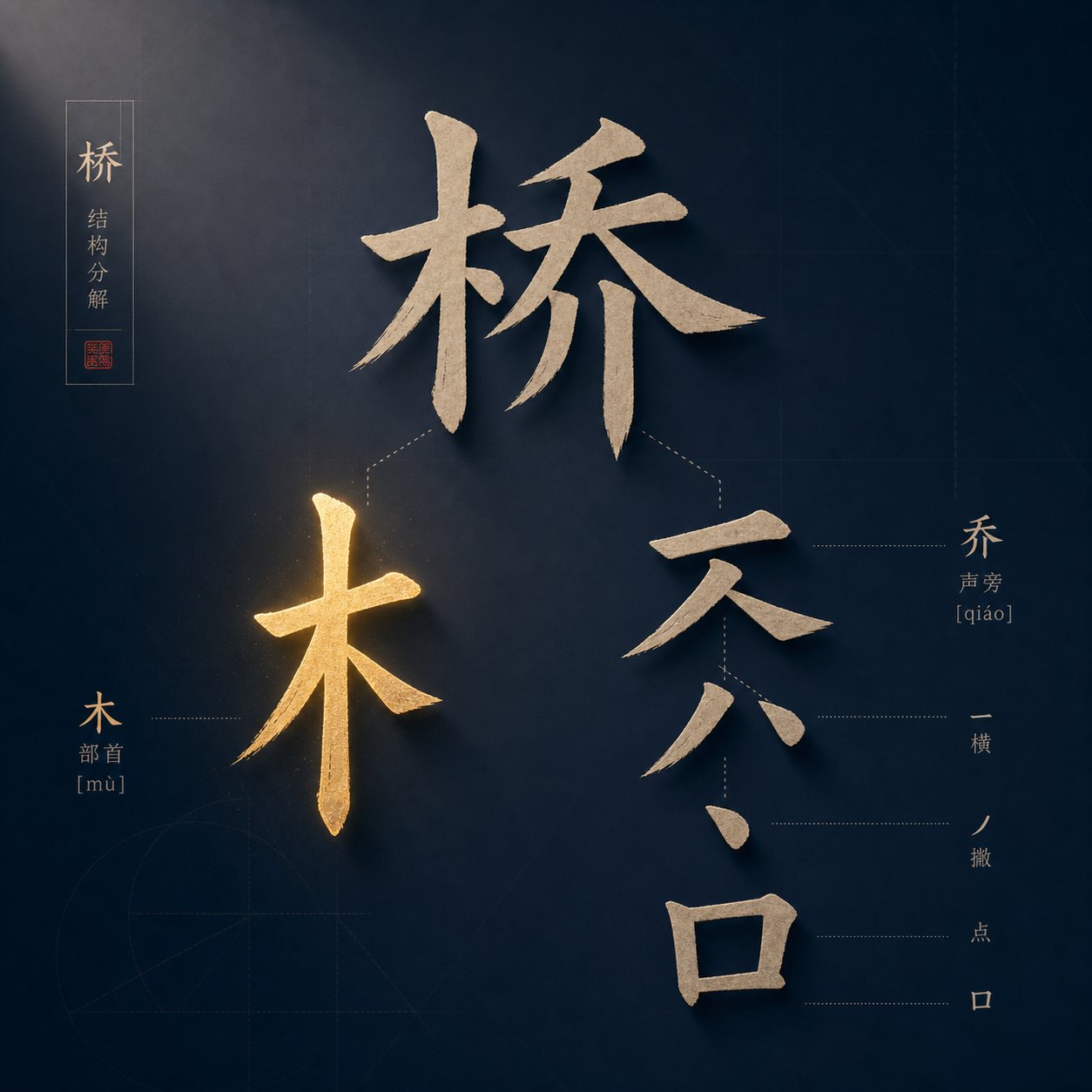
Roughly 80% of all Chinese characters are phono-semantic compounds, built from exactly two functional pieces: one that carries meaning and one that hints at pronunciation. The semantic piece is your radical. The phonetic piece is everything else. Telling them apart is the single most important skill for identifying chinese character radicals in real reading situations.
How Phono-Semantic Compounds Are Organized
The logic behind these compounds is surprisingly straightforward. Ancient writers needed to represent a spoken word in writing, so they combined a component related to the word's meaning category with a component that already had a similar sound. The result is a character where one half tells you what general topic it belongs to and the other half tells you roughly how to say it.
Take 洋 (yang, ocean). The left component 氵 signals water, placing the character in the liquid meaning category. The right component 羊 (yang, sheep) has nothing to do with oceans, but its chinese pronunciation matches the target word. The sound radical meaning split is clean: 氵 equals meaning, 羊 equals sound. The radical is 氵.
This pattern repeats across thousands of characters. The chinese character semantic component anchors the character to a meaning family, while the phonetic component acts as a pronunciation tag borrowed from an unrelated word. Once you internalize this division, you stop seeing random strokes and start seeing a two-part code.
Worked Examples Separating Meaning From Sound
Let's walk through the identification process on a left-right compound first, then a top-bottom compound.
Example 1: 请 (qing, to invite/please)
- Identify the structure: left-right compound. Two components sit side by side.
- Split the character into its components: 讠 on the left, 青 (qing, green/blue) on the right.
- Check which component relates to meaning: 讠 is the speech radical, and asking or inviting someone involves speaking. This connects logically to the character's meaning.
- Check which component relates to sound: 青 is pronounced qing, matching the character's pronunciation almost exactly.
- Confirm the radical: 讠 carries the semantic load, so it is the radical.
The phonetic component 青 appears in an entire family of characters that share similar chinese pronunciation: 清 (qing, clear), 情 (qing, emotion), 晴 (qing, sunny). Each pairs 青 with a different semantic radical that shifts the meaning category, water for 清, heart for 情, sun for 晴, while the sound stays consistent.
Example 2: 花 (hua, flower)
- Identify the structure: top-bottom compound. One component sits above the other.
- Split the character into its components: 艹 on top, 化 (hua, to change) on the bottom.
- Check which component relates to meaning: 艹 is the grass/plant radical. Flowers are plants, so this connection is direct.
- Check which component relates to sound: 化 is pronounced hua, closely matching the character's pronunciation.
- Confirm the radical: 艹 provides the semantic anchor, making it the radical.
Notice the pattern across both examples. The radical connects to the character's meaning category, and the other component echoes the character's sound. When you encounter unfamiliar chinese characters radicals, ask yourself two questions: which piece relates to what this word means, and which piece sounds like the word itself? The one tied to meaning is your radical.
Understanding chinese radicals and meanings through this lens transforms radical identification from memorization into deduction. You do not need to have every radical pre-loaded in memory. You just need to recognize the meaning-sound split and ask which component carries the semantic weight. Of course, this clean division assumes you can confidently identify both components and test them against known meanings and sounds. What happens when neither component is obvious, or when both seem to carry meaning? That is where a structured decision-tree method becomes essential.

Step 5 Apply the Decision-Tree Method to Find Any Radical
The previous steps gave you individual tools: structure recognition, position rules, variant forms, and the meaning-sound split. Individually, each tool handles a slice of the problem. Combined into a single repeatable sequence, they become a mental algorithm you can run against any unfamiliar character. Think of it as a flowchart you carry in your head, one that works whether you are staring at a paper dictionary or puzzling over a street sign.
The Decision-Tree Algorithm for Any Character
When you encounter an unknown chinese radical candidate inside a character, run through these steps in order:
- Is the character a single component or a compound? If it cannot be split into smaller meaningful parts (like 山, 火, or 田), the character itself is the radical. You are done.
- Identify the structure type. Determine whether the compound is left-right, top-bottom, enclosing, or three-part. This tells you which spatial zones to examine.
- Check the expected radical position. Apply the position rules: left side for left-right characters, top for top-bottom characters, outer frame for enclosing characters. Locate the component sitting in that default slot.
- Recognize variant forms. If the component in the expected position looks unfamiliar, check whether it is a compressed or abbreviated version of a known radical (e.g., 氵 for 水, 忄 for 心).
- Test for semantic meaning. Ask yourself: does this component relate logically to what the character means? If the character means "river" and the left component is the water radical, you have a match.
- Verify against the phonetic component. Confirm that the other component provides a sound hint rather than a meaning hint. If it echoes the character's pronunciation, your radical identification is correct.
This six-step sequence handles the vast majority of characters you will encounter. It works because it mirrors the logic behind how radicals chinese dictionaries have used for centuries: structure first, position second, meaning confirmation last. You do not need to have memorized all chinese radicals beforehand. The algorithm guides you to the answer through elimination.
When position rules and semantic logic conflict, meaning wins. The component that carries the semantic connection to the character's definition is the radical, regardless of where it sits.
Handling Ambiguous and Rule-Breaking Characters
Not every character cooperates with the algorithm on the first pass. Some present two components that both seem to carry meaning. Others place the radical in an unexpected position. A few have disputed assignments that differ between dictionaries.
Consider 闻 (wen, to hear). Its enclosing component is 门 (door), and its interior component is 耳 (ear). Both relate to meaning in some way, but the radical for 闻 is 耳, not 门. Why? Because "ear" connects more directly to the act of hearing than "door" does. Dictionary editors historically resolved these ambiguities by asking which component has the stronger semantic link to the character's core meaning. That principle, semantic relevance over positional convention, is your tiebreaker.
Another tricky case: 到 (dao, to arrive). The left component 至 actually means "to arrive," which is the character's own meaning. Yet the radical is 刂 (knife) on the right. This happens because radical assignment is ultimately an editorial choice for dictionary indexing, and sometimes that choice prioritizes organizational convenience over pure semantic logic. Characters like 到 remind you that no rules for radicals list is perfectly consistent. The system is workable, not flawless.
A few more characters that break standard expectations:
- 功 (gong, achievement) - The radical is 力 (power) on the right, not 工 (work) on the left, even though "work" seems semantically relevant.
- 颜 (yan, face/color) - The radical is 页 (page/head) on the right, breaking the left-side default for left-right compounds.
- 问 (wen, to ask) - The radical is 口 (mouth) inside the enclosure, not 门 (door) on the outside, because asking involves the mouth.
These exceptions are not random. They follow the same underlying principle: the component with the strongest meaning connection gets radical status. When you consult a radical list or list of radicals in a dictionary's front matter, you will often find notes explaining these edge cases. Over time, the exceptions become familiar landmarks rather than obstacles.
The decision-tree gives you a systematic path from unknown character to identified radical. But identifying the radical is only half the practical payoff. The real reward comes when you use that identification to actually look the character up, whether in a paper dictionary organized by radical index or a digital app that lets you search by component.
Step 6 Use Radicals to Look Up Characters in Dictionaries
Identifying a radical is satisfying on its own, but the practical payoff arrives when you use that knowledge to find the character in a dictionary. The lookup process differs significantly depending on whether you are flipping through a paper chinese dictionary with radicals or tapping through a digital app. Both paths start from the same place: the radical you just identified.
Traditional Paper Dictionary Radical Lookup
Paper dictionaries organized by radical follow a system that has remained largely unchanged since the Kangxi era. Every mandarin radical dictionary places a radical index in its front pages, and navigating it requires a specific sequence of steps.
Here is the process for a standard chinese character lookup by radical:
- Count the strokes in the radical. Determine how many strokes your identified radical contains. For example, 氵 (water) has three strokes, and 木 (wood) has four.
- Find the radical in the radical index. The index groups radicals by stroke count. Flip to the section matching your number and locate your radical. Next to it, you will find a page reference pointing to the section where all characters sharing that radical are listed.
- Count the remaining strokes in the character. Subtract the radical's strokes from the total. For 样 (yang, appearance), the radical 木 accounts for four strokes, leaving six remaining strokes in the right component 羊... wait, that is actually the component 样's right side. You count only the non-radical portion.
- Locate the character under the correct stroke count. Within the radical's section, characters are sorted by how many additional strokes they contain. Find the subsection matching your count and scan for the character.
- Follow the page reference. The entry will direct you to the full dictionary page with pronunciation, meaning, and usage examples.
This method works reliably, but it demands accurate stroke counting and correct radical identification upfront. A wrong radical sends you to the wrong section entirely, which is why the decision-tree method from the previous step matters so much.
Digital Tools and Radical-Based Search Methods
Modern apps and websites have transformed chinese character lookup from a multi-minute page-flipping exercise into something nearly instant. Digital tools handle the chinese dictionary radical search differently because they are not bound by the physical constraints of printed pages. Instead of forcing you through a single lookup path, they offer multiple entry points.
- Radical-based component search - Apps like Pleco and websites like MDBG let you select a radical from a visual grid, then browse all characters containing it. This mirrors the paper method but eliminates stroke counting errors.
- Handwriting input - When you can see the character but cannot identify its radical, you can draw it directly on a touchscreen. This is the fastest chinese character finder method for characters spotted in the physical world. Google Translate and most smartphone Chinese keyboards support this.
- OCR (optical character recognition) - Point your phone camera at printed text and let the app identify characters automatically. This bypasses radical identification entirely for printed sources.
- Component decomposition search - Some tools let you type in any component you recognize, not just the official radical. If you spot 口 and 天 inside a character, you can search by both components simultaneously to narrow results.
- Wildcard and contextual search - If you know one character in a two-character word, you can search with a wildcard for the unknown one, letting frequency-sorted results guide you to the answer.
The key difference between paper and digital lookup is flexibility. A paper chinese radical dictionary locks you into one path: correct radical, correct stroke count, or failure. Digital tools give you fallback options. If your radical guess is wrong, you can try handwriting input or draw chinese character lookup instead. If handwriting fails, OCR might catch it. This layered approach means radical identification remains your fastest route, but it is no longer your only route.
Even with all these tools available, the speed advantage of knowing the radical first is real. Learners who can identify the radical and go straight to a component search consistently find characters faster than those who rely on drawing alone, especially for characters with many strokes where handwriting recognition becomes less forgiving. The radical remains your most reliable anchor, and the tools simply make acting on that knowledge easier.
Of course, speed only matters if your identification is correct. Certain recurring mistakes can send you down the wrong path entirely, wasting the time these tools are designed to save.

Step 7 Avoid Common Mistakes and Confirm Your Answer
The method works, but only if you sidestep a handful of traps that catch learners at every level. These mistakes are predictable, which means they are also preventable. Knowing what are radicals in chinese is one thing. Correctly picking them out under pressure, especially in characters you have never seen, requires awareness of where your instincts will mislead you.
Mistakes That Trip Up Most Learners
- Confusing decorative strokes with radical components. Some strokes exist purely for structural balance or historical convention. The dot in 玉 (jade) distinguishes it from 王 (king), but it is not a separate component. Tip: if a stroke cannot stand alone or combine with others to form a recognized radical from a chinese radicals list, it is likely a distinguishing mark rather than a meaningful part.
- Assuming the more complex component is the radical. Learners often gravitate toward the busier-looking half of a character, thinking complexity equals importance. In reality, radicals are frequently the simpler piece. In 请 (to invite), the radical is the compact 讠 on the left, not the more elaborate 青 on the right. Tip: test for meaning connection, not visual weight.
- Misidentifying the radical side in symmetrical characters. Characters like 林 (forest) have two identical components side by side. When both halves look the same, the radical is typically the left instance of the repeated component (木 in this case). Tip: default to the left-side rule even when both sides mirror each other.
- Failing to recognize variant forms. This remains the most common stumbling block. Seeing 忄 and not connecting it to 心, or spotting 灬 without thinking of 火, breaks the entire identification chain. Tip: drill the eight to ten highest-frequency variant pairs from the transformation table until recognition becomes automatic. A downloadable list of chinese radicals pdf or flashcard set focused on variant forms accelerates this process significantly.
Each of these errors shares a root cause: relying on visual intuition instead of running the systematic method. The decision-tree exists precisely to override gut reactions that lead you astray. When in doubt, restart the sequence from step one rather than guessing.
Quick-Reference Summary of the Complete Method
You now have a full chinese radical list of techniques spanning seven steps. Here is the entire process compressed into a single reference you can return to whenever you face an unfamiliar character:
Determine if the character is a single component or compound. If compound, identify the structure type (left-right, top-bottom, or enclosing). Check the expected radical position for that structure. Recognize any variant forms in that position. Test the candidate for semantic meaning connection. Verify that the remaining component serves a phonetic role. If meaning and position conflict, trust meaning.
That sequence, applied consistently, handles the vast majority of characters you will encounter in any chinese characters radicals list or real-world text. Print it, bookmark it, or write it on a sticky note next to your study desk. The more you practice, the faster each step collapses into a single glance. Within a few weeks of active use, you will find yourself identifying radicals instinctively, no longer lost in strokes but reading them like a map you have walked a hundred times before.
Frequently Asked Questions About Finding Chinese Radicals
1. What is the fastest way to find the radical of a Chinese character?
The fastest method is a three-part visual scan: first identify whether the character is a single component or compound, then check the structure type (left-right, top-bottom, or enclosing), and finally look at the expected radical position for that layout. In left-right characters, the radical is almost always on the left. In top-bottom characters, check the top first. In enclosing characters, the outer frame is usually the radical. This approach narrows your search to one specific zone within seconds.
2. How many radicals are there in Chinese and do I need to memorize all of them?
The traditional Kangxi system uses 214 radicals, while some modern dictionaries trim the count to around 201. You do not need to memorize all of them before you start identifying radicals. Focus on learning the 40-50 most frequently occurring radicals and their variant forms first. These high-frequency radicals appear in the majority of everyday characters, and the decision-tree method lets you deduce unfamiliar radicals through structure and meaning analysis rather than pure recall.
3. Why do some Chinese radicals look different inside a character than when they stand alone?
Radicals change shape when squeezed into specific positions within compound characters. The left slot is narrow, so radicals compress horizontally. For example, water (水) becomes three dots (氵), person (人) becomes a single vertical stroke with a tick (亻), and heart (心) becomes three vertical strokes (忄). Bottom-position radicals also transform, like fire (火) flattening into four dots (灬). These changes follow consistent position-based rules and affect roughly a dozen high-frequency radicals that appear in thousands of characters.
4. How do I tell the difference between the radical and the phonetic component?
In phono-semantic compounds, which make up about 80% of Chinese characters, the radical provides a meaning clue while the phonetic component hints at pronunciation. To distinguish them, ask two questions: which component relates to what the character means, and which component sounds like the character itself? For example, in 河 (he, river), the left component 氵 connects to water (meaning), while the right component 可 (ke/he) echoes the pronunciation. The meaning-bearing component is always the radical.
5. What should I do when a character seems to have two possible radicals?
When two components both appear to carry meaning, apply the semantic relevance tiebreaker: the component with the stronger, more direct connection to the character's core definition is the radical. For instance, in 闻 (to hear), both 门 (door) and 耳 (ear) relate to meaning in some way, but 耳 connects more directly to hearing, making it the radical. If you are still unsure, consult a digital dictionary with component search, which lets you try either component and quickly confirm the correct assignment.