The Hu Surname and Its Place in Chinese Heritage
When you encounter the Hu last name, you're looking at one of the most widespread family names in the Chinese-speaking world. But what does it actually mean, and where does it come from? The answer is more layered than most people expect.
What the Hu Surname Means in Chinese
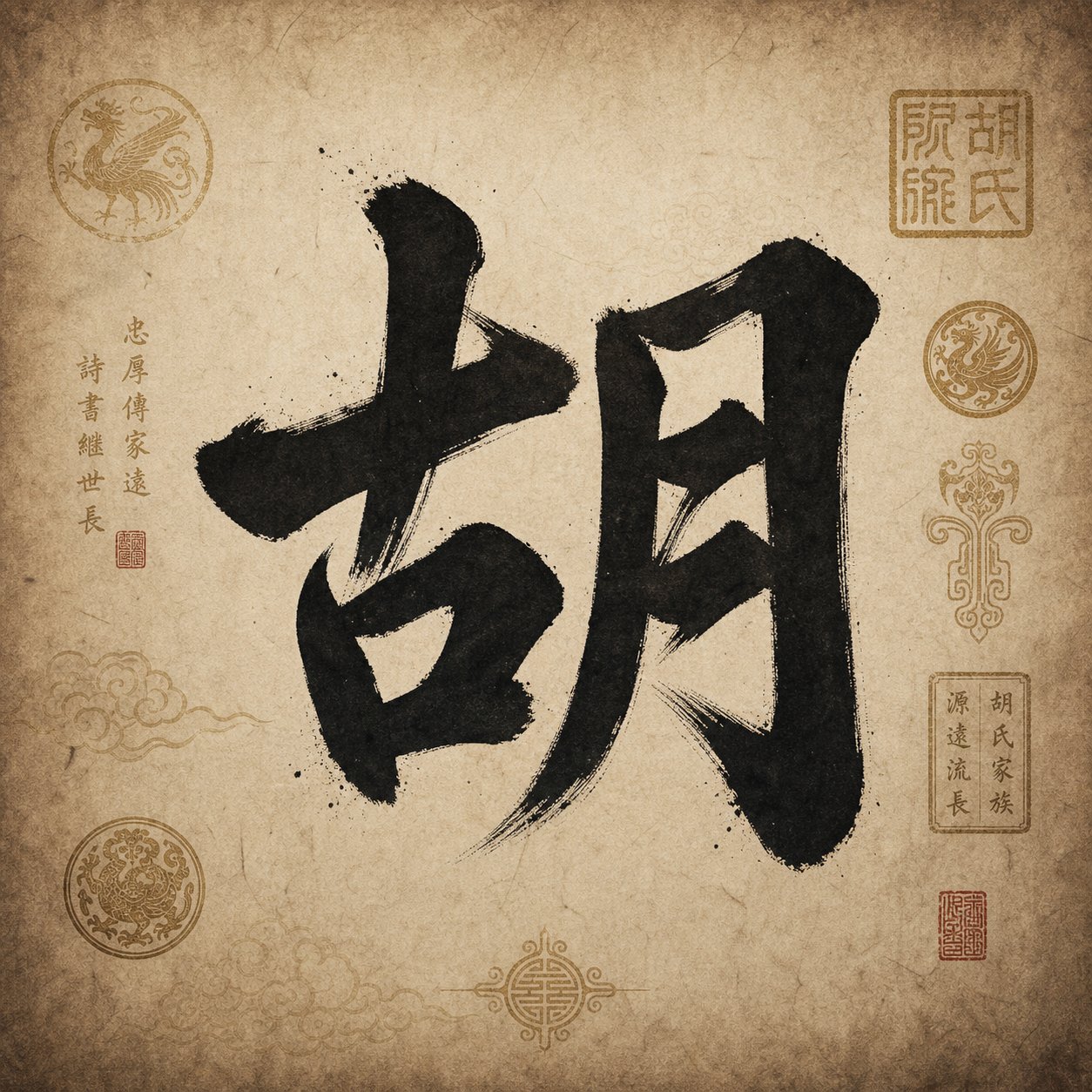
The Hu surname (胡, pinyin: hu) is a Chinese family name ranking approximately 15th among all last names in mainland China. It traces its primary origin to the posthumous title of Gui Man, the first ruler of the State of Chen during the Western Zhou dynasty, who was honored as Duke Hu (胡公). The char in Chinese for this surname also carries meanings of "foreign" and "reckless," though these senses developed separately from the name's genealogical roots.
The single character 胡 packs a surprising amount of history into its strokes. As a surname, it represents not one clean lineage but several distinct ancestral streams that converged under the same written form over thousands of years. Three major origin theories account for most Hu families today:
- Descent from Duke Hu of Chen (胡公满), whose posthumous title became a family name
- Descent from the ancient State of Hu (胡国), a vassal state conquered during the Spring and Autumn period
- Adoption by non-Han ethnic groups, including Xianbei and Xiongnu peoples, who sinicized their names across multiple dynasties
How Common Is the Hu Last Name
The hu surname accounts for roughly 1.31% of the Han Chinese population, translating to over 16.5 million people. The classic text Hundred Family Surnames (百家姓), compiled during the early Song dynasty, lists it at position 158. That ranking reflects political prestige at the time of compilation rather than actual population size. Modern census data tells a different story, placing Hu firmly among China's top twenty last names.
Understanding this single char in Chinese requires looking beyond dictionary definitions. Each origin theory connects to a different chapter of Chinese civilization, from the founding of Zhou-era states to the ethnic mixing that reshaped northern China across centuries. The surname's story is, in many ways, a compressed history of how Chinese identity itself was built, layer by layer, from diverse sources.
The Founding Ancestor Story Behind the Hu Name
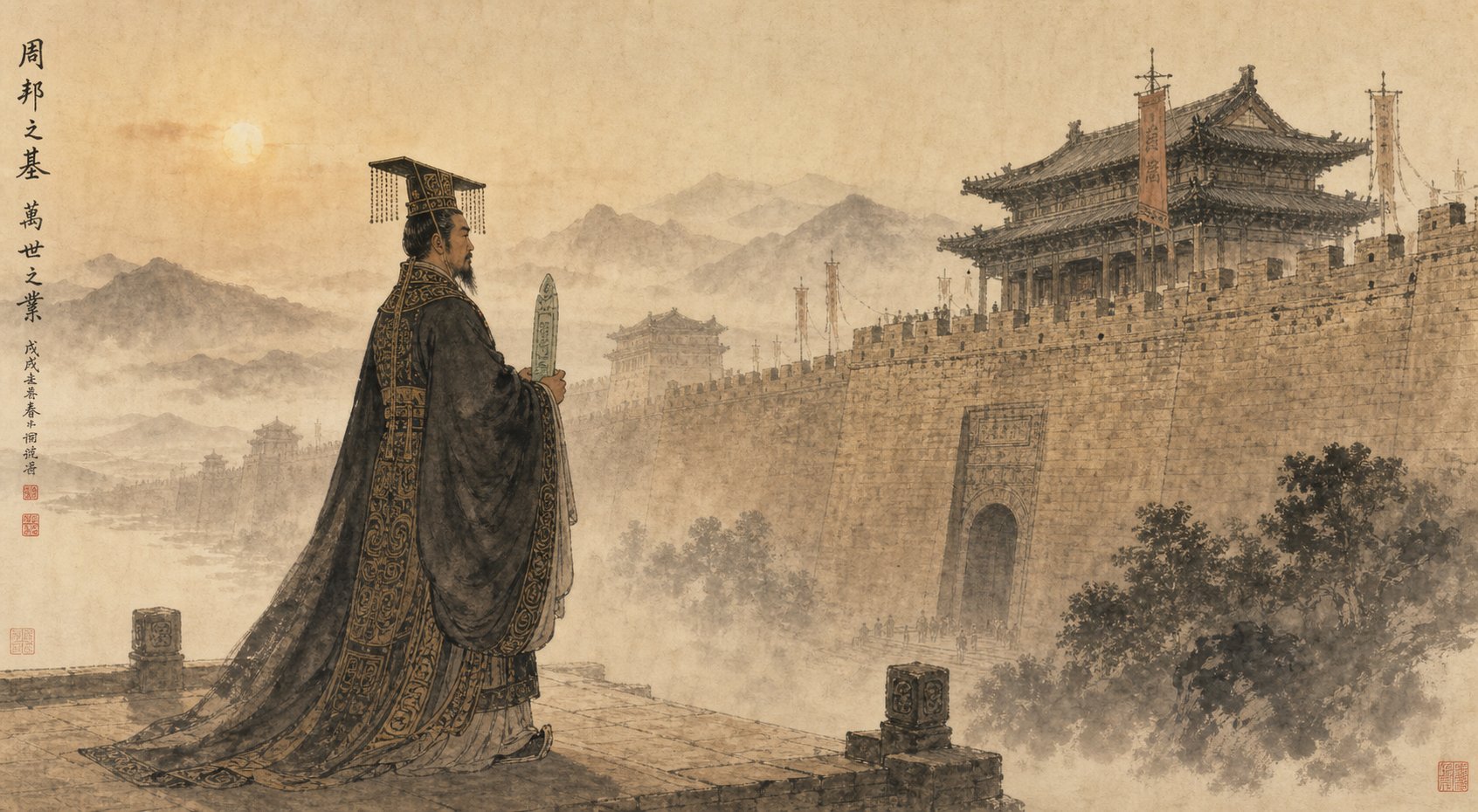
Every major Chinese surname has a founding ancestor story, and the hu last name origin traces back to one of the most well-documented lineages in classical genealogy. The man at the center of this story is Gui Man (妫满), a figure whose life bridged the fall of one dynasty and the rise of another.
Gui Man and the Posthumous Title Origin
Imagine a newly victorious king looking to legitimize his rule. After King Wu of Zhou overthrew the Shang dynasty around 1046 BC, he needed to demonstrate respect for China's ancient sage-kings. One way he did this was by enfeoffing their descendants, granting them land and titles to maintain ancestral rites. Gui Man, a direct descendant of the legendary Emperor Shun, was one of these chosen heirs.
King Wu thought highly of Man's father, Efu (阏父), who served as the royal official in charge of pottery manufacture. The king gave his eldest daughter, Da Ji (大姬), to Man in marriage, making him the royal son-in-law. Man was then granted the territory of Chen, with its capital at Wanqiu in modern-day Huaiyang County, Henan Province. This new state was part of the San Ke (三恪), or "Three Reverent States," established specifically to honor the descendants of ancient sage-kings.
When Gui Man died, he received the posthumous title Duke Hu (胡公). And here's where the surname hu enters the picture: his descendants adopted that posthumous title as their family name.
So what exactly is a posthumous title? In ancient China, a shi hao (谥号) was an honorific name bestowed after a ruler's death to summarize their character or achievements. Think of it as a one- or two-character verdict on a life's work, chosen by court officials or successors. These titles carried enormous weight. They weren't casual nicknames but formal designations used in ritual and record-keeping for generations. When descendants of Duke Hu of Chen chose to carry his posthumous title as their lineage surname, they were anchoring their identity to his legacy.
The State of Chen Connection Explained
The full picture becomes clearer when you trace the chronological sequence from Emperor Shun all the way to the adoption of the surname Hu. Classical genealogical texts like the Yuanhe Xing Zuan (元和姓纂), a Tang dynasty compendium of surname origins, document this lineage in detail:
- Emperor Shun (虞舜), one of China's legendary Five Emperors, bore the ancestral surname Gui (妫) after residing near the Gui River in what is now Shanxi Province.
- Shun's descendants carried the Gui surname through roughly 33 generations, maintaining their lineage across the Xia and Shang dynasties.
- Efu (阏父), the 32nd-generation descendant of Shun's son Shang Jun, served the pre-dynastic Zhou state as an official overseeing pottery production.
- Gui Man, Efu's son, married King Wu of Zhou's eldest daughter and was enfeoffed at the State of Chen around 1046 BC.
- Duke Hu (胡公) became Man's posthumous title after his death, honoring his rule over Chen.
- Descendants adopted Hu as their lineage surname (氏), following the common Western Zhou practice of deriving family names from posthumous titles or place names.
This practice wasn't unique to the Hu family. During the Western Zhou, commoners and nobles alike began identifying themselves by place of residence, ancestral titles, or official positions. The surname Hu and the surname Chen actually share the same founding ancestor: Gui Man. Those who took the state name became Chen; those who took the posthumous title became Hu. This shared root means that Hu and Chen families, despite bearing different last names, may trace back to the same bloodline.
The State of Chen itself lasted until 478 BC, when it was conquered by the powerful state of Chu. By that point, the surname Hu was already well established among Duke Hu's descendants. The Shiji (史记), China's foundational historical record compiled by Sima Qian, corroborates the Chen-Hu genealogical connection in its chapter on the houses of Chen and Qi.
This origin story makes the last name Hu one of the oldest documented surnames in Chinese civilization, rooted in a lineage stretching from a mythical sage-king through the founding of a Zhou-era state. It also explains why the surname Hu is considered a "noble surname" (贵姓) in traditional Chinese culture: its bearers can claim descent from Emperor Shun himself, one of the most revered figures in Chinese moral philosophy.
Yet Duke Hu of Chen's lineage is only the most widely accepted origin. Other Hu families trace their roots to an entirely different source: a small, ill-fated vassal state that shared the same name but had no genealogical connection to Gui Man at all.
The Lost State of Hu and Its Surviving Legacy
A small kingdom once stood in what is now northern Anhui Province. It was called Hu (胡国), and its people had no genealogical connection to Duke Hu of Chen. When this state fell, its survivors carried the name forward in the only way they could: as a surname.
The Ancient State of Hu as a Surname Source
The State of Hu was a minor vassal kingdom during the early Eastern Zhou period, situated near modern-day Fuyang in Anhui. Historical records place its destruction at 763 BC, when Duke Zhuang of Zheng (郑庄公) attacked and conquered it. The event is documented in chronicles of the Spring and Autumn period, a turbulent era when larger states routinely absorbed their weaker neighbors.
After the conquest, the people of Hu lost their homeland but kept their identity. Following a widespread practice of the time, they adopted the name of their former state as their family name. The character they used was the same one: 胡. This means that when you see hu in Chinese written as 胡, it could point to either the Duke Hu of Chen lineage or the State of Hu lineage, depending on the specific family's genealogical records.
Sounds confusing? It helps to think of it this way: two completely separate historical events produced the same surname through different mechanisms. One came from a posthumous title. The other came from a state name. Both are legitimate, and both contributed to the large population carrying the Hu surname today.
The ho surname origin in Cantonese-speaking communities often traces back to one of these same two sources, since Ho is simply the regional pronunciation of the same character 胡.
How Chinese Surnames Form from State Names
The State of Hu isn't an isolated case. Adopting a conquered state's name as a family surname was one of the most common mechanisms of surname formation in ancient China. Consider how many familiar Chinese surnames follow this exact pattern:
- Chen (陈) from the State of Chen
- Song (宋) from the State of Song
- Zheng (郑) from the State of Zheng
- Wu (吴) from the State of Wu
The last name Wu origin, for instance, follows a nearly identical path. When the State of Wu fell to the State of Yue in 473 BC, its displaced people adopted Wu as their surname. This pattern repeated across dozens of states during the Spring and Autumn and Warring States periods, as each family name traces back to a specific founding event that historians can identify.
The table below puts the two primary Hu origin theories side by side so you can see how they differ:
| Feature | Duke Hu of Chen Origin | State of Hu Origin |
|---|---|---|
| Time Period | Western Zhou (c. 1046 BC onward) | Spring and Autumn (destroyed 763 BC) |
| Geographic Location | Wanqiu, modern Henan Province | Near modern Fuyang, Anhui Province |
| Ancestral Figure | Gui Man (妫满), descendant of Emperor Shun | Ruling house of the State of Hu (surname Gui 归) |
| Mechanism of Surname Formation | Adopted from posthumous title (谥号) | Adopted from state name after conquest |
| Genealogical Tradition | Most widely cited primary origin | Secondary but well-documented origin |
Both lineages are valid. They coexist because Chinese surnames were never a single-origin system. Different families bearing the same written character can have entirely unrelated ancestral roots. The only way to determine which origin applies to a specific Hu family is through clan genealogies (族谱) that trace the line back to a particular ancestor or geographic origin.
This multiplicity of sources also hints at something deeper about the character 胡 itself. Beyond its role as a state name and a posthumous title, the character carried other meanings in ancient Chinese, meanings that would eventually draw yet more people into the Hu surname through an entirely different historical process.
Understanding the Character 胡 Beyond the Surname
A single character carrying the weight of "barbarian," "reckless," and "beard" might seem like an odd choice for a family name. Yet over 16 million people bear it proudly. The disconnect between the character's broader meanings and its role as a surname puzzles many English-language readers encountering it for the first time. Is hu a word with one meaning or many? The answer is: many, and they developed along separate historical tracks.
The Multiple Meanings of the Character 胡
The character 胡 is what linguists call polysemous: it carries multiple distinct meanings that branched off from a single root over centuries. If you're wondering about hu pronunciation, it's spoken in Mandarin's second tone (hu, rising pitch), romanized as hu in pinyin. Knowing how to pronounce hu is straightforward, but understanding what it means requires unpacking layers of history.
Here are the documented semantic meanings of 胡, each with its own origin story:
- Dewlap or pendulous flesh - The earliest attested meaning. The Shuowen Jiezi (说文解字), China's foundational character dictionary from 100 AD, defines 胡 as "the hanging flesh beneath a cow's chin." The right side of the character is the "flesh" radical (肉), not "moon" (月), though they look identical in modern script.
- Beard - By extension from "pendulous flesh," 胡 came to mean the mass of hair hanging beneath a man's chin. A later variant, 鬍, added a "hair" radical on top to distinguish this meaning, though modern simplified Chinese has merged both forms back into 胡.
- Non-Han peoples from the north and west - Attested at least as early as the Western Han dynasty (206 BC-9 AD), 胡 became a blanket term for steppe nomads and Central Asian peoples. This usage may have originated as a phonetic transcription of a group's own name rather than a descriptive label.
- Foreign (adjective) - Derived from the ethnic meaning, 胡 became a prefix for anything introduced from the west: 胡椒 (black pepper), 胡萝卜 (carrot), 胡琴 (fiddle), 胡桃 (walnut).
- Reckless or wild (adverb) - Expressions like 胡说八道 ("nonsense") and 胡闹 ("act wild") use 胡 to convey uncontrolled, careless behavior. Whether this sense derives from Chinese perceptions of "barbarian" conduct or developed independently remains debated among scholars.
- Why (interrogative particle) - An archaic literary usage, unrelated to the other meanings, found in classical texts.
People sometimes search for "hu hu hu meaning" expecting a single clean definition. What they find instead is this web of interconnected senses, each rooted in a different era of Chinese linguistic history. The character is not the chinese for tiger, which is an entirely different word: 虎 (also pronounced hu, but in the third tone, hu). That tonal distinction, second tone versus third tone, separates two completely unrelated characters in spoken Mandarin.
Why a Character Meaning Foreign Became a Common Surname
Here's the key insight: the surname meaning of 胡 predates most of its negative connotations. Duke Hu of Chen received his posthumous title around the 11th century BC. The character's use as a label for northern peoples didn't become widespread until the Warring States and Han periods, centuries later. By the time 胡 carried the baggage of "barbarian" or "reckless," millions of people already bore it as an inherited family name with no connection to those meanings.
The character's structure tells part of this story. Its left component, 古 (gu, "ancient"), serves as a phonetic element indicating pronunciation. Its right component, 肉 ("flesh"), points to the original meaning of dangling tissue. Neither component has anything to do with foreigners or wild behavior. Those meanings were layered onto the character through historical usage, not built into its graphic structure.
As Victor Mair noted in his etymological analysis, educated Chinese speakers today do not mentally connect the surname 胡 with expressions like 胡说 ("nonsense") or 胡人 ("barbarian"). The associations have drifted apart over time, much like how English speakers named "Hunter" don't think of killing animals when they hear the name. Context separates the surname from the adjective completely.
Yet the irony runs deeper than simple semantic drift. The very peoples once labeled 胡, the Xianbei, Xiongnu, and other northern groups, eventually adopted this character as their own family name when they assimilated into Chinese society. The word that once marked them as outsiders became the name that marked them as insiders.

Non-Han Origins and Ethnic Assimilation into the Hu Lineage
Picture a Xianbei warrior in the 5th century, ordered by imperial decree to abandon his ancestral clan name and adopt a single Chinese character as his new identity. The character assigned to his family? 胡, the very word that had been used to label his people as outsiders for centuries. This isn't a hypothetical scenario. It happened on a massive scale, and it reshaped the demographics of the Hu surname permanently.
Xianbei and Xiongnu Roots of Some Hu Families
The northern frontier of ancient China was never a sealed border. Across centuries of warfare, trade, intermarriage, and political alliance, steppe peoples moved into Chinese-administered territories and gradually adopted Han cultural practices, including Chinese-style single-character surnames. Several documented ethnic groups contributed lineages to the Hu surname pool:
- Xianbei (鲜卑) — Northern Wei dynasty, 5th century AD: Emperor Xiaowen of Northern Wei launched sweeping sinicization reforms around 496 AD, mandating that Xianbei nobles replace their multi-syllable clan names with single-character Chinese surnames. The Xianbei clan Hegu (纥骨氏) was officially reassigned the surname Hu (胡). Other Xianbei clans received different surnames: Tuoba became Yuan, Pugushi became Zhou, Daxishi became Xi. The Hu assignment was just one piece of a broader restructuring.
- Xiongnu (匈奴) — Han through Jin dynasties, 2nd century BC to 4th century AD: As Xiongnu confederacy power fragmented, southern Xiongnu groups settled within Chinese borders and gradually adopted Han surnames. Some took the surname Hu, though others chose Liu, Jin, or Helian depending on their specific clan affiliations and political circumstances.
- Qiang (羌) — Han through Tang dynasties: Qiang peoples of the northwestern frontier, particularly those in the Anding (安定) region of modern Gansu, intermarried with local Chinese hu families over generations. The blending was so thorough that distinguishing ethnic Qiang-origin Hu families from Han-origin Hu families in that region became nearly impossible by the Tang dynasty.
- Sogdians and other Central Asian peoples — Tang dynasty, 7th-9th centuries: Merchants and settlers from Central Asia who took up residence in Tang China sometimes adopted Hu as a surname, possibly because the character already carried the meaning of "western foreigner" and served as a natural phonetic fit for their original names.
Ethnic Assimilation and Surname Adoption
Here's what makes this history so striking. The character 胡 was literally the word Chinese writers used to mean "barbarian" or "non-Chinese northerner." And yet, when these very peoples assimilated, some of them ended up carrying that exact character as their permanent family name. The label became the identity.
Was this ironic? Certainly. Was it intentional? In some cases, possibly. The reference material from Hu clan genealogical research notes that during Emperor Xiaowen's reforms, the surname assignments weren't random. Some scholars have speculated that clans already associated with the "hu" (foreign) designation received the matching character deliberately. Others argue the assignments were purely phonetic, matching the sound of the original clan name to a similar-sounding Chinese character.
Regardless of intent, the demographic impact was real. These non-Han lineages added substantial numbers to the Hu surname population. Yet it's important to keep proportion in mind. Modern genetic testing, including Y-chromosome DNA analysis through services like 23Mofang, shows that the majority of contemporary Hu surname bearers, particularly those belonging to the Hualin (华林) branch which may account for over 50% of all Hu families, share paternal lineage markers (Y-O series) consistent with Han Chinese ancestry. Their genetic profile aligns with the Chen surname's Yimen (义门) branch, confirming the shared ancestor Gui Man as documented in clan genealogies.
So while non-Han assimilation is a genuine and documented part of chinese hu surname history, it represents a tributary stream rather than the main river. The hu culture of genealogical record-keeping has preserved these distinctions clearly. Most Hu clan genealogies (族谱) openly acknowledge the existence of non-Han branches without treating them as the primary origin. The ancestors, it seems, were honest about their mixed heritage rather than hiding it.
This layering of ethnic origins onto a single surname raises a practical question for modern descendants scattered across the globe. If the same character 胡 can represent Han lineages from Chen, survivors of a conquered state, and assimilated northern peoples, how do diaspora families, many of whom spell their name differently depending on dialect, figure out which branch they belong to?
Romanization Variants and Dialect Differences Across the Diaspora
The spelling on your passport might say Ho, Wu, Woo, Oh, Foo, or Aw, and yet all of these can represent the same Chinese character: 胡. Conversely, the English spelling "Hu" might actually represent a completely different character with a completely different lineage. For overseas Chinese families trying to trace their roots, this tangle of romanization creates real confusion. Let's untangle it.
Different Characters That Romanize as Hu
In Mandarin pinyin, several distinct characters share the pronunciation "hu" across its four tones. Each one represents an entirely separate surname with its own origin story, unrelated to the 胡 lineage discussed throughout this article:
- 胡 (hu, second tone) — The primary subject of this article. Origins in Duke Hu of Chen, the State of Hu, and ethnic assimilation.
- 扈 (hu, fourth tone) — A rare surname derived from the ancient Hu clan near modern Xi'an, Shaanxi. Completely unrelated to 胡 despite the identical romanization.
- 壶 (hu, second tone) — Extremely rare as a surname. Originally referred to a type of vessel.
- 瑚 (hu, second tone) — Found in compound words like 珊瑚 (coral) and occasionally used as a surname element, though vanishingly rare on its own.
- 户 (hu, fourth tone) — Meaning "door" or "household," this character functions as a distinct surname in some regions.
If your family name romanizes as "Hu" but you're unsure which character it represents, the simplest check is to look at older family documents, ancestral tablets, or any Chinese-language records that show the actual written character. Without that confirmation, romanization alone cannot tell you which lineage you belong to.
Dialect Variants and Diaspora Spellings
Here's where things get especially interesting for diaspora families. The character 胡 is pronounced differently across China's major dialect groups, and immigrants historically registered their names based on how they actually spoke, not based on Mandarin pinyin. The result? A single ancestral character scattered across a dozen different English spellings depending on when and where a family emigrated.
The last name Ho, for instance, is one of the most common diaspora spellings of 胡. Cantonese speakers pronounce the character roughly as "wu" or "woo" in some romanization systems, but under the older Wade-Giles and colonial Hong Kong systems, it was often recorded as "Ho" or "Wu." If your family carries the ho last name and has roots in Guangdong or Hong Kong, there's a strong chance it corresponds to 胡.
Similarly, the last name Oh appears frequently among Hokkien and Teochew speakers from Fujian Province and Southeast Asia. In these southern Min dialects, 胡 is pronounced closer to "o" or "oh," which is how it ended up on identity documents throughout Malaysia, Singapore, and the Philippines.
The table below maps the major dialect pronunciations to their common romanized spellings and the regions where you'll most likely encounter them:
| Dialect Group | Pronunciation of 胡 | Common Romanized Spellings | Primary Regions / Diaspora Locations |
|---|---|---|---|
| Mandarin | hu (second tone) | Hu | Mainland China, Taiwan, post-1970s immigrants worldwide |
| Cantonese | wu / woo | Wu, Woo, Wou, Ho | Hong Kong, Guangdong, older diaspora in North America and Australia |
| Hokkien (Southern Min) | o / oh | Oh, O, Aw | Fujian, Taiwan, Malaysia, Singapore, Philippines |
| Teochew | ou / o | Oh, Ow, Au | Eastern Guangdong, Thailand, Cambodia, Vietnam |
| Hakka | fu / foo | Foo, Fu | Guangdong (Meizhou), Malaysia, Mauritius, Reunion Island |
| Shanghainese (Wu dialect) | ghu / vu | Vu, Woo | Shanghai, Zhejiang, Jiangsu |
You'll notice that some of these spellings overlap with entirely different surnames. The hsu last name, for example, is a Wade-Giles romanization of 許 (Xu in pinyin), not 胡. And the huang surname (黄) is a completely separate character and lineage, though diaspora confusion between "Hu" and "Huang" occasionally occurs due to unfamiliarity with tonal distinctions.
A related point of confusion involves Vietnamese surnames. The huynh surname, one of the most common Vietnamese family names, is actually the Vietnamese reading of 黄 (Huang), not 胡. Similarly, hoang is an alternate romanization of the same Vietnamese surname Huynh/Hoang (黄). Vietnamese families bearing the surname Hồ, however, do correspond to the Chinese character 胡. The distinction matters: if your Vietnamese family name is Hồ, you likely share ancestral roots with Chinese Hu (胡) families. If it's Huynh or Hoang, your lineage connects to the Huang (黄) surname instead.
For families trying to determine their connection, the critical step is identifying the original Chinese character behind the romanized spelling. A "Ho" family from Hong Kong and an "Oh" family from Singapore may share the exact same character 胡 and potentially the same ancestral branch. Meanwhile, a "Ho" family whose character is actually 何 belongs to an entirely different surname group with no relation to the Hu lineage at all.
These spelling variations aren't just linguistic curiosities. They shaped how communities clustered in the diaspora, which clan associations families joined, and whether genealogical records from different countries can be cross-referenced. The character is the anchor. The romanization is just the surface.

Migration Patterns and Where Hu Families Live Today
Spelling variations tell you where a family ended up. Migration history tells you how they got there. The Hu surname didn't spread evenly across China like water filling a basin. It moved in waves, pushed by war, famine, and political collapse, pooling in certain regions while barely reaching others. Those patterns, set in motion over a thousand years ago, still show up in population data today.
Southward Migration Through Chinese Dynasties
Early Hu families clustered in the Yellow River basin, the cradle of Chinese civilization and the geographic home of both the State of Chen and the State of Hu. During the pre-Qin era, the surname's activity centered on the area south of the Yellow River, stretching across the Huai River and Han River watersheds in what is now Henan, Anhui, and Hubei.
From that starting point, successive crises drove Hu clans southward in distinct waves. Each migration left a demographic footprint that accumulated over centuries:
- Western Jin collapse and the Yongjia Rebellion (311 AD) — When Xiongnu-led forces sacked the Jin capital Luoyang, massive numbers of northern Chinese elites fled south across the Yangtze. Hu families were among these refugees. This event, known as the Yongjia Disorder (永嘉之乱), marks the first documented large-scale southward movement of Hu clans. Many initially settled in Anhui before pushing further into Fujian over subsequent generations.
- Late Tang dynasty upheaval (9th century) — The Huang Chao Rebellion (875-884 AD) devastated northern and central China. Hu families already established in the Yangtze region moved further south into Jiangxi, Hunan, and Fujian. By the end of the Tang period, the surname had gained a strong foothold throughout the middle and lower Yangtze.
- Northern Song to Southern Song transition (1127 AD) — When Jurchen armies captured the Song capital Kaifeng and the court relocated to Lin'an (modern Hangzhou), another massive wave of northerners followed. This migration cemented the Hu surname's dominance in the Yangtze River delta and pushed branches deeper into Guangdong and Fujian.
- Late Ming and Qing dynasty movements (17th-19th centuries) — Smaller but significant migrations carried Hu families into Sichuan (during the "Huguang Fills Sichuan" campaign), Taiwan, and eventually Southeast Asia as part of broader overseas Chinese emigration.
A genealogical study of Hu clan migrations traces a common path: from the Central Plains to Anhui, then from Anhui to Fujian, and finally from Fujian to Taiwan. The Anding (安定) branch in Gansu Province became one of the most prominent Hu lineages during the Han dynasty, serving as a source population for later dispersals across China.
Global Distribution of the Hu Surname Today
These layered migrations produced a clear geographic signature. During the Song dynasty (960-1279), approximately 980,000 people carried the Hu surname, with Jiangxi alone accounting for 29% of the total Hu population. The four provinces of Jiangxi, Hunan, Jiangsu, and Zhejiang together held about 63% of all Hu families in China at that time.
By the Ming dynasty (1368-1644), the Hu population had grown to roughly 1.47 million. The center of gravity shifted eastward: Jiangxi (22.7%), Zhejiang (20%), and Anhui (13.3%) collectively held 56% of all Hu surname bearers. The overall pattern remained stable across six centuries, with the Jiangxi-Zhejiang-Anhui triangle serving as the surname's densest concentration zone.
Modern data from China's National Citizen Identity Information Center, covering 1.28 billion citizens enrolled in 2007, places the Hu surname at approximately 18 million people, or about 1.31% of the national population. The surname ranks 13th to 15th depending on the source, making it a major surname but far from the world's most common last name (that distinction belongs to Wang, with over 100 million bearers in China alone).
Regional concentrations within China still reflect those historical migration routes. The highest densities appear in:
- Jiangxi, Anhui, and Zhejiang — The historical core, where Hu families have been concentrated since the Song dynasty
- Hubei and Hunan — Secondary concentration zones fed by Yangtze River corridor migrations
- Fujian and Taiwan — Terminal points of the southward migration chain, with Hu families arriving primarily during the Jin and Song transitions
- Sichuan — Repopulated during the Qing dynasty after devastating wars emptied the province
Outside mainland China, the Hu surname (under its various romanizations) appears across the global Chinese diaspora. Among hong kong surnames, the Cantonese pronunciation "Wu" or "Woo" represents a visible community. Thai surnames of Chinese origin include descendants of Teochew-speaking Hu families who emigrated to Thailand during the 19th and early 20th centuries, though many adopted Thai last names under assimilation policies while maintaining Chinese surnames for family use. Similar patterns exist in Malaysia, Singapore, Indonesia, and the Philippines.
In North America and Australia, Hu surname bearers arrived in multiple waves: early Cantonese laborers in the 19th century (often registered as "Ho" or "Woo"), Fujianese immigrants in the mid-20th century, and post-1980s Mandarin-speaking professionals who use the pinyin spelling "Hu." Each wave brought families from different provinces and different branches of the surname's genealogical tree.
Research published in the American Journal of Physical Anthropology confirms that surname distribution patterns in China correlate strongly with historical migration events. Prefectures that received large immigrant populations show more homogeneous surname distributions, while isolated mountainous regions preserve more unique local surname profiles. The Hu surname, concentrated in the Yangtze basin "Immigration Region" identified by researchers, fits squarely into the pattern of a surname shaped primarily by southward migratory movements rather than local drift.
These migration patterns didn't just move people. They moved culture, genealogical records, and clan identity across vast distances. The families who carried the Hu name southward also carried their stories, their ancestral hall traditions, and their written genealogies, preserving connections to founding ancestors even as they put down roots thousands of kilometers from the Yellow River homeland.
Cultural Significance and Famous Bearers of the Hu Name
Families who migrated carried more than their belongings. They carried reputations built by ancestors whose achievements elevated the entire clan. The Hu surname produced scholars, artists, and reformers whose influence shaped Chinese intellectual life across dynasties.
Notable Figures Who Carried the Hu Name
When people search for famous bearers of the Hu surname, one name surfaces immediately: Hu Shih (胡适, 1891-1962). A philosopher, essayist, and diplomat, Hu Shih championed the use of vernacular Chinese (白话文) over classical literary language, fundamentally reshaping how modern Chinese is written. He studied under John Dewey at Columbia University and became one of the leading voices of China's New Culture Movement in the early 20th century.
But Hu Shih is far from the only notable figure. The surname spans centuries of cultural contribution:
- Hu Yuan (胡瑗, 993-1059) — A Northern Song dynasty educator whose teaching methods influenced Confucian academies for generations. He emphasized practical learning alongside classical study.
- Hu Die (胡蝶, 1908-1989) — One of China's earliest and most celebrated film actresses, known as the "Movie Queen" during Shanghai's golden age of cinema in the 1930s.
- Hu Zongxian (胡宗宪, 1512-1565) — A Ming dynasty military strategist who led campaigns against Japanese pirates (wokou) along China's southeastern coast.
- Tiger Hu Chen (胡彦斌) — A martial artist and actor known internationally for his work in contemporary action cinema, bridging Chinese martial arts traditions with global audiences.
Across literature and historical records, the Hu name also appears in regional chronicles and poetry collections. Figures like Hu Jing and other lesser-known scholars contributed to local literary traditions that preserved provincial histories through periods of upheaval.
Clan Genealogies and Ancestral Traditions
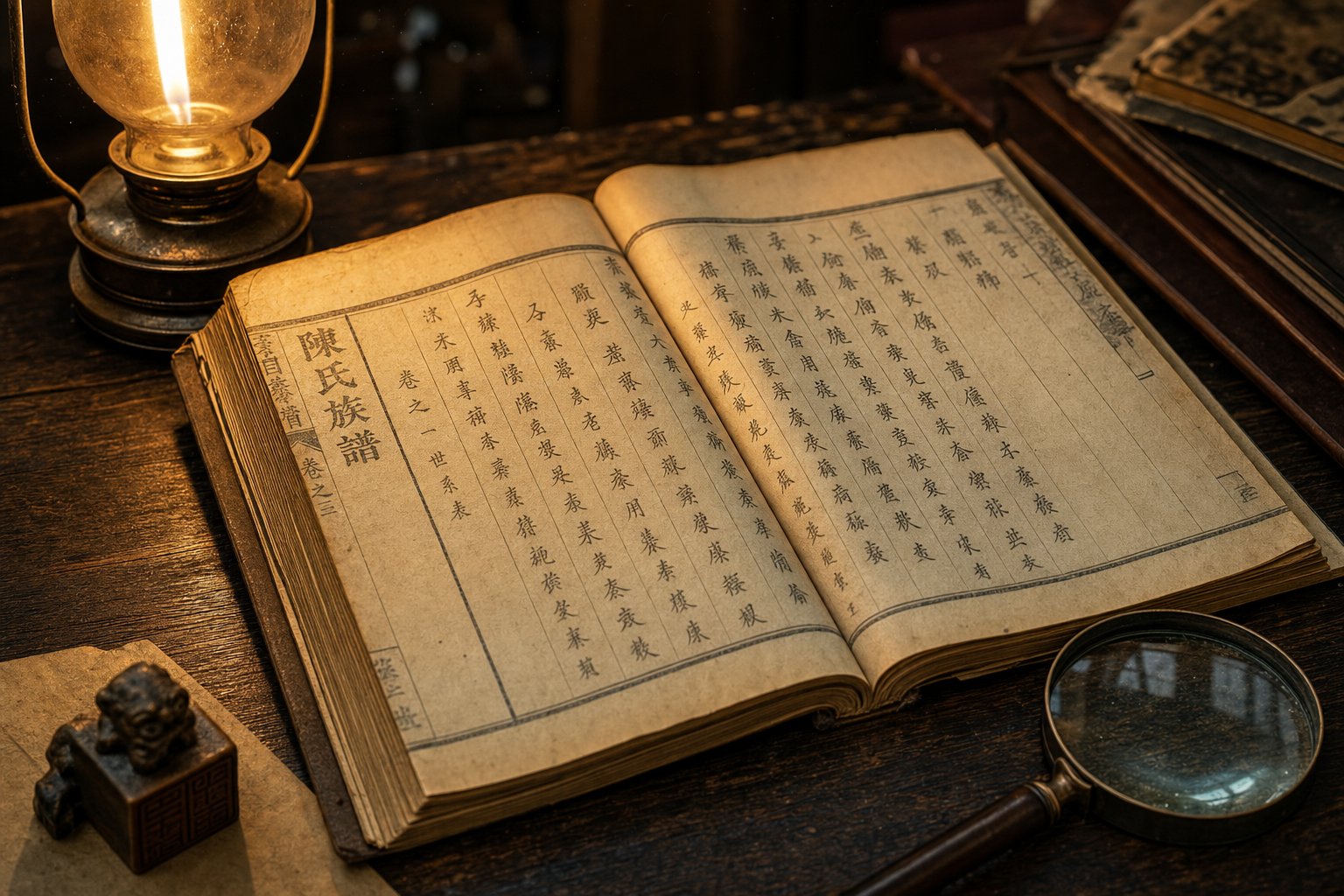
What connects these individuals across centuries isn't just a shared character on paper. It's a living system of genealogical record-keeping that Hu families have maintained for generations. The clan genealogy, or zupu (族谱), serves as the backbone of this tradition.
These family history books are remarkable documents. As genealogical researchers at My China Roots note, zupus have been compiled by Chinese clans since the late Ming and early Qing dynasties, with some tracing lineages back hundreds of generations. A typical Hu clan zupu includes far more than names and dates. You'll find migration stories, biographies of accomplished ancestors, clan rules governing behavior, generation poems (派字歌) dictating how children should be named, and even instructions for ancestral worship rituals.
Many Hu zupus were destroyed during the Cultural Revolution (1966-1976), when campaigns against the "Four Olds" targeted genealogical records, ancestral halls, and tombstones. Yet families went to extraordinary lengths to preserve them. Some buried their zupus underground for over a decade, digging them up again after 1979. Others shipped copies to relatives overseas. The 1980s saw a revival of zupu compilation, with elders reconstructing entire genealogies from memory and scattered notes.
Ancestral halls (祠堂) complement these written records as physical gathering places where Hu clans conduct seasonal worship, resolve disputes, and reinforce lineage identity. The Hualin (华林) ancestral hall in Jiangxi Province, associated with one of the largest Hu surname branches, remains an active site of pilgrimage for Hu descendants from across China and the diaspora.
Together, zupus and ancestral halls form a living infrastructure of memory. They're the reason a Hu family in Malaysia can potentially trace its line back to a specific village in Fujian, and from there to a branch that left Jiangxi during the Song dynasty. The records exist. The challenge lies in finding them and reading them correctly.
Tracing Your Hu Family History and Related Surnames
The records exist. The ancestral halls still stand. But where do you actually start if you want to connect your own family to a specific branch of the Hu lineage? Whether your passport says Hu, Ho, Oh, or Foo, the research process follows a similar path.
How to Research Your Hu Family Lineage
Genealogical research in Chinese families revolves around one document: the jiapu (家谱) or zupu (族谱). These clan genealogies are your primary link to a specific origin theory. Here are actionable steps you can take to begin tracing your Hu ancestry:
- Confirm your Chinese character. Before anything else, determine whether your surname is 胡, 扈, 壶, or another character entirely. Check older family documents, ancestral tablets, immigration papers, or ask elder relatives who can write the character from memory.
- Identify your ancestral village. Chinese genealogies are organized by place. Knowing your family's province, county, and ideally village narrows the search dramatically. Even a general region like "Jiangxi" or "Fujian" helps.
- Locate your family's jiapu. FamilySearch hosts digitized jiapu collections searchable by surname and location. Input your surname in Chinese characters, your ancestral province, and any known ancestor names. Start viewing images toward the end of the book, where more recent generations appear.
- Look for your generation poem (派字歌). Many Hu clans assigned a specific character to each generation's given names. If your father and his male cousins share the same first character in their given names, that character likely comes from a generation poem traceable to a specific branch.
- Check your ancestral hall name (堂号). Hu families from the Duke Hu of Chen lineage often use "Anding" (安定堂) as their hall name, referencing the prominent Anding branch in Gansu. Other hall names point to different branches or geographic origins.
- Cross-reference with DNA testing. Y-chromosome testing through services like 23Mofang or FamilyTreeDNA can confirm whether your paternal line matches known Hu genetic clusters, particularly the dominant O-haplogroup associated with the Hualin branch.
This process works similarly for related surnames. If you're researching the hui last name origin, for example, the surname Hui (惠) traces to a different ancestral line but follows the same jiapu-based research methodology. The hui family name and the surname hui (回 or 惠, depending on the character) each have distinct genealogical traditions, though they share the broader Chinese system of clan record-keeping. The same applies to anyone investigating the huang name origin, the huang family name, the wu surname meaning, the hui surname, or the hua last name origin. Each character leads to its own genealogical trail.
The Hu and Chen Surname Connection
One discovery surprises many researchers: the Hu and Chen surnames share the same founding ancestor. Both trace back to Gui Man, the man enfeoffed at the State of Chen who received the posthumous title Duke Hu. Descendants who took the state name became Chen. Descendants who took the posthumous title became Hu. Same man, two surnames.
This means Hu and Chen families may be genealogical cousins separated by a naming choice made over 3,000 years ago. Some clan genealogies explicitly acknowledge this connection, and joint ancestral worship events between Hu and Chen clans still occur in parts of Jiangxi and Fujian. If your research hits a dead end within Hu genealogies, exploring Chen clan records from the same region might reveal shared ancestors further up the tree.
The connection extends even further. The surnames Tian (田), Yuan (袁), and Yao (姚) also claim descent from Emperor Shun's lineage through various branches of the State of Chen's ruling house. These "five surnames of one family" (五姓同宗) represent different moments when descendants chose different naming conventions but ultimately trace to the same root.
This is the essential insight behind the hu surname meaning. It's not one story. It's a convergence point where a posthumous title, a conquered state, ethnic assimilation, and dialect variation all flow into a single written character. The 胡 on your family's ancestral tablet might connect you to Emperor Shun's bloodline, to the survivors of a fallen kingdom, or to northern warriors who crossed the frontier and made China their home. The character is the same. The stories behind it are as varied as the families who carry it.
Frequently Asked Questions About the Hu Surname
1. What does the Hu surname mean in Chinese?
The Hu surname uses the character 胡 (pinyin: hu, second tone) and primarily derives from the posthumous title of Gui Man, the founding ruler of the State of Chen during the Western Zhou dynasty. While the character 胡 also carries meanings like 'foreign,' 'reckless,' and 'dewlap,' these senses developed centuries after the surname was already established. The surname itself carries no negative connotation and is considered a noble lineage tracing back to the legendary Emperor Shun.
2. Is the last name Hu related to the last name Chen?
Yes, the Hu and Chen surnames share the same founding ancestor: Gui Man (妫满). When Gui Man was enfeoffed at the State of Chen around 1046 BC, he later received the posthumous title Duke Hu (胡公). Some descendants adopted the state name Chen as their surname, while others took the posthumous title Hu. This makes Hu and Chen genealogical cousins separated by a naming choice made over 3,000 years ago. Joint ancestral worship events between the two clans still occur in parts of Jiangxi and Fujian today.
3. Why is the Hu surname spelled differently across countries?
The character 胡 is pronounced differently across Chinese dialect groups. Mandarin speakers use 'Hu,' Cantonese speakers say 'Wu' or 'Woo,' Hokkien speakers pronounce it 'Oh' or 'O,' and Hakka speakers say 'Foo' or 'Fu.' When families emigrated, they registered names based on their spoken dialect rather than standardized Mandarin pinyin. This produced spellings like Ho, Wu, Oh, Foo, and Aw on passports and immigration documents, all potentially representing the same character 胡.
4. How common is the Hu surname worldwide?
The Hu surname ranks approximately 13th to 15th among Chinese surnames, with over 16.5 million bearers in mainland China alone, representing about 1.31% of the Han Chinese population. The highest concentrations appear in Jiangxi, Anhui, Zhejiang, Hubei, and Hunan provinces. Globally, Hu families (under various romanized spellings) are found throughout Southeast Asia, North America, Australia, and Europe, reflecting centuries of migration from southern Chinese provinces.
5. How can I trace my Hu family ancestry?
Start by confirming which Chinese character your surname uses (胡, 扈, or another variant) through older family documents or ancestral tablets. Next, identify your ancestral village or province in China. Then search for your clan's jiapu (家谱) through resources like FamilySearch, which hosts digitized genealogy collections searchable by surname and location. Look for your generation poem (派字歌) and ancestral hall name (堂号) as additional identifiers. Y-chromosome DNA testing can also confirm whether your paternal line matches known Hu genetic clusters.