The Luo Surname and Its Place in Chinese History
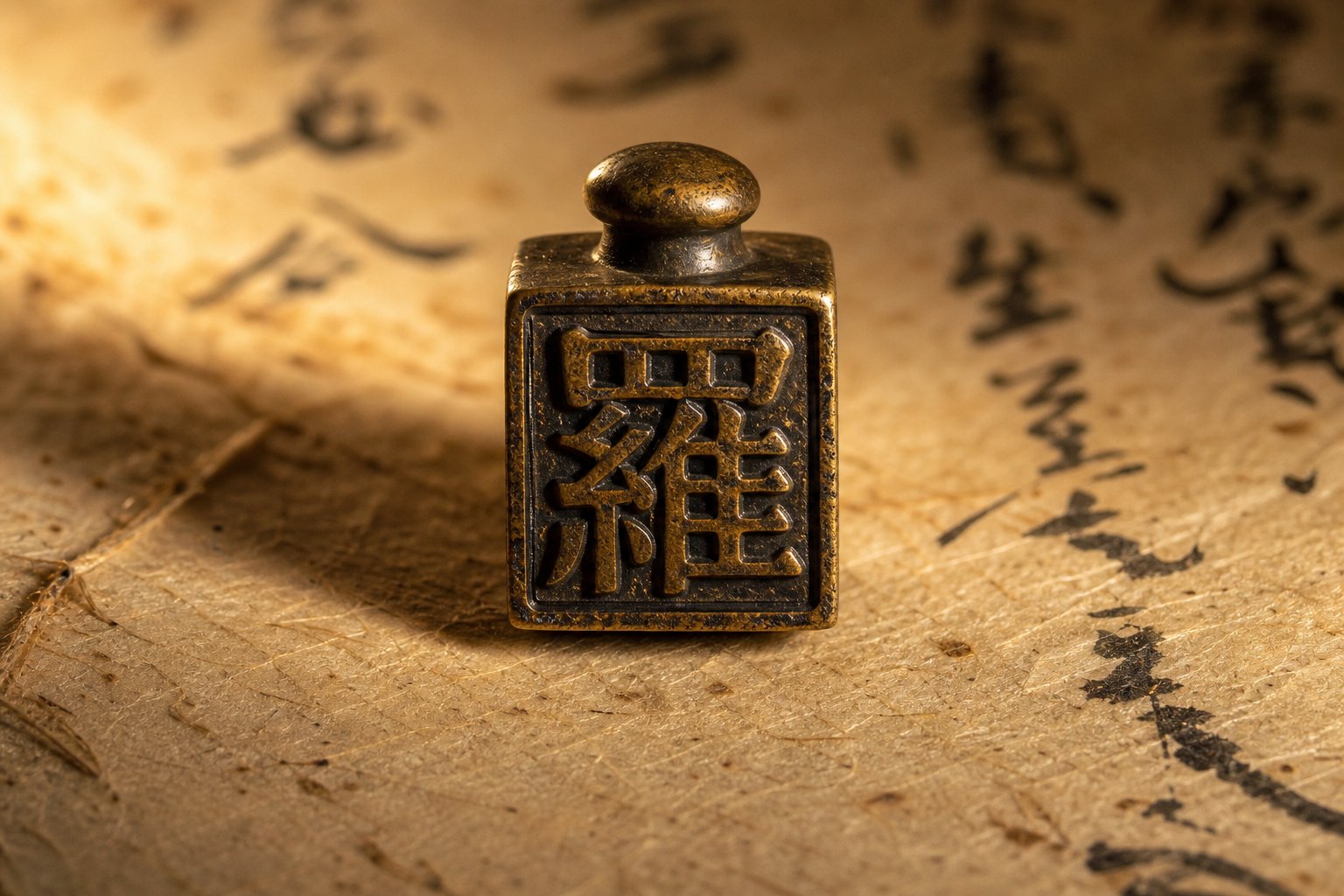
Imagine a single family name that connects an ancient fire god, a lost kingdom, and millions of people scattered across six continents. That is the story behind the Luo surname, written as 罗 in simplified Chinese and 羅 in its traditional form. Few clan names carry this kind of weight, linking mythology, statecraft, and migration into one continuous thread stretching back over three thousand years.
What the Luo Surname Represents
The Luo surname is far more than a label. It traces its primary lineage to the ancient Luo State, a vassal kingdom established during the Zhou dynasty (1046-256 BCE). The character itself originally referred to a finely woven net used for catching birds, hinting at the ancestral tribe's deep connection to nature and skilled craftsmanship. Over millennia, the surname Luo became a marker of resilience. The clan survived conquest, forced migration, and dynastic upheaval, each time adapting and spreading further across the Chinese landscape.
The Luo surname currently ranks 19th among the most common surnames in China, shared by approximately 14.2 million people according to data from China's Ministry of Public Security (2022).
A Surname Spanning Millennia and Continents
What makes the Luo last name particularly fascinating is its layered origin story. The primary branch descends from Zhu Rong, the legendary God of Fire, through the founding of the Luo State in present-day Hubei province. Yet additional branches emerged through ethnic minority adoptions, imperial grants, and cultural assimilation across dynasties. The result is a surname with roots in multiple ethnic and geographic traditions.
Equally striking is the global reach of the surname Luo today. Romanized as Lo in Cantonese, Loh in Hokkien, Low in some Southeast Asian communities, and Lor in Teochew, it appears in over 45 countries. From ancestral halls in Jiangxi province to Chinatowns in San Francisco, from Hmong communities in Minnesota to business families in Bangkok, the name carries distinct local histories while pointing back to shared origins.
This article traces the full arc of luo surname history, from its mythological beginnings and the fall of the Luo kingdom, through centuries of southward migration, to its modern presence in the global diaspora. Along the way, you will find the character's etymology, pronunciation guidance, romanization variants, and practical steps for tracing your own Luo lineage.
The story begins where many Chinese surnames do: with the destruction of a small state and the determination of its people to preserve their identity through a name.
The Ancient Luo State and How a Kingdom Became a Name
Every surname carries a founding moment, a point where identity crystallizes into something permanent. For the Luo clan, that moment stretches across centuries, beginning with a mythological ancestor and ending with the fall of a kingdom. Understanding the luo last name origin means tracing a line from divine fire to political destruction, and watching a displaced people turn loss into lasting identity.
The Zhu Rong Lineage and the Birth of Luo State
The story starts with Zhu Rong (祝融), the legendary God of Fire in Chinese mythology. According to the Tongzhi (通志), a comprehensive historical encyclopedia compiled by Zheng Qiao during the Song dynasty, the Luo clan descended from Zhu Rong through his grandson Zhurong's lineage within the ancient Mi (芈) surname group. This same ancestral line produced the royal house of Chu, making the Luo and Chu ruling families distant relatives sharing a common mythological root.
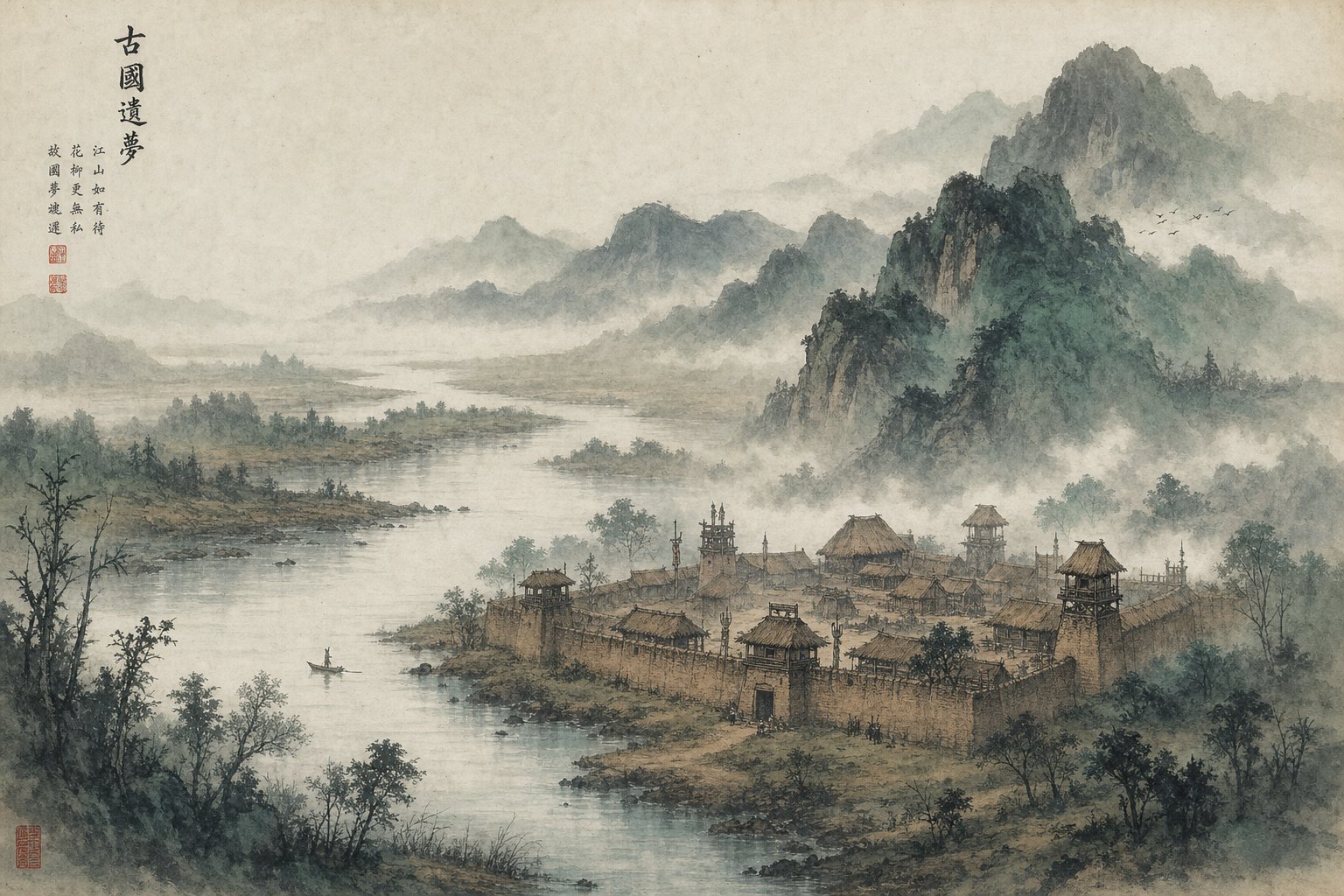
During the early Zhou dynasty, around the 11th century BCE, a branch of this lineage was enfeoffed with a small territory called Luo (罗), establishing what historians refer to as the Luo State (罗国). The kingdom sat in what is now Yicheng County, Hubei province, positioned along the Han River basin. It was a modest vassal state, but it held strategic value in the patchwork of Zhou-era polities. The Yuanhe Xing Zuan (元和姓纂), a Tang dynasty genealogical reference compiled by Lin Bao in 812 CE, confirms this lo surname origin and places the Luo State firmly within the Zhu Rong descent system.
What made this china name origin pattern distinctive was the totemic connection. The Luo people were known as skilled bird-catchers, and their state name itself derives from the character 罗, meaning a woven net. Some scholars believe the clan's original identity was tied to bird-netting as both livelihood and ritual practice, a connection preserved in the very character that became their surname.
Destruction by Chu and the Adoption of a Surname
Small states rarely survive when powerful neighbors expand. During the Spring and Autumn period (770-476 BCE), the state of Chu embarked on an aggressive campaign to absorb surrounding territories. The Luo State, despite its shared ancestral ties with Chu's ruling house, could not escape this fate. Around 690 BCE, Chu conquered and annexed Luo, erasing it from the political map.
The people of Luo scattered southward, many relocating to areas in present-day Hunan province. Stripped of their homeland but determined to preserve their heritage, the displaced population adopted their former state's name as a hereditary surname. This pattern, where descendants of a destroyed state take its name as their family identifier, is one of the most common mechanisms of surname formation in ancient China. It explains the lo last name origin shared by millions today.
Researchers tracing the lu last name origin sometimes encounter this same narrative, since regional pronunciation differences across Chinese dialects produced multiple romanized forms from the single character 罗. Whether written as Luo, Lo, or Lu in various transliteration systems, the genealogical thread leads back to the same fallen kingdom on the banks of the Han River.
The destruction of Luo State did not end the clan's story. It scattered them, and scattering created diversity. That single character, 罗, would eventually be written in two forms, pronounced in a dozen dialects, and carry meanings far older than the kingdom itself.
Character Etymology and Pronunciation of Luo
That single character carried meaning long before it became a surname. The luo meaning encoded in 罗 (and its traditional form 羅) tells a story about what the ancestral clan actually did, how they saw themselves, and how the written language preserved that identity across millennia.
From 羅 to 罗 and the Meaning Behind the Character
The traditional form 羅 is an ideogrammic compound built from two components: 罒 (a compressed form of 网, meaning "net") sitting on top of 維 (meaning "bird tied with string"). Together, they paint a vivid picture: a net for catching birds. This char in chinese writing dates back to oracle bone inscriptions from the Shang dynasty, making it one of the oldest characters still in active use as a surname.
The Baxter-Sagart reconstruction places the Old Chinese pronunciation at *rˤaj, while Zhengzhang Shangfang reconstructs it as *raːl. Both point to a simple, ancient syllable that evolved over thousands of years into the modern forms we hear today.
When China introduced simplified characters in the 1950s, 羅 (19 strokes) was reduced to 罗 (8 strokes). The simplification kept the net radical 罒 on top but replaced the complex lower component with 夕. The core visual metaphor of a net remained intact. In English, 罗 translates most directly as "net" or "gauze," though as a surname it carries no literal translation, functioning purely as a proper noun.
The bird-netting connection is more than coincidence. Scholars believe the original Luo clan practiced bird-catching as both livelihood and ritual, and their tribal identity became inseparable from the tool of their trade. The character preserved that identity even after the occupation faded from memory.
Pronouncing Luo Correctly Across Dialects
If you have ever wondered how to pronounce luo, the key lies in understanding Mandarin's second tone. The luo pronunciation in Standard Mandarin is luó, spoken with a rising pitch that moves from mid-range to high, described phonetically as /lu̯ɔ³⁵/.
Think of it like asking a one-word question in English. The pitch rises the way your voice lifts when you say "Tea?" or "What?" That upward movement is the second tone. Here is a breakdown of the phonetic components:
- Initial consonant: "l" as in "love" — tongue touches the ridge behind your upper teeth
- Vowel combination: "uo" — start with a brief "oo" (as in "woo") and glide into "aw" (as in "law")
- Tone: Second tone (rising) — start at a comfortable mid pitch and rise firmly to a high pitch, without letting the energy fade at the end
A common mistake among non-Chinese speakers is starting the rise too late or not rising enough, which can make luó sound like the third tone luǒ, a completely different syllable. The rise should begin almost immediately, with no significant dip at the start.
Across Chinese dialects, the pronunciation shifts considerably. Cantonese speakers say lo (IPA: /lɔː²¹/), which is a low falling tone rather than a rising one. Hokkien speakers use lo with a mid-rising contour, while Teochew speakers pronounce it as lo at a high level pitch. These dialect differences explain why the same character produces so many different romanized spellings in overseas communities, a topic that connects directly to how the Luo surname branched into multiple written forms across Asia.
Multiple Origins and the Distinction From East African Luo
Dialect variations explain how one character produces many spellings, but the Luo surname's complexity runs deeper than pronunciation. The name itself does not trace to a single ancestor or a single event. Like many major Chinese surnames, 罗 absorbed people from different lineages, ethnic groups, and historical circumstances over thousands of years. Researchers investigating the surname lou or its variants often discover that what appears to be one family name actually conceals a web of distinct origin stories.
Beyond One Origin — The Multiple Roots of Luo
The Zhu Rong lineage and the fall of Luo State account for the largest branch, but at least four other major pathways fed into the surname. Consider the 骆 (Luò/Lok) branch first. This is a separate character entirely, meaning "white horse with a black mane," and it carries the fourth tone rather than the second. In Mandarin romanization, both 罗 and 骆 can appear as "Luo," creating confusion for genealogists. The 骆 surname traces to a different ancestral line and geographic origin, yet in Cantonese romanization both may appear as "Lok" or "Lo," making them nearly indistinguishable on paper.
Beyond these two distinct characters, the 罗 surname expanded through ethnic minority adoption. CCTV's Baijia Xing program documents at least eighteen separate source streams for the Luo surname, calling it "a highly typical multi-ethnic, multi-origin surname" (多民族、多源流姓氏). Among the most significant minority contributions:
- Miao (苗族): Han Chinese Luo families historically migrated into Miao communities in Hunan, Guizhou, and Yunnan, eventually becoming integrated. Luo ranks among the top five Miao surnames in southwestern China.
- Yi (彝族): The Shuixi Yi people of Guizhou adopted Luo as a sinicized surname during the Ming and Qing dynasties under the government's "改土归流" (replacing native chieftains with appointed officials) policy.
- Tujia (土家族): Descended from the ancient Ba people, some Tujia clans carried the Luo surname as far back as the Han dynasty, when Emperor Gaozu exempted seven Tujia surnames, including Luo, from taxation.
- Manchu (满族): Multiple Manchu clans adopted Luo during the Qing dynasty, including the Gorolo (郭尔罗氏), Boholo (博和罗氏), and Logiya (罗佳氏) clans. Some of these families had originally been Han Chinese captured by the Xianbei centuries earlier.
- Xianbei (鲜卑族): During the Northern and Southern Dynasties, the Xianbei Chiluo (叱罗) clan was sinicized to Luo under Emperor Xiaowen's sweeping surname reform.
Imperial surname grants added yet another layer. During the Sui, Tang, and Ming dynasties, emperors bestowed the Luo surname on meritorious officials and surrendered foreign generals, further diversifying the clan's genetic and cultural makeup. People researching the lau name origin in Cantonese-speaking communities sometimes trace back to these granted lineages rather than the original Zhu Rong descent. Similarly, those investigating the luong last name origin in Vietnamese contexts may find connections to Chinese Luo families who migrated southward and adapted their name to local phonetics over generations.
The table below maps the major origin streams for quick reference:
| Origin Branch | Character | Lineage / Source | Geographic Origin | Approximate Period |
|---|---|---|---|---|
| Zhu Rong / Luo State | 罗 | Descendants of Fire God Zhu Rong via Mi (芈) surname | Yicheng, Hubei | Zhou dynasty (c. 1046-690 BCE) |
| Official title (罗氏) | 罗 | Hereditary bird-catching officials in Zhou courts | Various Zhou states | Western Zhou (c. 1046-771 BCE) |
| Luo/Lok branch | 骆 | Separate lineage, often conflated in romanization | Northern China | Pre-Qin period |
| Xianbei Chiluo clan | 罗 (from 叱罗) | Xianbei Tuoba tribe sinicization | Northern Wei capital (Luoyang) | Northern Dynasties (c. 496 CE) |
| Miao adoption | 罗 | Han Luo families absorbed into Miao communities | Hunan, Guizhou, Yunnan | Ming-Qing (1368-1912) |
| Manchu clans | 罗 (from various) | Gorolo, Boholo, Logiya, Sakda clans | Manchuria, Beijing | Qing dynasty (1644-1912) |
| Imperial grants | 罗 | Bestowed by Sui, Tang, and Ming emperors | Various | 581-1644 CE |
Chinese Luo vs. East African Luo — A Critical Distinction
Here is where researchers frequently stumble. Search for "Luo surname" online and you will encounter two completely unrelated groups sharing the same romanized name. The Chinese surname lou (罗) and the East African Luo people have no historical, genetic, or linguistic connection whatsoever.
The East African Luo are a Nilotic ethnic group numbering over six million people, primarily in Kenya, Uganda, and Tanzania. They speak Dholuo, a Western Nilotic language in the Nilo-Saharan family. Their name derives from their own ethnic self-designation and has nothing to do with Chinese characters, bird-nets, or the Zhou dynasty. The most famous person of Luo heritage is former U.S. President Barack Obama, whose father belonged to the Kenyan Luo community.
The confusion arises purely from romanization coincidence. When the Chinese character 罗 is transliterated into the Latin alphabet, it produces "Luo," which happens to look identical to the English spelling of the African ethnic group's name. The la surname form used in Vietnamese (La or Lã) adds another layer of potential confusion, since "La" can also appear in unrelated African and European naming traditions.
If you are researching your own ancestry, the distinction matters immediately. A person with the surname Lou, Lo, or Luo in a Chinese, Southeast Asian, or Hmong context is almost certainly connected to the 罗 or 骆 character traditions. A person identified as "Luo" in an East African context belongs to an entirely separate ethnic and linguistic heritage. The two share a spelling, not a story.
With so many streams feeding into one surname, the natural question becomes: where did all these Luo families actually go? The answer lies in wave after wave of southward migration, each triggered by a different dynasty's collapse or a different war's displacement.

Migration Patterns Across Chinese Dynasties
Political collapse has a way of scattering people. For the lo family name, each dynastic upheaval pushed branches further south, deeper into unfamiliar terrain, and closer to the coastlines that would eventually launch them overseas. Tracing these movements reveals not just where Luo families ended up, but why certain provinces became strongholds and how clan identity survived centuries of displacement.
Southward Migrations From Han Through Tang
The pivotal figure in early Luo migration is Luo Zhu (罗珠), a Han dynasty official who served as Grand Agricultural Minister (治粟内史) under Emperor Gaozu. Around 201 BCE, Luo Zhu accompanied General Guan Ying to pacify the Yuzhang region, present-day Nanchang in Jiangxi province. He personally oversaw the construction of the Yuzhang city walls and planted camphor trees (豫章树) within the settlement. This act gave the city its name and established Yuzhang as the ancestral seat of the largest Luo branch. Clan genealogies across China trace their lineage back to Luo Zhu's six sons, making him the recognized progenitor of the "Yuzhang Luo" tradition.
From this Jiangxi base, subsequent generations radiated outward. The lo last name ethnicity in southern China diversified as families moved into Hunan, where ancient Luo State refugees had already settled centuries earlier. By the Tang dynasty (618-907 CE), the 34th-generation descendant Luo Que (罗崱) relocated from Yuzhang to Luling (庐陵, modern Ji'an in Jiangxi), creating a secondary dispersal hub that would feed migrations into Hunan, Guangdong, and Fujian for the next thousand years.
Here is a chronological timeline of the major migration waves tied to specific dynasties:
- Qin-Han transition (c. 206 BCE): Luo Zhu settles Yuzhang (Nanchang), establishing the clan's southern headquarters and the Yuzhang commandery lineage.
- Western Jin collapse (c. 311 CE): The Yongjia Rebellion drives northern families south. Luo clan members relocate into Hunan's Changsha region and parts of Hubei's Xiangyang, forming two additional commandery bases.
- Tang dynasty (618-907): Luo Que moves to Luling, Jiangxi. His three sons — Chao, Yan, and Da — establish sub-branches that spread across Jiangxi and into Hunan. Fujian receives its first major Luo influx as officials and soldiers settle in Yanping and Tingzhou prefectures.
- Late Song dynasty (c. 1270s): Mongol invasion triggers mass flight. Luo Gui (罗贵) leads 33 surnames and 97 households from Nanxiong in northern Guangdong southward to the Pearl River Delta, scattering across what is now Guangzhou, Foshan, and surrounding areas.
- Yuan-Ming transition (c. 1368): Jiangxi Luo families pour into Hubei under imperial resettlement orders. Over one hundred ancestral founders enter Huangzhou and Hanyang prefectures during this period alone.
- Ming-Qing transition (c. 1644-1680s): The "Huguang Fills Sichuan" (湖广填四川) campaign repopulates war-devastated Sichuan. Luo families from Hubei, Hunan, and Guangdong migrate westward, making Sichuan and Chongqing major Luo population centers. Many retain Hakka customs and the "Yuzhang Hall" identity to this day.
- Qing dynasty (1644-1912): Military campaigns and the "replacing native chieftains" policy (改土归流) bring Luo settlers into Guizhou, Yunnan, and Guangxi. Luo families also cross into Taiwan beginning in the Kangxi era, primarily from Guangdong's Lufeng and Zhenping counties.
Song Dynasty Dispersal and Clan Hall Names
If you encounter a Luo family that identifies with a specific "hall name" (堂号), you are looking at a geographic fingerprint. These hall names correspond to ancestral commanderies (郡望), the administrative regions where a clan first achieved prominence. For the low family name branches scattered across southern China and Southeast Asia, three commanderies dominate:
| Commandery (郡望) | Hall Name (堂号) | Location | Significance |
|---|---|---|---|
| Yuzhang (豫章郡) | Yuzhang Hall (豫章堂) | Nanchang, Jiangxi | Largest branch; traces to Luo Zhu. Most Luo families in Sichuan, Guangdong, and Fujian claim this hall. |
| Changsha (长沙郡) | Changsha Hall (长沙堂) | Changsha, Hunan | Connected to ancient Luo State refugees who settled Hunan after Chu's conquest. |
| Xiangyang (襄阳郡) | Xiangyang Hall (襄阳堂) | Xiangyang, Hubei | Northern branch; rose to prominence during the Northern and Southern Dynasties. |
The Yuzhang Hall is by far the most widespread. Sichuan Luo families, asked about their origins, overwhelmingly identify as "Yuzhang Hall descendants" (豫章堂子孙), even after four centuries of separation from Jiangxi. This persistence reveals how clan hall names functioned as portable identity markers, carried through migration and preserved in genealogy books regardless of how far a family traveled from its commandery of origin.
Additional hall names exist for smaller branches. The Qi commandery (齐郡) in Shandong gained prominence during the Tang dynasty, when it was listed as the "first commandery" for the Luo surname. Regional halls like Baoben Hall (报本堂) in Jiangxi's Jinxian County and Xiuchuan Hall (秀川堂) in Ji'an reflect sub-branches that developed their own genealogical traditions after the Song dynasty dispersal.
These migrations produced a clear demographic pattern that persists today. Guangdong holds the largest provincial Luo population at over 2.8 million, followed by Sichuan at 2.3 million and Hunan at 1.8 million. Together with Jiangxi, Guizhou, Yunnan, Hubei, Guangxi, and Chongqing, these provinces account for roughly 79% of all Luo surname bearers in China. The concentration reflects centuries of southward drift, each wave depositing families in new territory while maintaining genealogical ties to Yuzhang.
Yet migration did not stop at China's borders. The same coastal provinces that received Luo families during the Song and Ming dynasties, particularly Guangdong and Fujian, later became launching points for overseas emigration. The dialect communities that formed in those provinces would determine how the surname was romanized, spelled, and recognized in every country the Luo diaspora reached.
Romanization Variants From Lo to Lor to Luu
Guangdong and Fujian did not just export people. They exported sounds. When Luo families left China for Southeast Asia, the Americas, or Oceania, they carried their local dialect pronunciation with them. Immigration officers, colonial administrators, and passport clerks then transcribed those sounds into the Latin alphabet using whatever system was available. The result is a single Chinese character, 罗, appearing under half a dozen different spellings depending on which port a family departed from and which era they emigrated in.
This is why you will find the lo surname in Hong Kong directories, the surname loh in Singaporean records, and the low surname in Malaysian phone books, all pointing back to the same ancestral character. Understanding these variants is essential for genealogical research, since family members separated by a single generation of emigration may carry entirely different romanized spellings.
Cantonese, Hokkien, and Teochew Variants
Cantonese is the most influential dialect for overseas romanization, particularly in Hong Kong, Macau, and older diaspora communities in North America and Australia. In Cantonese, 罗 is pronounced lo (Jyutping: lo4), a low falling tone. This produces the lo last name spelling seen in figures like film director Lo Wei and businessman Vincent Lo. The variant "Law" also appears in Cantonese contexts, following an older romanization convention where the vowel was lengthened to reflect the open-back quality of the sound.
Hokkien and Teochew speakers, concentrated in Fujian province and across Southeast Asia, produce different forms. The loh last name spelling is common among Hokkien families in Singapore and Penang, as seen in badminton champion Loh Kean Yew. Some Hokkien communities use "Loke" instead, reflecting a syllable-final stop consonant in certain sub-dialects. Teochew speakers typically romanize the name as "Low" or "Lor," making the low last name a recognizable marker of Teochew heritage in Thailand and Malaysia. If you encounter the surname low in a Southeast Asian context, there is a strong chance it traces back to 罗 through Teochew pronunciation.
Vietnamese, Korean, and Other Regional Forms
Beyond southern Chinese dialects, the character 罗 transformed further as it crossed into neighboring cultures with their own phonological systems. In Vietnam, the name appears as La (羅), following Sino-Vietnamese pronunciation conventions. Vietnamese families bearing this surname lo variant have been present since at least the 10th century, when Chinese administrative families settled in the Red River Delta. The related forms Lu (呂/吕) and Luu (Lữ/Lư) sometimes overlap in genealogical records, though they technically derive from different Chinese characters.
Korean romanization introduces yet another surprise. In South Korea, 罗 is read as 나 (Na), while in North Korea the same character is read as 라 (Ra). This split reflects the Korean phonological rule that drops the initial "r/l" sound at the beginning of a word in the southern dialect standard. A Korean person surnamed Na and a Chinese person surnamed Luo may share the exact same ancestral character without recognizing the connection.
Among Thai surnames, Chinese-origin Luo families often adopted polysyllabic Thai names during the 20th century assimilation policies, making the original connection harder to trace. However, many retained "Lo" or "Low" as informal family identifiers alongside their official thai last names. This dual-naming practice is common across the Thai-Chinese community.
The table below maps each major romanization to its dialect, region, and notable examples:
| Romanization | Dialect / Language | Primary Region | Notable Examples |
|---|---|---|---|
| Luo | Mandarin (Pinyin) | Mainland China, Taiwan | Luo Guanzhong, Luo Yunxi |
| Lo | Cantonese (Jyutping) | Hong Kong, Macau, older diaspora | Show Lo, Lo Wei, Vincent Lo |
| Law | Cantonese (older romanization) | Hong Kong | Nathan Law, Law Kar-ying |
| Loh | Hokkien | Singapore, Penang, Fujian | Loh Kean Yew |
| Loke | Hokkien (sub-dialect) | Malaysia, Singapore | Various community leaders |
| Low | Teochew / some Hokkien | Thailand, Malaysia | Thai-Chinese business families |
| Lor | Teochew | Thailand, Cambodia | Hmong Lor clan (distinct origin) |
| La | Vietnamese (Sino-Vietnamese) | Vietnam | La Hoi (composer) |
| Na | Korean (South) | South Korea | Na Yoon-Sun (jazz singer) |
| Ra | Korean (North) | North Korea | Various |
One character, ten or more spellings, and millions of people who may not immediately recognize each other as kin. The romanization diversity is not a flaw in the system. It is a historical record in itself, encoding which port a family left from, which decade they emigrated, and which colonial administration first wrote their name down. For anyone researching the lo surname or its variants, matching a romanized spelling back to its dialect origin is often the first step toward identifying the correct ancestral branch and home village.
These spelling variants also map onto distinct migration waves and destination countries, each with its own community history, clan associations, and generational story of adaptation.

Global Diaspora and Modern Surname Distribution
Spelling variants tell you where a family came from. Diaspora communities tell you where they went. The same coastal provinces that generated all those romanization differences — Guangdong, Fujian, Hainan — also served as departure points for successive waves of emigration spanning five centuries. Today, the Luo surname and its variants appear in more than 45 countries, carried there by traders, laborers, refugees, and professionals who left China under vastly different circumstances but shared a common ancestral character.
Southeast Asian Communities and Their Roots
Southeast Asia holds the oldest and largest overseas Luo communities. Chinese migration into this region predates European colonialism, with Fujian and Guangdong merchants establishing trade networks across the Malay Archipelago, Siam, and the Philippines as early as the Song dynasty. The pace accelerated dramatically during the Ming-Qing transition (1644) and again during the Taiping Rebellion (1850-1864), when millions fled southern China's devastation.
Imagine a Hakka farmer in 1860s Guangdong watching his village burn during the Punti-Hakka clan wars that followed the Taiping uprising. His options were limited: move deeper inland or board a ship. Thousands chose the ship. They landed in Malaya's tin mines, Siam's rice paddies, and the Philippines' commercial ports, carrying their Luo surname in whatever dialect form their home village spoke.
Here are the major diaspora communities organized by region:
- Malaysia and Singapore: Luo families appear as Lo, Loh, Low, and Loke across Penang, Kuala Lumpur, Ipoh, and Singapore. Hokkien and Teochew speakers dominate, with Hakka Luo families concentrated in Sabah and Sarawak. Clan associations like the Lo Clan Association of Singapore maintain ancestral halls and genealogical records.
- Thailand: The Thai-Chinese community, numbering over 10 million people of partial Chinese descent, includes significant Luo representation. Teochew-origin families predominate, having arrived during the 18th and 19th centuries through Bangkok's river trade. Under 20th-century assimilation policies, many adopted polysyllabic thai surnames while retaining Lo or Low as informal identifiers. Tracing Luo ancestry through official thai last names often requires cross-referencing Chinese-language clan records kept by Bangkok's Teochew associations.
- Philippines: Hokkien-origin Lo families settled in Manila, Cebu, and Iloilo from the Spanish colonial period onward. Many adopted Spanish-influenced surnames during the 1849 Claveria Decree but maintained Chinese clan connections through community organizations.
- Indonesia: Luo families in Java and Sumatra faced forced name changes during the Suharto era (1966-1998), adopting Indonesian-sounding surnames. Post-reform, some have reclaimed their Chinese names, though many retain dual identities.
- Vietnam: The La surname community in southern Vietnam traces largely to Ming loyalists who fled to the Mekong Delta after 1644, joining earlier waves of Chinese settlers in Cholon (Ho Chi Minh City's Chinatown).
The fall of the Ming dynasty in 1644 produced the first major political refugee wave. Loyalist generals and their followers refused to serve the Manchu Qing government and sailed south, establishing communities in Vietnam, Cambodia, and what is now Myanmar. These families often maintained Ming-era customs for generations, distinguishing themselves from later economic migrants.
The Hmong Lo Clan and Western Migration
Not every person bearing the lor surname or lor last name traces back to the Chinese character 罗 through Han Chinese lineage. The Hmong Lo (also spelled Lor) clan represents a distinct tradition with its own migration story, one that intersects with but differs fundamentally from the broader Chinese Luo diaspora.
The Hmong people organize themselves into clan groups, traditionally counted as the hmong 18 clan names: Lo (Lor), Vang, Xiong, Lee, Moua, Her, Thao, Vue, Yang, Cha (Chia), Hang, Khang, Kue, Cheng, Chue, Fang, Kong, and Phang. The Lo clan is among the largest. While the Hmong Lo surname may share a distant etymological connection to the Chinese 罗 character — Hmong communities lived in southern China for millennia before migrating into mainland Southeast Asia — the clan identity developed independently within Hmong social structures. A person identified as chia lor in Hmong naming conventions belongs to the Lor clan through patrilineal descent, following Hmong kinship rules rather than Chinese genealogical traditions.
The Hmong Lo clan's path to the West followed a dramatically different route than other Luo diaspora communities. During the Vietnam War era, the CIA recruited Hmong fighters in Laos to combat communist Pathet Lao forces. When Laos fell to communist control in 1975, Hmong soldiers and their families faced severe persecution. More than 200,000 Hmong fled Laos as refugees, crossing the Mekong River into Thailand. Because of their role in the U.S.-led war, approximately 90 percent of Hmong refugees were resettled in the United States.
The largest wave arrived during the 1980s, accounting for 46 percent of Hmong foreign-born currently in the U.S. By the 2000 Census, approximately 103,000 foreign-born Hmong lived in the United States, concentrated in California (40 percent), Minnesota (26 percent), and Wisconsin (19 percent). The most recent wave came after 2003, when over 15,000 Hmong from the Wat Tham Krabok monastery in Thailand were approved for resettlement after the Thai government decided to close the complex.
For the Hmong Lor families specifically, this means communities in Minneapolis-St. Paul, Fresno, Sacramento, and Milwaukee where the lor surname appears in school rosters, business registrations, and community organizations. The Hmong have also been resettled in France, Canada, and Australia, creating smaller but significant Lor clan communities in those countries.
Beyond Southeast Asia and the Hmong diaspora, Luo families reached the Americas and Oceania through different historical channels:
- United States: Early arrivals came during the California Gold Rush (1848-1855) and railroad construction era. The Chinese Exclusion Act of 1882 severely restricted further immigration until its repeal in 1943. The Immigration and Nationality Act of 1965 reopened large-scale Chinese immigration, bringing educated professionals and family reunification cases. Today, Luo/Lo families are found across major metropolitan areas, with concentrations in California, New York, and Texas.
- Canada: Similar to the U.S. pattern, early laborers arrived for railroad construction and mining, followed by exclusion-era restrictions (1923-1947) and post-1967 points-system immigration that favored skilled workers.
- Australia and New Zealand: Gold rush migration in the 1850s brought the first wave. Post-White Australia Policy (abolished 1973), significant Cantonese and later Mandarin-speaking Luo families settled in Sydney, Melbourne, and Auckland.
- Europe: Smaller but growing communities exist in the United Kingdom, France, the Netherlands, and Germany, largely from post-1980s economic migration and student settlement.
- Latin America: Cantonese-speaking Lo families established communities in Peru, Cuba, Panama, and Brazil during the 19th-century coolie trade and subsequent chain migration.
The global spread follows a clear pattern. Each wave of emigration was triggered by a specific historical rupture: dynastic collapse, rebellion, war, exclusion, or economic crisis. And each wave carried a particular dialect group to a particular destination, which is why Cantonese Lo dominates in older Western communities while Mandarin Luo appears more frequently in post-1965 immigration records.
What connects all these scattered communities — the Thai-Chinese businessman, the Hmong Lor refugee in Minnesota, the Cantonese Lo family in San Francisco's Chinatown — is not just a shared character or a common ancestor. It is the impulse to preserve identity across displacement. That impulse takes practical form in clan associations, genealogy books, and ancestral halls, tools that any Luo descendant can still use today to trace their specific branch back through the centuries of movement.
How to Research Your Own Luo Family History
Clan associations and genealogy books are not museum pieces. They are working tools, and they are accessible to anyone willing to ask the right questions in the right order. Whether your family spells the name Luo, Lo, Loh, Low, Lor, or even Luu, the research process follows a similar logic: start with what you know, identify your branch, then work backward through the records that branch left behind.
Using Zupu and Ancestral Halls for Research
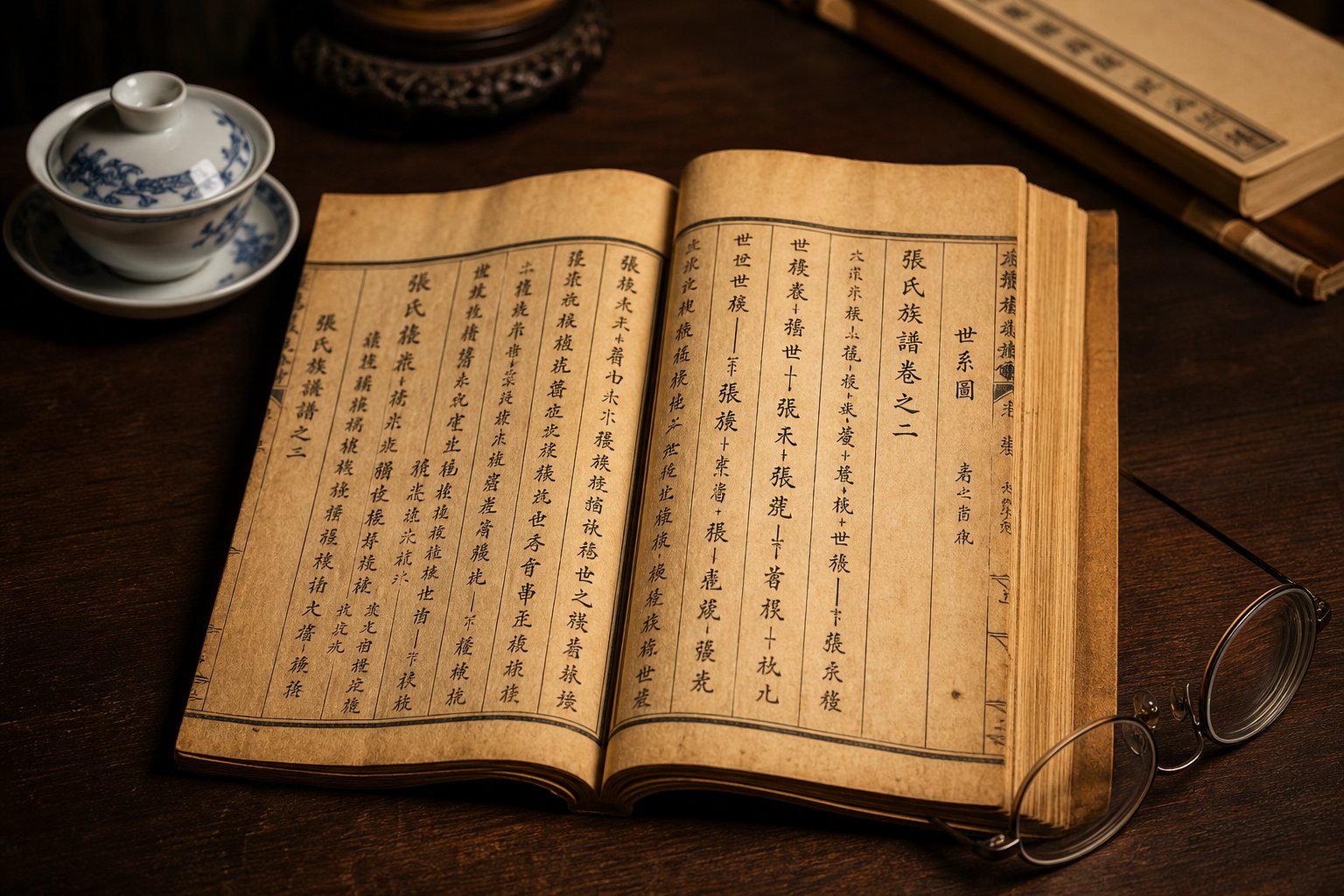
The single most valuable document in Chinese genealogical research is the zupu (族谱), also called jiapu (家谱) or zongpu (宗谱). These are clan genealogy books, sometimes spanning dozens of volumes, that record every generation from the founding ancestor forward. A well-maintained Luo zupu will list birth and death dates, marriage records, migration notes, examination achievements, and burial locations for each male descendant, with women typically recorded by maiden surname and birth family.
How do you find yours? The FamilySearch Chinese genealogy collection holds thousands of digitized jiapu searchable by surname and ancestral location. Start by searching for your known ancestral county or prefecture paired with the character 罗. If your family identifies with a specific hall name like Yuzhang Hall (豫章堂) or Changsha Hall (长沙堂), that narrows the search considerably, since hall names point to a specific commandery and therefore a specific set of genealogy books.
Ancestral halls (祠堂) serve a parallel function. Many Luo ancestral halls in Jiangxi, Guangdong, and Fujian still stand, and some maintain updated genealogical records. These halls often display stone tablets naming the founding ancestor (始祖) of that particular branch. Visiting or contacting the hall's caretaker can connect you directly to living clan members who maintain the zupu.
For those researching the luu surname or luu last name origin in Vietnamese contexts, the process is similar but requires cross-referencing Sino-Vietnamese records. Vietnamese Luu (Lữ/Lư) families sometimes maintained parallel genealogies in Chinese characters, particularly in southern Vietnam's Cholon district where Chinese-language clan records survived into the 20th century.
Practical Steps to Trace Your Luo Lineage
Sounds overwhelming? It does not have to be. Here is a structured approach that works whether you are starting from a family Bible entry in California or a half-remembered village name passed down from a grandparent:
- Interview living relatives. Ask older family members for any Chinese characters associated with your name, your ancestral village or county, your hall name (堂号), and any generation poems (字辈) your family used. Even a single detail like "our family came from Meixian" or "we are Yuzhang Hall" dramatically narrows the search.
- Identify your romanization variant and dialect group. Match your family's spelling (Lo, Loh, Low, Lor, Luu) back to its dialect origin using the romanization table from earlier in this article. This tells you which province and which port your ancestors likely departed from.
- Search online genealogical databases. FamilySearch.org offers free access to Chinese genealogy records, including the China Vital Records Index and thousands of digitized clan genealogies. Search by surname character (罗) combined with any known location.
- Consult county gazetteers (地方志). These local gazetteers are comprehensive records of a region's history, population, notable families, and administrative changes. They often contain surname distribution data and biographical entries for prominent local Luo figures. Major university libraries and databases like the China Comprehensive Gazetteers collection (中国综合方志库) provide digital access to over 7,000 gazetteer titles.
- Contact a Luo clan association. Active associations exist in Singapore, Malaysia, Hong Kong, Taiwan, Thailand, and major Western cities. The World Luo Clan Association (世界罗氏宗亲联谊会) coordinates between regional groups. These organizations often maintain pooled genealogical databases and can help match your branch to a specific zupu.
- Visit or write to your ancestral hall. If you have identified a specific village or county, the local ancestral hall may hold records not yet digitized. Many halls welcome overseas descendants and can provide copies of relevant genealogy pages.
- Cross-reference generation poems. Many Luo zupu include a generation poem (字辈排行), a sequence of characters assigned to successive generations for naming. If your family used a specific character in the given names of each generation, matching that character to a known poem can pinpoint exactly which branch and which generation you belong to.
One practical tip: the characters 族谱 (zupu) and 地方志 (difangzhi) are essential search terms when navigating Chinese-language databases. Even without reading fluency, entering these terms alongside 罗 and a location name will surface relevant results in catalog systems designed for genealogical research.
For anyone investigating the luu last name origin specifically, Vietnamese genealogical records present unique challenges since many were destroyed during the wars of the 20th century. However, temple records in Ho Chi Minh City's District 5 and community archives maintained by overseas Vietnamese associations in France and the United States preserve fragments of these lineages.
The tools exist. The records are more accessible than at any point in history. What once required a physical journey to a remote village in Jiangxi can now begin with a database search from anywhere in the world. The Luo surname's long history of displacement and adaptation means that somewhere in the documentary record, your specific branch left a trace. Finding it is a matter of patience, the right search terms, and knowing which door to knock on first.
Frequently Asked Questions About the Luo Surname
1. What is the origin of the Luo surname?
The primary origin traces to the ancient Luo State (罗国), a vassal kingdom established during the Zhou dynasty in present-day Hubei province. The state descended from Zhu Rong, the legendary God of Fire, through the Mi (芈) surname lineage. When the state of Chu conquered and destroyed Luo around 690 BCE, the displaced population adopted their former kingdom's name as a hereditary surname. Additional origin streams include ethnic minority adoptions by Miao, Yi, Tujia, and Manchu peoples, Xianbei clan sinicization, and imperial surname grants across multiple dynasties.
2. How do you pronounce the Chinese surname Luo?
In Standard Mandarin, Luo is pronounced 'luo' with a second (rising) tone, written as luó in pinyin. The initial 'l' sounds like English 'love,' followed by a vowel glide starting with a brief 'oo' sound and moving into 'aw' as in 'law.' The pitch rises from mid-range to high, similar to the intonation of asking a short question in English. In Cantonese, the same character is pronounced 'lo' with a low falling tone, while Hokkien and Teochew dialects produce slightly different tonal patterns.
3. Why does the Luo surname have so many different spellings?
The single character 罗 produces multiple romanized spellings because Chinese emigrants carried their local dialect pronunciations overseas. Cantonese speakers produced 'Lo' and 'Law,' Hokkien speakers created 'Loh' and 'Loke,' Teochew speakers generated 'Low' and 'Lor,' and Mandarin pinyin gives 'Luo.' Colonial administrators and immigration officials transcribed these sounds differently depending on the era and location. Korean readings add 'Na' (South Korea) and 'Ra' (North Korea), while Vietnamese Sino-pronunciation yields 'La.'
4. Is the Chinese Luo surname related to the East African Luo people?
No, there is no historical, genetic, or linguistic connection between the two. The Chinese Luo surname derives from the character 罗 and traces to the Zhou dynasty Luo State. The East African Luo are a Nilotic ethnic group of over six million people in Kenya, Uganda, and Tanzania who speak Dholuo, a Western Nilotic language. The identical English spelling is purely a romanization coincidence. Researchers should distinguish between the two based on geographic and cultural context.
5. How can I trace my Luo family history?
Start by interviewing older relatives for details like your ancestral village, hall name (堂号), or generation poem characters. Match your family's romanized spelling to its dialect origin to identify the likely departure province. Then search digitized clan genealogies (族谱) on FamilySearch.org using the character 罗 paired with your known ancestral location. Contact active Luo clan associations in Singapore, Malaysia, Hong Kong, or your local area, as they often maintain pooled genealogical databases. County gazetteers (地方志) and ancestral hall records provide additional documentary evidence.