What a Nature Name Generator Does and Why It Matters
Imagine you need a name that feels rooted in the earth, the sky, or the sea. Maybe it is for a character in a novel, a newborn, or a brand you are building from scratch. You turn to a name generator nature tool, click a button, and get a list. But most of those lists feel hollow. They lack context, meaning, and the kind of depth that makes a name stick. This guide is built to change that.
What Is a Nature Name Generator
A nature name generator is a tool that produces names inspired by the natural world — drawing from plants, animals, landscapes, weather patterns, celestial bodies, and geological features — for use in baby naming, fiction writing, game design, or brand development.
At its simplest, a nature names generator pulls from databases of words tied to the environment and recombines them into naming suggestions. Some tools focus on a single category like flowers or gemstones. Others blend elements, pairing a botanical root with a suffix that sounds like a surname or a fantasy title. The output ranges from straightforward picks like Willow and River to more inventive combinations you would not find on a standard baby name list.
The real value, though, is not in the random output itself. It is in understanding why certain nature names work and others fall flat.
Why Nature Names Resonate Across Cultures
Nature-inspired names carry an immediate, easy-to-grasp meaning that does not require a backstory to explain. A name like Sage or Aurora paints a picture the moment you hear it. That clarity is one reason these names have surged across creative fields and personal naming alike.
Parents are drawn to them because they feel timeless without being old-fashioned. Nature-inspired baby names are now a major naming trend, with choices like Ivy, Hazel, and Forrest appearing on shortlists alongside vintage classics. Writers and game designers reach for them because nature imagery communicates character traits instantly — a healer named Fern, a warrior named Slate. Brand founders choose them because words like Summit, Bloom, and Reef evoke trust, growth, or adventure without needing explanation.
Another driver is global mobility. Nature names often travel well across languages because they rely on universal imagery rather than culture-specific references. A name tied to light, water, or a tree can feel familiar whether you speak English, Japanese, or Spanish.
This article goes deeper than any single nature name generator can. You will learn how nature names are categorized by element, how etymology unlocks hidden options, how different cultures approach nature naming, and how to evaluate any generated name against a practical framework — whether you are naming a baby, a fictional kingdom, or a business.
Nature Name Categories Sorted by Element and Source
Every nature themed name generator draws from the same raw material: the natural world. The difference between a useful tool and a forgettable one comes down to how well it organizes that material. When you understand the categories behind the output, you stop scrolling aimlessly and start searching with intention.
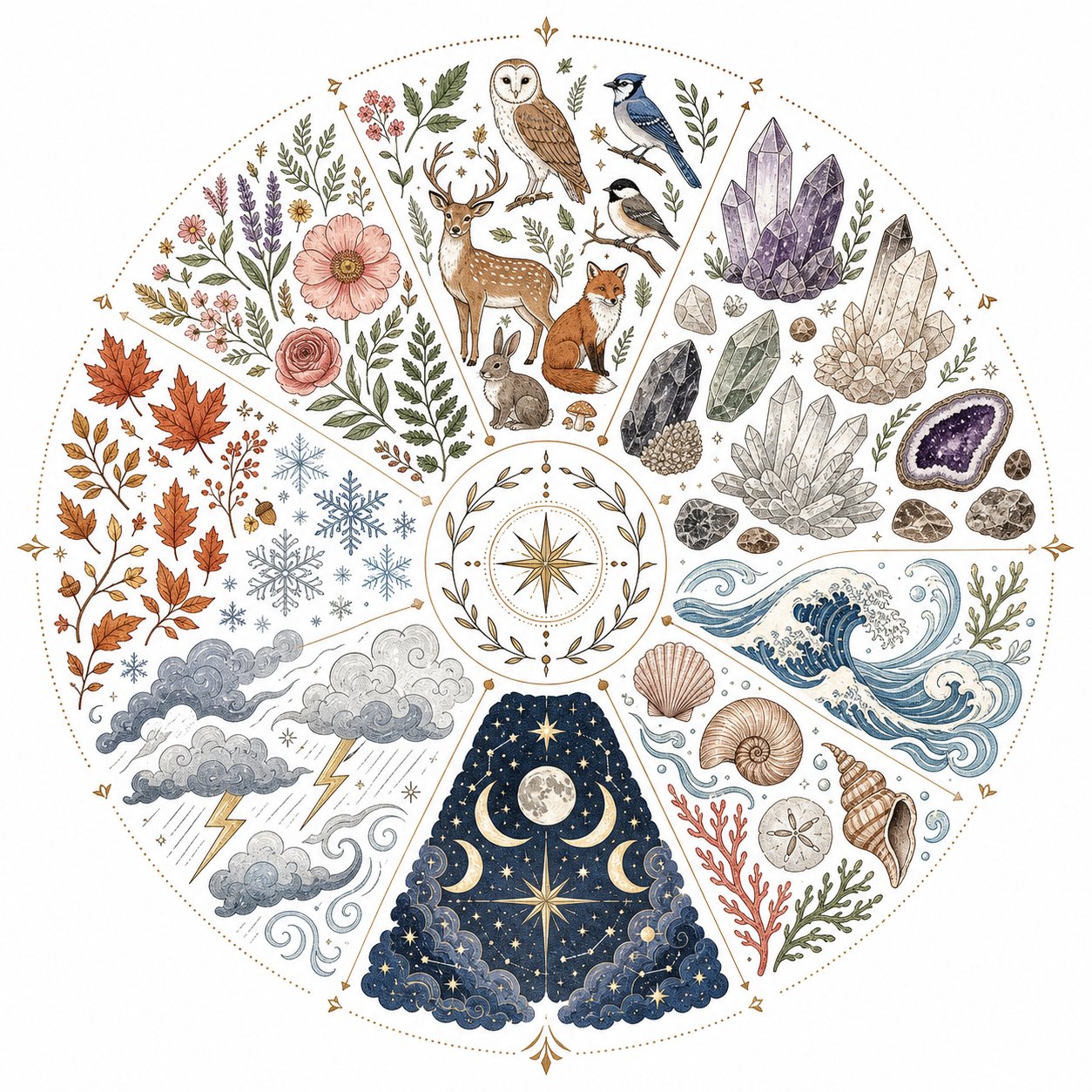
Nature names fall into seven distinct source categories. Each carries its own emotional tone, cultural weight, and phonetic character. Knowing which category fits your purpose — whether you are naming a fictional settlement for a nature place name generator or choosing a name for a child — narrows thousands of options into a manageable shortlist.
Flora and Fauna Name Categories
Flora names pull from flowers, trees, herbs, and plants. They tend to feel gentle, grounded, and organic. Think of Rose (Latin, meaning the flower itself), Ivy (Old English, referring to the climbing plant), or Linden (Germanic, the linden tree known for its heart-shaped leaves). These names work across genders and carry a quiet elegance rooted in botanical tradition.
Fauna names borrow from the animal kingdom and often suggest specific personality traits. Wren (Old English, a small agile bird) implies quickness and subtlety. Fox (Old English, the animal) suggests cleverness. Raven (Old English, the black bird) carries associations with mystery and intelligence. Animal-inspired names are popular in fantasy worldbuilding because they communicate character at a glance.
Celestial and Elemental Name Categories
Celestial names reference stars, planets, moons, and cosmic phenomena. Luna (Latin, meaning moon) and Stella (Latin, meaning star) have become mainstream picks, while Orion (Greek, a mythological hunter and constellation) leans more dramatic. These names feel expansive and aspirational — a quality that explains their growing popularity among parents looking for something distinctive but recognizable.
Atmospheric names draw from weather and air. Storm (Old English, a tempest) carries raw power. Misty (Old English, covered in mist) feels soft and ethereal. Zephyr (Greek, the west wind) sounds poetic and rare. A natural disaster name generator might lean heavily on this category, pulling from tempest-related vocabulary for dramatic effect.
Geological and Aquatic Name Categories
Geological names reference landforms, minerals, and terrain. Cliff (Old English, a steep rock face), Slate (Old English, a fine-grained rock), and Canyon (Spanish, a deep gorge) all project strength and permanence. These are strong picks for a natural landmarks name generator focused on rugged, grounded identities.
Aquatic names come from bodies of water and marine life. Brook (Old English, a small stream) sounds gentle and approachable. Marina (Latin, of the sea) feels elegant. Coral (Latin/Greek, the marine organism) is colorful and distinctive. Seasonal names round out the taxonomy — Autumn (Latin, the harvest season), Solstice (Latin, when the sun stands still), and Frost (Old English, frozen dew) each anchor a name in a specific time and mood.
The table below maps representative names across all seven categories with their origin language and core meaning:
| Category | Example Name | Origin Language | Meaning |
|---|---|---|---|
| Flora | Rose | Latin | The rose flower |
| Flora | Ivy | Old English | Climbing evergreen plant |
| Flora | Linden | Germanic | Linden tree (heart-shaped leaves) |
| Fauna | Wren | Old English | Small, agile songbird |
| Fauna | Fox | Old English | The fox animal; cleverness |
| Fauna | Raven | Old English | Large black bird; mystery |
| Geological | Cliff | Old English | Steep rock face |
| Geological | Slate | Old English | Fine-grained metamorphic rock |
| Geological | Canyon | Spanish | Deep gorge carved by water |
| Aquatic | Brook | Old English | Small flowing stream |
| Aquatic | Marina | Latin | Of the sea |
| Aquatic | Coral | Latin/Greek | Marine organism; reef structure |
| Celestial | Luna | Latin | The moon |
| Celestial | Orion | Greek | Mythological hunter; constellation |
| Celestial | Stella | Latin | Star |
| Atmospheric | Storm | Old English | Violent weather; tempest |
| Atmospheric | Misty | Old English | Covered in mist; hazy |
| Atmospheric | Zephyr | Greek | Gentle west wind |
| Seasonal | Autumn | Latin | The fall harvest season |
| Seasonal | Solstice | Latin | Sun standing still; peak of season |
| Seasonal | Frost | Old English | Frozen dew; cold crystallization |
Notice how each category carries a different emotional register. Flora names whisper. Geological names anchor. Celestial names reach upward. The best results from any generator come when you already know which register fits your purpose — and that starts with understanding the taxonomy behind the names themselves.
Categories also blend. A name like Coral sits at the intersection of aquatic and geological. Frost bridges atmospheric and seasonal. These overlaps are where the most interesting, layered names live — and where etymology starts to reveal hidden connections most generators never surface.
Literal Nature Names vs Nature-Derived Names Explained
Those overlapping categories hint at something deeper. Some nature names wear their meaning on the surface — you hear them and immediately picture a plant, a river, or a season. Others carry nature inside their etymology, hidden beneath centuries of linguistic change. Understanding this distinction is what separates a good nature names generator from a truly useful naming strategy. It doubles your options and adds layers of meaning that most random lists never reveal.
Literal Nature Names and Their Appeal
Literal nature names are exactly what they sound like. River means a river. Sage means the herb. Willow means the tree. There is no decoding required, no etymological detective work. The image arrives the moment the name is spoken, and that directness is a big part of their appeal.
This transparency works well for parents who want a name with a meaning they can explain in a single sentence. It also works for writers building characters who need to signal a connection to the natural world immediately. When you name a druid character Thorn or a gentle healer Fern, readers grasp the association without a glossary.
Literal names also tend to age well because their reference point is permanent. Trends shift, but rivers keep flowing and willows keep growing. That stability is one reason names like Ivy, Hazel, and Brooke have remained on naming charts for decades without feeling dated. As one naming resource notes, these names avoid strong ties to a single era, which helps them travel well across schools, workplaces, and international settings.
The trade-off is subtlety. A literal nature name leaves little room for interpretation. Everyone knows what it means, which can feel limiting if you want a name that rewards curiosity or carries a private significance only the bearer understands.
Hidden Nature Roots in Common Names
This is where nature-derived names become powerful. These are names with etymological roots in the natural world, but the connection is not obvious to a casual listener. You will not find them by searching "tree names" or "flower names" in a standard tool. You find them by tracing language backward.
Consider how many familiar names quietly carry forests, water, and wildlife inside their syllables:
- Sylvia — from Latin silva, meaning forest or woodland. A person named Sylvia carries an entire forest in two syllables without anyone thinking "tree name."
- Douglas — from Gaelic dubh glas, meaning dark water or dark stream. It began as a river name in Scotland before becoming a surname and then a first name.
- Daphne — from Greek daphne, meaning laurel tree. In mythology, the nymph Daphne transformed into a laurel to escape Apollo.
- Ainsley — from Old English elements meaning "one" and "clearing" or "meadow." The name quietly references an open woodland space.
- Bryn — from Welsh, meaning hill. Short, modern-sounding, and entirely geological in origin.
- Linnea — named after the Linnaea borealis flower, itself named for botanist Carl Linnaeus. A botanical name disguised as Scandinavian elegance.
- Avery — from Old English aelf (elf) and ric (ruler), but also linked through Norman French to names meaning "ruler of elves," connecting it to nature-spirit mythology.
- Oliver — often associated with the olive tree through Latin oliva, though its exact etymology is debated between Germanic and Latin roots.
These names function differently than River or Sage. They pass through everyday life without announcing their nature connection, yet the meaning is there for anyone who looks. That hidden depth makes them especially useful when you want a nature last name generator to produce results that feel sophisticated rather than on-the-nose. A surname like Ashford (ash tree + river crossing) or Lindberg (linden tree + mountain) carries landscape imagery without sounding like a fantasy character.
For writers using a fantasy nature last name generator, etymology is a goldmine. You can construct names that sound original but follow real linguistic patterns. Combine a Latin root for "stone" (petra) with a suffix that suggests lineage, and you get something that feels both invented and grounded. The name has internal logic because it is built from real pieces of language, not random syllables.
Understanding etymology also helps you find good nature names generator results that others overlook. Most people searching for nature-inspired names stop at the literal layer. They pick from the same pool of Willows, Ravens, and Auroras. Digging into derived names opens a second, much larger pool — names that carry nature's resonance without its obviousness. That is the difference between a name that sounds pretty and a name that rewards discovery.
The practical takeaway is simple: when evaluating names from any generator, check the etymology even when the surface meaning seems unrelated to nature. You might find that a name you dismissed actually carries exactly the natural imagery you were looking for — just buried one linguistic layer deeper. And that buried meaning often makes the name feel richer, more personal, and harder to outgrow.

How Different Cultures Approach Nature-Inspired Naming
Etymology reveals the hidden nature inside individual names. But zoom out further and you will find that entire cultures have built naming systems around the natural world — each with its own logic, its own sacred elements, and its own rules about how a person relates to the landscape they are named after. If you have ever searched for a nature god name generator or a nature goddess name generator, you have already brushed against this territory. The names those tools produce often trace back to specific cultural traditions where nature was not just inspiration — it was theology.
Understanding these traditions does more than expand your options. It helps you use names with awareness rather than accident, and it reveals patterns that make generated names feel authentic rather than borrowed at random.
Celtic and Norse Nature Naming Traditions
Celtic naming traditions are inseparable from trees, seasons, and landscape. The ancient Celts organized knowledge itself around trees — the Ogham alphabet assigned a tree to each letter, and druids (a word meaning "oak man") held specific species sacred. Rowan, for example, was known in old Celtic as fid na ndruad — the wizard's tree — believed to ward off evil spirits. As a name, Rowan carries that protective energy. Ailsa derives from a rocky island off Scotland's coast (Ailsa Craig), tying the bearer to a specific, dramatic piece of geography.
Other Celtic nature names include Briar (thorny plant), Niamh (brightness, radiance), and Celyn (holly). The pattern is consistent: Celtic names tend to root a person in a particular place or plant, grounding identity in the local landscape rather than abstract qualities.
Norse traditions take a different angle. Where Celtic names anchor to specific trees and places, Norse names channel elemental forces. Thor connects to thunder. Freya, the goddess of fertility, ties to the productive power of the earth itself. Names like Eira (snow in Old Norse), Solveig (sun + strength), and Bjorn (bear) reflect a worldview where humans and natural forces exist on the same plane — not observing nature from outside, but participating in it.
Anyone using a nature god names generator will notice heavy Norse and Celtic influence in the output. These two traditions produced some of the most recognizable deity-nature pairings in Western mythology, which is why their naming patterns dominate fantasy worldbuilding tools.
Japanese and Sanskrit Nature Names
Japanese naming conventions treat nature imagery as a default rather than a special category. Seasonal references are woven into everyday naming with precision — a child born in spring might carry Sakura (cherry blossom), while Hayato (falcon person) suggests speed and sharp vision. The kanji writing system allows parents to layer meaning: the same sound can be written with different characters, each pointing to a different natural element. Ren might mean lotus, love, or water lily depending on the kanji chosen.
This precision makes Japanese nature names unusually specific. Rather than broad categories like "flower" or "water," they reference particular species, particular seasons, even particular times of day. Akira (bright, clear), Natsuki (summer hope), and Mizuki (beautiful moon) each pin a name to a narrow slice of the natural world.
Sanskrit traditions operate with similar depth but different emphasis. Where Japanese names often capture a sensory moment, Sanskrit names tend to invoke cosmic forces. Vayu means wind — not a gentle breeze, but the divine wind, a deity in its own right. Prithvi means earth, referencing the goddess who embodies stability and strength. Akash (sky or open space) and Suryansh (a fragment of the sun) reflect a tradition where naming a child after nature is also naming them after divinity — the two are not separate.
For anyone exploring a my mother nature name generator or looking for names that personify the earth as a living force, Sanskrit offers a rich well. Names like Dhara (steady flow of water) and Aaravi (tranquility and harmony) carry both natural imagery and spiritual weight without requiring explanation to those familiar with the tradition.
Respectful Cross-Cultural Name Borrowing
Access to global naming traditions is easier than ever, but ease of access does not equal ease of use. A name that functions beautifully within its home culture can land differently when lifted out of context. Respectful engagement means understanding what a name carries — its sacred associations, its social signals, its pronunciation requirements — before adopting it.
A few practical guidelines help:
- Research whether a name has religious or ceremonial significance that makes casual use inappropriate.
- Learn the correct pronunciation rather than anglicizing it beyond recognition.
- Understand the gender conventions attached to a name in its source culture, even if you plan to use it differently.
- Distinguish between names that are widely shared across cultures and names that belong to specific communities with closed naming practices.
Indigenous naming philosophies, for instance, often describe natural events or qualities observed at the time of a person's birth. These names are deeply personal and context-specific. Treating them as generator fodder strips away the relational meaning that makes them powerful in the first place.
The table below compares key traditions side by side:
| Tradition | Example Name | Meaning | Cultural Context |
|---|---|---|---|
| Celtic | Rowan | The rowan tree (wizard's tree) | Sacred protective tree in druid tradition |
| Celtic | Ailsa | Rocky island (Ailsa Craig) | Geographic identity tied to Scottish landscape |
| Norse | Freya | Noble woman; earth's fertility | Goddess associated with love and productive land |
| Norse | Eira | Snow | Elemental force as personal quality |
| Japanese | Sakura | Cherry blossom | Seasonal precision; spring birth association |
| Japanese | Hayato | Falcon person | Animal qualities mapped to human traits |
| Sanskrit | Vayu | Wind (divine wind) | Nature and deity are unified; cosmic force |
| Sanskrit | Prithvi | The earth | Goddess embodying stability and grounding |
| Indigenous (varied) | Context-specific | Describes natural event at birth | Relational; often not separable from ceremony |
Each tradition reveals a different relationship between people and the natural world. Celtic names root you in a place. Norse names align you with a force. Japanese names capture a moment. Sanskrit names connect you to the cosmic. Knowing which relationship you want a name to express — belonging, power, beauty, or divinity — points you toward the right cultural well to draw from.
That cultural awareness also shapes how you use generated names in practice. A nature goddess name generator might produce a beautiful Sanskrit-derived result, but if you are naming a character in a Celtic-inspired fantasy world, the linguistic mismatch will feel off. Matching cultural origin to narrative context is what separates names that feel inevitable from names that feel pasted on — a distinction that matters whether you are building a fictional world or choosing a name a real person will carry for life.
Using Nature Names for Fantasy Characters and Worldbuilding
Cultural naming traditions give you authentic roots to draw from. But what happens when you are building a world that does not exist — one with its own races, factions, and mythologies? Writers, game designers, and tabletop RPG players face a specific challenge: nature names need to feel organic within an invented setting, not borrowed from a real-world baby name list. A fantasy nature name generator can supply raw material, but shaping that material into something believable requires understanding how nature names map to character function and narrative role.
Matching Nature Names to Character Archetypes
The fastest way to make a nature name feel intentional is to align the name's source category with the character's role in the story. When the name's elemental origin echoes what the character does, readers absorb the connection without conscious effort.
Here is how common archetypes pair with nature name categories:
- Healers and nurturers — botanical names (Sage, Yarrow, Linden, Verbena). Plants associated with medicine or gentle growth reinforce the caretaker role.
- Warriors and protectors — geological or storm names (Granite, Ridge, Tempest, Flint). Hard, unyielding materials and violent weather suggest resilience and force.
- Tricksters and rogues — fauna names (Fox, Magpie, Viper, Kestrel). Animals known for cunning, speed, or opportunism mirror the archetype's personality.
- Seers and mystics — celestial or atmospheric names (Solstice, Nebula, Haze, Eclipse). Cosmic and weather phenomena evoke mystery and otherworldly perception.
- Leaders and rulers — landmark or aquatic names (Summit, Cascade, Meridian, Basalt). Large-scale natural features suggest authority and permanence.
This mapping is not a rigid formula. Subverting expectations — a brutal warlord named Petal, a timid scholar named Avalanche — can be just as effective when done with intention. The point is that the pairing creates meaning either through alignment or deliberate contrast.
If you are using a nature superhero names generator for comic-style characters, the same logic applies at higher intensity. Superhero names lean toward dramatic natural forces: Cyclone, Thorn, Riptide, Obsidian. The archetype-to-element connection just gets amplified.
Fantasy Race Naming Conventions
Fantasy races tied to nature — elves, druids, fae, forest spirits — often need naming systems rather than individual names. A single good name is not enough when you need to populate an entire civilization. This is where a fantasy name generator nature names approach becomes a system-building exercise.
Consider how different races might relate to nature linguistically:
- Wood elves or nature half elf characters — names drawn from old-growth trees and seasonal cycles, often with elongated vowels and soft consonants (Aelindra, Thaloren, Celowyn). A nature half elf name generator might blend human-sounding syllables with elvish botanical roots to reflect mixed heritage.
- Druids and nature priests — names referencing sacred plants, weather patterns, or animal totems, often structured as compound words (Oakenhart, Stormcall, Mossweald).
- Fae and nature spirits — names with light, musical phonetics drawn from flowers, dew, moonlight, and insects (Briarelle, Dewmere, Glintmoth). A nature fairy name generator typically leans toward these delicate, two-part constructions.
- Nature spirit name generator results — often combine an elemental word with an archaic suffix suggesting sentience or age (Thornwight, Ashenveil, Rillspoken).
The key insight from fantasy naming language construction is that consistency matters more than individual brilliance. As author A.K. Larkwood explains, the goal is phonetic coherency — names within a single culture should share consonant patterns, syllable structures, and rhythmic qualities. A faction of forest guardians whose names all feature soft fricatives and long vowels will feel like they belong together, even if no two names share a root word.
This principle extends to group naming. A nature faction name generator works best when it produces names that share a phonetic family — the Thornveil Covenant, the Ashborne Circle, the Misthollow Pact. The faction name signals allegiance to a specific slice of the natural world while the shared linguistic texture makes the group feel unified.
Building Believable Nature-Based Fantasy Names
Random combinations of nature words rarely produce names that feel real. "Leafstorm" or "Rockwind" might technically combine natural elements, but they sound like placeholder labels rather than names someone would actually carry. The difference between a flat combination and a believable name comes down to linguistic structure.
Three techniques help bridge that gap:
- Use nature roots, not whole words. Instead of "River," use the Latin root riv- or the Old English ea- (water). "Rivaine" or "Eadris" sound like names. "Riverstone" sounds like a subdivision.
- Apply consistent phonetic rules. Decide which consonant clusters your culture uses, which vowels dominate, and where stress falls. Larkwood's method involves picking a consonant palette and syllable structure, then generating names that follow those constraints — producing results that feel like they belong to a shared language.
- Layer meaning through compound construction. Real-world names like Ashford (ash tree + river crossing) combine two nature elements into something that reads as a single name. Apply the same logic: Thorn + an Old English suffix like -ley (clearing) gives you Thornley — a name with internal meaning that does not announce itself.
For darker settings, a nature cult name generator might draw from poisonous plants, predatory animals, or destructive weather — Nightshade Circle, the Viperous Root, Stormrot Coven. The construction method is identical; only the emotional register of the source material shifts.
The underlying principle across all these applications is the same: nature provides the meaning, but linguistic structure provides the believability. A name that follows consistent phonetic patterns and draws from real etymological roots will always feel more grounded than a random mashup — whether it belongs to a half-elf ranger, a fae queen, or the leader of a forest rebellion. That structural awareness is what turns generator output into names worth keeping for an entire campaign or novel series.
Nature Baby Names and Modern Naming Trends
Fantasy worldbuilding rewards bold, invented names — but when a name belongs to a real person who will carry it through classrooms, job interviews, and border crossings, the stakes shift. Parents drawn to nature-inspired names face a different kind of design challenge: finding something meaningful and distinctive that still works in everyday life. A nature baby name generator can surface hundreds of options in seconds. The harder part is knowing which ones will hold up over a lifetime.
Gender-Neutral Nature Baby Names on the Rise
One of the clearest shifts in modern naming is the move toward gender-neutral choices, and nature names sit at the center of that trend. Names like River, Sage, Rowan, Wren, and Sky carry no inherent gender signal — they reference the natural world rather than masculine or feminine traditions. That flexibility appeals to parents who want a name that does not box their child into rigid expectations before they can walk.
This is not a fringe movement. According to EasyTot's naming guide, gender fluidity is a significant driver behind the popularity of nature names overall. River has climbed steadily for both boys and girls. Sage works equally well in any context. Rowan, rooted in Celtic tree lore, has become a go-to unisex pick that feels strong without leaning masculine or soft without leaning feminine.
Other gender-neutral nature names gaining traction include:
- Ash — short, grounded, referencing the ash tree
- Rain — gentle and cleansing, poetic without being precious
- Lake — calm, reflective, understated
- Briar — earthy with a slight edge, botanical in origin
- Kai — multicultural roots (Hawaiian for sea, Japanese for forgiveness), short and versatile
If you are using a random nature name generator and filtering for unisex results, these names represent the sweet spot: recognizable enough to pronounce on sight, nature-connected enough to carry meaning, and flexible enough to suit any child regardless of gender.
Balancing Uniqueness With Everyday Usability
Every parent wants a name that stands out. But standing out comes with a cost when the name is difficult to spell, hard to pronounce, or requires explanation in every new introduction. The spectrum of nature baby names runs from mainstream picks like Lily and Hazel — currently sitting in the top 25 for girls — all the way to rare botanical options like Tansy, Sorrel, or Calathea that most people have never encountered as names.
Where you land on that spectrum depends on how much friction you are comfortable with. A name like Willow (#41 in popularity) gives you nature imagery with zero pronunciation risk. A name like Zephyr gives you something far more distinctive but guarantees a lifetime of "Could you spell that?" Neither choice is wrong, but the trade-off should be deliberate rather than accidental.
For parents — especially those using a male nature name generator looking for less common options — geological and atmospheric names offer a middle ground. Cedar, Forrest, Flint, and Heath all read clearly, sound strong, and remain uncommon enough to feel distinctive without causing confusion.
Here is a ranked approach to evaluating any nature baby name candidate:
- Say it aloud with your surname. Test the rhythm. Contrasting syllable counts (short first name + long surname, or vice versa) tend to flow best.
- Check current popularity data. If uniqueness matters, look at whether the name is rising fast. Luna and Willow are beautiful but increasingly common; Sylvan and Soleil remain rare.
- Test the nickname factor. Does the name produce natural short forms you like? Magnolia offers Maggie or Nola. Autumn can become Audie. Make sure the inevitable nicknames appeal to you.
- Verify meaning across languages. A name that sounds lovely in English might carry unintended associations elsewhere — especially relevant for families who travel or have multicultural ties.
- Consider the sibling factor. If you plan more children, does this name leave room for nature-themed siblings that feel cohesive without being contrived? River and Sage work together. River and Lake might feel like a theme park.
That fourth point — checking meaning across languages — deserves extra attention. As NameXray's cross-cultural name framework explains, a name that sounds beautiful in one country can become unpronounceable or carry awkward associations in another. The damage is rarely dramatic but it accumulates: constant correction, family members who quietly switch to a nickname, professionals who anglicize in adulthood because the original never quite fit. Parents in multicultural families or those who expect their child to live internationally should run basic phonetic and meaning checks across the languages their child will encounter.
The most portable nature names tend to use universal vowel sounds (clean A, E, I, O, U without diphthongs) and consonants that exist across major language families. Names like Lara, Nina, and Kai pass this test cleanly. Names built on English-specific sounds — the TH in Heather, the soft W in Willow — may require adaptation in Romance or East Asian language contexts.
The table below offers a selection of nature baby names across the usability spectrum, with gender usage, origin, and meaning:
| Name | Gender Usage | Origin | Meaning | Usability Level |
|---|---|---|---|---|
| Hazel | Primarily girls | Old English | The hazel tree; wisdom | Mainstream |
| River | Unisex | English | Flowing body of water | Mainstream |
| Rowan | Unisex | Celtic | Rowan tree; protection | Mainstream |
| Cedar | Primarily boys | English | Aromatic evergreen tree | Moderate |
| Wren | Unisex | Old English | Small songbird | Moderate |
| Sage | Unisex | Latin/English | Wise; the herb | Moderate |
| Zephyr | Primarily boys | Greek | Gentle west wind | Distinctive |
| Soleil | Primarily girls | French | Sun | Distinctive |
| Sorrel | Unisex | Old French | Reddish-brown; the plant | Rare |
| Sylvan | Primarily boys | Latin | Of the forest | Rare |
Notice how the mainstream options require zero explanation while the rare ones reward curiosity. Both ends of the spectrum are valid — the key is choosing deliberately. A nature baby name generator gives you volume. This framework gives you a filter. And the best name is rarely the most unusual one or the most popular one. It is the one where meaning, sound, and practical usability align for the specific life your child will live.
That alignment between personal meaning and real-world function is not just a parenting concern. The same tension — wanting something distinctive that still works under pressure — applies to anyone naming a business, a brand, or a product line. The stakes just shift from playgrounds to trademarks.

Nature Names for Businesses and Brand Identity
Trademarks do not care about poetry. A name can sound beautiful, carry deep meaning, and still fail commercially because someone else registered it first or because the .com is parked by a domain squatter. When you shift from personal naming to business naming, the creative process collides with legal and digital realities that most nature business name generator tools never account for. The good news: nature-inspired names remain one of the strongest foundations for brand identity across industries. The challenge is filtering creative output through practical constraints without losing the qualities that made the name appealing in the first place.
What Makes a Nature Business Name Effective
Not every nature name works for every business. A wellness studio and an adventure outfitter both benefit from nature-inspired branding, but they need different emotional registers. The name Bloom signals growth, softness, and renewal — perfect for a skincare line or a yoga studio. The name Summit signals ambition, challenge, and achievement — better suited to a consulting firm or an outdoor gear company. Choosing the wrong register is like putting a lullaby on a rock climbing ad.
Effective nature business names share a few core qualities regardless of industry. They evoke a feeling before they explain a product. As Human Nature Studios explains, the best nature-inspired branding draws from the principles of nature — balance, simplicity, rhythm, and connection — rather than just literal imagery. A name like Canopy works not because people picture a specific tree, but because it suggests shelter, coverage, and organic structure. That principle-level resonance is what separates a forgettable name from one that builds trust on first contact.
Different business contexts call for different slices of the natural world:
- Wellness and lifestyle brands — botanical and aquatic names (Sage Collective, Dew Wellness, Fern & Root). These signal calm, restoration, and organic care.
- Eco-friendly products — names referencing cycles, growth, or ecosystems (Evergreen Supply, Watershed Goods, Canopy Co). They communicate sustainability without needing to spell it out.
- Outdoor and adventure companies — geological and atmospheric names (Ridgeline, Basecamp, Gale Force). Strength, terrain, and weather suggest durability and exploration.
- Creative studios and agencies — celestial or flora names (Solstice Studio, Wildflower Creative, Aurora Labs). They evoke inspiration, beauty, and originality.
- Natural product lines — a natural product name generator might pull from herbs, minerals, or botanicals (Juniper & Stone, Birchwood Essentials, Amber & Moss). Specificity signals craftsmanship.
If you are running a nature store name generator looking for retail-ready options, the most effective results tend to combine a nature word with a functional modifier — a word that hints at what the business does without being literal. "Fern" alone is vague. "Fern & Forage" tells you it is a food or lifestyle brand. "Fernside" suggests a place. The modifier does the commercial work while the nature word does the emotional work.
The same logic applies to digital ventures. A blog name generator nature search works best when you pair an evocative natural element with a word that signals content type: "Mossy Path Journal," "Tideline Reads," "Canopy Conversations." The nature word draws people in; the second word sets expectations.
Trademark and Domain Availability Checks
Here is where many founders stumble. They fall in love with a name, build a logo around it, maybe even print business cards — then discover the trademark is taken or the domain costs thousands. Treating legal and digital availability as afterthoughts wastes time and money. Treat them as first-pass filters instead.
Before committing emotional energy to any name from a natural business name generator, run these checks in order:
- Trademark database search. In the US, search the USPTO's TESS database. In the EU, check EUIPO. Look for exact matches and phonetic equivalents in your industry class. A name can exist in a different class ("Evergreen" is trademarked in dozens of unrelated industries), but a match in your specific category is a dealbreaker.
- Domain availability. Check the .com first — it still carries the most commercial credibility. If the exact .com is taken, consider whether a modifier (.co, .studio, .shop) works for your brand or whether it signals that you are the second-choice version of someone else's name.
- Social handle consistency. Search your top name candidates across Instagram, TikTok, and any platform relevant to your audience. Inconsistent handles across platforms create confusion and dilute brand recognition.
- International language check. If you plan to operate in multiple markets, verify that your nature name does not carry negative or unintended meanings in your target languages. This is especially relevant for names drawn from a nature reserve name generator or geographic terms that may already be associated with specific protected areas in other countries.
A name that clears all four filters is rare. Most founders need to generate 20 to 30 candidates before finding one that passes every check. This is where volume from a nature business name generator becomes genuinely useful — not because any single output is perfect, but because you need enough raw material to survive the filtering process.
Common Naming Mistakes to Avoid
Nature names feel safe because they are familiar. But that familiarity creates its own traps. The most common mistakes are not creative failures — they are strategic ones.
Choosing a name too similar to an established brand is the biggest risk. Nature vocabulary is finite, and popular words get claimed fast. If your wellness brand is called "Willow" and a major competitor in your space already uses "Willowroot," you are not just risking trademark issues — you are handing your marketing budget to someone else's brand recognition every time a customer searches your name.
Another frequent mistake: picking a name so broad it says nothing. "Nature's Way" or "Green Earth" might sound pleasant, but they are so generic they fail to create any distinct mental image. The best nature brand names are specific. They reference a particular plant, a particular landform, a particular phenomenon — not the entire natural world at once.
A third trap involves geographic or ecological terms that carry existing associations. Using a name that sounds like a nature reserve name generator output — say, "Redwood Basin" or "Blue Ridge Collective" — can create confusion with actual protected areas, national parks, or government entities. Customers may assume an affiliation that does not exist, which creates trust problems down the line.
Use this checklist to evaluate any nature-inspired business name before committing:
- Does the name evoke a specific feeling aligned with your brand values?
- Is it distinct from competitors in your industry and geographic market?
- Can it be spelled and pronounced correctly on first hearing?
- Does the .com (or a credible alternative) exist and is it available?
- Is the trademark clear in your business class?
- Does it work across your target languages without negative associations?
- Is it specific enough to create a mental image, not just a mood?
- Does it leave room for growth if your product line or services expand?
- Can you say it naturally in a sentence like "Have you tried [name]?" without awkwardness?
- Does it avoid confusion with existing parks, reserves, or geographic landmarks?
A name that checks every box on this list is not just pretty — it is functional. It works in a logo, in a URL, in a customer's mouth when they recommend you to a friend. That functional dimension is what separates brand naming from baby naming or character naming. You are not just choosing something meaningful. You are choosing something that performs under commercial pressure, day after day, across every touchpoint where your business meets the world.
Still, even the most practical checklist cannot replace judgment. Knowing how to evaluate a name — weighing phonetics against meaning, cultural fit against market positioning, distinctiveness against accessibility — requires a framework that works regardless of whether you are naming a business, a character, or a child. That universal evaluation process is where all these naming paths converge.
A Name Selection Framework for Any Use Case
Whether you are pulling results from a nature club name generator, building a shortlist for a fictional faction, or narrowing baby name candidates, the evaluation process is the same. A generated name is a starting point, not a finish line. The difference between a name you forget by tomorrow and one you commit to for years comes down to how deliberately you test it against a consistent set of criteria.
Five Criteria for Evaluating Generated Names
Every name — regardless of purpose — can be measured against five dimensions. Think of these as lenses you rotate through, one at a time, before any name earns a permanent spot on your list.
- Phonetic appeal. Say the name aloud. Does it flow naturally, or does it catch in your throat? Names with a mix of hard and soft sounds (like Rowan or Solstice) tend to feel balanced. Names overloaded with plosives or sibilants can sound harsh or hissy. Test it in a sentence: "This is [name]" or "Welcome to [name]." If it feels awkward spoken, it will feel awkward everywhere.
- Semantic fit. Does the meaning match the intended purpose? A nature group name generator might produce something like "Thornveil" — evocative, but wrong for a children's gardening club. The meaning behind a name should reinforce, not contradict, the identity it represents. Check etymology, not just surface imagery.
- Cultural sensitivity. As naming experts at Catchword emphasize, even well-intentioned names can carry problematic associations across cultures. Run candidates past diverse perspectives. If a name borrows from a specific tradition, confirm it is appropriate for your context. The more global your audience, the more languages you need to check.
- Memorability. Short names stick faster. Rhythmic names stick longer. Distinctive names stick harder. The sweet spot is a name that is easy to process on first encounter but different enough to avoid blending into background noise. Lexicon Branding's research confirms that memorability depends on processing fluency — our brains favor names that are easy to understand and easy to visualize.
- Scalability. Will this name still work if the project grows? A nature name generator with capricious in it might produce something charmingly specific today, but a name tied too tightly to one mood or one product can become a constraint. Ask whether the name leaves room for evolution — a broader product line, a sequel, a second child, a new chapter.
A Step-by-Step Name Selection Process
Criteria are useful, but sequence matters too. Here is a process that prevents you from falling in love with a name that fails on practical grounds:
- Generate volume. Start with 30 to 50 candidates. Use a nature name generator, etymology searches, and category lists from earlier in this guide. Do not judge yet — just collect.
- Apply the phonetic filter first. Read every name aloud. Cut anything that stumbles, rhymes awkwardly with your surname or brand modifier, or sounds too similar to something already well-known.
- Check semantic and cultural fit. For each surviving name, verify the meaning and origin. Remove anything with unintended associations or meanings that contradict your purpose.
- Test memorability with others. Share your top 10 with people outside the project. Ask them to recall the names 24 hours later without looking. The ones they remember are the ones that work.
- Run practical checks. For business names: trademark, domain, social handles. For baby names: spelling ease, nickname potential, cross-language pronunciation. For fictional names: consistency with your world's linguistic rules.
- Sit with the finalists. Live with your top three for a week. Use them in conversation, write them down, imagine introducing them. The name that still feels right after the novelty fades is the one worth keeping.
Prioritize meaning over novelty. A name that sounds clever today but carries no personal significance will feel hollow within a year. The names that endure are the ones where the meaning deepens over time rather than wearing thin.
This framework works whether you are choosing a name from a nature group name generator for your hiking collective or selecting a single perfect name for a character who will anchor an entire novel. The tools generate possibilities. The framework generates decisions. And a good decision — one tested against sound, meaning, culture, memory, and growth — is what turns a random word into a name worth carrying forward.
Frequently Asked Questions About Nature Name Generators
1. What types of names can a nature name generator produce?
A nature name generator can produce names across seven distinct categories: flora (Rose, Ivy, Linden), fauna (Wren, Fox, Raven), geological (Cliff, Slate, Canyon), aquatic (Brook, Marina, Coral), celestial (Luna, Orion, Stella), atmospheric (Storm, Misty, Zephyr), and seasonal (Autumn, Solstice, Frost). Each category carries a different emotional tone and works best for specific purposes. Flora names tend to feel gentle and organic, geological names project strength and permanence, and celestial names feel expansive and aspirational. Understanding these categories helps you search with intention rather than scrolling through random output.
2. What is the difference between literal nature names and nature-derived names?
Literal nature names directly reference natural elements and are immediately recognizable — River means a river, Sage means the herb, Willow means the tree. Nature-derived names carry etymological roots in the natural world but are not obvious to casual listeners. For example, Sylvia comes from Latin 'silva' meaning forest, Douglas originates from Gaelic 'dubh glas' meaning dark water, and Daphne derives from Greek for laurel tree. Nature-derived names offer a larger, more sophisticated pool of options that reward curiosity without announcing their connection to the natural world on first hearing.
3. How do I choose a good nature name for a business or brand?
Start by matching the emotional register of the nature name to your industry — botanical names suit wellness brands, geological names fit outdoor companies, and celestial names work for creative studios. Then run practical checks in this order: search trademark databases in your business class, verify domain availability (prioritize .com), check social handle consistency across platforms, and test the name across languages if you serve international markets. The most effective nature business names combine a specific natural element with a functional modifier that hints at what the business does, like 'Fern & Forage' rather than just 'Fern.'
4. Are nature names good for gender-neutral baby naming?
Nature names are among the strongest options for gender-neutral baby naming because they reference the natural world rather than masculine or feminine traditions. Names like River, Sage, Rowan, Wren, Sky, Ash, Rain, and Kai carry no inherent gender signal and have been climbing in popularity for both boys and girls. This flexibility appeals to parents who want meaningful names without rigid gender expectations. When evaluating candidates, test them by saying the name aloud with your surname, checking popularity trends, considering nickname potential, and verifying meaning across multiple languages.
5. How can I use nature names effectively for fantasy characters and worldbuilding?
Align the nature name's source category with the character's narrative role — healers pair well with botanical names like Sage or Yarrow, warriors suit geological names like Granite or Flint, and tricksters match fauna names like Fox or Kestrel. For building entire fantasy races, create naming systems with consistent phonetic rules rather than picking individual names at random. Use nature roots instead of whole words (Latin 'riv-' instead of 'River'), apply consistent consonant patterns within each culture, and layer meaning through compound construction. This approach produces names that feel like they belong to a shared language rather than a random generator.