Two Ways to Translate a Name Into Chinese
When you translate an English name into Chinese, you face a fork in the road. Pinyin transliteration maps the sound of the original name onto Chinese characters. Meaning-based translation ignores the sound entirely and instead crafts a new Chinese name that carries semantic weight, cultural resonance, or personal significance. The difference between pinyin and translation for names comes down to one core tension: should your Chinese name sound like you, or should it mean something?
Imagine you're deciding how to translate the English name "Thomas" into Chinese. You could approximate the sound, or you could build a name from characters chosen for their meaning. Both are valid. Both produce completely different results.
What Pinyin Transliteration Actually Means
Pinyin transliteration takes the phonetic shape of a foreign name and reconstructs it using Chinese characters that produce similar sounds. The characters are selected primarily for pronunciation, not meaning. So "Thomas" becomes something like 托马斯 (Tuo-ma-si), a sequence of characters that echo the English syllables. The literal meaning of those characters? Roughly "entrust-horse-this." It doesn't make semantic sense, and it's not supposed to. The goal is phonetic fidelity.
What Meaning Based Translation Looks Like
A meaning-based approach works differently. Instead of asking "how does this name sound?" it asks "what qualities should this name express?" For someone named Thomas, a meaning-based Chinese name might be 德明 (De-ming), where 德 means "virtue" and 明 means "bright." The result sounds nothing like "Thomas," but it follows native Chinese naming conventions and carries intentional meaning.
Here's how the same name looks under each method:
| Approach | Chinese Characters | Pronunciation | Literal Meaning |
|---|---|---|---|
| Pinyin Transliteration | 托马斯 | Tuo-ma-si | Entrust-horse-this (no coherent meaning) |
| Meaning-Based Translation | 德明 | De-ming | Virtue-bright (intentional meaning) |
Should you use pinyin or a Chinese name built for meaning? The answer depends on where you'll use it, who you're speaking to, and what you want your name to communicate. This article walks through the mechanics, tradeoffs, and real-world consequences of each approach so you can make that choice deliberately rather than by default.
The mechanics of sound mapping, though, are where most confusion starts. Getting from English syllables to Chinese characters is far less straightforward than it appears.

How Pinyin Transliteration Works in Practice
So how are English names transliterated into Chinese? The process seems simple on the surface: break a name into syllables, find Chinese characters that sound similar, and string them together. In reality, you're forcing one phonetic system onto another that operates by entirely different rules. The result is a series of compromises, and those compromises explain why the same English name can end up written multiple ways in Chinese characters.
How Sound Mapping Works Across Languages
English-Chinese name transliteration works through pronunciation, not spelling. The written English name gets mapped to its spoken form, and that spoken form is then approximated using Chinese characters. Each Chinese character represents exactly one syllable, so a multi-syllable English name requires multiple characters chained together.
Here's where it gets complicated. Mandarin Chinese has a fixed inventory of roughly 375 possible syllables. English, by contrast, uses thousands of distinct syllable combinations. You're compressing a vast phonetic space into a much smaller one. The transliterator's job is to find the closest available match for each chunk of sound, knowing that "close" is often the best you'll get.
Research into automatic transliteration systems describes this as a multi-stage process: first segmenting the English word into syllables, then mapping each syllable's phonemes to their nearest Mandarin equivalents, and finally selecting specific characters from the available options for each pinyin syllable. At every stage, information is lost.
Why the Same Name Gets Different Characters
You'll notice that the name "Michael" might appear as 迈克尔 (Mai-ke-er) in one context and 麦克 (Mai-ke) in another. Why do Chinese transliterations vary for the same name? Several factors drive this inconsistency:
First, multiple Chinese characters share identical pronunciations. The syllable "mai" in Mandarin can be written as 迈 (stride), 麦 (wheat), or 买 (buy), among others. Each carries a different meaning and visual impression, but they all sound the same. The transliterator must choose one, and different people make different choices.
Second, there's no single correct way to segment English sounds into Mandarin-compatible chunks. Should the "-ael" ending of Michael be rendered as one syllable or two? Should the "r" sound be preserved or dropped? These judgment calls produce legitimate variation.
Third, tone adds another layer. Mandarin is a tonal language with four tones plus a neutral tone. English names carry no tonal information, so the transliterator assigns tones implicitly through character selection. The pinyin tone marks and foreign name problems compound because a character chosen for its consonant-vowel match might carry a tone that sounds awkward next to its neighbors.
Technical Limits of Phonetic Approximation
Certain English sounds simply don't exist in Mandarin's phonetic system. When you encounter these gaps, the transliteration must either drop the sound, substitute the closest alternative, or insert extra vowels to make consonant clusters pronounceable. Common challenges include:
- Consonant clusters like "str-," "bl-," or "gr-" that Mandarin cannot produce as single-onset combinations, requiring them to be split into separate syllables with inserted vowels
- Syllable-final consonants such as "-ck," "-pt," or "-lm" that have no equivalent in Mandarin's consonant-vowel or consonant-vowel-nasal structure
- Vowel combinations like the "ae" in "Faeroe" or the "ough" in English names that must be approximated by the nearest available Mandarin diphthong
- The English "v" sound, which Mandarin lacks entirely, forcing a substitution to either "w" or "f"
- The English "th" (both voiced and voiceless), which gets mapped to "s" or "t" depending on the transliterator's preference
To manage this inconsistency, government bodies and news agencies rely on a standard transliteration table for English to Chinese. Xinhua News Agency, for example, maintains official character mappings for foreign names that journalists are expected to follow. These tables specify which character to use for each phoneme combination, reducing variation in published media. But outside of institutional contexts, no single authority governs how individuals transliterate their own names, which is why personal transliterations remain wildly inconsistent.
The deeper issue is that context collapses when a name is reduced to sound alone. In English, "Grace" carries meaning. In its transliterated form 格蕾丝 (Ge-lei-si), those characters mean roughly "pattern-bud-silk." The semantic thread connecting the name to its original significance disappears entirely. This loss of meaning is precisely what drives some people toward the alternative: building a Chinese name from scratch, using characters chosen for what they say rather than how they sound.
The Art of Meaning Based Chinese Names
Building a Chinese name from scratch, character by character, is a fundamentally different act than transliterating a sound. You're not converting an existing name. You're creating a new identity marker that follows the same conventions Chinese parents use when naming their children. To understand how to choose a Chinese name based on meaning, you first need to understand how native Chinese names actually work.
How Native Chinese Names Are Structured
A Chinese name is built from a simple architecture: the surname comes first, followed by a given name of one or two characters. The total name is typically two or three characters long. That's it. No middle names, no suffixes, no hyphenation. The Chinese name structure of surname plus given name reflects a Confucian priority where family identity precedes individual identity.
The surname (姓, xing) is inherited and fixed. China has roughly 6,000 surnames in use, though the top five alone (Li, Wang, Zhang, Liu, and Chen) account for about 35% of the population. The given name (名, ming) is where all the creative work happens. Parents, grandparents, or sometimes professional name consultants spend weeks or months selecting one or two characters that together form a phrase expressing their hopes for the child.
Each character in a given name carries its own pronunciation, tone, and meaning. When combined, the characters create a mini-phrase. For example, 美华 (Meihua) pairs 美 (beautiful) with 华 (splendid) to express "beautiful splendor." The name 志远 (Zhiyuan) combines 志 (aspiration) with 远 (far) to mean "ambition reaches far." Every native Chinese name tells a tiny story.
Choosing Characters for Meaning and Sound Harmony
When you pick Chinese characters for a name, meaning is only one of several factors working simultaneously. A well-crafted name balances at least four dimensions:
- Semantic meaning: each character should carry positive associations, and the combination should form a coherent aspiration or quality
- Phonetic harmony: the tones of the characters should flow naturally when spoken aloud, avoiding awkward tonal sequences that feel clunky to native ears
- Stroke count: many families consult traditional numerology (八字, bazi) to ensure the total stroke count aligns with favorable patterns
- Visual balance: the characters should look proportionate when written together, avoiding a mix of extremely simple and extremely complex forms
Common character themes in given names include virtues like 德 (virtue) and 仁 (benevolence), nature imagery like 梅 (plum blossom) and 竹 (bamboo), and aspirational qualities like 强 (strong) and 伟 (great). A meaning-based Chinese name for foreigners draws from this same pool of culturally resonant characters, which is exactly why it sounds natural to Chinese speakers. It follows the rules native names follow.
The hybrid approach many serious Mandarin learners use keeps a surname that phonetically echoes their real surname while pairing it with a meaningful given name. Someone with the English surname "Harris" might adopt the Chinese surname 何 (He), which sounds similar and is a common real surname, then add a given name like 志远 to create 何志远 (He Zhiyuan, "aspiration reaches far"). The result is indistinguishable from a native Chinese name in structure and feel.
But here's where people get tripped up. Not every combination of positive-meaning characters produces a good name.
A meaning-based name requires cultural fluency to execute well. Characters that look elegant on paper can sound like something embarrassing when spoken aloud, carry generational connotations that mark the name as outdated, or accidentally echo words associated with death, suffering, or bodily functions in spoken Mandarin.
Consider the character 丑 (chou), which means "ugly." Another character pronounced chou (臭) means "bad smell." A name consultant at Temple University's Center for Chinese Language Instruction notes that any character pronounced chou would be avoided in a name, even if its dictionary meaning is neutral, because the phonetic association with "ugly" and "stench" is too strong. Similarly, a name that sounds like 死 (si, death) or 苦 (ku, suffering) in any tone would be rejected immediately by a native speaker.
This is the gap that online name generators can't bridge. They might suggest characters with individually positive meanings that, when combined, sound awkward, dated, or accidentally humorous to a native ear. A beautifully literary character that nobody can read or type becomes a daily inconvenience. A name that uses rare characters might signal pretension rather than sophistication.
The deeper truth about meaning-based names is that you're not translating your existing identity. You're constructing a parallel one. Your English name and your Chinese name don't need to share sound or meaning. They operate in separate linguistic worlds, each following its own conventions. The question isn't "what does my English name mean in Chinese?" It's "who do I want to be in Chinese-speaking contexts?"
That freedom is powerful, but it also means your name choice signals something about your relationship to Chinese culture. And those signals read very differently depending on who's receiving them and where you are in the world.
Regional Differences That Change Everything
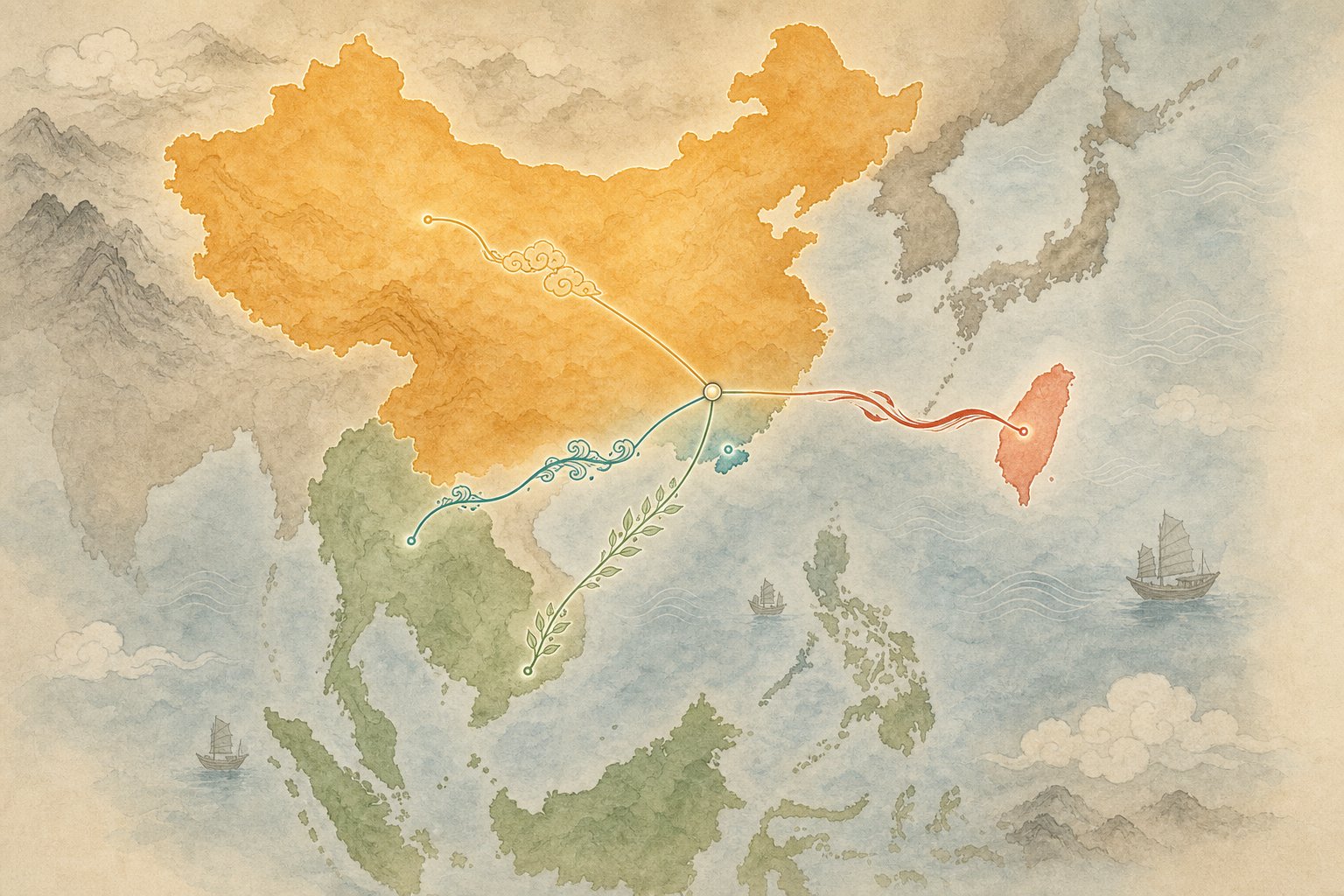
Those signals don't just shift between individuals. They shift between entire regions of the Chinese-speaking world, each with its own romanization system, phonetic conventions, and expectations about how names should look on paper. If you've been thinking about pinyin as a single, universal standard, the reality is messier than that.
Mainland Pinyin vs Taiwan Wade-Giles
Hanyu Pinyin is the official romanization system of mainland China, adopted in 1958 and recognized internationally by ISO and the United Nations. When most people say "pinyin," this is what they mean. But cross the Taiwan Strait, and you'll encounter Wade-Giles, a romanization system developed in the 19th century that remains embedded in Taiwanese proper nouns, personal names, and institutional conventions.
The pinyin differences between mainland and Taiwan are not subtle. The same Chinese characters produce completely different spellings depending on which system you use. The Library of Congress Pinyin Conversion Project documents these distinctions in detail: Wade-Giles uses apostrophes to mark aspiration (t'u vs. tu), hyphens to separate syllables in personal names (Wang T'ieh-jen), and letter combinations like "hs" that pinyin replaces with "x." Pinyin joins syllables together (Wang Tieren) and uses letters like b, d, g, q, and x that never begin a Wade-Giles syllable.
What does this mean in practice? Imagine your transliterated Chinese name uses the characters 志新. In Hanyu Pinyin, that's "Zhixin." In Wade-Giles, it becomes "Chih-hsin." Same person, same characters, two completely different romanized spellings. If you chose your name specifically because "Zhixin" looked clean on a business card, that advantage evaporates the moment you hand that card to someone in Taipei who reads it as an unfamiliar mainland convention.
Cantonese and Hokkien Romanization Differences
Move south to Hong Kong or Guangdong, and the landscape fractures further. Cantonese speakers don't use Hanyu Pinyin at all for their names. The dominant systems are Jyutping (created by the Linguistic Society of Hong Kong) and the older Yale romanization. Cantonese has six practical tones compared to Mandarin's four, different initial consonants, and final stop consonants (p, t, k) that Mandarin lacks entirely. The character 國 (country) is "guo" in Mandarin pinyin but "gwok" in Jyutping. The character 學 (study) is "xue" in pinyin but "hok" in Cantonese romanization.
Hokkien, spoken widely in Taiwan, Fujian province, and Southeast Asian Chinese communities, adds yet another layer. Multiple competing romanization systems exist for Hokkien alone, including Pe̍h-oe-ji, Tai-lo, and Bbanlam pingyim. The same character 中 (middle) reads as "zhong" in Mandarin pinyin, "zung" in Jyutping, and "tiong" in Hokkien Tai-lo. A name built around phonetic transliteration in one system becomes unrecognizable in another.
Here's how a single set of characters looks across these regional systems:
| Characters | Hanyu Pinyin (Mainland) | Wade-Giles (Taiwan) | Jyutping (Cantonese) | Tai-lo (Hokkien) |
|---|---|---|---|---|
| 王志明 | Wang Zhiming | Wang Chih-ming | Wong Zi-ming | Ong Tsi-bing |
| 陈学文 | Chen Xuewen | Ch'en Hsueh-wen | Can Hok-man | Tan Hak-bun |
| 李国强 | Li Guoqiang | Li Kuo-ch'iang | Lei Gwok-koeng | Li Kok-kiong |
Same people. Same written names. Four entirely different romanized outputs. If you picked your transliterated name because it sounded a certain way in Mandarin pinyin, that phonetic identity doesn't travel with you across dialect regions.
What This Means for Your Name Choice
This is where the pinyin name vs meaning-based translation decision takes on a geographic dimension most people overlook. A pinyin-based name is anchored to a specific regional pronunciation. Move to a different dialect region, and the romanized spelling of your name changes even though the characters stay the same. Your identity on paper becomes unstable.
Meaning-based names sidestep this problem entirely. Because the value of a meaning-based name lives in the characters themselves, not in any particular romanized spelling, the name remains consistent regardless of how dialect affects Chinese name pronunciation. A Cantonese speaker in Hong Kong and a Mandarin speaker in Beijing will read the same characters, understand the same meaning, and simply pronounce them according to their own dialect. The name's identity doesn't fracture across regional boundaries.
This doesn't make meaning-based names universally superior. If your primary context is mainland China and you'll rarely interact with Cantonese or Hokkien speakers, the romanization fragmentation may never affect you. But if your professional or personal life spans multiple Chinese-speaking regions, or if you're building a name for long-term use across borders, the stability of characters over romanization is worth factoring into your decision.
Regional pronunciation is one thing. How people actually perceive your name choice, the social signals it sends in professional and personal contexts, is another layer entirely.
Identity and Perception Across Cultures
Hand someone a business card in Shanghai, and the name printed on it tells a story before you say a word. A transliterated name like 杰克 (Jie-ke, "Jack") immediately marks you as foreign. A meaning-based name like 嘉文 (Jiawen, "fine writing") signals something else entirely: that you've invested time in Chinese culture, that you plan to stay, that you take the relationship seriously enough to meet people on their linguistic terms. How Chinese speakers perceive transliterated names versus meaning-based ones isn't just a matter of aesthetics. It shapes first impressions, professional credibility, and the depth of connection people are willing to offer you.
How Native Speakers Perceive Each Approach
To a native Chinese speaker, a transliterated foreign name reads as exactly what it is: a phonetic approximation. The characters don't form a coherent phrase. They don't carry aspirational meaning. They announce "foreigner" in the same way an accent does. That's not inherently negative, but it does position you as an outsider, someone passing through rather than putting down roots.
A meaning-based name, by contrast, follows the same structural logic as every other Chinese name in the room. It blends in. Native speakers process it the way they process any name: they read the characters, register the meaning, and form an impression based on the qualities those characters express. The cultural perception of pinyin names in China is that they're functional but shallow. Meaning-based names earn a different kind of respect because they demonstrate cultural fluency, or at least the effort to achieve it.
This perception gap matters most in relationship-driven business cultures. In contexts where trust is built through personal connection rather than contractual obligation, a Chinese name on a business card for foreigners communicates commitment. It says you're not just here for a single transaction.
Professional and Social Signaling
The signaling works differently depending on which direction you're translating. For a Western professional working in China, adopting a meaning-based Chinese name signals long-term engagement. For a Chinese professional operating internationally, the calculation flips. Research on Chinese business professionals in foreign-invested corporations shows that adopting Western names isn't simple emulation of the West. It's a deliberate strategy for negotiating status within global capitalism, signaling modernity and openness to intercultural communication to both foreign and Chinese audiences.
The contexts where each approach carries different social weight break down roughly like this:
- Client-facing roles in China: meaning-based names build rapport faster and signal cultural respect
- International conference name badges: pinyin preserves identity continuity across borders and avoids confusion
- Internal company directories: pinyin-based legal names prevent the identity fragmentation that complicates HR records and investigations
- Casual introductions among Chinese friends: meaning-based names feel natural and invite deeper social connection
- Academic publishing: pinyin maintains traceability to your legal identity and publication history
- Social gatherings in diaspora communities: either approach works, but the choice itself signals generational and cultural orientation
From an employer and HR perspective, the practical stakes are real. Kroll's research on internal investigations in China found that multinational corporations often have only an employee's English name on file, making it extraordinarily difficult to conduct investigations when a person's legal Chinese identity isn't documented. Companies operating in China are advised to capture legal names, aliases, and ID numbers in employee registration records precisely because the gap between a person's working name and their legal name creates administrative blind spots.
Generational Shifts in Name Translation Preferences
The generational differences in Chinese name translation are striking. Older generations of the Chinese diaspora often adopted anglicized names or meaning-based adaptations that helped them assimilate into Western societies. The name was a bridge, sometimes a shield, designed to smooth interactions and reduce friction.
Younger diaspora members increasingly reverse this logic. Many retain their pinyin names in professional settings as a deliberate identity statement, refusing to anglicize for the convenience of non-Chinese colleagues. As one account of diaspora naming practices describes, Chinese names function as identity partitions: "It's almost a cue into which identity to activate." The name becomes a switch between cultural modes rather than a permanent choice.
This generational shift also shows up in how people reclaim names. Younger Chinese Canadians and Chinese Americans are returning to their birth names after years of using English alternatives, treating the reclamation as an act of cultural reconnection. The practice parallels broader movements where marginalized communities reclaim non-anglophone names as assertions of identity rather than concessions to assimilation.
For Chinese professionals working internationally, the trend is toward strategic multiplicity: a pinyin name for legal documents and global platforms, a meaning-based name for Chinese-language contexts, and sometimes a Western name for casual use with non-Chinese colleagues. The goal isn't picking one approach forever. It's deploying the right name in the right context with full awareness of what each version communicates.
That strategic multiplicity, though, runs into hard limits the moment you encounter official paperwork. Passports, visas, and academic transcripts don't accommodate fluid identity. They demand a single, consistent, verifiable name, and the rules governing which format they'll accept are surprisingly rigid.
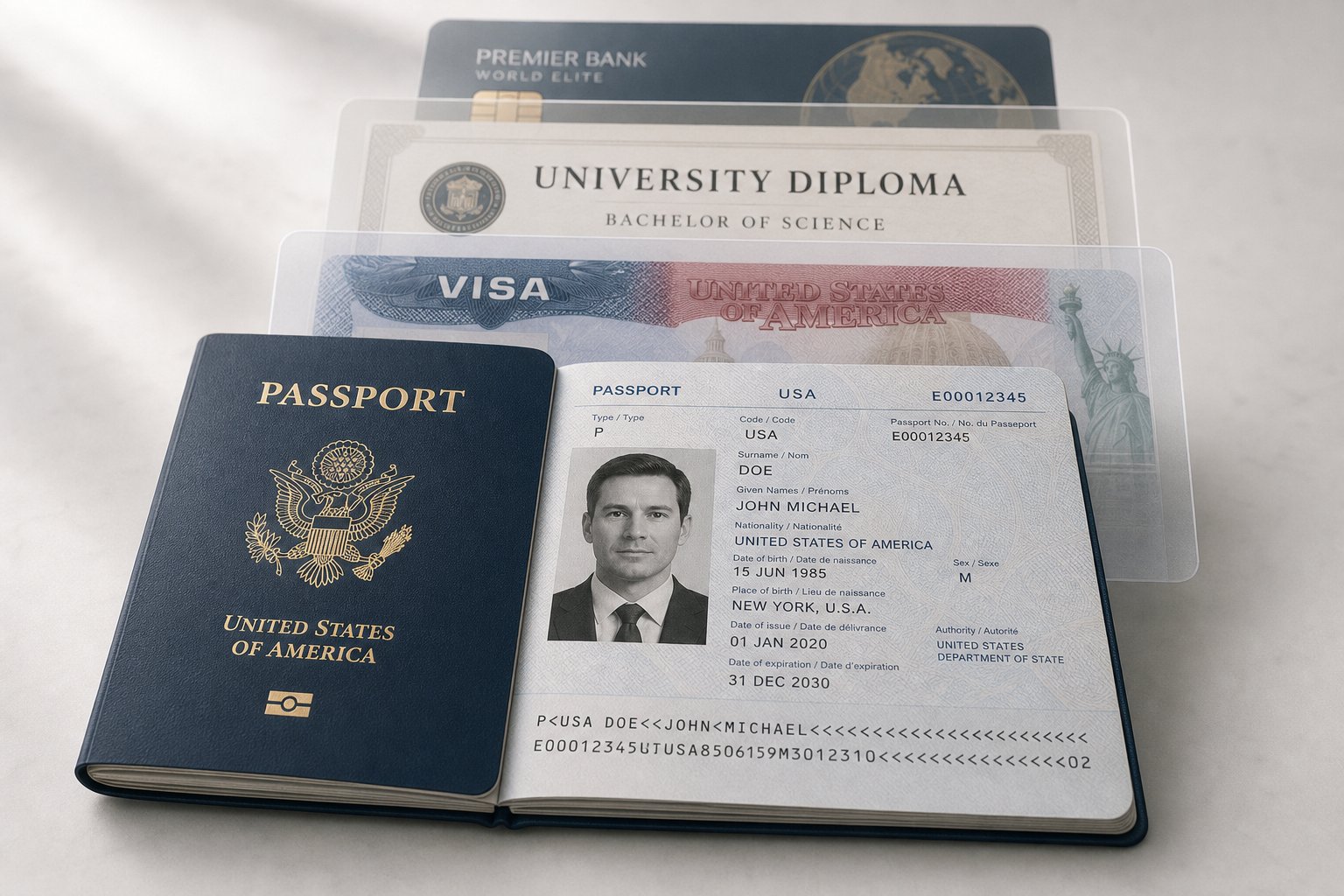
Legal Documents and Official Name Requirements
Passports don't care about cultural resonance. Visa applications don't reward creative character choices. When your name hits an official document, the rules narrow sharply, and the pinyin name vs meaning-based translation decision is often made for you by bureaucratic mandate. Understanding these constraints before you commit to a name strategy saves you from the kind of identity fragmentation that triggers delays, rejections, and expensive corrections down the line.
Passport and Immigration Requirements
The International Civil Aviation Organization (ICAO) Doc 9303 sets the global standard for machine-readable travel documents. Every passport's Machine-Readable Zone (MRZ) must use the Roman alphabet only, with no special characters, no hyphens, and no diacritical marks. For Chinese passport holders, this means the name in the MRZ is rendered in Hanyu Pinyin, the mainland standard romanization system. The characters on the Visual Inspection Zone (VIZ) of the passport page are the legal name. The pinyin in the MRZ is the official romanized representation of those characters.
This ICAO standard for Chinese name romanization creates a direct, traceable link between the Chinese characters and their romanized form. Immigration systems worldwide rely on this link for identity verification. When a border officer scans your passport, the MRZ pinyin is what gets checked against databases, watchlists, and visa records. A meaning-based English name, no matter how elegant, doesn't appear in that machine-readable zone and can't serve as a legal identifier in this context.
For Chinese visa applications going the other direction, the Chinese Embassy's visa FAQ makes clear that personal information on the visa must match the passport exactly. If your passport says "WANG ZHIMING" in the MRZ, that's what appears on your visa. There's no field for a preferred meaning-based name, no option to substitute an English equivalent. The system demands consistency between documents, and pinyin is the thread that holds that consistency together.
Academic and Professional Documents
Academic transcripts, diplomas, and professional certifications follow a similar logic. Chinese universities issue transcripts with the student's legal name in characters alongside its pinyin romanization. When those documents are translated for use abroad, certified translators preserve the pinyin spelling as it appears on the original. They don't substitute a meaning-based English name, because doing so would break the identity chain between the source document and the translation.
The U.S. Student and Exchange Visitor Program (SEVP) enforces strict name standards in its SEVIS database. Names must match the passport MRZ, use the Roman alphabet only, and contain no special characters or punctuation. The system does provide a "Preferred Name" field where a student can list an alternative, but the legal record is anchored to the passport's pinyin rendering. A student whose passport reads "ZHANG YIBIN" can use "Susan Zhang" as a preferred name, but SEVIS tracks identity through the pinyin version.
Professional licensing bodies, immigration attorneys, and background check services all operate on the same principle. Research on name discrepancies in translated documents shows that inconsistencies between a person's pinyin legal name and other name versions used across documents are one of the most common triggers for Requests for Evidence in immigration proceedings. USCIS officers are trained to flag any mismatch rather than assume equivalence, placing the burden on the applicant to explain every variation.
Managing Multiple Name Versions
Here's where the consistency problem becomes concrete. Imagine you use pinyin on your passport (Li Guoqiang), a meaning-based English name on LinkedIn (George Lee), and a different meaning-based Chinese name on WeChat (李国强 but introduced as "Kevin" to Western contacts). Each context made sense at the time. But when a background check, visa renewal, or legal proceeding requires you to prove these are all the same person, you've created an identity puzzle that costs time and money to resolve.
The practical reality is that legal name consistency between pinyin and your English name matters across every official touchpoint. Here's how different document types typically handle the question:
- Passports (Chinese-issued): pinyin romanization required in MRZ, characters in VIZ, no alternatives accepted
- Visa applications: must match passport exactly, no substitution of meaning-based names
- Academic transcripts: pinyin romanization alongside characters, certified translations preserve original spelling
- Immigration forms (USCIS, SEVIS): legal name in pinyin, with optional preferred name field for alternatives
- Professional licenses: pinyin-based legal name required for verification against passport records
- Bank accounts and financial documents: must match government-issued ID, which uses pinyin
- Employment records: legal pinyin name for payroll and tax purposes, preferred name for internal directories
- Court documents and legal filings: pinyin legal name required, aliases listed separately
The pattern is clear. Legal contexts almost universally mandate pinyin transliteration for Chinese-to-English conversion because it preserves a verifiable, traceable link back to the original characters. A meaning-based name, however culturally appropriate, doesn't satisfy identity verification requirements because it has no systematic relationship to the characters on your government-issued ID.
This doesn't mean you can't use a meaning-based name. It means you need to understand where it belongs and where it doesn't. The safest approach is treating your pinyin legal name as the anchor and your meaning-based name as a layer that operates in social, professional, and digital contexts where legal verification isn't at stake.
Those digital contexts, as it turns out, come with their own set of constraints. Platform character limits, ASCII-only usernames, and searchability algorithms all push the naming decision in directions that neither passports nor business cards anticipate.
Digital Platforms and Modern Name Strategy
Every platform you sign up for asks the same question in a slightly different way: what's your name? But the technical constraints behind that question vary wildly. Some platforms restrict usernames to ASCII characters only. Others allow Unicode display names but limit them to a handful of characters. A few let you maintain separate identities for your handle and your visible name. Each constraint nudges the pinyin username vs Chinese display name decision in a different direction, and most people end up running a hybrid approach whether they planned to or not.
Social Media and Platform Constraints
When you're choosing a Chinese name for a social media handle in pinyin, you're working within hard technical limits. Twitter/X, Instagram, and most Western platforms restrict usernames to Latin letters, numbers, and underscores. Chinese characters simply aren't an option for the handle itself. Pinyin wins by default here because it's the only way to represent a Chinese name in an ASCII-only field.
Display names are a different story. Most platforms allow Unicode characters in the visible name field, which means you can show Chinese characters, a meaning-based name, or a combination. This creates a natural split: pinyin for the machine-readable handle, meaning-based characters for the human-readable display name. On WeChat, the dynamic flips entirely. The platform is built for Chinese characters, and career networking advice for China recommends using your actual name plus company and role in your WeChat profile name for discoverability among Chinese contacts.
Gaming platforms occupy a unique niche. Character limits are generous, Unicode is usually supported, and creativity is rewarded over professionalism. This is where meaning-based names thrive. Players craft names using evocative characters like 夜影 (Night Shadow) or 星辰 (Starlight) without any obligation to match a legal identity. The context is pure self-expression, untethered from verification requirements.
Professional Networking and Searchability
Professional platforms introduce a different pressure: findability. The best Chinese name format for LinkedIn depends on who needs to find you. If your network spans both Chinese and English-speaking markets, searchability in both languages matters. LinkedIn allows a name in your primary language plus a secondary name field for another script. A professional operating across borders might list "Zhiming Wang" as the primary name and "王志明" in the secondary field, ensuring both Chinese and Western contacts can locate the same profile.
For anyone building a personal brand name strategy across Chinese and English audiences, the discoverability question extends beyond any single platform. SEO research on bilingual content shows that Chinese and English audiences use fundamentally different search behaviors. Professional topics often trigger English searches, while lifestyle and local queries generate Chinese ones. If your name appears differently across these ecosystems with no connecting thread, you're splitting your personal brand's search equity in half.
Email addresses add one more constraint: simplicity. Most professionals default to pinyin for email ([email protected]) because it's compact, universally typeable, and matches the legal name on corporate records. A meaning-based English name in the email ([email protected]) works too, but only if that name is used consistently enough that people associate it with you.
Here's how the recommendation breaks down by platform type:
| Platform Type | Recommended Approach | Reasoning |
|---|---|---|
| Western social media (handle) | Pinyin | ASCII-only restriction; maintains link to legal identity |
| Western social media (display name) | Hybrid or meaning-based | Unicode supported; Chinese characters increase recognition among Chinese contacts |
| WeChat / Chinese platforms | Meaning-based or real name | Native character support; cultural expectations favor natural Chinese names |
| LinkedIn / professional networking | Pinyin primary + characters secondary | Dual-script fields enable cross-language searchability |
| Email address | Pinyin | Must be ASCII; should match corporate and legal records |
| Gaming platforms | Meaning-based | Creative freedom; no identity verification pressure |
| Academic profiles (Google Scholar, ORCID) | Pinyin | Must match publication history and institutional records |
The pattern across all these platforms is that digital contexts rarely let you use one approach exclusively. You end up managing a portfolio of name versions, each optimized for a different technical environment and audience. The question isn't which single approach to pick. It's how to keep them coherent enough that people recognize you across contexts without creating the kind of fragmentation that causes professional confusion.
That coherence requires a framework, a deliberate system for deciding which name goes where and why. Without one, you end up with a patchwork of ad hoc choices that made sense individually but don't hold together as a strategy.

Choosing the Right Approach for Your Situation
You've seen how each approach works, where it breaks down, and what signals it sends. The missing piece is a system for deciding which one to use and when. Most people default into a name strategy by accident, picking whatever felt right in the moment without considering how it connects to every other context where their name appears. A deliberate framework prevents that drift.
Matching Your Approach to Your Context
The right choice depends on what you need the name to do in a specific situation. A Chinese name for a business card vs passport serves fundamentally different purposes: one builds relationships, the other satisfies legal verification. Trying to force a single approach across all contexts creates friction somewhere. Here's how common scenarios map to recommended approaches:
| Context | Recommended Approach | Why |
|---|---|---|
| Passport and visa applications | Pinyin | ICAO standards require romanized characters traceable to legal identity |
| Business cards for use in China | Meaning-based or hybrid | Signals cultural investment and reads naturally to Chinese colleagues |
| Academic publications | Pinyin | Maintains citation consistency and links to institutional records |
| Social media handles | Pinyin | ASCII restrictions; preserves searchability across platforms |
| WeChat and Chinese-language platforms | Meaning-based | Follows native naming conventions; builds social rapport |
| Casual introductions in Chinese | Meaning-based | Sounds natural in conversation; avoids the "foreign tourist" signal |
| Creative contexts (gaming, art, pen names) | Meaning-based | Maximum expressive freedom; no verification constraints |
| Corporate HR and payroll systems | Pinyin | Must match government-issued ID for tax and legal compliance |
| Email signatures for bilingual audiences | Hybrid (pinyin + characters) | Serves both Chinese and Western recipients in a single format |
Notice the pattern. Legal and institutional contexts demand pinyin because they need traceability. Social and relationship contexts reward meaning-based names because they need cultural resonance. Professional contexts that bridge both worlds benefit from hybrid formats that serve dual audiences simultaneously.
Hybrid Patterns That Work
When you need to operate across Chinese and English-speaking environments, hybrid Chinese English name format examples give you the best of both worlds. These aren't compromises. They're deliberate structural patterns that experienced bilingual professionals use daily:
- Pinyin surname + meaning-based given name: Keep your family name in its pinyin form (Wang, Chen, Li) and pair it with a given name chosen for meaning. Example: Wang Zhiyuan (王志远). This preserves the surname link to your legal identity while giving you a culturally resonant given name.
- English first name + pinyin surname: The most common pattern among overseas Chinese professionals who work in Western contexts. Example: David Chen. The English name handles daily Western interactions while the pinyin surname maintains family identity continuity.
- Full meaning-based name with pinyin in parentheses: Used on business cards and email signatures targeting bilingual audiences. Example: 嘉文 (Jiawen Li). The characters lead for Chinese readers, while the parenthetical pinyin helps non-Chinese speakers pronounce it.
- Phonetically-linked hybrid: A meaning-based name where the characters happen to echo the sound of your original name. Example: someone named "Lee" adopting 李 (Li) as a surname because it sounds similar and is a genuine Chinese surname, then adding meaningful given-name characters. The result satisfies both phonetic and semantic criteria.
The phonetically-linked hybrid is the hardest to execute but produces the most satisfying result. It requires finding characters that simultaneously sound like your original name and carry appropriate meaning, a combination that doesn't always exist. When it works, though, you get a name that feels like a natural Chinese name to native speakers while remaining recognizable to people who know your English name.
A Step by Step Decision Process
How to decide on a Chinese name approach without overthinking it? Walk through these questions in order. Each one narrows your options until the right choice becomes obvious:
- Identify your primary context. Where will this name be used most often? If it's legal documents, start with pinyin. If it's social or professional relationships in Chinese-speaking environments, start with meaning-based.
- Determine your audience. Will the people reading or hearing this name be native Chinese speakers, Western contacts, or both? Native speakers respond better to meaning-based names. Western contacts need something pronounceable. Mixed audiences need a hybrid format.
- Check for legal constraints. Does this context require your name to match a passport, transcript, or government ID? If yes, pinyin is mandatory regardless of preference.
- Assess your cultural fluency. Do you have access to a native speaker or name consultant who can vet character choices for unintended connotations? If not, a pinyin transliteration carries less risk of accidental embarrassment than a poorly chosen meaning-based name.
- Consider longevity. Will you use this name for years or decades? Meaning-based names age better because they follow native conventions. Transliterated names can feel temporary, like a placeholder you never replaced.
- Map your other name versions. What names do you already use on your passport, social media, and professional profiles? Does the new name create confusion or complement what already exists? Aim for a coherent portfolio, not a contradictory collection.
- Choose your hybrid structure. If you need to serve multiple contexts, pick one of the hybrid patterns above and apply it consistently across all non-legal touchpoints.
Most people land on a two-name system: pinyin for legal and institutional contexts, meaning-based (or hybrid) for social and professional ones. That's not indecision. It's the same logic that leads millions of Chinese professionals to maintain both a Chinese name and an English name, deploying each where it functions best.
The principle that ties everything together is simple: consistency within each context matters more than using one approach everywhere. Your passport name should match your visa, your transcript, and your bank account. Your social name should match your business card, your WeChat, and your verbal introduction. These two systems can coexist without conflict as long as you don't accidentally mix them in contexts that demand one or the other.
The goal isn't finding the single "correct" answer to when to use pinyin vs a meaning-based Chinese name. It's making an intentional choice for each context rather than letting defaults, platform constraints, or momentary convenience dictate something you'll live with for years. Choose deliberately, stay consistent within each lane, and the name does its job without creating problems you'll have to untangle later.
Frequently Asked Questions About Pinyin Name vs Meaning Based Translation
1. Should I use pinyin or a meaning-based Chinese name for my business card?
For business cards used in China, a meaning-based or hybrid name is generally more effective. Native Chinese speakers perceive meaning-based names as a sign of cultural investment and long-term commitment, which builds rapport faster in relationship-driven business cultures. A pinyin transliteration, while functional, immediately signals 'foreigner' and can feel temporary. The hybrid approach of pairing a phonetically similar Chinese surname with meaningful given-name characters offers the best balance of identity continuity and cultural resonance.
2. Why does the same English name get different Chinese transliterations?
Multiple factors cause variation. First, many Chinese characters share identical pronunciations, so transliterators must choose between options like 迈, 麦, or 买 for the syllable 'mai.' Second, there is no single correct way to segment English sounds into Mandarin-compatible chunks. Third, tone assignment through character selection introduces further variation. Government bodies like Xinhua News Agency maintain standardized tables to reduce inconsistency in media, but no universal authority governs personal name transliterations.
3. What name format do Chinese passports require?
Chinese passports follow ICAO Doc 9303 standards, which require the Machine-Readable Zone to use Hanyu Pinyin romanization in the Roman alphabet only, with no special characters, hyphens, or diacritical marks. The Chinese characters appear in the Visual Inspection Zone as the legal name. Immigration systems worldwide use the MRZ pinyin for identity verification against databases and visa records, so a meaning-based English name cannot substitute for the official pinyin rendering on any travel document.
4. Can I use both a pinyin name and a meaning-based Chinese name?
Yes, and most bilingual professionals do exactly this. The practical approach is a two-name system: pinyin for legal and institutional contexts like passports, bank accounts, and academic transcripts, and a meaning-based name for social and professional contexts like business cards, WeChat, and verbal introductions. The key is maintaining consistency within each lane. Your passport name should match your visa and financial records, while your social name should match your business card and Chinese-language platforms.
5. How do regional dialects like Cantonese affect my Chinese name choice?
A pinyin-based name is anchored to Mandarin pronunciation specifically. The same characters romanize completely differently in Cantonese Jyutping, Hokkien Tai-lo, or Taiwanese Wade-Giles. For example, 王志明 reads as 'Wang Zhiming' in Mandarin pinyin but 'Wong Zi-ming' in Cantonese and 'Ong Tsi-bing' in Hokkien. Meaning-based names sidestep this fragmentation because the characters remain constant regardless of dialect. If your life spans multiple Chinese-speaking regions, character-based identity is more stable than any single romanization.