What Makes a Pinyin Surname Rare
When you search for Chinese last names online, you'll find the same short list recycled everywhere: Wang, Li, Zhang, Liu, Chen. These five alone account for over 430 million people, roughly 30% of China's population. Nearly 86% of the country shares just 100 surnames. But here's what most English-language guides leave out: China has recorded over 20,000 surnames throughout its history, and around 6,000 remain in active use today. Thousands of rare pinyin surnames sit completely undocumented for non-Chinese readers.
Defining Rarity in Chinese Surname Pinyin
What actually makes a surname "rare" in pinyin terms? Two distinct categories exist. The first is straightforward: surnames carried by tiny clan populations, sometimes fewer than 10,000 people nationwide. China's Ministry of Public Security tracks these through periodic census surveys, and many fall below even 1,000 bearers. The second category is subtler and often more confusing. Some characters are perfectly common in everyday Mandarin, yet carry a completely different pronunciation when used as a surname. The character is familiar, but its surname-specific pinyin reading catches even native speakers off guard.
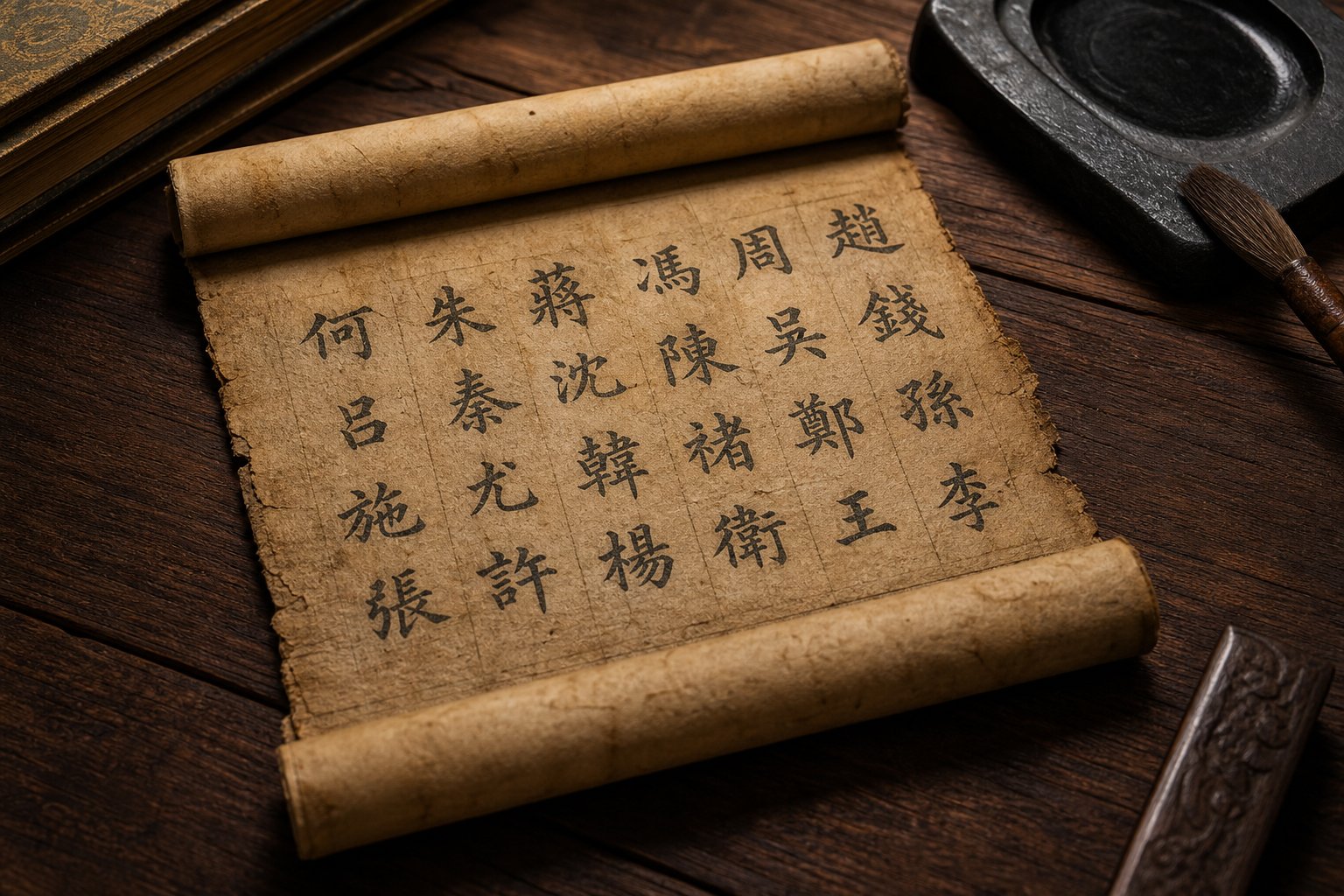
The Song Dynasty classic Hundred Family Surnames (百家姓) listed several hundred chinese family names as a teaching text for children. It remains a cultural touchstone, but it barely scratches the surface. Research from the Chinese Academy of Sciences confirms that rare chinese surnames, representing over 95% of all surname types, connect to only about 15% of the population. The remaining 85% cluster under roughly 100 common names.
Why Most Resources Miss These Surnames
Pinyin romanization flattens the visual distinctiveness of Chinese characters into alphabetic text, making it nearly impossible for non-Chinese speakers to recognize when a surname is rare versus simply unfamiliar to them personally.
This is the core problem. A learner encountering "Shan" as a rare chinese last name has no way of knowing whether it represents the common 山 or the rare surname reading of 单. English-language resources on chinese surnames tend to stop at frequency lists without addressing these hidden pronunciation splits. The result is a massive blind spot for genealogy researchers, language students, and professionals working across cultures.
The forces that pushed so many chinese family names toward extinction span centuries of political upheaval, forced migrations, and linguistic standardization. Understanding those mechanisms reveals why certain pinyin readings survived while others vanished.

Historical Forces That Made Surnames Disappear
Surnames don't vanish overnight. They erode across generations, pushed toward extinction by political violence, bureaucratic standardization, and the slow drift of spoken language. Many traditional chinese surnames that once identified thriving clans now survive only in dusty genealogical records or single-village populations. Four major forces drove this decline, and each left a distinct fingerprint on the pinyin landscape.
- Clan dispersal during dynastic upheavals and forced migrations — Wars, rebellions, and government-ordered relocations scattered tight-knit surname communities across vast distances. When a clan of a few thousand people fragmented into isolated families, intermarriage with dominant local surnames gradually absorbed the rare name.
- Character simplification merging previously distinct surnames — The transition from traditional to simplified characters collapsed certain written distinctions. Two separate surnames sharing a simplified form became statistically invisible as independent lineages.
- Political persecution causing families to adopt new surnames — Targeted purges against specific clans, particularly during dynastic transitions, forced survivors to change their family names entirely. Some adopted the surname of a protector or simply picked a common name to disappear into the crowd.
- Regional dialect influence erasing standard pinyin forms — A surname might survive in Hokkien, Hakka, or Cantonese pronunciation while its Mandarin pinyin equivalent fell out of everyday use, effectively removing it from the standard romanization record.
Dynastic Upheaval and Clan Dispersal
Imagine a surname carried by a single community in one province. A forced migration order during the Ming Dynasty scatters those families across five regions. Within a few generations, isolated branches marry into locally dominant clans, and the original surname thins to near-invisibility. This pattern repeated across centuries of chinese last names and meanings being tied directly to geographic roots. Many rare surnames trace their etymology to ancient feudal states, official titles, or geographic features that no longer exist as administrative units. The surname 邴 (Bing), for instance, derives from a small Zhou Dynasty fief. Once the state dissolved, so did the political structure sustaining that name's prominence.
How Character Simplification Merged Distinct Surnames
China's 1950s script reform prioritized literacy over genealogical precision. When traditional characters were simplified, some surnames that looked entirely different in their full forms collapsed into a single simplified character. Bearers of the less common variant often found their distinct identity absorbed into the more popular reading. This is one reason researchers studying chinese surnames and meanings must consult traditional-character sources to distinguish lineages that modern simplified text treats as identical.
Political Persecution and Surname Abandonment
Compound surnames offer a vivid example. Ancient China once had over 1,000 compound surnames, many derived from official titles, professions, or regional hereditary names. Fewer than 100 remain today. Some disappeared because their bearers faced political targeting and simplified their names to single characters for safety. Others, like Sima or Zhuge, survived only because famous historical figures kept them culturally visible. The rest quietly vanished as families chose survival over lineage pride.
These four mechanisms didn't operate in isolation. A clan might suffer political persecution, scatter during a migration, lose its traditional character form in simplification, and finally see its dialect pronunciation excluded from standard pinyin, all within a few centuries. The cumulative result is a modern surname corpus where certain pinyin readings feel almost alien, even to native Mandarin speakers who encounter them for the first time.
Surnames Where the Pinyin Reading Defies Expectations
Some rare pinyin surnames aren't rare because few people carry them. They're rare because almost nobody reads them correctly on the first try. Picture this: you see the character 仇 and confidently say "chou," meaning hatred. Except when it's a chinese surname, it's pronounced Qiu. The character hasn't changed. The meaning context has. And suddenly, a word you thought you knew becomes a pronunciation trap that catches native Mandarin speakers and learners alike.
Characters With Hidden Surname Pronunciations
Mandarin Chinese has a small but significant set of characters that carry a completely different reading when functioning as a surname. IBM's Global Name Management documentation identifies this directly: there is a small set of characters with a surname-specific pronunciation, and standard transliteration systems default to the most common reading, not the surname reading. This means automated systems, dictionaries, and even well-educated speakers routinely get these wrong.
The confusion runs deep for anyone researching mandarin last names or building databases of common chinese names. A genealogy researcher encountering "Shan" in a family record might assume it's 山 (mountain) when it's actually 单, a character most people read as "dan" (single). The surname reading Shan preserves a pronunciation that predates modern standard Mandarin by centuries.
Here's a reference table covering the most commonly mispronounced surname characters:
| Character | Common Reading | Surname Reading (Pinyin) | Approximate Population |
|---|---|---|---|
| 仇 | chou (hatred) | Qiu | ~960,000 |
| 单 | dan (single) | Shan | ~270,000 |
| 区 | qu (area) | Ou | ~170,000 |
| 朴 | pu (simple) | Piao | ~300,000 |
| 查 | cha (check) | Zha | ~180,000 |
| 秘 | mi (secret) | Bi | ~20,000 |
| 乐 | le (happy) | Yue | ~960,000 |
| 华 | hua (splendid) | Hua (fourth tone) | ~6,300,000 |
| 曾 | ceng (once) | Zeng (first tone) | ~6,800,000 |
| 解 | jie (untie) | Xie | ~700,000 |
Why Surname Readings Preserve Ancient Sounds
These alternate pronunciations aren't random quirks. They're linguistic fossils. When a character entered the chinese last name system centuries ago, it carried the pronunciation standard at that time. General vocabulary evolved as Mandarin standardized across dynasties, but surnames, passed rigidly from parent to child, resisted phonological drift. The surname reading of 区 as Ou, for example, reflects an older pronunciation that the word's common usage abandoned long ago. Surnames functioned like sealed containers, preserving sounds that the rest of the language discarded.
This is why you'll notice that many of these alternate readings sound nothing like their modern counterparts. They aren't dialectal variations or regional accents. They're direct inheritances from Middle Chinese or even Old Chinese phonology, frozen in place by the social weight of family identity.
Common Mispronunciation Traps
The practical problem is real. Automated pinyin systems default to the most frequent reading of any character, which means name databases, translation software, and even official documents regularly assign the wrong pronunciation to these surnames. Someone named 乐 (Yue) gets called "Le" in every automated system. A person surnamed 解 (Xie) sees their name rendered as "Jie" on airline tickets and bank records.
For language learners and genealogy researchers, the takeaway is straightforward: when you encounter a chinese surname that seems too "ordinary" in its pinyin form, check whether the character has a surname-specific reading. The common chinese names databases won't always flag these distinctions, and standard dictionaries often bury the surname pronunciation in a secondary entry.
These hidden readings represent just one dimension of phonological surprise. Beyond characters with dual pronunciations, the broader surname corpus contains pinyin combinations that sound genuinely unusual, with initials and finals that most Mandarin speakers rarely encounter in any family name context.
Unusual Pinyin Initials and Finals in the Surname Corpus
Beyond characters with hidden pronunciations, there's another layer of phonological surprise: surnames that use pinyin syllables you'd almost never expect to see in a family name. Mandarin has roughly 400 possible syllable combinations when you factor in tones, but the surname corpus draws from a remarkably narrow slice of that inventory. Certain initials and finals cluster heavily among common names while others appear so rarely that encountering them feels almost like a typo.
Rare Initial Consonants in Surname Pinyin
Consider how most one syllable last names in Chinese cluster around familiar initials: Zh-, W-, L-, Ch-, and H- dominate the top 100. Surnames in Asia, particularly within the Chinese tradition, overwhelmingly favor these sounds. But what about last names beginning with R? The initial R- is strikingly uncommon in the surname corpus. Ren (任) and Ruan (阮) are the only R-initial surnames with significant populations, and even they rank outside the top 40. Rarer still are surnames like Rong (容) and Rao (饶), each carried by relatively small communities.
Last names beginning with P present a similar gap. Standard Mandarin pinyin distinguishes P- (aspirated) from B- (unaspirated), but P-initial surnames are scarce beyond Pan (潘) and Peng (彭). Surnames like Pu (蒲), Pi (皮), and Piao (朴, the Korean-origin surname reading) sit far down the frequency list. K last names are even harder to find. Because Mandarin's K- initial competes with G- in the same phonological space, surnames like Kong (孔) and Kuang (邝) represent nearly the entire K-initial inventory.
This scarcity isn't random. Research into rare Mandarin syllables shows that certain sound combinations are associated with very few characters overall. Syllables like nue, cen, and eng have only two or three characters each in the entire language. When the character pool for a given syllable is tiny, the odds of one becoming a surname drop dramatically.
Unexpected Final Sounds and Tonal Patterns
Finals tell an equally interesting story. Most Chinese surnames end in open vowels or common nasal finals (-ng, -n). Surnames ending in -ue (like Yue 岳) or -üe (like Que 阙) are phonologically unusual. The final -ao dominates given names but appears less frequently in surnames beyond Zhao, Cao, and Mao. Meanwhile, tonal analysis of Chinese names reveals that second tone overwhelmingly dominates the surname space, with fourth tone being the least represented among the top 20 surnames.
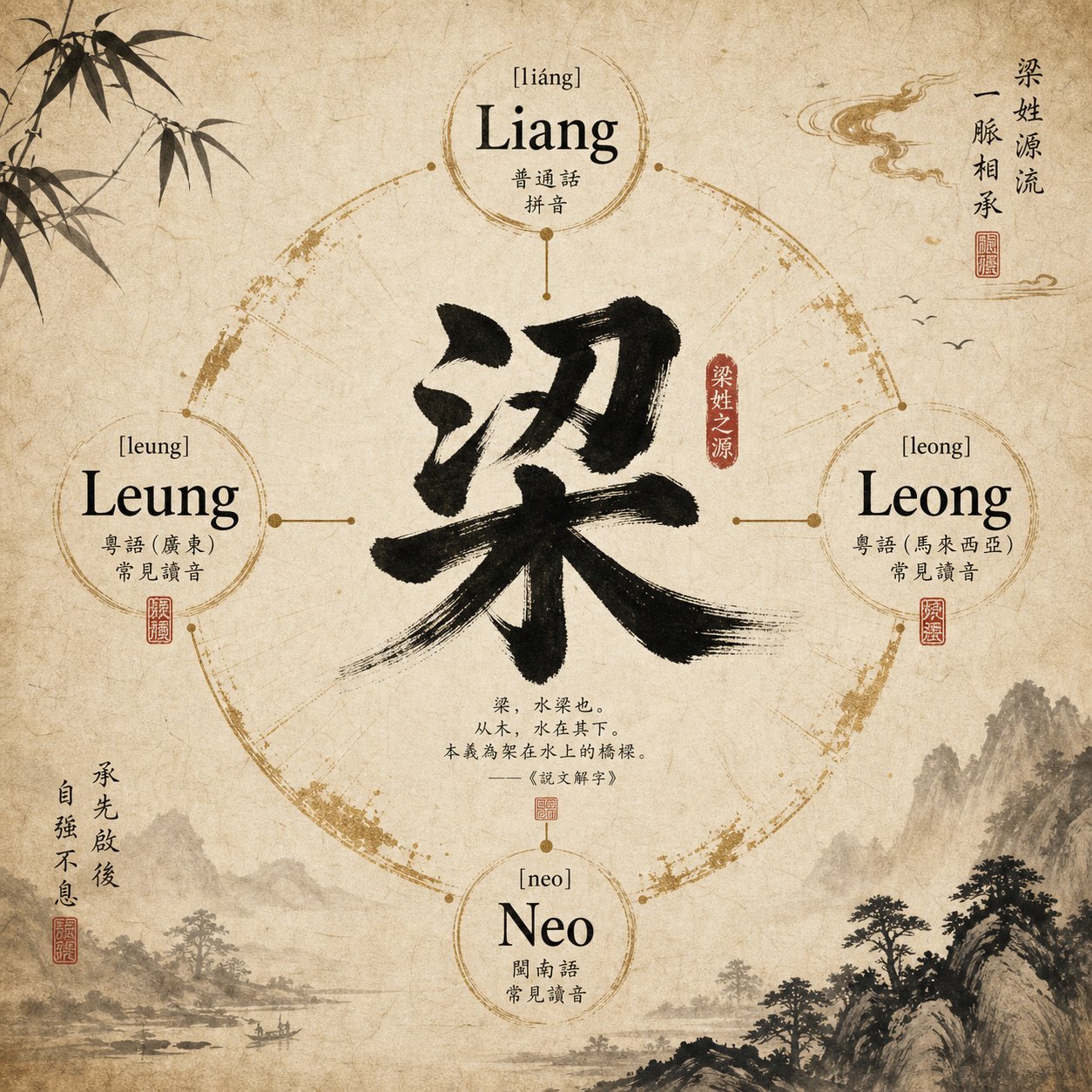
Regional dialects complicate this picture further. A 3 letter chinese name romanized from Cantonese or Hokkien might represent a surname that standard Mandarin pinyin renders as a single unfamiliar syllable. The character 王, for instance, becomes Wang in Mandarin, Wong in Cantonese, and Ong in Hokkien. For rarer surnames, the dialect pronunciation may be the only form that survived in overseas communities, while the Mandarin pinyin equivalent faded from common knowledge entirely.
| Pinyin | Character | Meaning Origin | Rarity Level |
|---|---|---|---|
| Rao | 饶 | Ancient state in modern Hebei | Uncommon |
| Rui | 芮 | Zhou Dynasty vassal state | Rare |
| Que | 阙 | Watchtower gate (architectural term) | Rare |
| Cen | 岑 | Small hill (geographic feature) | Uncommon |
| Pi | 皮 | Leather/hide (occupational origin) | Rare |
| Kuang | 邝 | Ancient place name in Henan | Uncommon |
| Nui (Nv) | 女 | Ancient matrilineal clan marker | Very Rare |
| Pou | 剖 | Archaic term (split/divide) | Nearly Extinct |
These phonological outliers raise a natural question: just how small can a surname population get before it effectively disappears? The answer requires a framework for measuring rarity at scale, one that distinguishes "uncommon" from "nearly extinct" with actual population data behind it.
Measuring Surname Rarity by Population Scale
Calling a surname "rare" without context is like saying a town is "small" without knowing the country. Is it 50,000 people? Five hundred? Five? Last name rarity in the Chinese system spans an enormous range, from surnames carried by hundreds of thousands down to names held by a single surviving family. To make sense of this spectrum, you need a framework anchored in actual population data.
The Rarity Spectrum From Uncommon to Nearly Extinct
China's Public Security Bureau conducts periodic surname censuses that reveal just how concentrated the population is among a handful of names. The most common chinese last names dominate at a staggering scale: Wang holds approximately 94.68 million bearers, Li follows at 92.76 million, and Zhang at 85.50 million. These three surnames alone account for roughly 21% of China's entire population. Wang is frequently cited as the most common surname name in the world when measured by total bearers within a single country.
The surname Wang is carried by nearly 95 million people. Some rare pinyin surnames are held by fewer than 100. That's a population ratio of almost one million to one within the same naming system.
Against that backdrop, here's how name rarity breaks down into meaningful tiers:
| Rarity Tier | Population Range | Example Surnames (Pinyin) | Context |
|---|---|---|---|
| Uncommon | 100,000 - 500,000 | Shan (单), Qu/Ou (区), Zha (查) | Recognizable but frequently mispronounced |
| Rare | 10,000 - 100,000 | Bi (秘), Rui (芮), Que (阙) | Most native speakers have never met one |
| Very Rare | 1,000 - 10,000 | Shan (墠), Cuan (爨), Nv (女) | Concentrated in one or two villages |
| Nearly Extinct | Fewer than 1,000 | Pou (剖), Nian (黏), Gui (癸) | May disappear within one generation |
The most popular chinese last names each exceed the entire population of many countries. Meanwhile, surnames in the "nearly extinct" tier could fit inside a single apartment building. This contrast explains why most common chinese surnames receive all the attention in language textbooks and databases while thousands of others go unrecorded.
Census Sources for Verifying Surname Populations
The primary source for mainland figures is China's Ministry of Public Security, which publishes annual surname reports drawn from the national household registration (hukou) system. Their 2019 survey confirmed that only about 6,000 surnames remain in active use out of more than 20,000 historically recorded. Taiwan maintains a separate household registration system that sometimes preserves surname distinctions lost on the mainland, particularly for families that migrated before 1949. Researchers tracing a forebears surname through genealogical records often cross-reference both datasets to confirm whether a name still has living bearers.
Tools like the Chinese Fuxi Culture Research Association's surname database, built from ID card records covering 1.33 billion people, offer the most granular population counts available. For anyone investigating common chinese last names versus genuinely rare ones, these census-grade sources are the only reliable way to confirm where a surname falls on the rarity spectrum.
Population numbers tell you how many people carry a name today. They don't tell you whether a surname once thrived and then collapsed, or whether it survives only as a ghost in historical texts, waiting to be rediscovered through clan records and place-name archaeology.
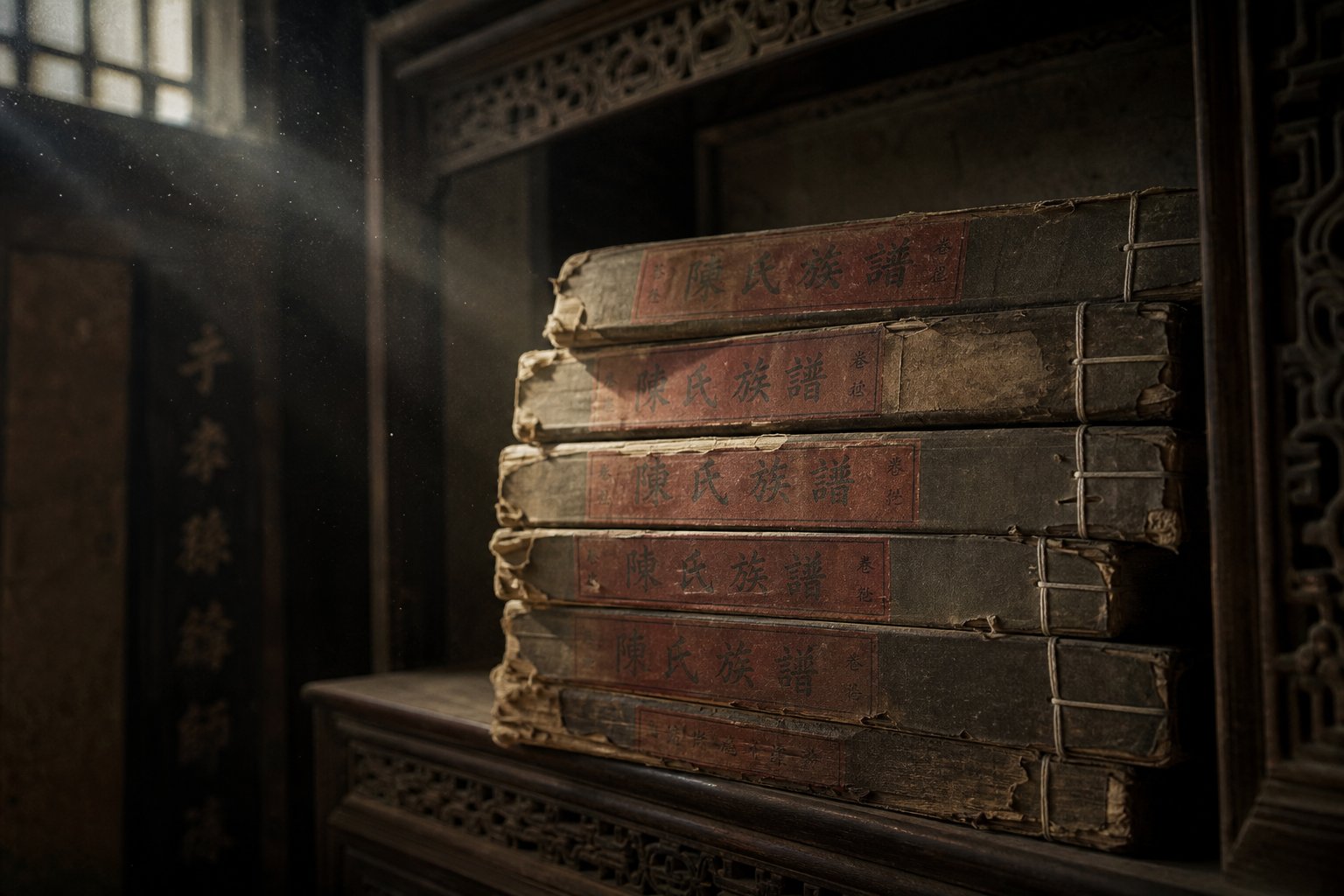
Lost Surnames From Historical Texts and Clan Records
Some surnames didn't fade gradually. They vanished from living communities entirely, surviving only as ink on old paper. The Hundred Family Surnames (百家姓) lists over 500 entries, yet dozens of those names have no confirmed living bearers in modern census data. Other ancient chinese family names appear in even older sources, like the Yuanhe Xing Zuan (元和姓纂) compiled during the Tang Dynasty, which documented over 1,200 surname entries. Many of those pinyin romanizations now exist only as historical curiosities, disconnected from any traceable population.
Surnames Preserved Only in Ancient Texts
Clan genealogy books, known as jia pu (族谱), represent the richest archive for tracing unique chinese surnames that have otherwise disappeared. These records date back to the Shang Dynasty in their earliest forms and became widespread during the Qing period. According to FamilySearch's documentation on Chinese compiled genealogies, existing published and manuscript genealogies may cover as much as 25% of the historical population since the 1600s. That figure would climb to 60% if preservation rates had been higher. The gap between those numbers represents countless lost lineages, many carrying surname chinese readings that no modern dictionary bothers to include.
Local gazetteers (地方志) offer another window. These regional histories, compiled by county and prefecture officials across dynasties, recorded prominent local families by surname. When a surname appears in a gazetteer but not in any modern household registration, researchers can pinpoint roughly when and where that china surnames lineage went silent.
Tracing Lost Surnames Through Place Names and Literature
Even when a surname loses all living bearers, it sometimes leaves geographic fingerprints. Villages, rivers, and mountain passes across China carry names derived from the families that once dominated them. A place called 爨庄 (Cuan Village) in Yunnan preserves the memory of the Cuan clan long after most bearers abandoned the notoriously complex 30-stroke character. Literary references work similarly. Classical poetry and historical texts mention surnames that readers today would struggle to pronounce, let alone connect to a living chinese family name tradition.
Here are notable nearly-extinct surnames with their historical context and last known concentrations:
- Cuan (爨) — Derived from an ancient kingdom in Yunnan. The character's extreme complexity (30 strokes) drove many bearers to simplify it to 寸 (Cun). Scattered remnants reported in Yunnan and Sichuan.
- Shan (墠) — Connected to ritual altar grounds in Zhou Dynasty records. Last documented in small communities in Henan province.
- Gui (癸) — One of the Heavenly Stems used as a surname in pre-Qin texts. Fewer than 500 confirmed bearers, concentrated in Guangdong.
- Nian (黏) — Possibly occupational, related to grain processing. Appears in Ming-era gazetteers from Shandong but nearly absent from modern records.
- Shentu (申屠) — A compound surname from the Spring and Autumn period. Survives in fragments across Zhejiang, though many bearers shortened it to Shen.
- Xiahou (夏侯) — Once a prominent compound surname tied to Han Dynasty nobility. Now extremely rare on the mainland, with small clusters in Jiangsu.
Diaspora Communities as Surname Preservers
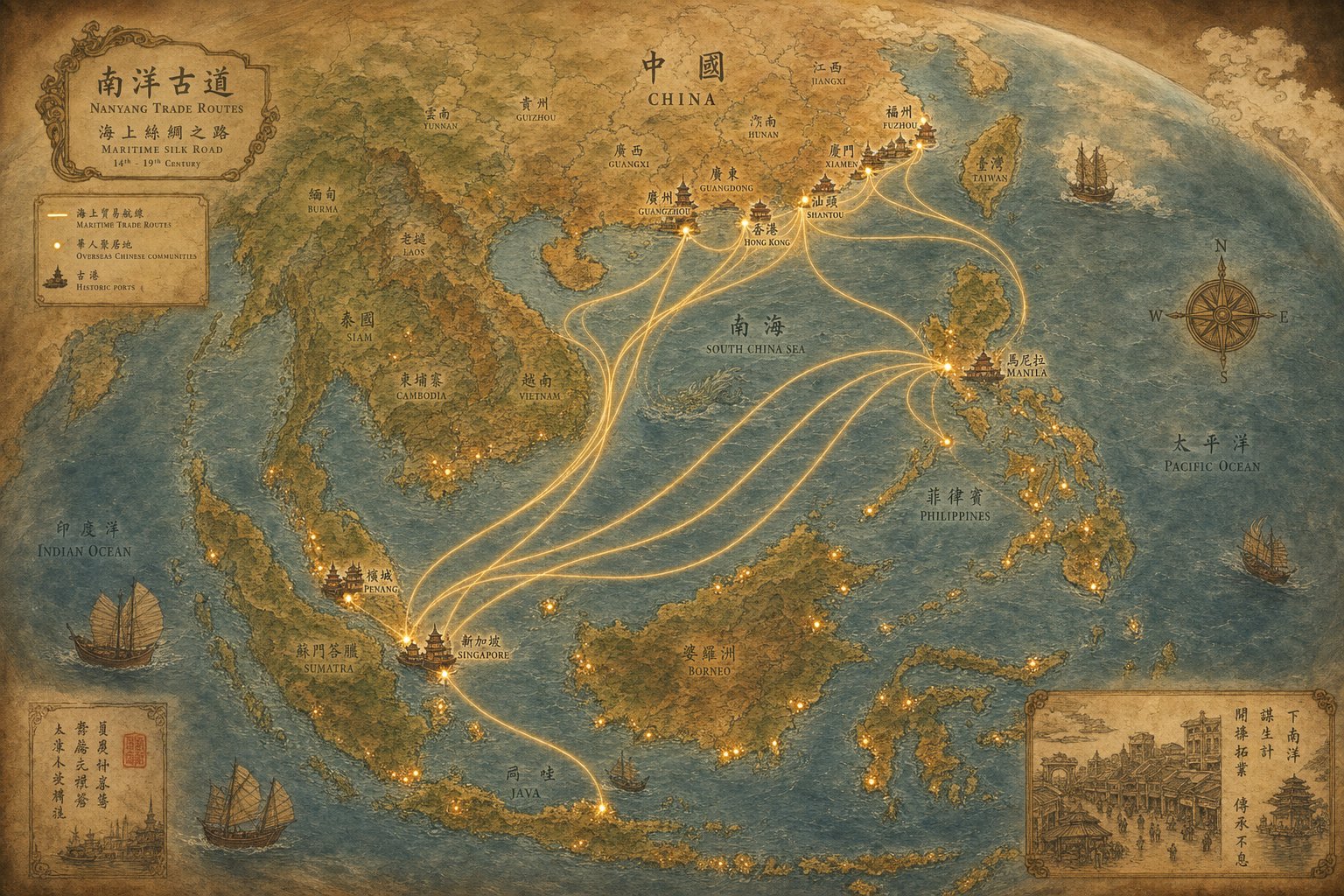
Overseas Chinese communities sometimes function as accidental archives. Families that emigrated during the 19th and early 20th centuries carried surnames that later disappeared on the mainland, particularly during the Cultural Revolution when many genealogical records were destroyed. A Chinese-Filipino heritage project documents how diaspora families are now working to reclaim surnames that were altered or abandoned during immigration. Tombstone inscriptions, ancestral hall records in Southeast Asia, and even ship manifests from emigration ports preserve surname readings that no longer appear in mainland databases.
The challenge is reconnection. A chinese family tree maintained by a Hokkien-speaking family in the Philippines might record a surname in dialect romanization that doesn't map obviously to any standard pinyin form. Researchers must work backward through dialect pronunciation tables, cross-referencing with historical gazetteers and jia pu collections, to identify which lost surname the family originally carried.
These ghost surnames aren't merely academic curiosities. For anyone tracing a rare lineage, a nearly-extinct name functions as a precision tool, narrowing geographic origin to a specific village or county in ways that common surnames never could.
Connecting Rare Surnames to Ancestry and Migration Patterns
A surname like Wang tells you almost nothing about where your family came from. With 94 million bearers spread across every province, it's a genealogical dead end without additional context. A rare pinyin surname, on the other hand, works like a geographic homing signal. If your family name is Cuan, Que, or Rui, you've already narrowed your ancestral origin to a handful of counties before opening a single record book.
Rare Surnames as Geographic Origin Markers
Research on Chinese surname distribution demonstrates that rare surnames cluster tightly in specific regions, while common asian last names spread uniformly across the country. The study, drawing from 1.28 billion citizen records, found that prefectures with high proportions of rare surnames tend to be geographically isolated areas where drift and mutation, rather than migration, shaped the population over centuries. In practical terms, this means a rare surname often points to a single province or even a single county of origin.
Imagine you're researching a family surnamed Que (阙). Census data places most bearers in Jiangxi and Fujian. That immediately eliminates 28 other provinces from your search. Compare that to someone researching the surname Chen, which appears in every single prefecture across China with populations in the millions. For genealogy purposes, rarity is an advantage, not an obstacle. The fewer people who carry a name, the more precisely it maps to a place.
This geographic specificity also applies to compound surnames. A family named Xiahou (夏侯) almost certainly traces to Jiangsu or Anhui. Shentu (申屠) points to Zhejiang. These aren't guesses. They're patterns confirmed by clan genealogy records and local gazetteers spanning centuries. Among asian names and surnames more broadly, Chinese rare surnames offer some of the strongest geographic signals because the patrilineal naming system kept them anchored to specific communities for so long.
Taiwanese and Dialect Romanizations in Genealogy
Taiwan's household registration system preserves surname distinctions that mainland records sometimes obscure. Because many taiwanese surnames were recorded before the 1950s character simplification, they retain traditional character forms that distinguish lineages merged on the mainland. Researchers working with taiwanese last names often find genealogical detail that mainland databases have flattened.
Dialect romanizations add another layer. The lim last name origin traces to the character 林 (Lin in Mandarin), but the Hokkien pronunciation "Lim" connects specifically to families from southern Fujian who migrated to Taiwan and Southeast Asia during the Qing Dynasty. Similarly, the family name Ng represents 黄 (Huang in Mandarin) or 吴 (Wu) depending on the dialect group. Cantonese speakers romanize 黄 as Wong, while Hokkien speakers render 吴 as Goh or Ng. Each romanization variant encodes a specific migration wave and point of origin.
Hakka romanizations tell their own story. A surname spelled "Chong" in Hakka corresponds to 张 (Zhang in Mandarin), immediately identifying the bearer's family as part of the Hakka diaspora rather than the broader Zhang population. These dialect-specific spellings function as migration timestamps, marking exactly when and from where a family left China.
If you're starting ancestry research with only a rare pinyin surname or an unfamiliar dialect romanization, here's a practical framework:
- Identify the character behind the romanization. Use dialect-to-Mandarin conversion tables to determine whether your surname spelling reflects Hokkien, Hakka, Cantonese, or standard pinyin. A single romanization like "Ng" could map to multiple characters depending on dialect origin.
- Check population distribution data. Cross-reference your surname against China's Public Security Bureau reports or Taiwan's household registration records to identify which provinces or counties have the highest concentration of bearers.
- Search clan genealogy databases. Platforms like FamilySearch and the Shanghai Library's genealogy collection hold thousands of digitized jia pu (族谱). Filter by surname and geographic region to find matching clan records.
- Examine local gazetteers for your target region. Once you've narrowed the geography, provincial and county gazetteers often list prominent local families by surname, providing historical context about when the clan settled there.
- Connect with surname associations. Many rare surname clans maintain active associations in Taiwan, Malaysia, Singapore, and other diaspora communities. These groups often hold genealogical records not available in any public database.
- Cross-reference emigration records. Ship manifests, port records, and overseas Chinese cemetery inscriptions can confirm the dialect romanization your family used at the point of departure, linking back to a specific home village.
The key insight is that rarity works in your favor. A common surname forces you to sift through millions of potential matches. A rare one hands you a shortlist of villages and a clear migration trail. The same phonological oddity that makes these surnames hard to pronounce makes them remarkably easy to trace, once you know where to look.
Navigating Rare Pinyin Surnames in Everyday Life
Tracing a rare surname through historical records is one challenge. Handling one correctly in a live conversation, a business meeting, or an email introduction is another entirely. Uncommon chinese surnames show up in professional settings more often than people expect, and mispronouncing someone's family name, especially after being told the correct reading, leaves a lasting impression for the wrong reasons.
Verifying Pronunciation in Professional Settings
When you encounter an unfamiliar surname on a name badge or email signature, resist the urge to guess. A name like Xie could represent 谢 (the common surname) or the rarer surname reading of 解. Que might look like a typo to someone unfamiliar with uncommon chinese last names, but it's a legitimate surname (阙) with centuries of history. The simplest professional move is to ask directly and listen carefully to the response.
For Chinese language learners building awareness of rare chinese names, the key habit is checking whether a character has a surname-specific reading before defaulting to the dictionary's primary entry. Many unique chinese last names hide behind characters you already know, just pronounced differently in the family name context. Understanding chinese names and meanings at this level takes deliberate study beyond standard textbook vocabulary.
Romanization Systems and Why They Cause Confusion
Part of the difficulty stems from competing romanization systems. Mainland China uses pinyin. Taiwan historically used Wade-Giles. Hong Kong and diaspora communities often use dialect-based spellings. The Library of Congress pinyin conversion documentation highlights the structural differences: Wade-Giles uses apostrophes and hyphens that pinyin eliminates, and personal names are spaced differently between the two systems. A surname spelled "Ch'en" in Wade-Giles becomes "Chen" in pinyin. "Ts'ui" becomes "Cui." Someone unfamiliar with these conventions might assume they're looking at two different surnames entirely.
As the Asia Media Centre explains, the character 王 alone appears as Wang, Wong, Ong, or Heng depending on the dialect and romanization system used. For the rarest chinese surnames, this multiplicity is even more disorienting because there's no widely recognized "default" spelling to anchor expectations.
Here are practical tips for handling unfamiliar Chinese surnames respectfully and accurately:
- Ask once, remember permanently. When someone corrects your pronunciation, write it down phonetically in a way that works for you. Repeating the mistake signals inattention.
- Don't assume the romanization tells the full story. Two colleagues both spelled "Xie" might carry entirely different characters with different tones and origins.
- Check which romanization system applies. A Taiwanese colleague's surname spelling likely follows Wade-Giles or a dialect convention, not mainland pinyin.
- Avoid guessing meanings aloud. Speculating about what someone's surname "means" based on the character's common usage can be awkward or inaccurate when surname-specific readings apply.
- Use full pinyin with tone marks in written contexts. When documenting names for databases or directories, include tone numbers or marks to distinguish otherwise identical spellings.
If you've ever wondered "what is my chinese name" or whether your family once carried a rare surname that was altered during immigration, the research path outlined in this article applies directly. Start with whatever romanization your family uses, trace it back through dialect conversion tables, and check whether the original character carries a surname-specific reading that modern systems might miss. The rarest chinese surnames aren't just linguistic curiosities. They're living connections to specific places, specific clans, and specific moments in history, waiting to be correctly pronounced again.
Frequently Asked Questions About Rare Pinyin Surnames
1. What are the rarest Chinese surnames still in use today?
Some of the rarest Chinese surnames with confirmed living bearers include Cuan (爨) with scattered populations in Yunnan, Gui (癸) with fewer than 500 bearers in Guangdong, and Nian (黏) which is nearly absent from modern records. China's Public Security Bureau data shows that surnames held by fewer than 1,000 people are classified as nearly extinct, and many of these concentrate in isolated villages or single counties. Compound surnames like Xiahou (夏侯) and Shentu (申屠) also fall into this category, having shrunk from prominent historical clans to tiny remnant populations.
2. Why do some Chinese characters have different pronunciations when used as surnames?
Certain Chinese characters carry a surname-specific pronunciation that differs from their common dictionary reading because surnames preserve ancient phonological forms. When a character entered the surname system centuries ago, it carried the standard pronunciation of that era. While everyday vocabulary evolved through dynastic standardization, surnames resisted change because they passed rigidly from parent to child. For example, 仇 is read as Qiu (not chou) and 单 as Shan (not dan) when used as family names. These readings are linguistic fossils from Middle Chinese or Old Chinese that the rest of the language discarded over time.
3. How can I find out if my Chinese surname is rare?
Start by checking China's Ministry of Public Security annual surname reports, which draw from the national household registration system covering over 1.3 billion people. Cross-reference with Taiwan's separate household registration data if your family has Taiwanese roots. The Chinese Fuxi Culture Research Association maintains a surname database built from ID card records that provides granular population counts. Surnames held by 100,000-500,000 people are considered uncommon, 10,000-100,000 are rare, 1,000-10,000 are very rare, and fewer than 1,000 bearers means the name is nearly extinct.
4. How do rare Chinese surnames help with genealogy and ancestry research?
Rare surnames function as geographic homing signals because they cluster tightly in specific regions rather than spreading uniformly across China. Research using 1.28 billion citizen records shows that prefectures with high proportions of rare surnames tend to be geographically isolated areas. If your surname is Que (阙), for instance, most bearers concentrate in Jiangxi and Fujian, immediately narrowing your ancestral search to two provinces. This geographic specificity makes rare surnames far more useful for tracing lineage than common names like Wang or Li, which appear in every prefecture nationwide.
5. What is the difference between pinyin, Wade-Giles, and dialect romanizations for Chinese surnames?
Pinyin is mainland China's official romanization system. Wade-Giles was historically used in Taiwan and older Western academic texts, using apostrophes and hyphens that pinyin eliminates (e.g., Ch'en becomes Chen). Dialect romanizations reflect Cantonese, Hokkien, or Hakka pronunciations used in Hong Kong and Southeast Asian diaspora communities. A single character like 王 appears as Wang (pinyin), Wong (Cantonese), or Ong (Hokkien). Each spelling encodes a specific migration history and point of origin, making the romanization system itself a genealogical clue about when and where a family left China.