What the Wood Radical 木 Means in Chinese
When you encounter an unfamiliar Chinese character and spot a tree-like shape tucked inside it, you already have a clue about its meaning. That shape is 木 (mu), the wood radical, and it acts as a built-in hint that the character relates to trees, timber, or plant-based materials.
The wood radical 木 (mu) is Radical 75 in the Kangxi dictionary system. It means "wood" or "tree" and serves as a semantic component signaling that a character is connected to trees, wooden objects, or plant-related concepts.
Think of it as a meaning key. Every time 木 appears inside a character, it quietly tells you: "this word has something to do with wood or living plants." Characters like 林 (forest), 桥 (bridge), and 椅 (chair) all carry this radical because they trace back to trees or wooden materials.
What Is the Wood Radical in Chinese
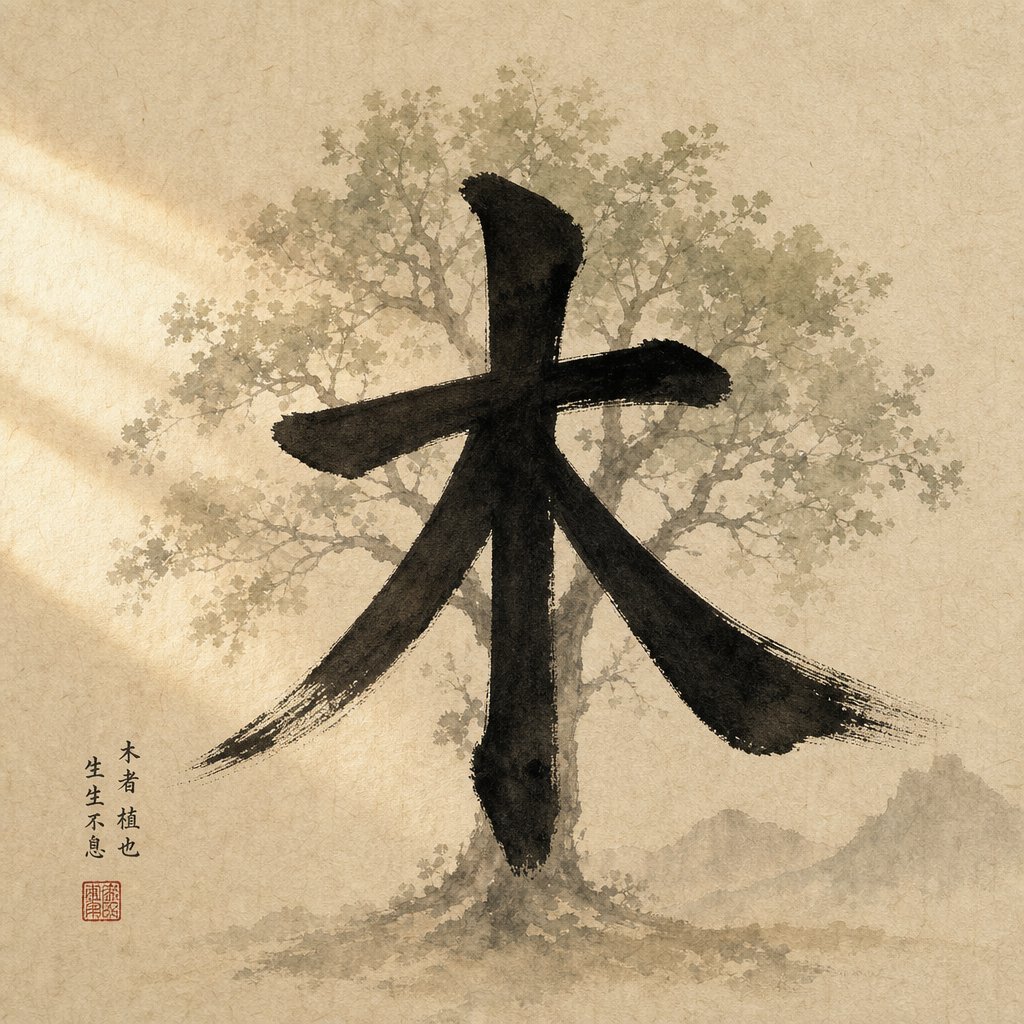
The character for wood in Chinese is 木, pronounced mu (fourth tone). As a standalone character, it simply means "tree" or "wood." But its real power shows up when it functions as a radical, one of the 214 building blocks used to classify and organize Chinese characters in traditional dictionaries. In the Kangxi radical system, 木 holds the number 75 position and appears in hundreds of compound characters. It belongs to the category of pictographic characters (象形字), meaning it originated as a drawing of a real object, in this case, a tree with branches reaching up and roots stretching down.
Why 木 Is One of the Most Important Radicals to Learn
Not all radicals carry equal weight. Some appear in only a handful of characters, while others show up everywhere. Radical 75 falls firmly in the second camp. It appears in characters for common trees like 松 (pine) and 柳 (willow), everyday objects like 桌 (table) and 板 (board), and even abstract ideas like 本 (origin) and 末 (end). Learning this single radical gives you a foothold in dozens of character families, making new vocabulary far easier to decode on sight.
Here is what makes this approach so practical: instead of memorizing each character as an isolated unit, you start recognizing patterns. You see 木 on the left side of a character and immediately narrow down its meaning to something tree-related or wood-related. That shift from brute memorization to pattern recognition is exactly what separates efficient learners from frustrated ones.
The visual logic behind 木 goes deeper than its modern form suggests. Its shape carries thousands of years of evolution, from ancient pictographs scratched into bone to the clean strokes you write today.
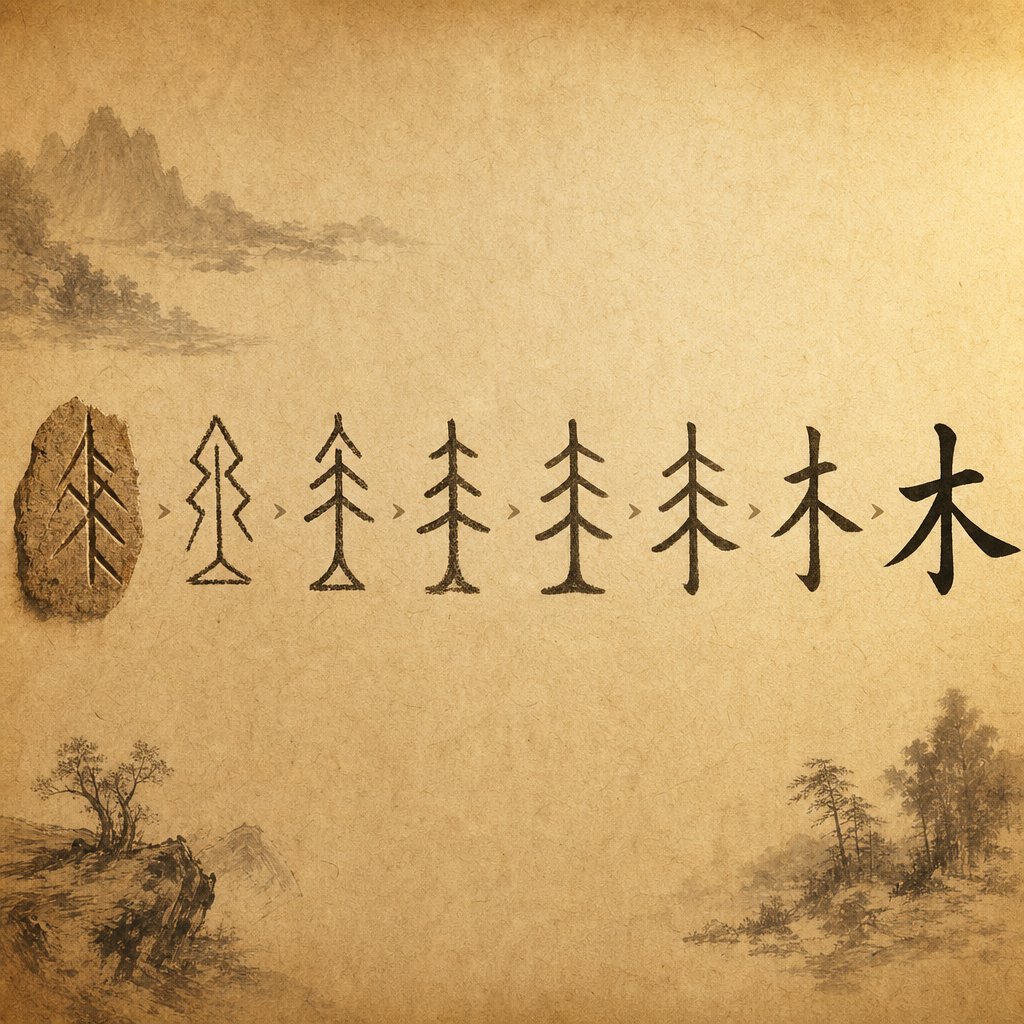
Pictographic Origins of the 木 Character
Imagine standing in front of a tree and sketching it with the fewest possible lines: a vertical trunk, a couple of branches angling upward, and roots spreading below. That is essentially what ancient Chinese writers did over three thousand years ago, and the result became the Chinese character for tree we still use today.
The character 木 belongs to a category called 象形字 (xiangxingzi), meaning "pictographic characters" or literally "form-resembling characters." These are the oldest layer of Chinese writing, symbols that began as simplified drawings of real-world objects. Characters like 山 (mountain), 水 (water), and 日 (sun) all share this origin. But 木 stands out because its pictographic logic remains remarkably visible in the modern form, making it one of the easiest radicals to internalize without rote memorization.
How Ancient Writers Drew a Tree
During the Shang Dynasty (roughly 1250-1050 BCE), diviners carved questions into ox bones and turtle shells for ritual purposes. The inscriptions on these oracle bones represent the earliest known systematic Chinese writing. When scribes needed to write "tree," they carved a shape that unmistakably resembled one: a central vertical line for the trunk, two strokes angling upward like branches, and two strokes angling downward like roots.
You'll notice the oracle bone version looks almost like a child's drawing of a tree. It is raw, angular, and carved with a stylus into hard bone, but the meaning is instantly clear. This directness is what makes pictographic characters so powerful for learners. You are not memorizing an arbitrary symbol. You are recognizing a picture that humans have recognized for millennia.
The Evolution from Oracle Bone to Modern 木
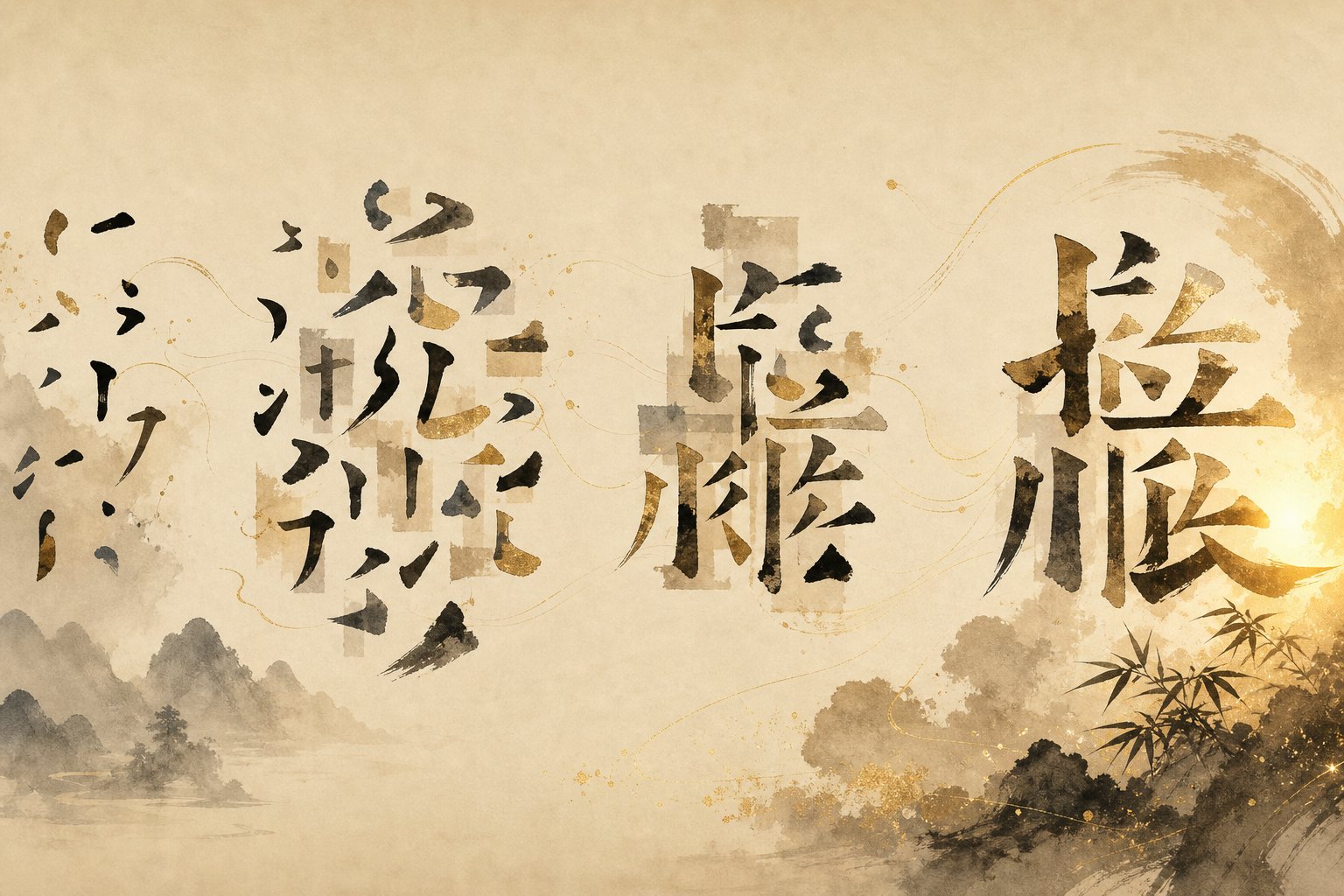
The character did not stay frozen in its earliest form. As writing materials and tools changed, so did the shape of 木. Each stage of Chinese script history left its mark on the character, gradually abstracting the tree drawing into the clean four-stroke form used today.
| Script Stage | Approximate Era | Visual Description | Key Feature |
|---|---|---|---|
| Oracle Bone Script (甲骨文) | c. 1250-1050 BCE | Angular tree shape with distinct branches and roots | Carved into bone; sharp, raw strokes |
| Bronze Script (金文) | c. 1050-256 BCE | Rounder, thicker strokes; tree form still recognizable | Cast into bronze vessels; more uniform lines |
| Seal Script (篆书) | c. 221 BCE onward | Symmetrical, elegant curves; stylized but tree-like | Standardized under Qin dynasty; decorative quality |
| Modern Regular Script (楷书) | c. 200 CE to present | Four straight strokes: horizontal, vertical, left-falling, right-falling | Optimized for brush and pen; fast to write |
The shift from oracle bone to bronze script brought rounder, thicker strokes because characters were now being cast into metal rather than scratched into bone. The bronze inscriptions on Zhou Dynasty ritual vessels show 木 with a softer, more flowing quality, though the tree silhouette remains clear.
Seal script, standardized after the Qin unification of China, introduced elegant symmetry. The branches and roots became graceful curves, giving the character an almost ornamental feel. Even at this stage, anyone looking at the seal script version of 木 could still see a tree.
The final leap to modern regular script (楷书) stripped away the curves entirely. Branches became a single left-falling stroke and a right-falling stroke. Roots merged into those same diagonal lines. The trunk remained as a vertical stroke, and a horizontal stroke was added across the top to represent the canopy or main branch line. Four strokes total, yet the skeleton of a tree persists if you know where to look.
This is the beauty of the Chinese character for tree: even after three thousand years of simplification, the visual DNA of the original drawing survives. A trunk runs down the center. Limbs extend outward. Roots anchor below. Once you see it, the character stops being an abstract shape and becomes a picture you simply recognize, which is exactly the kind of mental shortcut that makes learning wood radical characters feel less like memorization and more like reading a visual language.
That visual awareness becomes even more practical once you pick up a pen. The way you write 木 follows a specific stroke sequence, and that sequence shifts slightly depending on whether the radical stands alone or squeezes into a compound character alongside other components.
How to Write 木 with Correct Stroke Order
Knowing what 木 means is one thing. Writing it correctly is another, and the stroke order matters more than you might expect. In Chinese, stroke order is not arbitrary. It affects the balance of the character, the flow of your handwriting, and even how you look up characters in handwriting-based dictionaries and input tools. The good news: 木 is only four strokes, making it one of the simplest radicals to master with a pen.
Four Strokes to Write 木 Correctly
The stroke sequence for writing the wood in Chinese character form follows a logical top-to-bottom, left-to-right pattern. Here is the exact order:
- Horizontal stroke (横 heng) - Draw a short horizontal line from left to right across the upper portion of the character. This represents the main branch line or canopy.
- Vertical stroke (竖 shu) - Starting from the center of the horizontal stroke, draw a straight line downward. This is the trunk of the tree, and it extends below the horizontal line.
- Left-falling stroke (撇 pie) - Beginning from the point where the horizontal and vertical strokes intersect, sweep a diagonal stroke down and to the left. Think of it as a branch or root reaching in that direction.
- Right-falling stroke (捺 na) - From the same intersection point, draw a diagonal stroke down and to the right, mirroring the left-falling stroke. This completes the tree shape.
You'll notice the logic here mirrors the pictographic origin. The horizontal stroke caps the top, the vertical stroke anchors the center, and the two diagonal strokes spread outward like limbs or roots. Writing 木 essentially means drawing a tiny, abstract tree every time.
How Stroke Order Changes When 木 Is a Component
Here is where things get practical. When 木 stands alone or sits at the bottom of a character, you write all four strokes exactly as described above. But when it appears as a left-side component, squeezed into the left half of a compound character like 松 (pine), 桃 (peach), or 柳 (willow), one small adjustment happens: the fourth stroke changes shape.
Instead of a full right-falling stroke (捺), you write a short dot (点 dian). Why? Space. The left side of a compound character is narrower, and a sweeping diagonal would collide with the right-side component. Compressing that final stroke into a dot keeps the character balanced and legible.
Compare the two forms side by side:
| Position | Fourth Stroke | Example | Visual Effect |
|---|---|---|---|
| Standalone or bottom | Full right-falling stroke (捺) | 木, 案, 架 | Wide, symmetrical spread |
| Left-side component | Short dot (点) | 松, 桃, 桥 | Compact, leaving room for the right component |
This is not unique to radical 75 simplified or traditional. Many radicals adjust their shape when they move into a left-side position. The radical of 75 remains structurally the same character in both simplified and traditional Chinese, with no alternate form between the two systems. What changes is purely positional: the dot replaces the sweep to fit the architecture of the compound character.
Once you internalize this small shift, you will start spotting the wood radical even when it looks slightly different from its standalone form. That recognition skill pays off immediately, because 木 does not always sit in the same spot inside a character. It moves around, appearing on the left, at the bottom, or even repeated multiple times, and each position tells you something different about how the character was constructed.
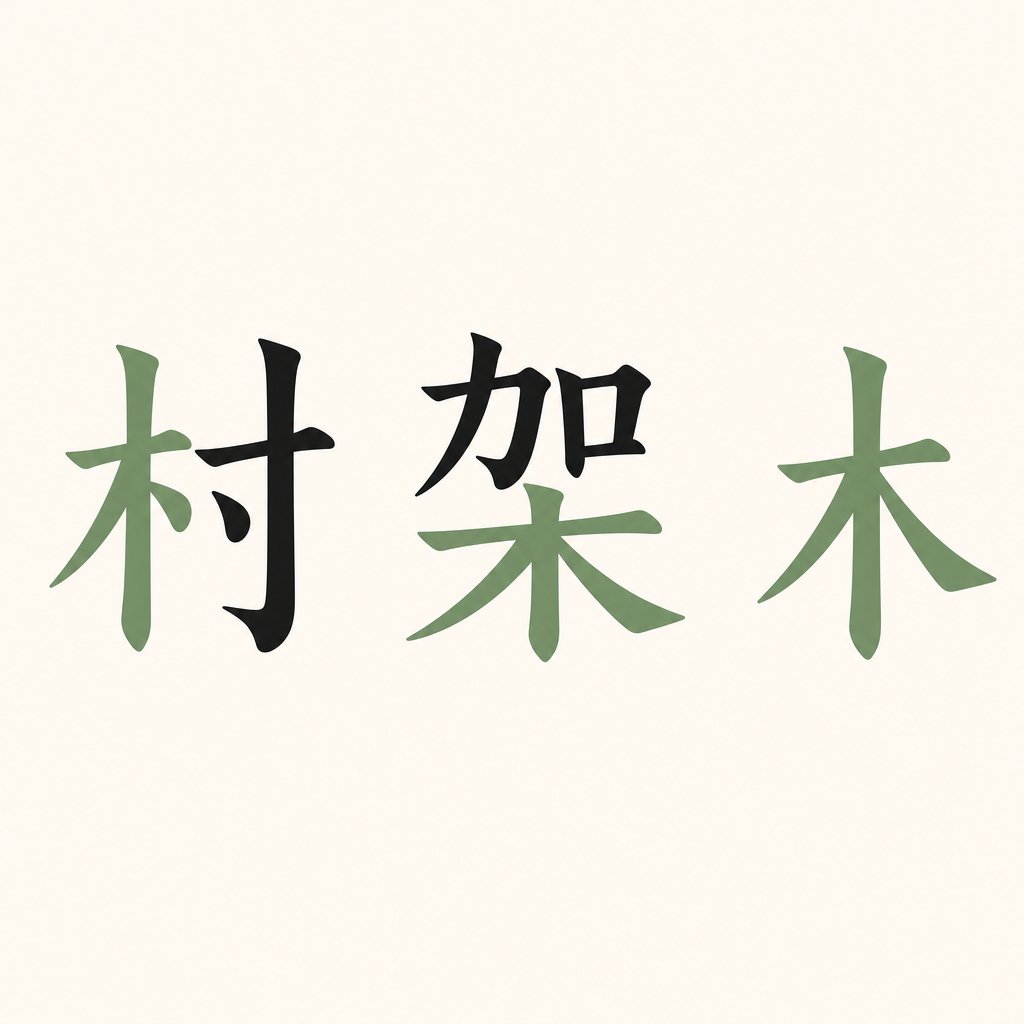
Where 木 Appears Inside Chinese Characters
Position is everything. The chinese character for wood does not behave the same way in every compound character it inhabits. Sometimes it sits on the left, compressed and narrow. Other times it stretches across the bottom, supporting the entire structure above it. And occasionally, it stands alone or multiplies, stacking copies of itself to build new meaning. Each position follows a consistent visual logic, and once you recognize the pattern, identifying the wood radical becomes almost automatic, regardless of where it hides.
Chinese radicals are divided into categories based on their position in a character: top, bottom, left, right, center, and full. The wood radical primarily occupies three of these slots. Understanding which slot it fills in a given character helps you read the character's internal architecture and predict its meaning faster.
木 on the Left Side of Characters
This is the most common position for the chinese character wood component. When 木 appears on the left, it compresses horizontally to make room for a second component on the right. That right-side element usually provides a pronunciation hint, while 木 on the left delivers the meaning: something related to trees, wood, or plant life.
Remember the stroke adjustment from the previous section? This is where it matters. The right-falling stroke becomes a dot, keeping the radical compact. Despite that visual compression, the radical remains fully recognizable once you know what to look for.
Common characters with 木 on the left include:
- 松 (song) - pine tree
- 桃 (tao) - peach tree
- 柳 (liu) - willow tree
- 桥 (qiao) - bridge (originally made of wood)
- 椅 (yi) - chair
- 柜 (gui) - cabinet
- 村 (cun) - village (a settlement among trees)
- 板 (ban) - board, plank
- 杯 (bei) - cup (originally a wooden drinking vessel)
- 桌 (zhuo) - table
You'll notice a clear pattern here. Trees, wooden furniture, wooden structures, and even places associated with trees all use this left-side placement. The chinese word for tree species almost always follows this format: 木 on the left, a sound component on the right.
木 at the Bottom of Characters
When 木 sits at the bottom of a character, it keeps its full standalone form, including the wide right-falling stroke. In this position, it acts as a foundation, literally supporting whatever sits above it. The components stacked on top often add meaning or narrow the concept.
Characters with 木 at the bottom include:
- 李 (li) - plum (子 "child/seed" above 木 "tree")
- 杰 (jie) - outstanding, heroic
- 架 (jia) - frame, rack, shelf
- 案 (an) - desk, legal case (originally a wooden table)
- 果 (guo) - fruit (a pictograph showing fruit on a tree)
- 杏 (xing) - apricot
- 栗 (li) - chestnut
The character 果 (guo) is a particularly vivid example. Earlier forms of this character showed multiple pieces of fruit hanging from a tree. Even in its modern simplified form, you can still see the logic: something round sitting on top of 木. A literal picture of fruit on a tree.
木 as a Standalone or Repeated Element
Sometimes 木 does not share space with a different component at all. It either stands alone as a complete character or repeats itself to build new meaning through visual multiplication. This is one of the most elegant features of Chinese character design.
- 木 (mu) - one tree: wood, tree
- 林 (lin) - two trees side by side: grove, woods
- 森 (sen) - three trees stacked together: dense forest, lush
The progression from 木 to 林 to 森 is pure visual logic. One tree is just a tree. Two trees together suggest a cluster, a grove. Three trees packed into one character convey density, a thick forest where you cannot see through the canopy. No phonetic component is needed here because the meaning builds entirely from repetition.
This table summarizes how position affects the radical's form and function:
| Position | Visual Form | Example Characters | Meanings |
|---|---|---|---|
| Left side | Compressed; right-falling stroke becomes a dot | 松, 桃, 柳, 桥, 椅, 柜, 村, 杯 | Pine, peach, willow, bridge, chair, cabinet, village, cup |
| Bottom | Full form with wide right-falling stroke | 李, 杰, 架, 案, 果, 杏, 栗 | Plum, outstanding, frame, desk/case, fruit, apricot, chestnut |
| Standalone or repeated | Full form; may appear two or three times | 木, 林, 森 | Tree/wood, grove/woods, dense forest |
Spotting these positional patterns turns character recognition into a visual habit rather than a memory exercise. You see the compressed form on the left and immediately know the character relates to wood or trees. You see the full form at the bottom and know it is anchoring the meaning from below. You see it repeated and know the character is building on the concept of "tree" through multiplication.
Position tells you where to look. But the real payoff comes from understanding what the wood radical signals about a character's meaning, because the hundreds of characters containing 木 cluster into clear semantic families that make vocabulary acquisition far more systematic.
Wood Radical Characters Organized by Meaning
Those semantic families are not random. Characters sharing the wood radical in Chinese cluster into three distinct groups based on what they describe: living trees and plants, objects built from timber, and abstract ideas rooted in wood metaphors. Sorting characters this way turns a long vocabulary list into something your brain can actually organize and retrieve.
Think of the radical as a filing label. Every character tagged with 木 belongs in the "wood" drawer, but within that drawer, the contents sort themselves into neat compartments. Here is how those compartments break down.
Trees and Plants with the 木 Radical
The most intuitive group. When you see 木 in a character that names a specific tree in Mandarin, the radical is doing exactly what it was designed to do: pointing at a living plant. These characters typically place 木 on the left side, with a phonetic component on the right hinting at pronunciation.
- 松 (song, first tone) - pine tree
- 柏 (bai, third tone) - cypress tree
- 梅 (mei, second tone) - plum tree
- 桃 (tao, second tone) - peach tree
- 柳 (liu, third tone) - willow tree
- 杉 (shan, first tone) - cedar, fir
- 桑 (sang, first tone) - mulberry tree
- 柿 (shi, fourth tone) - persimmon tree
- 梨 (li, second tone) - pear tree
- 橙 (cheng, second tone) - orange tree
Notice the pattern: every tree species character follows the same architecture. The radical tells you "this is a plant," and the right-side component gives you a pronunciation clue. Once you internalize this structure, encountering an unfamiliar tree name in Chinese becomes far less intimidating because you already know half the character's story.
Wooden Objects and Structures
Before plastic and metal dominated manufacturing, nearly everything humans built came from wood. Chinese characters preserve that history. Objects that were traditionally wooden in Chinese culture still carry the 木 radical, even when modern versions are made from steel or synthetic materials.
- 桌 (zhuo, first tone) - table
- 椅 (yi, third tone) - chair
- 桥 (qiao, second tone) - bridge
- 柜 (gui, fourth tone) - cabinet
- 板 (ban, third tone) - board, plank
- 杯 (bei, first tone) - cup (originally a wooden drinking vessel)
- 棚 (peng, second tone) - shed, shelter
- 柱 (zhu, fourth tone) - pillar, column
- 棺 (guan, first tone) - coffin
- 机 (ji, first tone) - desk; also "machine" in modern usage
The character 机 is a good example of semantic drift. It originally referred to a small wooden table, and the 木 radical made perfect sense. Over time, 机 became the standard character for "machine" (机器) and "airplane" (飞机), meanings that have nothing to do with timber. Yet the radical remains, a fossil of the word's wooden origins. Characters like 杯 (cup) follow a similar path: modern cups are ceramic or glass, but the character still remembers when drinking vessels were carved from wood.
Abstract Meanings Derived from Wood
This is where the radical in Chinese gets genuinely creative. Some characters use 木 not to describe a physical tree or wooden object, but to express an abstract idea through visual metaphor. The tree becomes a conceptual anchor rather than a literal reference.
- 本 (ben, third tone) - root, origin, basis; also a measure word for books. A horizontal stroke at the base of 木 marks the roots, suggesting "foundation" or "source."
- 末 (mo, fourth tone) - tip, end. The opposite of 本: a longer stroke at the top of 木 marks the treetop, suggesting "the far end" or "conclusion."
- 未 (wei, fourth tone) - not yet. Similar to 末, but the top stroke is shorter, as if the tree has "not yet" grown to full height. Used in 未来 (future, literally "not yet come").
- 朵 (duo, third tone) - blossom; measure word for flowers and clouds. The upper component suggests something sitting atop a tree.
- 果 (guo, third tone) - fruit; result, outcome. A pictograph of fruit on a tree, extended metaphorically to mean "consequence" in words like 结果 (result).
The pair of 本 and 末 is especially elegant. Both modify the basic tree shape with a single extra stroke, one at the bottom (roots = origin) and one at the top (tip = end). They are visual antonyms built from the same radical, and they remain antonyms in modern Chinese: 本末倒置 (ben mo dao zhi) means "to put the cart before the horse," literally "to invert root and tip."
These abstract characters reveal something important about how Chinese writing works. The radical does not always point to a physical object. Sometimes it provides a conceptual scaffold, a visual metaphor that ancient writers used to encode ideas that had no obvious picture. A tree's roots become "origin." A tree's tip becomes "end." A tree that has not finished growing becomes "not yet." The logic is poetic, but once you see it, it sticks.
This layered relationship between radical and meaning becomes even more systematic when you look at how 木 interacts with the other half of a compound character, the phonetic component that hints at pronunciation rather than meaning.
How Phonetic-Semantic Compounds Work with 木
Here is a question worth asking: if the wood radical tells you what a character means, what tells you how to pronounce it? The answer lies in the other half of the character, the phonetic component. Together, these two pieces form what linguists call a phonetic-semantic compound, or 形声字 (xingshengzi) in Chinese. This structure accounts for roughly 80% of all Chinese characters, making it the single most important pattern to understand when learning how Chinese radicals work.
The concept is straightforward. In a phonetic compound Chinese character containing 木, the radical sits on one side (usually the left) and delivers the meaning: "this word relates to wood or trees." The remaining component delivers a pronunciation hint. You get two pieces of information from one character, a meaning clue and a sound clue, packaged together.
How 木 Carries Meaning in Compound Characters
Imagine encountering the character 松 for the first time. You spot 木 on the left and immediately know the word involves a tree or something wooden. The right side shows 公 (gong, first tone), which is the phonetic component. It suggests the character's pronunciation is something close to "gong" or "song." In this case, 松 is pronounced song (first tone) and means "pine tree." The chinese radical meaning and sound work together like a two-part code.
The same logic applies across dozens of wood radical compound characters:
- 桃 (tao) - 木 signals "tree" + 兆 (zhao) hints at the sound. Result: peach tree.
- 梅 (mei) - 木 signals "tree" + 每 (mei) hints at the sound. Result: plum tree.
- 柏 (bai/bo) - 木 signals "tree" + 白 (bai) hints at the sound. Result: cypress tree.
- 桥 (qiao) - 木 signals "wooden structure" + 乔 (qiao) hints at the sound. Result: bridge.
Notice how 梅 and 柏 have phonetic components that match the actual pronunciation almost perfectly. The character 梅 sounds like 每 (mei), and 柏 sounds like 白 (bai). These are the easy cases, where the sound component delivers an exact or near-exact match.
Reading the Sound Component Alongside 木
Not every phonetic match is this clean. Chinese pronunciation has shifted considerably over the centuries, and some sound components that were perfect matches in ancient Chinese no longer line up neatly in modern Mandarin. The character 松 (song) contains 公 (gong), which shares the "-ong" final but differs in the initial consonant. The character 桃 (tao) contains 兆 (zhao), where the vowel sound "ao" carries over but the initial changes from "zh" to "t."
Native speakers navigate this intuitively using a rule of thumb called 有边读边 (you bian du bian), meaning "if it has a side, read the side." When they encounter an unfamiliar character, they look at the phonetic component and use it as a pronunciation guess. The guess is not always perfect, but it is right often enough to be genuinely useful.
Here is a reference table showing how the meaning and sound components split across common wood radical characters:
| Character | Meaning Component | Sound Component | Actual Pronunciation | English Meaning |
|---|---|---|---|---|
| 松 | 木 (wood/tree) | 公 (gong) | song, 1st tone | pine tree |
| 桃 | 木 (wood/tree) | 兆 (zhao) | tao, 2nd tone | peach tree |
| 梅 | 木 (wood/tree) | 每 (mei) | mei, 2nd tone | plum tree |
| 柏 | 木 (wood/tree) | 白 (bai) | bai, 3rd tone | cypress tree |
| 桥 | 木 (wood/tree) | 乔 (qiao) | qiao, 2nd tone | bridge |
| 柱 | 木 (wood/tree) | 主 (zhu) | zhu, 4th tone | pillar |
| 棚 | 木 (wood/tree) | 朋 (peng) | peng, 2nd tone | shed, shelter |
| 杉 | 木 (wood/tree) | 彡 (shan) | shan, 1st tone | cedar, fir |
A few patterns emerge from this table. Characters like 柏/白, 梅/每, 桥/乔, 柱/主, and 棚/朋 show nearly identical pronunciation between the character and its sound component. Others like 松/公 and 桃/兆 share a vowel sound but differ in the initial consonant. Both types are useful. Even a partial match narrows down the possibilities dramatically when you encounter an unfamiliar character in the wild.
This two-part framework, meaning from the radical plus sound from the phonetic component, transforms character learning from pure memorization into educated guessing. You will not always guess correctly, but you will be right far more often than someone who treats each character as an isolated symbol. And the more wood radical compound characters you learn, the more reliable your guesses become, because you start recognizing which phonetic components are highly regular and which ones have drifted over time.
The phonetic-semantic structure explains how most 木 characters encode information. But a smaller, visually striking group of characters skips the sound component entirely and builds meaning purely through repetition, stacking one tree on top of another to create something greater than the sum of its parts.
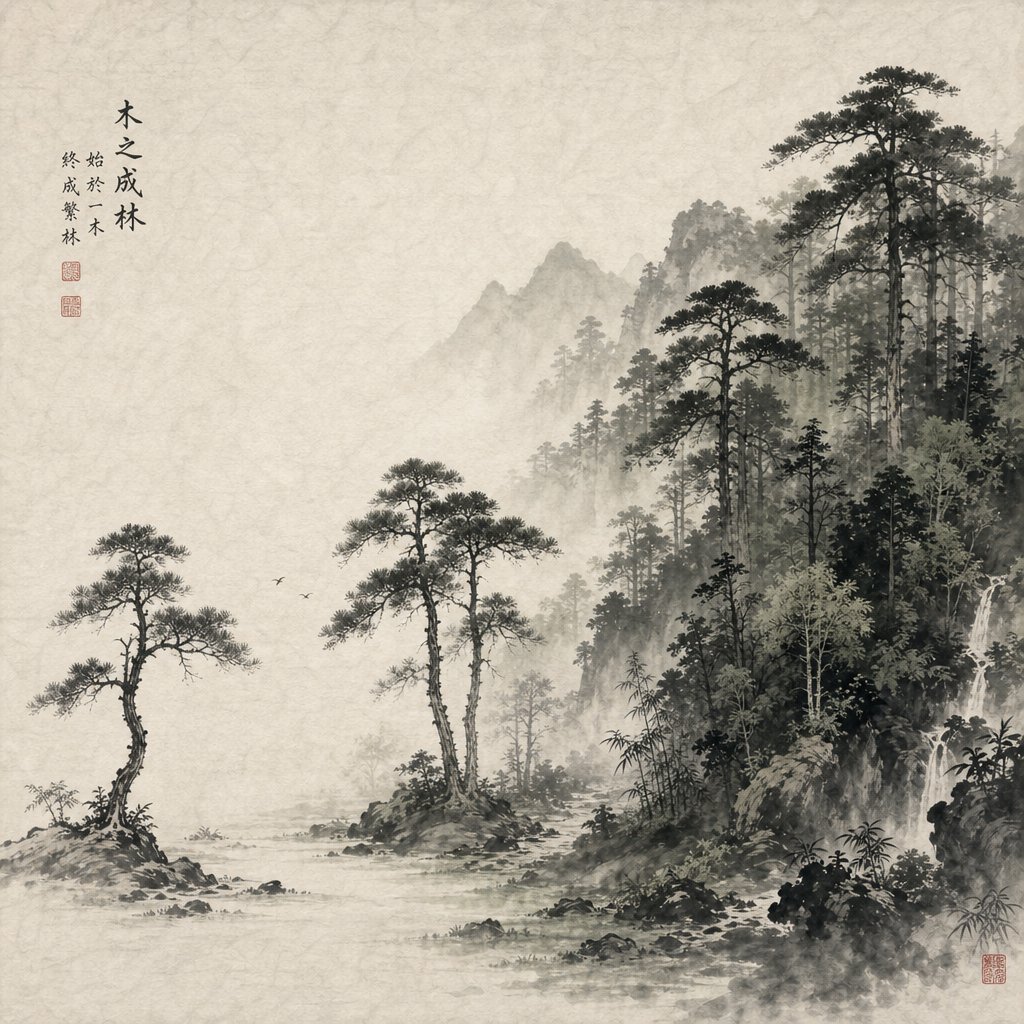
From 木 to 林 to 森: The Tree Kanji Connection Across Languages
One tree. Two trees. Three trees. That is the entire logic behind one of the most elegant sequences in Chinese writing. No phonetic component, no abstract metaphor, just visual multiplication that anyone can grasp in seconds. The characters 木, 林, and 森 demonstrate a character-building method called ideographic composition (会意字, huiyizi), where simple pictographic elements combine to generate new meaning purely through their arrangement.
木 (one tree) = wood, tree. 林 (two trees) = grove, woods. 森 (three trees) = dense forest. More trees, more density, more meaning.
This progression is not just a clever mnemonic. It represents a fundamental principle of Chinese character design, and it carries directly into Japanese kanji with nearly identical meanings, making it one of the most transferable pieces of knowledge for anyone studying East Asian languages.
One Tree, Two Trees, Three Trees
Start with 木 (mu, fourth tone). A single tree. It means "tree" or "wood" as a material. Simple enough.
Place two 木 characters side by side and you get 林 (lin, second tone). The visual logic is immediate: two trees standing together suggest a cluster, a grove, a stretch of woods. Not a single specimen, but not yet an impenetrable wilderness. The character 林 is classified as a compound ideograph (会意字) because it combines two pictographic elements to create a new meaning that neither element carries alone. One tree is just a tree. Two trees together become a place.
Stack three 木 characters, one on top and two below, and you arrive at 森 (sen, first tone). Dense forest. Lush, thick, impenetrable. The character uses what is sometimes called a "pin" (品) structure, with three identical components arranged in a triangular formation. The meaning intensifies through sheer accumulation: if two trees make a grove, three trees packed together must be a forest so thick that light barely reaches the ground.
This is ideographic composition at its purest. No sound hint is needed because the meaning builds visually. You see more trees, you understand more density. A child could follow the logic, and that is precisely the point. Ancient character designers were solving the same problem modern learners face: how do you encode meaning in a way that sticks?
The character 森 also extends beyond its literal meaning. In modern Chinese, 森 carries connotations of darkness, eeriness, and imposing grandeur. The word 阴森 (yinsen) means "gloomy" or "eerie," evoking the feeling of standing in a forest so dense it blocks out sunlight. The word 森严 (senyan) means "strict" or "forbidding," borrowing the forest's imposing quality as a metaphor for authority. Even in these abstract uses, the image of overwhelming density persists.
In everyday vocabulary, 森林 (senlin) is the standard word for "forest," combining both the two-tree and three-tree characters. Meanwhile, 树林 (shulin) means "woods" or "grove," pairing the general word for tree (树) with 林. These compounds show how the characters layer onto each other in practical speech, not just in visual design.
The Same Radical in Japanese Kanji
Here is where this knowledge pays a cross-language dividend. The characters 木, 林, and 森 exist in Japanese with virtually the same meanings. If you learn the tree kanji in one language, you already know it in the other. Japanese borrowed these characters from Chinese centuries ago, and while pronunciation differs, the semantic core remains intact.
In Japanese, each kanji carries multiple readings depending on context. The kanji for tree, 木, has a native Japanese reading (訓読み, kunyomi) of き (ki), meaning "tree," and a Chinese-derived reading (音読み, onyomi) of もく (moku) or ぼく (boku). Japanese elementary school students learn 木 in first grade, alongside 林 and 森, making this trio one of the earliest kanji sequences children encounter.
| Character | Chinese Pronunciation | Chinese Meaning | Japanese Kunyomi | Japanese Onyomi | Japanese Meaning |
|---|---|---|---|---|---|
| 木 | mu (4th tone) | tree, wood | き (ki), こ (ko) | もく (moku), ぼく (boku) | tree, wood |
| 林 | lin (2nd tone) | grove, woods | はやし (hayashi) | りん (rin) | grove, woods |
| 森 | sen (1st tone) | dense forest | もり (mori) | しん (shin) | forest |
The kanji tree meanings map almost perfectly between the two languages. 木 means tree or wood in both. 林 means grove or woods in both. 森 means dense forest in both. The visual logic, more trees equals more density, transcends the language barrier entirely because it is built into the shape of the characters themselves.
Japanese extends the kanji for wood into the same semantic territory as Chinese. Characters like 松 (matsu, pine), 桃 (momo, peach), 柳 (yanagi, willow), 桜 (sakura, cherry), and 橋 (hashi, bridge) all carry the tree radical and retain wood-related meanings. As one Nippon.com analysis notes, Japanese kanji with the tree radical tend to focus on characters with a strong semantic connection to trees and wood, making them among the easiest to memorize because the radical reliably signals meaning.
There is a practical takeaway here for dual-language learners. The wood radical functions as a shared key across Chinese and Japanese. Learn it once, and you unlock character recognition in both writing systems. The pronunciations differ, the grammar surrounding these characters differs, but the visual architecture and core meaning remain constant. A 松 is a pine whether you read it as song in Mandarin or matsu in Japanese. A 桥/橋 is a bridge whether you say qiao or hashi.
Even the cultural associations overlap. In both languages, 木 as one of the classical elements represents growth and vitality. The planet Jupiter is 木星 (mokusei in Japanese, muxing in Chinese). Thursday is 木曜日 (mokuyobi) in Japanese, directly borrowing the wood-element association. These shared cultural layers mean that understanding the wood radical in Chinese gives you a head start not just on Japanese vocabulary, but on the cultural logic embedded in both writing systems.
The 木→林→森 sequence is more than a vocabulary lesson. It reveals how Chinese characters encode meaning through visual logic rather than arbitrary convention, and it demonstrates that this logic travels across national and linguistic boundaries. That cross-cultural staying power hints at something deeper: the wood radical is not just a linguistic tool but a cultural symbol, one tied to ancient philosophical systems that still shape how East Asian languages categorize the natural world.
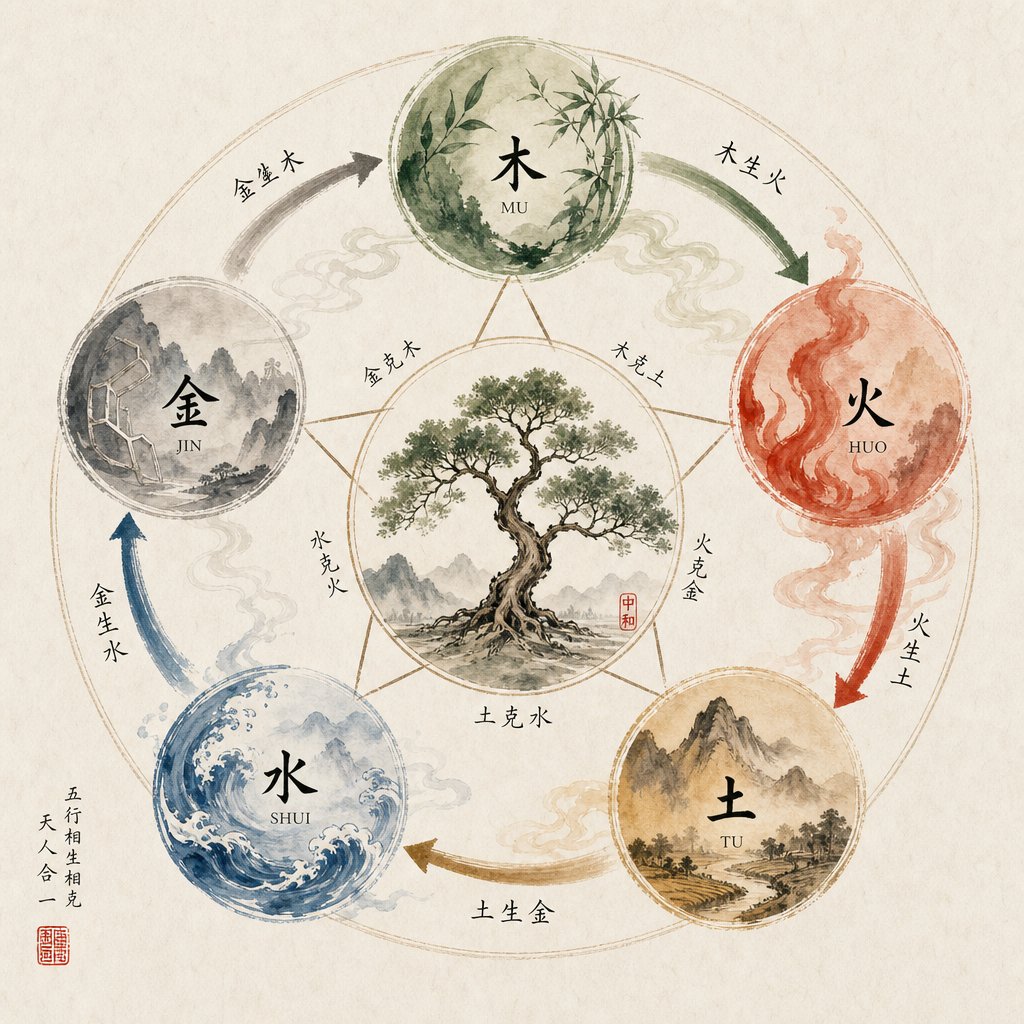
Cultural Context and Common Learner Confusions
The wood radical does not exist in a vacuum. It belongs to a philosophical system that has organized Chinese thinking about the natural world for over two thousand years. Understanding that system explains why 木 carries the associations it does, and why certain characters that seem like they should contain the wood radical actually do not.
Wood in the Five Elements System
In Chinese philosophy, the 五行 (wuxing) framework classifies all natural phenomena into five phases: Metal (金), Wood (木), Water (水), Fire (火), and Earth (土). Each element corresponds to a season, a direction, a color, and a set of qualities. Wood maps to spring, the east, the color green, and the concept of 生 (sheng), meaning growth and upward expansion.
This is not just abstract philosophy. It directly reinforces how the radical functions in the writing system. Characters containing 木 tend to describe things that grow, branch out, or originate from living plants. Pine trees grow. Willow branches reach outward. Even the abstract character 本 (origin) borrows the image of roots pushing into the earth. The five elements framework and the radical system echo the same underlying logic: wood equals life pushing upward.
Contrast this with the chinese character for earth, 土 (tu). In the five elements system, earth represents stability, centering, and transformation. As a radical, 土 appears in characters related to ground, construction, and fixed places: 地 (ground), 城 (city), 墙 (wall). Where 木 signals living, growing things, 土 signals solid, stationary things. The two radicals carve the natural world into complementary domains, one dynamic and one stable, mirroring their elemental roles perfectly.
This elemental thinking also travels into Japanese. The wood kanji 木 retains its five-element association in Japan, where Thursday is called 木曜日 (mokuyobi, "wood day") and Jupiter is 木星 (mokusei, "wood star"). The kanji for wood carries the same philosophical weight across both languages because the cultural framework predates the linguistic split.
Common Confusions and Exceptions
If 木 signals plant life, why does 花 (hua, flower) use the grass radical 艹 instead? This trips up many learners, but the logic is consistent once you see the distinction. Chinese radicals differentiate between woody plants and herbaceous plants. Trees, shrubs, and anything with a hard trunk or woody stem get 木. Grasses, herbs, flowers, and soft-stemmed plants get 艹 (the grass radical, a simplified form of 草). A flower is not a tree. It grows from a soft stem, blooms briefly, and dies back. So 花 takes the grass radical, not the wood radical. The same applies to 草 (grass), 茶 (tea, from a bush's leaves), and 药 (medicine, originally herbal).
The opposite confusion also appears: characters that contain 木 but seem to have nothing to do with trees in modern life. The character 机 (ji) is the classic example. Today it means "machine" in 机器 and "airplane" in 飞机. Where is the wood? The answer is historical. 机 originally referred to a small wooden side table or a loom's wooden mechanism. The character preserved its radical even as its meaning expanded far beyond timber. Modern usage drifted, but the radical fossilized the word's origin.
Similar fossils appear throughout the radical system. 杯 (cup) still carries 木 because cups were once carved from wood. 柜 (cabinet) retains it because furniture was built from timber. 桥 (bridge) keeps it because early bridges were wooden beams laid across streams. In each case, the radical is not wrong. It is simply remembering a material reality that modern manufacturing has replaced. Recognizing these fossils rather than being confused by them is part of reading Chinese characters with historical awareness.
These exceptions actually reinforce the system's reliability. When a character contains 木 and you cannot immediately see the wood connection, the explanation is almost always one of two things: either the character describes a historically wooden object, or it uses 木 as part of a phonetic compound where the radical's meaning has faded. Both cases reward curiosity rather than frustration.
With the cultural logic and common pitfalls clarified, the remaining question is practical: how do you turn all of this knowledge into an actual study method that accelerates your character learning beyond the wood radical alone?
Practical Strategy for Learning Wood Radical Characters
Knowledge without a system stays scattered. You now understand the wood radical's meaning, its pictographic origin, its positional behavior, its semantic families, its phonetic partnerships, its cross-language reach, and its cultural roots. The question is: how do you turn all of that into a repeatable method that works not just for 木 but for every radical you encounter next?
The answer is to treat 木 as your first radical key, a master entry point that unlocks an entire family of characters through pattern recognition rather than brute-force memorization. Once you build this habit with one radical, the same approach scales to the water radical (氵), the fire radical (火/灬), the hand radical (扌), and dozens more. The wood radical is simply the best place to start because its pictographic logic is so visible and its character family is so large.
Using 木 as Your First Radical Key
Imagine walking into a library where every book is shelved by topic but none of the shelves are labeled. You would wander aimlessly, pulling random volumes off the wall. Radicals are the shelf labels. Learning 木 means you can now walk straight to the "wood and trees" section and browse with purpose. Every character filed under this radical shares a semantic thread, and that thread gives you context before you even look up a definition.
This is the shift from memorizing to recognizing. Instead of treating 桃, 柳, 桥, and 椅 as four unrelated characters, you see them as four members of the same family. They share a visual marker. They share a meaning domain. They even share structural patterns, with 木 compressed on the left and a phonetic hint on the right. That family resemblance cuts your cognitive load dramatically because you are learning a system, not a list.
The same principle applies when you encounter an unfamiliar character in the wild. You spot 木 on the left side, and immediately you know two things: the word relates to wood or trees, and the right-side component probably hints at pronunciation. You have not memorized this specific character, but you can make an educated guess about both its meaning and its sound. That is recognition, not recall, and it is far more sustainable over thousands of characters.
A Step-by-Step Approach to Radical-Based Learning
Here is a concrete sequence you can follow, starting today, to build a radical-based learning system with 木 as your foundation:
- Memorize the radical's form and meaning. Write 木 until the four strokes feel automatic. Internalize its core meaning: tree, wood, plant life. Visualize the ancient pictograph of a tree with branches and roots. This is your anchor.
- Learn the positional variants. Practice recognizing 木 in its compressed left-side form (with the dot replacing the right-falling stroke) and its full bottom-position form. Write a few characters in each position: 松 and 桃 for the left side, 果 and 架 for the bottom.
- Group characters by semantic category. Study tree names (松, 柏, 梅, 柳) as one batch, wooden objects (桌, 椅, 桥, 柜) as another, and abstract derivatives (本, 末, 未) as a third. Grouping by meaning creates stronger memory associations than random ordering.
- Identify the phonetic components. For each character, note the sound hint on the right side. Ask yourself: does 公 in 松 sound like song? Does 每 in 梅 sound like mei? Track which phonetic components are reliable and which have drifted. This builds your pronunciation-guessing instinct.
- Practice spotting the radical in real reading material. Open any Chinese text, a news article, a menu, a social media post, and scan for 木. Circle or highlight every character that contains it. You will be surprised how often it appears once you start looking. This exercise trains your eye to decompose characters automatically.
- Extend the method to a second radical. Once 木 feels solid, pick another high-frequency radical like 氵 (water) or 火 (fire) and repeat the same steps. Each new radical you master adds another "shelf label" to your mental library, making the entire character system more navigable.
The key insight behind this sequence is layering. You start with the simplest piece of information (the radical's shape and meaning), then add complexity one step at a time (position, semantic groups, phonetic patterns, real-world application). Each layer reinforces the previous one rather than competing with it.
Radical-based learning also pairs well with spaced repetition systems. Instead of adding random characters to your flashcard deck, you can add them in radical families. Review all your 木 characters together, then all your 氵 characters, then mix them. The shared radical creates a built-in retrieval cue that makes each review session more efficient.
One practical tip: do not try to learn every 木 character at once. The Kangxi dictionary lists hundreds of characters under Radical 75. Start with the 20 to 30 most common ones, the trees, furniture, and abstract terms covered in this article, and expand from there as your reading demands. Quality of understanding beats quantity of exposure every time.
The wood radical is not just one entry in a list of 214 radicals. It is a proof of concept. It proves that Chinese characters are not arbitrary shapes to be memorized through repetition alone. They are structured, logical, and interconnected. Once you see that structure in 木, you cannot unsee it in the rest of the writing system. That shift in perception, from "thousands of random symbols" to "a few hundred building blocks arranged in predictable patterns," is what separates learners who plateau from learners who keep accelerating.
Frequently Asked Questions About the Wood Radical in Chinese
1. What does the wood radical 木 mean in Chinese?
The wood radical 木 (pronounced mu, fourth tone) means 'tree' or 'wood' and is Radical 75 in the Kangxi dictionary system. It functions as a semantic component inside compound characters, signaling that the character relates to trees, wooden materials, or plant-based concepts. For example, 松 (pine), 桥 (bridge), and 椅 (chair) all contain this radical because they historically connect to wood or living trees.
2. How many strokes does the wood radical 木 have?
The wood radical 木 consists of exactly four strokes written in this order: a horizontal stroke from left to right, a vertical stroke downward from the center, a left-falling diagonal stroke, and a right-falling diagonal stroke. When 木 appears as a left-side component in compound characters like 松 or 桃, the fourth stroke changes from a full right-falling stroke to a short dot to save space.
3. Why do some characters with the wood radical have nothing to do with wood?
Characters like 机 (machine) and 杯 (cup) retain the wood radical because they originally referred to wooden objects. 机 once meant a small wooden table or loom mechanism, while 杯 described a wooden drinking vessel. Over centuries, the meanings expanded beyond timber, but the radical preserved the word's historical origin. These are linguistic fossils rather than errors in the system.
4. What is the difference between the wood radical 木 and the grass radical 艹?
Chinese radicals distinguish between woody plants and herbaceous plants. The wood radical 木 appears in characters for trees, shrubs, and anything with a hard trunk or woody stem, such as 松 (pine) and 柳 (willow). The grass radical 艹 is used for soft-stemmed plants, herbs, and flowers like 花 (flower) and 草 (grass). This is why 花 uses 艹 rather than 木, even though both relate to plant life.
5. Is the wood radical the same in Chinese and Japanese?
Yes, the wood radical 木 appears in both Chinese characters and Japanese kanji with nearly identical meanings. In Japanese, 木 is read as ki (native reading) or moku (Chinese-derived reading) and still means tree or wood. The progression 木, 林, 森 carries the same logic in both languages: one tree, a grove, a dense forest. Learning this radical in Chinese gives you immediate recognition in Japanese kanji as well.