Understanding Yin and Yang Characters in Fiction
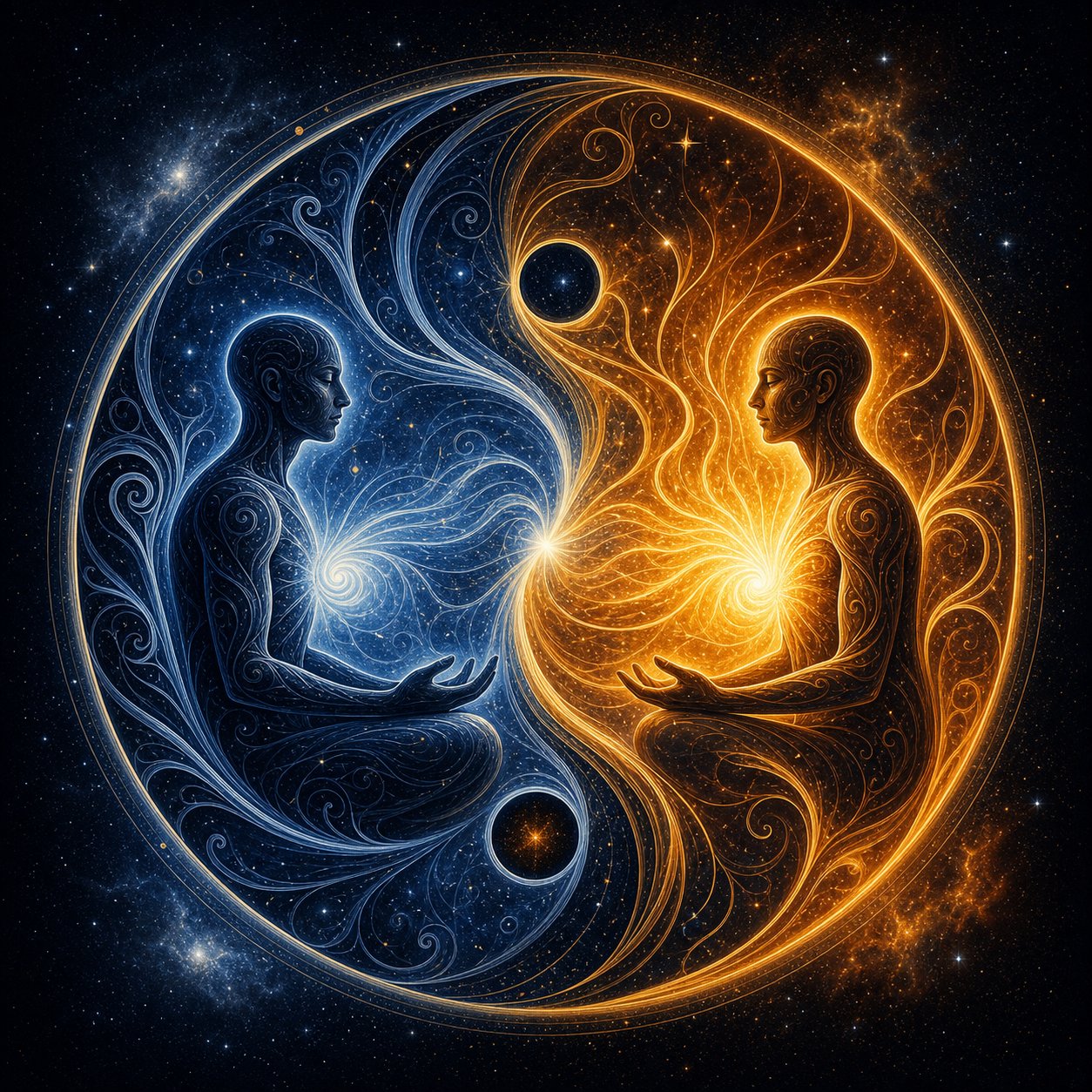
Think about your favorite fictional rivalry. One character is quiet, strategic, and inward-focused. The other is loud, instinctive, and driven by forward momentum. You feel the tension between them because they represent genuinely opposing forces, yet neither one works without the other. That pull, that magnetic friction, is yin-yang duality at work in character design.
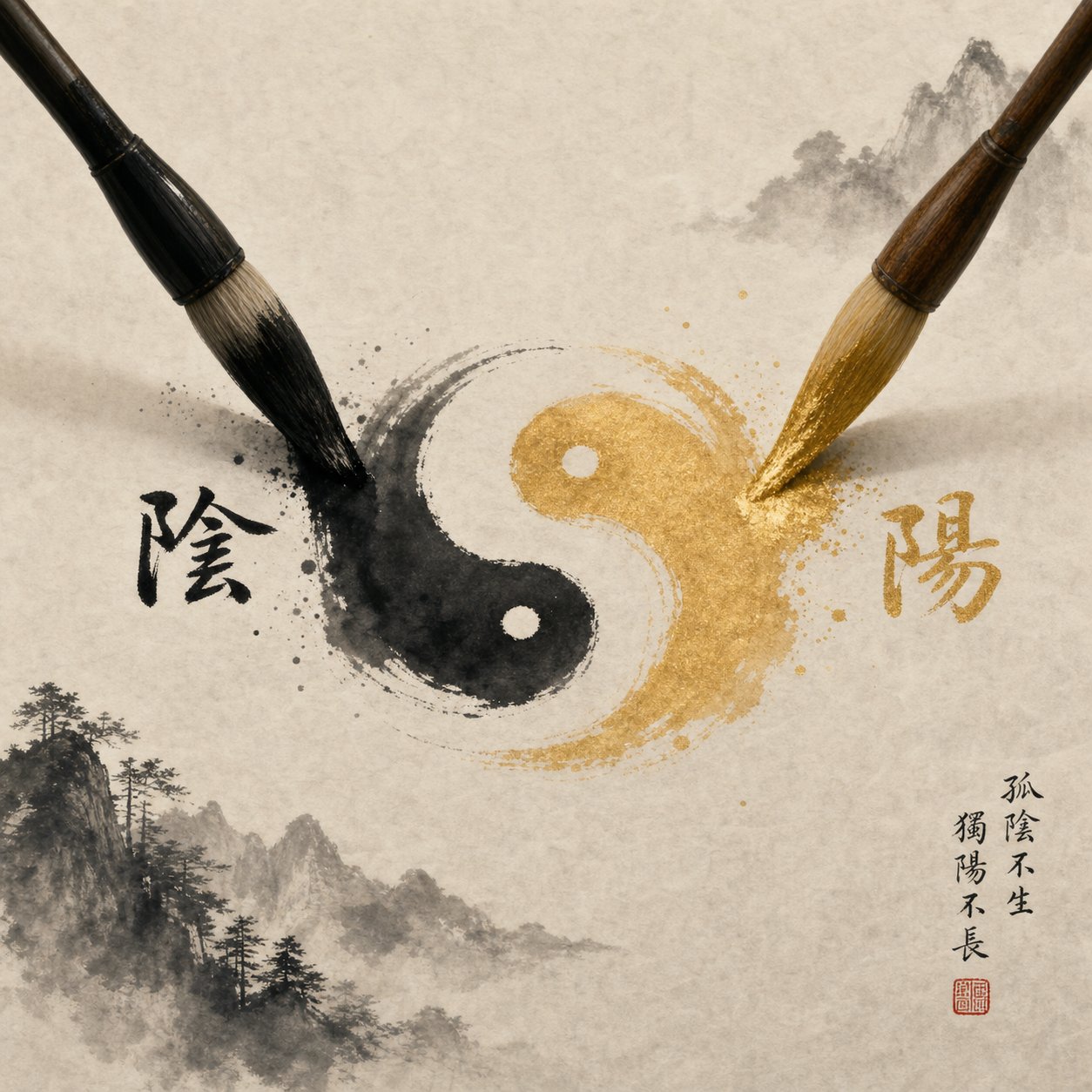
The concept originates in Chinese philosophy, where yin (pinyin: yin) represents the receptive, dark, and still, while yang represents the active, bright, and dynamic. In storytelling, yin and yang characters form the backbone of nearly every compelling duo, rivalry, or partnership across anime, film, television, and video games. Writers may not always name the framework explicitly, but the significance of yin yang as a design principle shows up everywhere, from Naruto and Sasuke to Batman and Superman.
Why Yin-Yang Duality Defines Great Characters
Great characters rarely exist in isolation. They need a counterpart, someone who challenges their worldview and exposes their blind spots. Yin vs yang gives writers a blueprint for building that dynamic tension. A yin character brings introspection, patience, and adaptive strategy. A yang character brings assertiveness, direct action, and outward energy. When you pair them together, every scene crackles with contrast.
This framework also explains why certain character relationships feel so satisfying. Each person is the yin to the yang of the other, filling gaps and creating a whole that neither could achieve alone. The philosophy itself insists on this: within yin, there is always a seed of yang, and within yang, a seed of yin. Characters built on this principle feel layered and real because they contain their opposite within them.
Yin does not mean weak, and yang does not mean strong. They are complementary forces, each containing a piece of the other. The best character duos reflect this truth: neither archetype is superior, and both are incomplete alone.
How This List Was Built
This article examines five iconic yin and yang characters pairings across different media. Each duo was selected because it demonstrates how yin-yang balance creates narrative tension, emotional chemistry, and satisfying character arcs. The pairings span anime (Naruto and Sasuke, Goku and Vegeta), Western comics (Batman and Superman), animated television (Zuko and Aang), and film (Elsa and Anna).
Every entry explores which character embodies yin energy, which carries yang energy, and how their dynamic drives the story forward. You will also see how the strongest pairings subvert expectations, letting yin characters erupt into decisive action and yang characters settle into stillness and reflection. That fluidity is what separates a flat archetype from a living, breathing character.
To classify each character, we drew on the core philosophical traits: yin as receptive, introspective, and strategically patient; yang as assertive, externally focused, and action-driven. But classification is only the starting point. The real question is how these opposing energies interact, clash, and ultimately transform each other across a story.
How We Classify Yin vs Yang Character Archetypes
Classifying a character as yin or yang is not about slapping a label on them and calling it done. It requires looking at how they approach conflict, where they draw energy from, and how they process the world around them. A yin character is not simply "the quiet one," and a yang character is not simply "the loud one." The distinction runs deeper, touching behavior, cognition, and emotional response in ways that shape every decision a character makes on screen or on the page.
Research into yin-yang personality from a biopsychological perspective identifies three core dimensions where yin and yang express differently: behavior (passive vs. active), cognition (meticulous vs. easy-going), and emotion (static vs. dynamic). These dimensions give us a structured way to analyze fictional characters rather than relying on surface-level impressions.
Core Yin Character Traits
A yin character operates from the inside out. Their power is receptive rather than forceful, strategic rather than impulsive. You will notice these characters tend to observe before acting, process internally before speaking, and adapt to circumstances rather than bulldozing through them. Think of the character who wins not by overpowering their opponent but by reading the situation and finding the precise opening.
Key yin traits include introspection, patience, emotional attunement, adaptive strategy, and a preference for working from the shadows or behind the scenes. The opposite of passive is not yang; it is reactive. A yin character can be intensely active, but their activity flows inward first. They are the planners, the watchers, the ones whose stillness conceals enormous depth. Yin personalities in psychological research are described as introverted, consistent, thoughtful, calm, and stable, qualities that translate directly into compelling fictional archetypes.
Core Yang Character Traits
A yang character operates from the outside in. Their energy radiates outward: they act first, confront directly, and draw power from engagement with the external world. These are the characters who charge into battle, speak their minds without hesitation, and push the plot forward through sheer momentum.
Core yang traits include assertiveness, action-orientation, external focus, confrontational energy, physical drive, and emotional expressiveness. Yang personalities are characterized as extroverted, sociable, flexible, and energetic. They thrive on novelty and stimulation. In fiction, they are often the ones who initiate conflict, forge connections through force of personality, and refuse to sit still when something needs doing.
| Attribute | Yin Expression | Yang Expression |
|---|---|---|
| Conflict Approach | Strategic, indirect, waits for the right moment | Direct, confrontational, initiates engagement |
| Energy Source | Internal reflection, solitude, stillness | External stimulation, social connection, movement |
| Leadership Style | Leads through insight, influence, and patience | Leads through action, presence, and decisiveness |
| Emotional Processing | Contained, deliberate, processes inwardly | Expressive, immediate, processes outwardly |
| Growth Direction | Learns to act decisively and connect openly | Learns to pause, reflect, and listen |
Why Characters Can Shift Between Yin and Yang
Here is where things get interesting. Characters are rarely purely one archetype or the other. The yin-yang symbol itself illustrates this: each half contains a dot of its opposite. The interconnectedness of these forces means that a well-written yin character carries a seed of yang within them, and vice versa. A character who begins as entirely yin, withdrawn and strategic, often grows by integrating yang qualities like openness and direct action. A character who starts as pure yang, all momentum and confrontation, matures by developing yin patience and self-awareness.
This is what separates a static archetype from a dynamic character arc. The dichotomous nature of yin and yang is not a prison; it is a starting point. The most satisfying character development happens when a yin character surprises you with explosive decisiveness, or when a yang character reveals unexpected depth through a moment of quiet vulnerability. That integration, that movement between poles, is what makes fictional duos feel alive rather than formulaic.
With these traits defined, the question becomes: how do specific characters embody and subvert these archetypes in practice? The answer lives in the rivalries themselves, starting with one of anime's most iconic pairings.
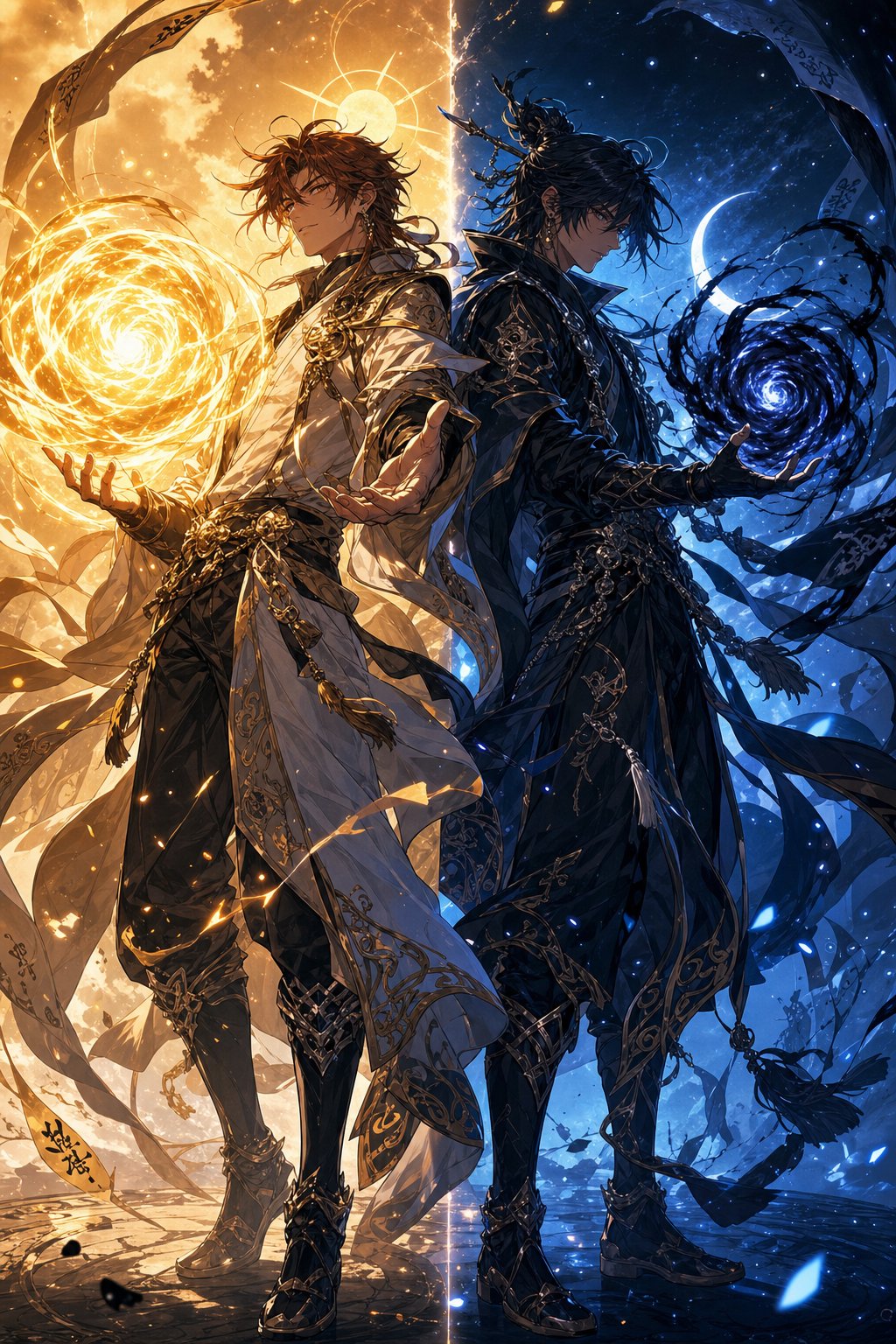
Naruto and Sasuke – Anime's Defining Yin-Yang Rivalry
Few fictional rivalries illustrate the balance and force of yin-yang philosophy as clearly as Naruto Uzumaki and Sasuke Uchiha. Their relationship is not just a subplot; it is the emotional engine of a 700+ episode series. One radiates outward like the sun. The other draws inward like the moon. The series itself makes this symbolism explicit through their connection to Asura and Indra Otsutsuki, reincarnated rivals whose souls cycle through generations, perpetually drawn together and perpetually at odds.
What makes this pairing work as a yin yang character study is not just their surface-level contrast. It is how their opposing energies create a gravitational pull that neither can escape, and how each character's growth depends on absorbing qualities from the other.
Naruto as the Ultimate Yang Character
Naruto is yang energy given human form. His bright blonde hair and orange outfit literally mark him as the sun in the series' visual language. Everything about him pushes outward: his voice, his emotions, his relentless pursuit of connection. When faced with a problem, Naruto does not retreat to strategize. He charges forward, trusting his instincts and his ability to reach people through sheer force of will.
His yang nature shows up in every dimension of his character. Emotionally, he processes externally, shouting his pain, his dreams, and his loyalty for anyone to hear. Socially, he craves bonds and refuses to let anyone remain isolated, even enemies. In combat, his style is overwhelming pressure, shadow clones flooding the battlefield, Rasengan variants that hit like a tidal wave. He does not wait for openings. He creates them through pure qi-like momentum.
Even his life goal is fundamentally yang: becoming Hokage means standing in the light, being seen, being acknowledged by everyone. Naruto's deepest wound, the loneliness of being an orphan and a jinchuriki, drives him toward connection rather than away from it. That outward response to pain is textbook yang energy.
Sasuke as a Complex Yin Archetype
Sasuke operates from the opposite pole. Dressed in blacks and blues, emotionally contained, strategically precise, he embodies yin through every choice he makes. Where Naruto broadcasts, Sasuke conceals. Where Naruto connects, Sasuke isolates. His power is inward-focused, drawn from the Sharingan's ability to perceive, analyze, and reflect attacks back at their source.
His yin nature runs deeper than introversion. Sasuke's entire approach to conflict is receptive and calculated. He observes, identifies weaknesses, and strikes with surgical precision. Even his descent into darkness follows a yin pattern: it is driven by internal processing, by grief turned inward until it becomes consuming. His reserved demeanor is not a phase he outgrows. It remains a core trait throughout his life, even after redemption.
Critically, Sasuke's yin nature does not make him weak. His stillness conceals devastating power. His isolation fuels a discipline that pushes him to match Naruto blow for blow across their entire lives. Yin is not the absence of strength; it is strength directed inward, and Sasuke proves this repeatedly.
How Their Dynamic Drives the Entire Series
The narrative tension between Naruto and Sasuke works because their yin-yang contrast creates friction at every level: philosophical, emotional, and physical. Consider the specific moments where this opposition generates the story's most powerful beats:
- The Valley of the End battles, where their opposing energies literally collide in Rasengan versus Chidori, yang's overwhelming force meeting yin's focused precision
- Sasuke's defection to Orochimaru, a yin character choosing deeper isolation and inward power while Naruto's yang response is to chase, to reach out, to refuse disconnection
- Their final clash ending in a draw that costs each an arm, the series physically demonstrating that neither force can overcome the other
- The "Shadow Hokage" resolution, where Naruto leads from the light and Sasuke protects from the shadows, their yin-yang roles becoming a literal governance structure
- Naruto's jealousy of Sasuke in childhood transforming into respect, showing how yang energy matures from competitive impulse into genuine admiration
What elevates this beyond a simple energy symbol or visual motif is how both characters grow by integrating their opposite. Sasuke's arc is essentially a yin character learning to accept yang qualities. He moves from vengeance-driven isolation toward connection, teamwork, and eventually pride in protecting others. He does not stop being yin. He learns to let yang in. His bond with Naruto, which he could never fully sever no matter how deep his hatred ran, is the thread that pulls him toward that integration.
Naruto's growth is subtler but equally important. The impulsive, charge-forward kid gradually develops yin patience and strategic thinking. He learns when to wait, when to listen, and when stillness serves better than action. By the time he becomes Hokage, his leadership blends yang charisma with yin wisdom, a balance he could not have reached without Sasuke as his counterweight.
This pairing resonates so deeply because it mirrors the core philosophical truth: neither force is complete without the other. Naruto without Sasuke is all momentum and no direction. Sasuke without Naruto is all depth and no warmth. Together, they create something whole. The series understands this so well that it makes their interdependence literal, tying them to a cosmic cycle of reincarnated souls who cannot exist apart.
Their rivalry set the template for an entire generation of anime character dynamics. But the yin-yang framework is not exclusive to Eastern storytelling. Western comics have their own definitive pairing, one built on the same philosophical foundation but expressed through an entirely different cultural lens.
Batman and Superman – Western Comics' Greatest Duality
Gotham never appears in broad daylight. Metropolis rarely lingers in shadow. That visual contrast is not accidental. It is the tao symbol rendered in cityscape, two opposing worlds that define two opposing heroes. Batman and Superman represent the Western comics equivalent of yin-yang character design, and their dynamic has anchored DC storytelling for nearly a century precisely because neither hero invalidates the other.
Where Naruto and Sasuke express this duality through personal rivalry, Batman and Superman express it through philosophical opposition. They disagree about how to save the world, what justice looks like, and whether humanity deserves trust or requires control. Those disagreements mirror the negative positive tension at the heart of yin-yang philosophy: darkness and light, fear and hope, restraint and openness, each force equally necessary.
Batman as Fiction's Premier Yin Hero
Batman operates from shadow in every sense. His power is strategic, not innate. His approach to conflict is indirect, built on preparation, surveillance, and exploiting weaknesses rather than meeting threats head-on with raw force. He processes internally, channeling childhood trauma into obsessive discipline rather than expressing it outward. Even his sacred space reflects yin energy: the Batcave sits underground, hidden, a place of stillness and calculation beneath the surface.
Symbolic analysis of the Batman v Superman film reinforces this reading. Batman is consistently associated with falling, with descent, with the subterranean. His parents fall. He falls into the well. His city exists in perpetual darkness. As symbolic film analysis notes, Gotham is never shown in broad daylight, while Batman's sacred space is a tomb, a place of reverence and inward reflection. Everything about him draws downward and inward, classic yin directionality.
His leadership style is yin to its core: influence through preparation, control through knowledge, power through restraint. He does not inspire through presence. He commands through competence and the implicit threat of what he knows and what he has planned for. Even among allies, Batman leads from the shadows.
Superman as Pure Yang Energy
Superman is the light symbol made flesh. He rises. He flies toward the sun. His power radiates outward, visible and undeniable. Where Batman hides, Superman stands in the open. Where Batman plans, Superman acts. His moral clarity is immediate and external: he sees someone in danger, he moves. There is no calculation, no weighing of strategic advantage. Yang energy in its purest form is action without hesitation, and Superman embodies that completely.
His sacred spaces reinforce this. In Zack Snyder's films, Superman communes with his father on mountaintops, elevated spaces far from human civilization. The mountain is a symbol of the sacred in multiple traditions, a place of revelation and clarity. Superman's verticality is always upward: rising from the earth, ascending toward light, lifting others from danger. This upward momentum contrasts directly with Batman's downward pull, creating a visual and symbolic red black polarity between the two heroes.
Emotionally, Superman processes outward. His vulnerability is visible. He loves openly, grieves openly, and struggles openly with the weight of his responsibility. That emotional transparency is yang in its purest expression: nothing hidden, nothing held back, everything offered to the world.
Why Their Partnership Works Despite Opposition
Stories that pit Batman against Superman work because they represent genuinely opposing but equally valid worldviews. Their philosophical disagreements are not manufactured conflict. They emerge naturally from who each character is at their core: fear versus hope, control versus trust, darkness versus light.
Consider the strengths and limitations each archetype brings to storytelling:
Pros of the Yin Archetype (Batman)
- Creates intellectual tension through strategy and preparation
- Demonstrates that power without innate gifts is possible through discipline
- Offers psychological depth through internal conflict and trauma processing
- Provides narrative unpredictability since yin characters reveal their plans gradually
Cons of the Yin Archetype (Batman)
- Can become emotionally inaccessible if isolation is overwritten
- Risks feeling passive if the story does not give yin characters decisive moments
- Internal processing can slow narrative momentum without careful pacing
Pros of the Yang Archetype (Superman)
- Drives plot forward through immediate, visible action
- Creates emotional accessibility through openness and transparency
- Provides moral clarity that anchors the story's ethical framework
- Generates spectacle and momentum that keeps audiences engaged
Cons of the Yang Archetype (Superman)
- Can feel one-dimensional if vulnerability is not explored beneath the power
- Risks becoming predictable since yang characters act before reflecting
- Moral certainty can read as naivete without yin complexity to challenge it
What makes this pairing transcend simple opposition is how both characters subvert their archetype. Batman's yin exterior conceals yang aggression. Beneath the strategy and patience lives a man driven by rage, by a need to physically dominate criminals, by an intensity that borders on recklessness. His yin shell contains a yang core that erupts in moments of violence and obsession.
Superman's yang exterior conceals yin vulnerability. Beneath the openness and moral clarity lives a man who feels profoundly alone, who questions whether connection with humanity is even possible given the distance between them. His yang power contains a yin wound: the isolation of being fundamentally other, of belonging nowhere fully. The film Batman v Superman explores this directly, showing Superman retreating into doubt after realizing the limitations of his relationship with humanity.
This layering, yin within yang and yang within yin, is what elevates the pairing beyond a simple dark-versus-light contrast. It mirrors the actual yin-yang symbol, where each half contains a dot of its opposite. Batman is not purely dark. Superman is not purely light. Their partnership works because each recognizes in the other something they lack and something they fear becoming.
The DC universe understands this intuitively. Its strongest stories do not resolve the tension between these two heroes. They hold it, letting the friction generate meaning. Neither worldview wins because neither worldview is complete alone. That is yin-yang philosophy expressed through decades of Western storytelling, proving the framework transcends cultural origin.
Batman and Superman demonstrate yin-yang duality between adults with fixed worldviews. But what happens when you apply this framework to characters still in the process of becoming, where the yin-yang classification itself shifts as they grow? That question finds its answer in one of animated television's most celebrated duos.

Zuko and Aang – Subverting Yin-Yang Expectations
Imagine a character who meditates, avoids conflict, and speaks softly about peace. Yin, right? Now imagine another who screams in rage, chases his enemy across continents, and literally bends fire. Yang, obviously. Avatar: The Last Airbender sets up exactly these assumptions, then spends three seasons dismantling them. Aang and Zuko are not a straightforward yin-yang pairing. They are a subversion of one, and that subversion is what makes their dynamic one of the finest in animated television.
The show draws directly from Daoist spirituality to build its world. The yin-yang motif appears explicitly through the two encircling koi fish representing the moon and ocean spirits, and the entire elemental system maps onto yin-yang philosophy: water and air lean yin (receptive, flowing, adaptive), while fire and earth lean yang (active, forceful, grounded). Aang bends air. Zuko bends fire. Their elemental identities suggest a clean classification. Their actual character arcs refuse it.
Aang's Yin Exterior and Yang Destiny
On the surface, Aang reads as pure yin. He is a pacifist monk raised by Air Nomads who valued detachment, spiritual harmony, and non-aggression. He avoids confrontation instinctively. He would rather play with penguins than train for war. His emotional default is gentleness, and his spiritual practice centers on stillness, meditation, and connection to past lives. Everything about his presentation says receptive, inward, peaceful.
But his destiny is entirely yang. The Avatar exists to act, to confront, to restore balance through direct intervention in the world. Aang must master all four elements, face the Fire Lord in combat, and make a decisive choice about whether to kill. The universe demands yang energy from a yin soul, and that tension drives his entire arc. His avoidance of responsibility, running away from the Air Temple before the war, freezing himself in ice for a hundred years, is not laziness. It is a yin character resisting a yang calling.
What makes Aang compelling is that he never fully abandons his yin nature to fulfill his yang role. He finds a way to defeat Ozai without killing him, integrating his peaceful core with his active destiny. That resolution embodies the yin yang meaning in life: you do not destroy one force to serve the other. You find the point where they coexist.
Zuko's Yang Aggression Hiding Yin Depth
Zuko enters the series as raw yang energy. He is aggressive, driven, externally focused, and defined by pursuit. His firebending is fueled by rage. His goal, capturing the Avatar, is entirely action-oriented. He shouts, he fights, he pushes forward with relentless momentum. Every surface indicator marks him as yang.
Beneath that exterior lives one of fiction's deepest yin characters. Zuko's true arc is not about action. It is about introspection, emotional processing, and receptivity to change. His journey is fundamentally inward: understanding who he is apart from his father's approval, processing the trauma of his scarring and banishment, and slowly opening himself to vulnerability. As character analysis reveals, Zuko is not truly seeking honor. He is seeking identity. He believes he will find it through external validation from his father, but his arc teaches him it can only come from within.
The show illustrates this through parallel episodes. In "Avatar Day," Aang confronts a hostile village and is redeemed as a hero. In "Zuko Alone," Zuko saves a child from bullies and is rejected anyway. Aang moves forward, gathering allies. Zuko moves backward, losing connections and growing more isolated. That isolation is not punishment for being yang. It is the necessary condition for a yin transformation: Zuko must go inward before he can come back out changed.
The Subversion That Makes This Duo Legendary
What separates Aang and Zuko from simpler yin-yang pairings is that their classification is not static. It shifts across the series as both characters integrate their opposite energy. Zuko's aggression cracks open to reveal patience, empathy, and the ability to sit with discomfort rather than lashing out. Aang's gentleness hardens into resolve, decisiveness, and the willingness to face overwhelming force head-on.
Yin-yang classification is not a fixed identity. It is a starting point. Characters grow by integrating their opposite, and the Zuko-Aang dynamic proves that the most powerful character arcs happen when a supposed yang character discovers yin depth, and a supposed yin character rises to yang action.
The elemental philosophy reinforces this interconnectedness at every level. Fire and air are not simply opposites. They feed each other: fire needs air to burn, and air currents are shaped by heat. The show uses this relationship to mirror how Aang and Zuko ultimately need each other. Zuko becomes Aang's firebending teacher, the aggressive pursuer transformed into a patient guide. Their relationship shifts from hunter-and-prey to master-and-student, from opposition to collaboration. That shift is the opposite of chaos. It is harmony earned through struggle.
The show's creators clearly wanted these two characters to carry the emotional weight of the series, and the structure supports that intention. Zuko's redemption arc is widely considered one of the greatest in television because it respects the yin process: change does not happen through a single dramatic moment. It happens through slow internal work, through sitting with shame, through the painful receptivity of admitting you were wrong. Meanwhile, Aang's arc earns its climax because we watch a genuinely peaceful soul choose to fight, not out of anger, but out of love for a world that needs protecting.
This pairing demonstrates something essential about yin-yang character writing. The framework is not a box. It is a spectrum, and the most resonant characters move along it. Aang and Zuko start at apparent poles and migrate toward center, each absorbing what the other represents. That migration, that mutual transformation, is why fans still discuss this duo decades after the show aired. It captures something true about growth itself: we become whole not by doubling down on what we already are, but by making space for what we are not.
Aang and Zuko prove that yin-yang dynamics reach their full potential when characters are still forming, still capable of fundamental change. But what about a pairing that challenges another common assumption entirely, one that dismantles the idea that yin must be feminine weakness and yang must be masculine force?
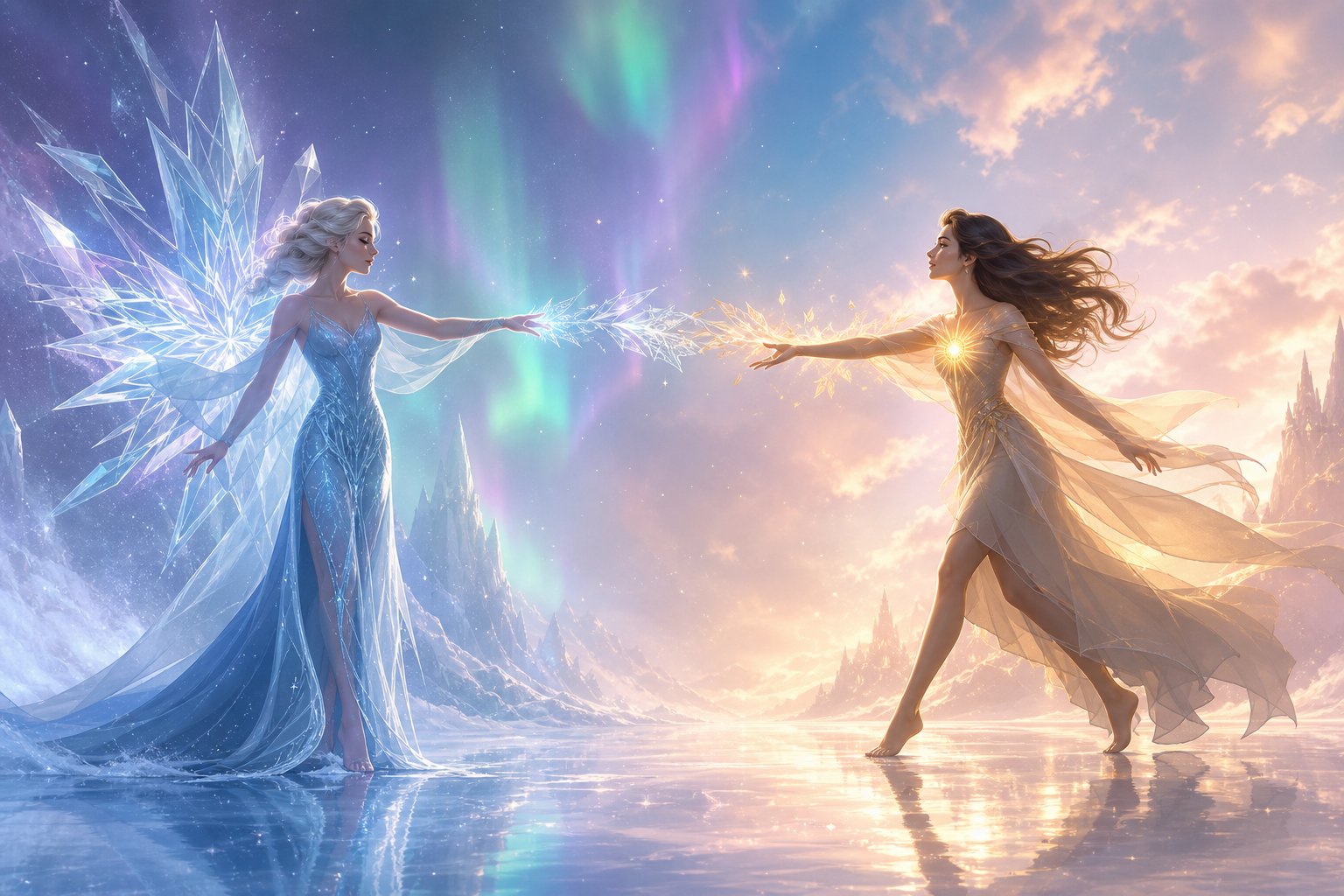
Elsa and Anna – Yin-Yang Sisterhood That Redefines Strength
Elsa can shatter mountains with a gesture. She raises ice palaces from nothing, commands the elements, and reshapes entire landscapes through sheer will. She is also the yin character in her story. That single fact demolishes one of the most persistent misconceptions in character analysis: the idea that yin equals passive, that receptive energy is somehow lesser. Frozen takes the yin archetype and gives it world-altering power, while simultaneously giving the yang archetype warmth instead of aggression. The result is a sister dynamic that challenges gendered assumptions about what dark feminine energy and active force actually look like in practice.
Disney's writers originally conceived Elsa as a straightforward villain, the cold and threatening Snow Queen from Hans Christian Andersen's fable. But as co-director Jennifer Lee explained during development, the team reached a point where they could no longer call Elsa a villain. She was not evil. She was afraid. Making Elsa and Anna sisters rather than adversaries revealed something deeper: these two characters represent dual emanations of the same creative force, opposite poles on a spectrum that only functions when both sides are in relationship.
Elsa as Yin Power Without Weakness
Elsa draws power from stillness, solitude, and inward focus. She craves isolation not because she is fragile but because her internal world is so vast and volatile that it requires space. Her ice powers crystallize thought into form, pulling molecules from the atmosphere into precise geometric structures. That is not passivity. That is creation through receptivity, the yin principle operating at its highest expression.
Her character design reinforces this at every level. According to Disney's visual development team, Elsa's hair and costume evolve throughout both films to reflect her emotional state. Tight buns signal restriction. The iconic braid signals partial liberation. Fully loose hair in Frozen II signals complete self-acceptance. Her color palette stays in cool blues and silvers, colors associated with lunar, reflective energy. Even her movement style is contained and deliberate compared to Anna's kinetic sprawl.
What makes Elsa a sign of a female character done right is that her yin qualities are never framed as flaws to overcome. Her introversion is not a problem to fix. Her need for solitude is not selfishness. Her emotional containment is not coldness. The films treat these traits as legitimate expressions of power, ones that simply need healthy channels rather than suppression.
Anna as Yang Force Without Aggression
Anna is pure outward momentum. She talks fast, moves fast, connects fast, and throws herself at problems with zero hesitation. When Elsa flees to the North Mountain, Anna does not pause to strategize. She saddles up and charges into a blizzard with no plan beyond reaching her sister. That impulsive, connection-driven energy is yang in its most recognizable form.
But here is what makes Anna interesting as a yang character: her force is not violent. It is relational. She does not conquer obstacles through aggression. She overcomes them through sheer emotional persistence, through refusing to stop loving even when love is not returned. Her yang energy expresses as warmth, openness, and an almost gravitational pull toward other people. She attracts allies not through dominance but through genuine, radiant care.
Anna's arc across both films shows yang energy maturing without losing its essential nature. In the first film, her impulsiveness leads her to trust Prince Hans, a mistake born from yang's tendency to act before reflecting. By Frozen II, she retains her action-oriented core but develops enough discernment to channel it wisely. She does not become yin. She becomes a more integrated yang, one who can sit with grief and uncertainty before rising to act.
Breaking the Misconception That Yin Equals Passive
The Frozen films systematically dismantle the assumption that yin and yang map neatly onto the male female symbol of weak and strong. Consider how each sister's arc involves absorbing qualities from the other:
- Elsa learns from Anna's yang openness: she moves from fearful isolation toward chosen connection, eventually ruling the Enchanted Forest in relationship with the Northuldra people rather than alone on a mountain
- Anna learns from Elsa's yin patience: she grows from reckless impulsiveness toward measured courage, eventually becoming Queen of Arendelle through steady leadership rather than reactive heroics
- Elsa's yin power saves the kingdom not through passivity but through creative expression, building, shaping, and transforming the physical world from a place of inner stillness
- Anna's yang love saves Elsa not through force but through persistent presence, proving that active energy can be gentle without being weak
- Neither sister thrives in isolation from her complement: Elsa alone freezes everything, Anna alone trusts the wrong people, together they create balance
This dynamic works because the films refuse to rank one energy above the other. Elsa's yin power is literally world-altering, capable of creating eternal winters and raising architectural marvels from thin air. Anna's yang love is equally world-altering, capable of thawing frozen hearts and inspiring loyalty in everyone she meets. The story never suggests that Elsa should become more like Anna, or that Anna should calm down and be more like Elsa. It suggests they need each other, that interdependence is the point.
Frozen earned over $1.29 billion at the box office and swept major awards not because it told a simple princess story, but because it captured something audiences recognized instinctively: the relationship between these two energies is the relationship most people have within themselves. The part of you that withdraws to process and the part that reaches out to connect are not at war. They are sisters. They need each other to function.
Elsa and Anna prove that yin-yang dynamics do not require rivalry or conflict to generate narrative power. Sisterhood, mutual need, and complementary strength can drive a story just as effectively as opposition. But what happens when you take this framework back into the arena of direct competition, stretching it across decades of escalating battles? That question leads to anime's longest-running yin-yang rivalry, one that has shaped an entire genre.
Goku and Vegeta – The Yin-Yang Rivalry That Shaped Anime
Decades. That is how long this rivalry has been running. Goku and Vegeta first clashed in the Saiyan Saga and have been pushing each other forward ever since, across Dragon Ball Z, Super, and beyond. No other yin-yang pairing in anime has had this much time to evolve, and that longevity is precisely what makes their dynamic so instructive. You get to watch two opposing energies grind against each other for years, slowly reshaping one another without ever collapsing into sameness.
Their contrast is not subtle. Goku is expansive, joyful, instinctive. Vegeta is contained, proud, calculated. One fights because it feels good. The other fights because losing is unacceptable. That fundamental difference in motivation creates a rivalry that, as psychology researcher Professor Nobuyuki Ota notes, is largely one-sided: Vegeta considers Goku his rival, but Goku's driving emotion is not competitiveness. It is a pure desire to become stronger. That asymmetry gives the dynamic its unique tension.
Goku's Boundless Yang Spirit
Goku is yang energy without a filter. He greets enemies with excitement rather than hostility. He spares villains not out of strategy but because fighting them again sounds fun. His combat style is instinctive and adaptive, relying on in-the-moment creativity rather than pre-planned technique. Everything about him pushes outward: his openness to strangers, his emotional transparency, his refusal to hold grudges.
Even his approach to growth is yang. Goku does not retreat to train in isolation by choice. He seeks sparring partners, gravitates toward teachers, and thrives on external stimulation. His power-ups often arrive mid-battle, triggered by emotional surges rather than quiet meditation. He is, in balanced other words, a character whose strength flows from engagement with the world rather than withdrawal from it.
Vegeta's Disciplined Yin Pride
Vegeta operates from the opposite principle. His power is forged in solitude, driven by internal standards rather than external joy. Where Goku fights for the thrill of connection, Vegeta fights to prove something to himself. His self-esteem, rooted in Saiyan royal lineage, creates a wall between him and others. Professor Ota's analysis identifies this as exceptionally high self-esteem, the kind that makes any blow to pride intensely stressful.
That pride is Vegeta's yin core. It drives isolation, internal processing, and a refusal to show vulnerability. He trains alone in gravity chambers. He processes defeat internally, converting shame into fuel rather than expressing it outward. His intensity is controlled and directed, never the wild, expansive energy of Goku's yangs. Even his combat style reflects yin precision: calculated strikes, strategic positioning, and a preference for overwhelming technique over raw instinct.
Consider the strengths and limitations of each warrior's approach:
Pros of Goku's Yang Approach
- Instinctive adaptation allows breakthroughs under pressure
- Openness to others creates unexpected alliances and learning opportunities
- Joyful motivation sustains effort without burnout or bitterness
Cons of Goku's Yang Approach
- Lack of strategic planning creates unnecessary risks for loved ones
- Emotional transparency makes him predictable to calculating opponents
- His expansive generosity toward enemies sometimes endangers Earth directly
Pros of Vegeta's Yin Approach
- Disciplined solo training builds consistent, reliable power gains
- Pride creates an unbreakable resolve to never stay down after defeat
- Strategic thinking allows him to identify and exploit opponent weaknesses
Cons of Vegeta's Yin Approach
- Isolation limits growth that comes from collaborative learning
- Obsession with surpassing one person narrows his broader potential
- Emotional containment occasionally erupts into destructive choices, like allying with Babidi
How Decades of Development Shift Their Balance
Vegeta's character arc is essentially a yin character learning to accept yang qualities without abandoning his core identity. As philosophical analysis of his journey highlights, Vegeta is broken down constantly and forced to rebuild himself. His pride transforms over time from something inherited, based on blood and lineage, into something earned through personal resolve. That transformation requires vulnerability, connection, and joy, all yang qualities he initially rejected.
The turning points are unmistakable. His tearful admission to Goku during the Buu Saga, acknowledging that Goku is better, is a yin character cracking open to express emotion outwardly for the first time. His sacrifice against Buu, embracing his family before death, is isolation giving way to connection. His development in Dragon Ball Super, particularly his relationship with his daughter Bulla and his protection of Cabba, shows a man who has integrated yang warmth without losing yin discipline.
Goku's shift is subtler. He remains fundamentally yang throughout, but later arcs show him developing more patience, more willingness to step back and let others fight, more awareness of consequences. Ultra Instinct itself, his ultimate technique, is paradoxically yin: it requires emptying the mind, reacting without conscious thought, achieving stillness within motion. The most yang character in anime reaches his peak through a yin state.
This pairing's influence on the shonen genre cannot be overstated. Vegeta is widely recognized as anime's most famous rival, and his archetype echoes through Hiei in Yu Yu Hakusho, Sasuke in Naruto, Bakugo in My Hero Academia, and Kageyama in Haikyu. Each of these characters carries Vegeta's DNA: the proud loner whose growth arc involves learning to accept connection without surrendering identity. The template works because it captures something true about yin energy. Discipline and pride are not flaws to cure. They are strengths that become richer when balanced with openness.
Goku and Vegeta endure as a synonym for expansive rivalry because their dynamic never resolves. It evolves. After decades, they still push each other, still represent opposing philosophies of growth, still refuse to let the other define them. That perpetual tension, never collapsing into agreement but never breaking into true hostility, is yin-yang philosophy stretched across a lifetime. It proves that the framework does not require resolution to generate meaning. Sometimes the tension itself is the point.

Comparing the Greatest Yin-Yang Character Duos
Five duos, five different media, one shared framework. Laying these pairings side by side reveals something you might not catch when examining them individually: the yin yang sign is not a rigid template. It is a flexible philosophy that adapts to genre, tone, and narrative purpose. Some pairings follow the taoism symbol almost literally. Others bend it, subvert it, or use it as a launching point for something more complex.
Side-by-Side Comparison of Yin-Yang Duos
| Duo | Medium | Yin Character | Yang Character | Key Dynamic | Subversion Level |
|---|---|---|---|---|---|
| Naruto & Sasuke | Anime (Shonen) | Sasuke Uchiha | Naruto Uzumaki | Cosmic rivalry tied to reincarnation cycle; neither can exist without the other | Moderate — Sasuke's yin conceals explosive yang rage |
| Batman & Superman | Western Comics | Batman | Superman | Philosophical opposition between fear-based control and hope-based trust | Moderate — Batman's yin shell hides yang aggression; Superman's yang power hides yin loneliness |
| Zuko & Aang | Animated TV | Aang (exterior) / Zuko (interior) | Zuko (exterior) / Aang (destiny) | Both characters swap apparent classifications as they grow | High — deliberately inverts expectations across three seasons |
| Elsa & Anna | Animated Film | Elsa | Anna | Sisterhood and interdependence rather than rivalry or conflict | Moderate — yin character holds the greater raw power |
| Goku & Vegeta | Anime (Shonen) | Vegeta | Goku | Decades-long rivalry where tension never resolves, only evolves | Low-Moderate — relatively straightforward classification that deepens over time |
Which Pairing Best Demonstrates Yin-Yang Philosophy
Not every duo engages with the philosophy at the same depth. Some use it as visual shorthand. Others build their entire narrative architecture around it. Ranking these yin yang characters by how faithfully they represent authentic Daoist principles:
- Zuko and Aang — The most philosophically rigorous pairing. The show draws directly from Daoist spirituality, features the yin yang fish as literal spirit guardians, and structures both arcs around integration rather than dominance. Neither character stays fixed, which mirrors the actual philosophy perfectly.
- Naruto and Sasuke — Explicitly coded through the Asura/Indra reincarnation cycle and the series' sun/moon imagery. The final resolution, where both occupy complementary roles in governance, reflects genuine yin-yang interdependence.
- Elsa and Anna — Captures the non-hierarchical nature of yin-yang better than any other pairing. Neither energy is framed as superior, and the films insist on mutual need rather than competition.
- Batman and Superman — Strong philosophical opposition but occasionally flattened into simple dark-versus-light by weaker stories. At its best, the pairing captures yin-yang tension. At its worst, it reduces to a power comparison.
- Goku and Vegeta — The most straightforward application. Classification is clear and consistent, which makes it accessible but less philosophically layered than pairings where roles shift and blur.
Patterns Across Genres and Media
Look across all five duos and certain patterns emerge regardless of genre or cultural origin. Yin characters consistently drive the internal and emotional arcs. Sasuke's trauma, Batman's psychology, Zuko's identity crisis, Elsa's self-acceptance, Vegeta's pride — these are the storylines that explore what it means to process, to sit with pain, to transform from the inside out. Yang characters, meanwhile, drive the external and plot-level arcs. Naruto's quest for Hokage, Superman's world-saving, Aang's defeat of Ozai, Anna's rescue missions, Goku's escalating battles — these are the engines that push narrative forward.
That division is not a coincidence. It reflects something structural about how stories work. External momentum needs internal meaning to resonate, and internal depth needs external stakes to matter. Yin characters provide the why. Yang characters provide the how. Together, they create complete narratives.
The strongest stories across every medium share one additional trait: they give both characters moments of integrating their opposite energy. Sasuke connects. Naruto strategizes. Batman rages. Superman doubts. Zuko teaches patiently. Aang fights decisively. Elsa opens up. Anna pauses. Vegeta loves. Goku empties his mind. These moments of crossover are where character development lives. Static archetypes generate initial contrast, but integration generates growth. The duos that allow both characters to move along the spectrum, rather than locking them at fixed poles, are the ones audiences remember for decades.
Recognizing these patterns is useful whether you are analyzing your favorite stories or building your own. The question shifts from "which archetype is better?" to something more productive: how do you write yin-yang dynamics that feel alive rather than formulaic?
How to Recognize and Create Yin-Yang Characters
Patterns are only useful if you can apply them. Whether you are a fan dissecting your favorite rivalries or a writer building your next character duo, the yin-yang framework offers something concrete: a lens for understanding why certain pairings feel electric and others fall flat. The difference between a memorable dynamic and a forgettable one often comes down to how well the creators understood this balance, even if they never named it explicitly.
For Fans Identifying Yin-Yang Dynamics
When you are watching a show, reading a novel, or playing a game, look for the friction point between two characters. Ask yourself: who initiates and who responds? Who processes outward and who processes inward? Who drives the plot forward and who carries the emotional weight? These questions will reveal the yin-yang structure beneath almost any compelling duo, even ones that do not use Eastern philosophy as a conscious reference.
You will also notice that the yin yang symbol meaning extends beyond simple opposition. The best pairings contain contradiction within each character. A yin character who never acts decisively is not well-written yin. They are just passive. A yang character who never pauses or reflects is not well-written yang. They are just loud. Look for the dot of opposite energy within each half. That is where depth lives.
For Writers Building Yin-Yang Character Pairs
The best yin-yang character dynamics work because neither archetype is presented as superior. The moment one side is framed as the correct way to be, the tension collapses and the relationship loses its power.
Building a yin-yang pair that resonates requires more than assigning one character "quiet" and the other "loud." As screenwriting analysis of interpersonal conflict emphasizes, you should never think of your character in a vacuum. If a character is the yin, you need another character to fill the yang, and the specific tension between them must be clear and purposeful. The conflict should be baked into the relationship itself, not generated artificially scene by scene.
Here are actionable principles for crafting these dynamics:
- Give yin characters moments of decisive, explosive action — Elsa shattering her restraints, Sasuke choosing to protect, Vegeta sacrificing himself against Buu. These moments land harder precisely because they contrast with the character's default energy.
- Give yang characters moments of stillness and reflection — Naruto sitting quietly with a dying enemy, Goku achieving Ultra Instinct through mental emptiness, Anna pausing in grief before rising to act. Stillness from a yang character carries enormous emotional weight.
- Let both characters grow by integrating their opposite — do not lock them at fixed poles. The interdependence of yin and yang means growth always moves toward the center, not further toward extremes.
- Avoid reducing yin to passive or yang to aggressive — yin characters can hold devastating power (Batman, Elsa, Vegeta). Yang characters can be gentle and warm (Anna, Naruto, Superman). The framework describes energy direction, not intensity or moral value.
- Create a specific interpersonal conflict that tests each character's core — the best duos force yin characters to confront their avoidance of connection and yang characters to confront their avoidance of introspection.
The Enduring Power of Complementary Characters
Yin-yang character design transcends any single genre, medium, or culture. It appears in Japanese shonen anime and American superhero comics. It drives animated children's films and decades-long serialized rivalries. It works in stories about cosmic reincarnation and stories about two sisters learning to coexist. The framework endures because it reflects something universal about how opposing forces create meaning through their relationship, not despite their differences but because of them.
That earth harmony, that sense of completeness born from tension rather than resolution, is what audiences respond to instinctively. We recognize it because we live it. Every person contains both energies, the part that withdraws to think and the part that reaches out to act. The characters who mirror that internal dialogue back to us are the ones we carry with us long after the story ends. They remind us that wholeness is not about choosing one side. It is about holding both.
Frequently Asked Questions About Yin and Yang Characters
1. What makes a character yin vs yang?
A yin character draws energy from introspection, patience, and strategic thinking. They tend to observe before acting and process emotions internally. A yang character draws energy from external engagement, direct action, and emotional expressiveness. The distinction goes beyond quiet vs loud — it reflects how a character approaches conflict, processes the world, and grows over time. Most well-written characters contain elements of both but lean primarily toward one pole.
2. Are yin characters weaker than yang characters?
Not at all. Yin energy represents receptive and strategic power, not weakness. Characters like Batman, Elsa, and Vegeta are classified as yin yet possess devastating strength. Elsa reshapes entire landscapes through stillness and focus. Batman outmaneuvers superpowered beings through preparation and intellect. Yin power is directed inward first, but its outward impact can be just as world-altering as any yang character's direct force.
3. Can a character be both yin and yang?
Yes, and the best-written characters demonstrate exactly this fluidity. The yin-yang symbol itself shows each half containing a dot of its opposite. Characters like Zuko start as apparent yang (aggressive, action-driven) but reveal deep yin qualities (introspection, emotional processing) as they develop. Character growth often involves integrating the opposite energy — a yin character learning decisive action or a yang character discovering stillness and reflection.
4. What is the best example of yin-yang characters in anime?
Naruto Uzumaki and Sasuke Uchiha are widely considered anime's defining yin-yang duo. The series makes their duality explicit through sun and moon imagery, the Asura and Indra reincarnation cycle, and their complementary fighting styles. However, Zuko and Aang from Avatar represent a more philosophically rigorous example because both characters actively shift between yin and yang across the series rather than staying at fixed poles.
5. How do writers create effective yin-yang character pairs?
Effective yin-yang pairs require more than surface contrast. Writers should give yin characters moments of explosive action and yang characters moments of quiet reflection. The interpersonal conflict between them should be baked into their opposing worldviews rather than manufactured artificially. Most importantly, neither archetype should be framed as superior — the tension works because both perspectives hold equal validity, and growth comes from each character integrating qualities of their opposite.