The Zhao Surname and Its Place in Chinese History
Imagine a single family name so powerful that it was placed at the very top of China's most famous surname registry, not because of alphabetical order, but because the emperor himself bore it. That name is Zhao (赵/趙, pinyin: Zhao). Few surnames in the world carry such a direct link to imperial authority, military conquest, and cultural prestige spanning more than three thousand years.
Why Zhao Ranks Among China's Most Powerful Surnames
The Zhao surname is the 8th most common surname in mainland China, carried by approximately 27 million people. Those numbers alone make it significant, but raw population figures only tell part of the story. What truly sets the last name Zhao apart is its unique position in Chinese cultural memory: it holds the number one spot in the Hundred Family Surnames, the classical text that has shaped how Chinese people think about surnames for over a thousand years.
Zhao holds the first position in the Baijiaxing (百家姓, Hundred Family Surnames) because it was the imperial surname of the Song Dynasty when the text was compiled. This placement was not random or phonetic. It was political, and it permanently cemented the Zhao family name at the top of China's surname consciousness.
That single fact tells you everything about how power and identity intertwine in Chinese naming culture. The Zhao surname did not earn its first-place ranking through population size or ancient seniority. It earned it because Zhao Kuangyin founded one of China's longest-lasting and most culturally productive dynasties in 960 CE, and the scholars who compiled the surname list lived under his family's rule.
A Surname Shaped by Emperors and Empires
The story of the Zhao surname stretches far deeper than the Song Dynasty, though. Written in simplified form as 赵 and in traditional form as 趙, this character traces its roots to the Zhou Dynasty, when a legendary charioteer earned a fiefdom that would eventually become one of the most powerful states of the Warring States period. From that ancient fief in what is now Shanxi province, the Zhao name traveled through centuries of war, imperial expansion, artistic achievement, and migration.
You'll notice that zhao surname history is not just the story of one family. It is a lens into how Chinese civilization itself evolved, how power was gained and lost, and how millions of people eventually carried a single name from the plains of northern China to every corner of the globe. The journey from a charioteer's reward to a global diaspora spanning Southeast Asia, Korea, Vietnam, and the West reveals patterns that shaped all of Chinese society.
That journey begins with the character itself, its meaning, and the ancient legend encoded within it.
The Meaning and Character Behind the Zhao Name
Every Chinese character tells a story, and the one behind the Zhao surname is no exception. Understanding the zhao meaning starts with looking at the character itself, its structural components, and the ancient concepts embedded within its strokes. This char in Chinese writing carries layers of history that connect directly to the surname's legendary origins.
Simplified and Traditional Forms of the Zhao Character
The Zhao surname exists in two written forms. The simplified version, 赵, is used in mainland China today. The traditional version, 趙, remains standard in Taiwan, Hong Kong, and many overseas Chinese communities. Both represent the same surname, but their internal structure reveals different aspects of the character's evolution.
The traditional character 趙 is built from two components:
- 走 (zou) - the radical on the left side, meaning "to walk" or "to run." This component suggests movement and speed.
- 肖 (xiao) - the phonetic component on the right side, which originally helped indicate the character's pronunciation rather than its meaning.
The simplified form 赵 retains the 走 radical but replaces the right-side component with a reduced form (x), streamlining the character while preserving its core identity. The presence of 走 in both versions is significant. A radical associated with running and swift movement sits at the heart of a surname whose origin legend involves a man famous for his extraordinary skill driving horses at speed.
That connection is likely not coincidental. Ancient Chinese characters often encoded meaning through their radicals, and the association between the Zhao character and rapid movement aligns perfectly with the story of Zaofu, the legendary charioteer whose mastery of speed earned him the fief that gave birth to this surname. The character itself preserves a trace of that founding myth in its very structure.
How to Pronounce Zhao Correctly
If you have ever wondered how do you pronounce z h a o, you are not alone. English speakers frequently stumble over this surname because its romanized spelling is misleading. The pinyin is zhao (fourth tone: zhao), and it sounds nothing like "zay-oh" or "zah-oh."
Here is how to pronounce zhao correctly: the "zh" is a retroflex consonant, produced by curling the tip of your tongue slightly backward toward the roof of your mouth. It is similar to the English "j" in "judge" but with the tongue positioned further back. The "ao" vowel sounds like "ow" in "cow" or "now," delivered as a smooth, quick glide rather than two separate syllables. The fourth tone means your pitch starts high and drops sharply.
Put it together, and zhao pronunciation lands close to "jow" (rhyming with "now") spoken with a firm, falling intonation. Many people try to zhao pronounce it as two syllables, but it is a single, crisp beat. The IPA transcription is /ʈʂaʊ˥˩/, confirming that falling tone and retroflex initial.
Getting the tone right matters more than you might expect. Mandarin has four tones, and the wrong one changes the word entirely: zhāo (first tone) means "to recruit," zhǎo (third tone) means "to look for," while zhào (fourth tone) is the surname and also means "to shine" or "to illuminate" in other contexts. The surname always carries that decisive fourth-tone drop.
The character's meaning, its radical structure pointing toward speed and movement, and its connection to a master charioteer all converge on a single origin point: a fief granted during the Zhou Dynasty that would grow into one of ancient China's most formidable states.
Ancient Origins in the Zhou Dynasty
A fief granted over three thousand years ago, a chariot racing across a thousand li of terrain, and a king's gratitude. The zhao last name origin traces back to one of the most dramatic episodes in Western Zhou history, when a man's extraordinary skill with horses earned his descendants a name that would endure for millennia.
Zaofu the Charioteer and the Zhou Dynasty Origins
The founding ancestor of the Zhao surname was Zaofu (造父), a man whose talent behind the reins of a chariot became the stuff of legend. Zaofu bore the ancient Ying (嬴) surname and was a descendant of Bo Yi, a minister who had served the legendary Emperor Shun. He was also recorded as the great-great-grandson of Fei Lian, placing him within one of the most storied lineages of early Chinese civilization.
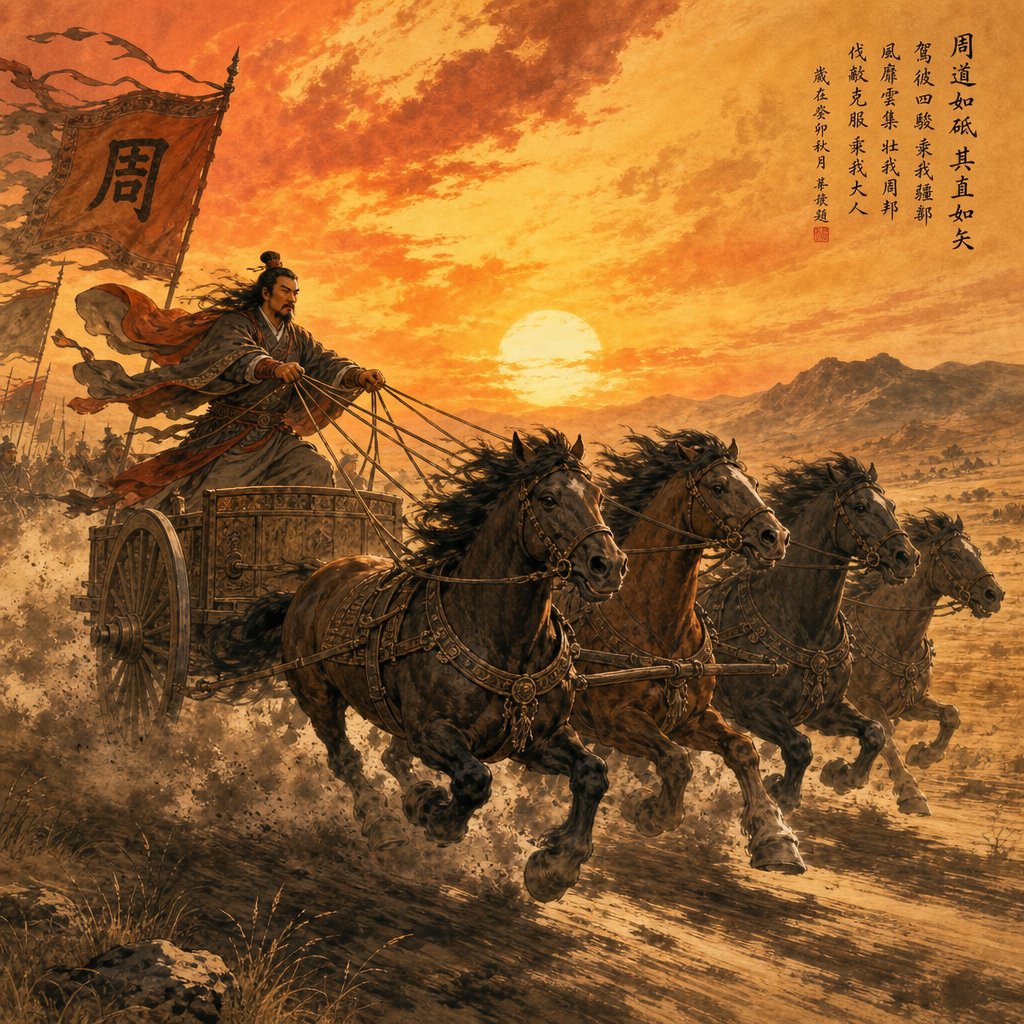
The story goes like this: Zaofu discovered eight magnificent horses in the Taolin region, trained them to perfection, and presented them to King Mu of Zhou (reigned approximately 976-922 BCE). The king was so delighted that he had Zaofu serve as his personal charioteer, and the two frequently traveled together on long journeys, including a legendary expedition west to the Kunlun Mountains.
Then came the crisis. While King Mu was far from his capital, word arrived that King Xu Yan of the Xu State had launched a rebellion. The king was stranded, hundreds of miles from his seat of power, with a revolt threatening to topple his rule. At this critical moment, Zaofu drove the chariot a thousand li in a single day, racing back to the capital Haojing with astonishing speed. King Mu arrived in time to dispatch troops, defeat King Xu Yan, and quell the rebellion before it could spread.
Grateful for this life-saving service, King Mu of Zhou bestowed upon Zaofu the city of Zhaocheng (present-day Hongtong County, Shanxi Province). From that point forward, Zaofu's clan became known as the Zhao clan, taking the name of their fief as their surname. This is why the zhao name meaning connects so directly to the character's radical component 走 (to walk or run). Speed, movement, and mastery of horses are woven into the surname's very DNA.
The Ying Ancestral Line and Related Surnames
Here is where Chinese surname genealogy reveals its interconnected nature. Zaofu did not emerge from nowhere. He belonged to the Ying (嬴) ancestral line, one of the most ancient and prolific surname groups in Chinese history. The Ying surname was originally bestowed by Emperor Shun upon Bo Yi for his loyal service, and Bo Yi's descendants branched into numerous clans over the centuries.
What makes this significant? The same Ying ancestral line that produced the Zhao surname also gave rise to several other major Chinese surnames:
- Qin (秦) - The ruling clan of the Qin state, which eventually unified China. The Qin ducal family shared a common ancestor with the Zhao clan through Fei Lian, which is why Qin Shi Huang (the First Emperor) was also known as Zhao Zheng (趙政).
- Xu (徐) - Descended from another branch of Bo Yi's lineage, the Xu clan established the Xu State during the Zhou Dynasty.
- Lian (廉), Huang (黄), and others - Multiple surnames trace their roots back to different descendants within the same Ying family tree.
This pattern illustrates something fundamental about how Chinese surnames work. They are not isolated labels. They form a genealogical web, with major ancestral lines branching repeatedly over generations as descendants received new fiefdoms, established new states, or adopted new identifiers. The Zhao and Qin clans, despite becoming bitter rivals during the Warring States period, shared blood going back to the same ancestor. As historical sources note, this connection led to the saying "the various Zhaos" (诸赵), acknowledging that both the Qin and Zhao peoples traced their lineage to Zaofu's era.
How Ancient Chinese Fiefdoms Created Surnames
Zaofu's story follows a naming pattern that produced hundreds of Chinese surnames. During the Zhou Dynasty, the feudal system (fengjian 封建) operated on a simple principle: the king rewarded loyal subjects with land, and those subjects often became identified by the territory they controlled. Over generations, a place name transformed into a family name.
This was not unique to the Zhao clan. The broader system worked through several mechanisms:
- Fief-based surnames - A minister received land, and descendants adopted the fief's name. The Zhao surname is a textbook example of this process.
- State-based surnames - When fiefdoms grew into independent states during the Spring and Autumn and Warring States periods, the state name became a surname. Names like Qi, Lu, Song, Wei, and Chu all originated this way.
- Title-based surnames - Official positions like Sima (Minister of War) or Situ (Minister of Education) became hereditary surnames for the families who held them.
For the Zhao jia (赵家, Zhao family), the transition from fief to surname happened organically. Zaofu's descendants governed Zhaocheng, identified themselves by that territory, and eventually carried the name even after political circumstances changed. By the time Zaofu's seventh-generation descendant Zhao Shudai left the Zhou court to serve the State of Jin, the Zhao identity was fully established as a hereditary surname rather than merely a geographic label.
That move to Jin proved pivotal. Within the Jin state, the Zhao clan rose to become one of the Six Great Officers, accumulating military power and political influence over generations. The clan that began with a charioteer's reward was positioning itself for something far greater: the founding of its own sovereign state, one that would reshape the political map of ancient China.
The State of Zhao in the Warring States Era
The Zhao clan's rise within the Jin state was no quiet accumulation of influence. It was a slow-burning power struggle among rival aristocratic families that eventually shattered Jin into three separate kingdoms. In 403 BCE, the Zhou king formally recognized what had already become reality on the ground: the state of Zhao, along with Wei and Han, emerged from the partition of Jin as independent sovereign powers. For the first time, the Zhao name was not just a family identifier. It was the name of a nation.
Rise and Fall of the State of Zhao
The state of Zhao stretched across a vast swath of northern China, covering northeastern and central Shanxi, southwestern Hebei, and portions of what is now Inner Mongolia. This territory placed it at the crossroads of Chinese civilization and the northern steppe, giving the Zhao state a distinctive military culture shaped by constant contact with nomadic peoples. Zhao cavalry became legendary, particularly after King Wuling of Zhao introduced the famous "Hufu Qishe" reform around 307 BCE, adopting nomadic-style horseback archery and replacing traditional chariot warfare with mobile cavalry units.
For a time, the state prospered aggressively. It seized large areas of land from the territories of Qi and Wei, expanding its borders and consolidating power. The Yanzhao region, as this northern heartland came to be known, developed a cultural identity associated with martial valor and bold, straightforward character. Even today, the term "Yanzhao" evokes a spirit of heroism and loyalty in Chinese culture, a legacy that traces directly back to this era.
The state of Zhao eventually became the strongest contender against the rising power of Qin in the west. That rivalry reached its catastrophic climax at the Battle of Changping in 260 BCE. Qin's commander Bo Qi lured the Zhao army into an exposed forward position, encircled it on the flanks, cut supply lines, and starved the trapped forces into desperation. The Zhao general Zhao Kuo attempted a breakout and failed. What followed was one of the most devastating military disasters in ancient history: approximately 50,000 Zhao soldiers died in battle, and the roughly 400,000 who surrendered were reportedly slaughtered. Whether or not the exact figure is accurate, the scale of destruction was staggering. Zhao's military strength was shattered in a single campaign.
The state limped on for nearly four more decades, but it never recovered its former power. In 222 BCE, Qin completed its conquest and formally annexed Zhao, erasing it from the political map as part of the broader unification of China under Qin Shi Huang.
| Date | Event | Impact on Zhao Surname Spread |
|---|---|---|
| 403 BCE | Partition of Jin; State of Zhao formally established | Zhao becomes a state identity, cementing the surname across the entire population of the territory |
| ~307 BCE | King Wuling's cavalry reform (Hufu Qishe) | Military expansion spreads Zhao-identified people into frontier regions and Inner Mongolia |
| 260 BCE | Battle of Changping; catastrophic defeat by Qin | Massive population loss; survivors scatter, beginning dispersal of Zhao-surnamed refugees |
| 222 BCE | Qin annexes the State of Zhao | State dissolution forces remaining Zhao elites and commoners to relocate across unified China |
How a Kingdom Became a Surname Legacy
Here is the paradox that makes this chapter of zhao surname history so fascinating: the man who destroyed the State of Zhao bore the Zhao surname himself. Qin Shi Huang, the First Emperor who unified China, was born Zhao Zheng (趙政) in the Zhao capital of Handan. His father, Ying Yiren, was a Qin prince held as a political hostage in the Zhao state. He married a woman from a prominent Zhao family, and their son was born in Handan around 259 BCE. Because of his birth in Zhao territory and his mother's local origins, the future emperor took the surname Zhao rather than his father's Ying surname, following the customs of the time.
The Records of the Grand Historian state plainly: "When he was born, he was named Zheng, and his surname was Zhao." So the conqueror who wiped the State of Zhao off the map carried its name on his own person. This irony underscores how deeply the Zhao identity had permeated the region. It was not merely a royal family's label. It had become the cultural signature of an entire geographic area.
The fall of the state in 222 BCE created the first major wave of Zhao surname dispersal. When a kingdom collapses, its people do not simply vanish. The royal clan scattered to avoid persecution. Soldiers who survived Changping and subsequent campaigns had already fled to neighboring regions. Commoners who had identified with the Zhao state for generations carried that name into new territories as refugees and migrants. What had been concentrated in the Yanzhao heartland of northern China began spreading southward and eastward.
This dispersal pattern is why the chao last name (an older romanization of Zhao) appears in historical records across such a wide geographic range even before the imperial era. The state's destruction did not erase the surname. It scattered it like seeds across the landscape of a newly unified China, setting the stage for its next dramatic chapter: the moment, over a thousand years later, when a Zhao descendant would seize the imperial throne and elevate the name above all others.
The Song Dynasty and the Rise of Zhao to Prominence
A thousand years after the State of Zhao fell to Qin's armies, a military commander from the same bloodline did something extraordinary: he reunified a fractured China and placed the Zhao family name on the imperial throne. That moment in 960 CE transformed the Zhao surname from a historically significant but regionally concentrated name into the most prestigious surname in the Chinese-speaking world.
Zhao Kuangyin and the Founding of the Song Dynasty
The Five Dynasties and Ten Kingdoms period (907-960 CE) was an era of relentless political chaos. After the Tang Dynasty collapsed, China splintered into competing warlord states, with five short-lived dynasties cycling through power in the north while ten smaller kingdoms carved up the south. Stability seemed impossible. Then came Zhao Kuangyin.
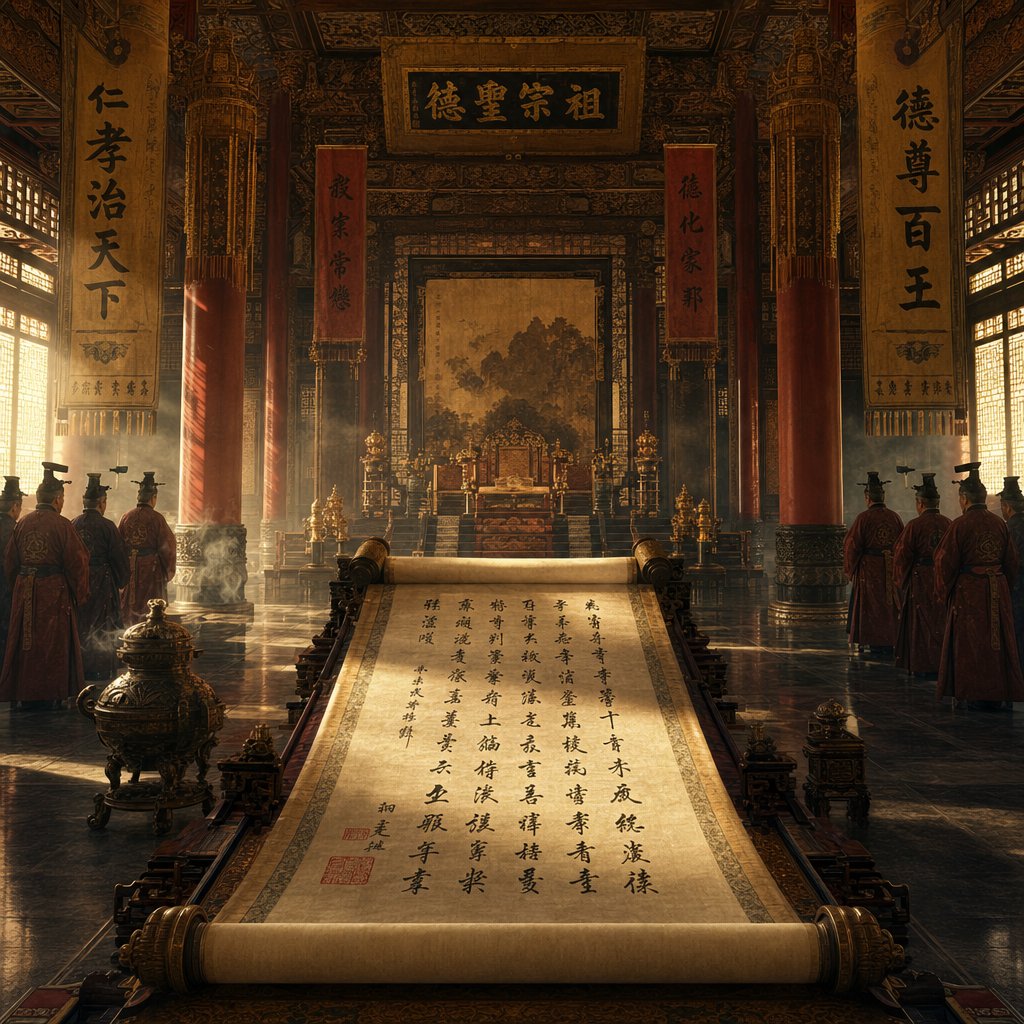
Born in 927 CE in Luoyang, Henan province, Zhao Kuangyin was the son of an important military commander named Zhao Hongyin. The younger Zhao proved himself a fine archer and horseman, rising to become the foremost general in the Later Zhou dynasty's army by his early thirties. When the Later Zhou ruler died and left a child on the throne, Zhao's troops took matters into their own hands. In 960 CE, the army dressed him in yellow imperial robes and proclaimed him emperor of all China.
Taking the reign title Taizu, meaning "Grand Progenitor," Zhao Kuangyin set about doing what no one had managed in over fifty years: building a unified, stable state. Rather than ruling through brute military force, he introduced a rotation system for generals, replaced military governors with civilian officials, revived the civil service examination system, and centralized power around his capital at Kaifeng. He was creating a less militaristic regime focused on efficient administration, cultural achievement, and economic prosperity.
The Song Zhao dynasty that resulted would rule China from 960 to 1279 CE, split into the Northern Song (960-1125 CE) and Southern Song (1125-1279 CE) periods. That is over three centuries of continuous Zhao imperial rule, making it one of the longest-lasting dynasties in Chinese history. For the Zhao family name, this meant something unprecedented: the surname was now synonymous with the ruling house of one of the world's most advanced civilizations.
Why Zhao Comes First in the Hundred Family Surnames
If you have ever encountered a list of Chinese last names, you have likely seen Zhao at the very top. That placement was not accidental, alphabetical, or based on population. It was a deliberate political statement encoded into one of China's most enduring educational texts.
趙錢孫李 (Zhao, Qian, Sun, Li) - the opening line of the Hundred Family Surnames, a sequence that reflects the political hierarchy of early Song Dynasty China rather than any demographic reality.
The Hundred Family Surnames (百家姓) was compiled during the Taiping Xingguo period of the Northern Song Dynasty, between 976 and 984 CE. Most scholars believe it was a collective creation by Confucian scholars from the Wuyue region, the coastal kingdom centered around modern Hangzhou. The text organized 504 surnames into a four-character rhymed verse designed as an elementary education primer for children.
The ordering principle was straightforward: first the imperial family, then the feudal lords, then the prominent clans. "Zhao" came first because it was the imperial surname of the Song Dynasty. "Qian" followed because it was the surname of the Wuyue Kingdom's ruling family, the Qian clan, who had peacefully surrendered their territory to the Song. "Sun" was the surname of the principal consort of the King of Wuyue. "Li" referred to the imperial surname of the Southern Tang, another recently absorbed kingdom.
This sequence encoded the entire political landscape of early Song China into four syllables. It told every child who memorized it exactly where power resided. And because the Hundred Family Surnames remained a standard educational text for centuries, alongside the Three Character Classic and the Thousand Character Classic, generations of Chinese children grew up learning that Zhao was the first among all last names. That cultural imprinting persists even today, long after the Song Dynasty's fall.
Later dynasties attempted their own versions. The Ming Dynasty produced the Huangming Qianjia Xing beginning with "Zhu" (the Ming imperial surname), and the Qing Dynasty created the Yuzhi Baijiaxing starting with "Kong" (honoring Confucius). Neither achieved the lasting cultural penetration of the original Song-era text. The Zhao family name remains permanently fixed at position one in Chinese surname consciousness.
Imperial Lineage Branches and Their Genealogical Meaning
Three centuries of imperial rule did more than boost the Zhao surname's prestige. It dramatically expanded the number of people who bore it. This happened through two mechanisms: natural population growth of the extended royal clan, and imperial grants of the surname to loyal subjects.
The Song imperial family was enormous. Zhao Kuangyin's brother Zhao Kuangyi (Emperor Taizong) succeeded him, and both lines produced extensive branches over thirteen generations of emperors. Each generation of princes, their children, and their children's children all carried the Zhao surname. By the dynasty's end, the imperial clan numbered in the tens of thousands. These were not all wealthy or powerful people. Many lower-ranking descendants lived as commoners. But they all bore the name, and they all contributed to its demographic expansion.
Imperial surname grants added another layer. Chinese emperors occasionally bestowed their own surname upon meritorious officials, military heroes, or allied leaders as a mark of supreme honor. During the Song Dynasty, this practice meant that families with no blood connection to the Zhao clan could legally adopt the Zhao family name, integrating themselves into the imperial lineage on paper if not in genetics.
To manage this growing complexity, the Song-era Zhao clan developed an elaborate system of lineage groups identified by hall names (堂号, tanghao). These hall names functioned as genealogical markers, distinguishing different branches of the family tree:
- Tianshui Tang (天水堂) - The most prominent hall name, referencing the Zhao clan's ancestral connection to the Tianshui region in Gansu province. This branch traces back to the pre-Song lineage.
- Banye Tang (半野堂) - A branch associated with scholarly pursuits and retirement from official life.
- Xiuqing Tang (琴鹤堂) - Named for a famous Song official known for his integrity, whose only possessions upon leaving office were a qin (zither) and a crane.
These hall names were not merely decorative. They served a practical genealogical function, allowing Zhao-surnamed individuals to identify which branch of the family they belonged to, trace their specific line of descent, and determine their relationship to other Zhao bearers. When a Zhao family built an ancestral hall, the tanghao displayed above the entrance told visitors exactly which lineage stream they were honoring.
The Song Dynasty's fall in 1279 CE scattered the imperial Zhao clan across southern China, but it did not erase these genealogical structures. If anything, the trauma of losing imperial status made lineage documentation more important. Zhao families fleeing the Mongol conquest carried their genealogies with them, preserving records of which branch they descended from and where their ancestors had lived. Those records would become the foundation for clan genealogies (族谱) that survive to this day, connecting modern Zhao-surnamed individuals to specific Song-era ancestors.
The dynasty's legacy extended beyond genealogy into the realm of cultural identity. For over three hundred years, bearing the Zhao surname meant belonging to the ruling class of one of history's most sophisticated civilizations. That association permanently elevated the name's social prestige. Even after the Song fell, the Zhao surname carried an aura of imperial heritage that no subsequent dynasty could erase. And the individuals who bore it during those centuries, from generals to painters to scholars, left marks on Chinese civilization that far outlasted the dynasty itself.
Notable Figures Who Carried the Zhao Name
The Song Dynasty elevated the Zhao surname to imperial status, but remarkable individuals bearing this name had already been shaping Chinese history for centuries before and would continue doing so long after. From battlefield legends to artistic visionaries, the Zhao lineage produced figures whose influence cut across military, political, and cultural domains in ways that few other surname groups can match.
Zhao Yun and the Three Kingdoms Legacy
Ask anyone familiar with Chinese history or popular culture to name a Zhao, and the first answer is almost always Zhao Yun (趙雲, courtesy name Zilong). A general of the Shu Han state during the late Han dynasty and Three Kingdoms period, Yun Zhao became the archetype of the loyal, incorruptible warrior. Born in Changshan Zhending (present-day Zhengding, Hebei), he served Liu Bei for nearly thirty years, participating in campaigns that defined the era.
His most celebrated moment came at the Battle of Changban in 208 CE. When Cao Cao's elite cavalry scattered Liu Bei's forces, Zhao Yun rode alone into the enemy formation, rescued Liu Bei's infant son Liu Shan, and carried the child to safety while protecting Lady Gan. Liu Bei himself later praised him with the famous line: "Zilong is a body full of courage." Within the army, he earned the title "General of Tiger's Might."
What set Zhao Yun apart from other Three Kingdoms warriors was his combination of martial prowess and political wisdom. He cited the precedent of Huo Qubing to argue against distributing Chengdu's farmland to generals, insisting it be returned to war-weary civilians. He advised against Liu Bei's ill-fated campaign against Eastern Wu. Later historians praised him as possessing "the bearing of a statesman," not merely a famous general. After his death in 229 CE, he received the posthumous title Marquis of Shunping, and his image as the "Ever-Victorious General" has been celebrated across Chinese culture for nearly two thousand years.
Zhao Mengfu and Artistic Achievement
If Zhao Yun represents the martial dimension of the surname's legacy, Zhao Mengfu (趙孟頫, 1254-1322) embodies its artistic and intellectual heights. Born in Huzhou, Zhejiang province, Meng Zhao was a direct descendant of the Song Dynasty imperial family, making him living proof of how the fallen dynasty's bloodline persisted through cultural achievement rather than political power.
Despite his Song royal heritage, Zhao Mengfu accepted service in the Mongol Yuan Dynasty court in 1286, a decision that drew criticism from some contemporaries but gave him the platform to revolutionize Chinese painting and calligraphy. He became one of the earliest masters within the literati painting tradition (wenrenhua), seeking personal expression over mere representation of nature. His paintings of horses recalled Tang Dynasty masters, while his landscapes and bamboo works displayed a deliberately simplified style that influenced generations of artists. His calligraphy, particularly in the running script (xingshu) style, remains studied and admired today. His wife Guan Daosheng and son Zhao Yong were also accomplished painters, creating a rare multi-generational artistic dynasty within the broader Zhao clan.
From Generals to Scholars Across Dynasties
Zhao Yun and Zhao Mengfu represent two poles of achievement, but the surname's historical footprint extends far wider. Zhao Tuo (趙佗, died 137 BCE), a Qin-era military commander from Zhending in Hebei, founded the Nanyue kingdom in what is now southern China and northern Vietnam. His reign as an autonomous ruler during the early Han period effectively extended Chinese cultural influence deep into Southeast Asia, and his legacy remains significant in Vietnamese history, where he is known as Triệu Đà.
Across different eras, the pattern repeats: Zhao-surnamed individuals appearing at critical junctures of Chinese civilization, often in roles that combined action with intellect. The concept of zhao chuan (赵传, Zhao legacy or transmission) captures this idea of cultural inheritance flowing through a single surname line across vastly different historical contexts.
- Warring States era: Zhao She (趙奢), a brilliant military strategist of the State of Zhao who defeated the Qin army at the Battle of Eyu, earning the title Lord Ma Fu.
- Qin-Han transition: Zhao Tuo (趙佗), who founded the Nanyue kingdom and ruled as an autonomous king for over sixty years, bridging Chinese and Southeast Asian civilizations.
- Three Kingdoms (220-280 CE): Zhao Yun (趙雲), the "Ever-Victorious General" whose loyalty and battlefield courage made him a cultural icon for millennia.
- Yuan Dynasty (1271-1368): Zhao Mengfu (趙孟頫), Song royal descendant turned master calligrapher and painter who redefined Chinese literati art.
- Modern era: Zhao Benshan (赵本山), the comedian and performing artist who became one of China's most recognized entertainers; Vicky Zhao (赵薇), the actress and filmmaker whose career spans decades of Chinese cinema.
What connects these figures is not just a shared character on their family registers. It is a pattern of individuals operating at the intersection of talent and historical circumstance, carrying a name that by their time already bore the weight of centuries. Each generation added new layers to what the Zhao surname signified, from martial valor to artistic refinement to popular entertainment.
These individuals did not exist in isolation, of course. Their stories unfolded against a backdrop of constant movement, as war, political upheaval, and economic opportunity pushed Zhao-surnamed populations across the map of China and eventually beyond its borders entirely.
Migration Patterns and Geographic Spread
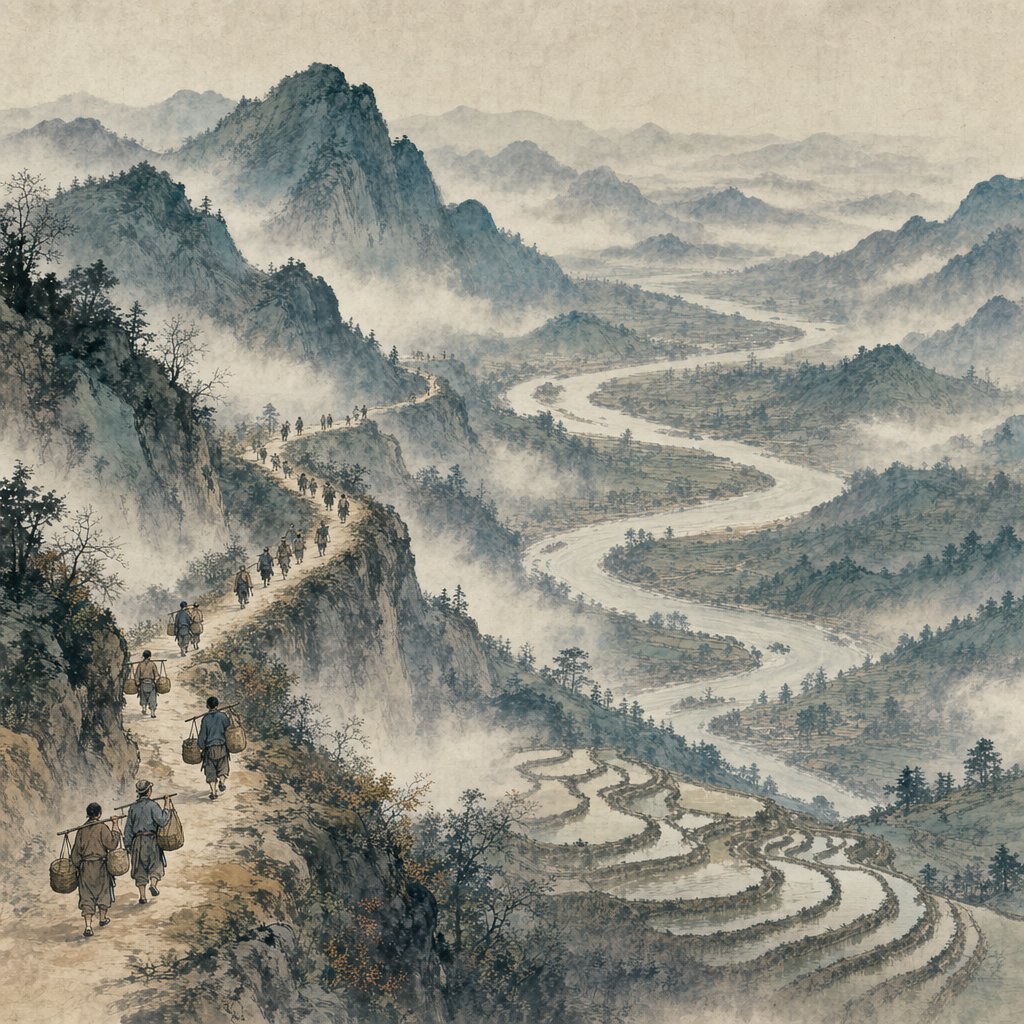
War has always been the great engine of surname dispersal in China. Every invasion, rebellion, and dynastic collapse sent waves of refugees streaming along river valleys and mountain passes, carrying their family names into regions where those names had never been heard before. For the Zhao surname, this process played out across nearly two thousand years of upheaval, transforming a name rooted in the northern plains into one scattered across the entire Chinese-speaking world and beyond.
Northern Origins and Southward Migration Waves
The Zhao surname's geographic heartland was always the north. From the original fief of Zaofu in Shanxi, through the State of Zhao's territory spanning Shanxi, Hebei, and Inner Mongolia, to the Song Dynasty capital at Kaifeng in Henan, the name remained concentrated above the Yangtze River for most of its early history. The Yanzhao region of northern China was home to the densest populations of Zhao-surnamed people well into the medieval period.
That concentration did not last. China's history of repeated northern invasions by steppe peoples created a recurring pattern: nomadic armies swept south, northern populations fled ahead of them, and surnames that had been regionally concentrated suddenly appeared hundreds of miles from their origin points. The Zhao surname followed this pattern with particular intensity because its bearers included not just ordinary farmers and merchants, but imperial clan members with powerful reasons to flee.
Each major crisis pushed the Zhao population further south and east, creating layered settlement patterns that still show up in modern demographic data. You can trace these waves like geological strata, each one depositing Zhao-surnamed communities in new territory.
How War and Upheaval Spread the Zhao Surname
Four major migration events reshaped the geographic distribution of the Zhao surname:
The first wave came after the fall of the State of Zhao in 222 BCE. As discussed earlier, the Qin conquest scattered the Zhao royal clan and commoners alike. Refugees moved east into Qi territory (modern Shandong) and south toward the Yangtze basin. This initial dispersal was relatively modest in scale but established the first Zhao communities outside the traditional northern heartland.
The second and far more dramatic wave arrived with the Yongjia Disaster of 311 CE. When the Xiongnu-led Han Zhao regime sacked the Western Jin capital of Luoyang and captured the emperor, it triggered one of the largest mass migrations in Chinese history. Millions of northern Chinese, including substantial Zhao-surnamed populations, fled south across the Yangtze into what is now Jiangsu, Zhejiang, Fujian, and Guangdong. This event fundamentally altered the demographic balance of China, and for the Zhao surname, it meant the first significant establishment of southern communities that would develop their own dialect pronunciations of the character.
The third wave followed the An Lushan Rebellion of 755-763 CE. This catastrophic civil war during the Tang Dynasty devastated northern China, killing millions and displacing millions more. Zhao-surnamed families in Henan, Hebei, and Shandong again moved south, reinforcing the communities established during the Yongjia migration and pushing further into Fujian and Guangdong. It was during this period that southern dialect pronunciations of the Zhao character began solidifying into distinct forms, as communities that had been separated for centuries developed their own phonological systems.
The fourth and most consequential wave for the Zhao surname specifically came during the Song-Yuan transition of the 13th century. When the Jurchen Jin dynasty captured the Northern Song capital of Kaifeng in 1127 during the Jingkang Incident, Emperor Huizong, Emperor Qinzong, and thousands of imperial clan members were taken prisoner. The surviving prince Zhao Gou fled south and reestablished the dynasty at Hangzhou. Tens of thousands of Zhao imperial relatives followed, creating massive new concentrations of the surname in Zhejiang, Fujian, and Guangdong.
Then came the final blow. When the Mongol Yuan dynasty completed its conquest of the Southern Song in 1279, the remaining imperial Zhao clan scattered into remote southern regions to avoid persecution. Some fled to Chengcun Village near the Wuyi Mountains in Fujian. Others reached Zhangpu County, where they built the Zhao Family Fort and even temporarily changed their surname to Huang to avoid detection. These desperate flights established Zhao communities in areas that would later serve as launching points for overseas emigration.
| Migration Period | Cause | Direction | Resulting Concentrations |
|---|---|---|---|
| 222 BCE | Fall of the State of Zhao to Qin | East and south from Shanxi/Hebei | Shandong, northern Yangtze basin |
| 311 CE (Yongjia Disaster) | Xiongnu sack of Luoyang; collapse of Western Jin | South across the Yangtze | Jiangsu, Zhejiang, early Fujian settlements |
| 755-763 CE (An Lushan Rebellion) | Civil war devastates northern China during Tang Dynasty | South into Fujian and Guangdong | Reinforced Zhejiang communities; new Fujian/Guangdong clusters |
| 1127 CE (Jingkang Incident) | Jurchen Jin capture of Northern Song capital | Imperial clan flees to southern China | Massive Zhao concentrations in Zhejiang, Jiangxi |
| 1279 CE (Fall of Southern Song) | Mongol Yuan conquest; end of Song Dynasty | Deep south and remote coastal areas | Fujian, Guangdong, Hainan; coastal emigration points |
From China to the World
Those coastal Fujian and Guangdong communities became the springboard for international migration. Starting in the Ming Dynasty and accelerating during the Qing, Zhao-surnamed individuals joined the broader waves of Chinese emigration to Southeast Asia, driven by trade opportunities, political instability, and economic hardship. Hokkien and Teochew speakers from Fujian carried the surname pronounced as "Teo" or "Teoh" to Malaysia, Singapore, Indonesia, and the Philippines. Cantonese speakers from Guangdong brought the pronunciation "Chiu" or "Ziu" to Hong Kong and communities across Southeast Asia and eventually to North America and Australia.
The chiu last name origin and the chao last name origin both trace back to these same southern migration waves. Families who had fled the northern plains centuries earlier now carried the Zhao character overseas, but pronounced it according to whichever dialect their particular community spoke. A Zhao family that settled in Guangdong during the Song-Yuan transition would pronounce the character as "Chiu" in Cantonese, while one that reached Fujian might say "Teo" in Hokkien. When these families later emigrated abroad, they romanized the surname based on their spoken dialect rather than Mandarin, which is why the cho last name origin, the chou last name origin, and other variants all point back to the same Chinese character.
The Korean peninsula received the Zhao surname through a different channel. Chinese migration to Korea occurred across multiple dynasties, and the character 趙 was adopted into Korean as 조 (Jo or Cho). The trieu last name origin follows yet another path: Zhao Tuo's founding of the Nanyue kingdom in the 2nd century BCE introduced the Zhao surname into Vietnamese culture, where it became Trieu (Triệu). Vietnamese families bearing this name may trace their ancestry to Zhao Tuo's era or to later waves of Chinese migration into northern Vietnam.
Each migration wave did more than move people. It created linguistic divergence. Communities separated by mountains and centuries developed distinct pronunciations of the same character, and those pronunciations hardened into permanent variants when families emigrated and romanized their names under different colonial spelling systems. The result is a single surname that appears as Zhao, Chao, Chiu, Cho, Teo, Triệu, and half a dozen other forms depending on which dialect community carried it and which era they left China. Understanding these variants requires mapping them systematically against their source dialects and regions, a task that reveals just how far a single charioteer's legacy has traveled.
Romanization Variants Across Languages and Dialects
A single Chinese character, 趙, appears on passports, birth certificates, and family registers across a dozen countries. Yet the spelling on those documents varies wildly: Zhao, Chao, Chiu, Cho, Teo, Triệu. If you encountered these names at a family reunion, you might not realize they all represent the same surname. The reason for this fragmentation lies in the intersection of dialect diversity, colonial history, and the timing of emigration.
Mandarin, Cantonese, and Hokkien Variants
Chinese is not a single spoken language. It is a family of related but often mutually unintelligible dialects that share a common writing system. The character 趙 is read differently depending on which dialect group a speaker belongs to, and those spoken differences became permanent when families romanized their names for official documents in their new countries.
In Mandarin, the standard pronunciation is Zhao (pinyin: Zhào, fourth tone). This is the form used across mainland China today and recognized internationally as the default romanization. The older Wade-Giles system, developed by British diplomats in the 19th century, renders the same Mandarin pronunciation as Chao. You will find this spelling among Taiwanese families, older overseas Chinese communities, and in historical texts published before pinyin became the international standard. If you have ever wondered how to pronounce chao in this context, it sounds identical to Zhao. The difference is purely a matter of which romanization system was in use when the name was first written in Latin letters.
Cantonese speakers pronounce the character quite differently. In Jyutping (the standard Cantonese romanization), it is rendered as Ziu6. Depending on which romanization convention a family adopted, this appears as Chiu, Ziu, Chew, Jew, or Siu in official documents. The Chiu surname is particularly common in Hong Kong, where British colonial registration practices locked in Cantonese-based spellings for generations of families. The chiu surname and chiu family name you encounter in Hong Kong, Macau, and older Cantonese diaspora communities in North America and Australia all trace back to this single character pronounced through Cantonese phonology.
Hokkien and Teochew speakers from Fujian and eastern Guangdong produce yet another sound. In the Pe̍h-ōe-jī romanization system for Hokkien, the character reads as Tiō. This becomes Teo or Teoh in the romanized forms common across Malaysia, Singapore, and Indonesia. A person with the last name Teo in Singapore and a person named Zhao in Beijing share the exact same surname character. Only the dialect layer differs.
Korean, Vietnamese, and Other East Asian Forms
The Zhao character traveled beyond Chinese dialect communities into neighboring cultures that adopted Chinese characters as part of their own writing systems. In each case, the character acquired a local pronunciation shaped by the receiving language's phonology.
In Korea, 趙 is read as 조 (romanized as Jo or Cho under different systems). The cho last name and cho family name are among the most common surnames in Korea, ranking in the top ten. Korean families bearing this surname may descend from Chinese migrants who arrived during various dynasties, or from indigenous Korean lineages that adopted the character. The last name Cho in Korean contexts carries its own distinct cultural associations separate from its Chinese origins, though the genealogical connection remains acknowledged in Korean surname scholarship.
Vietnamese adopted the character as Triệu, reflecting the Middle Chinese pronunciation that was current when Chinese characters entered Vietnamese culture. The connection runs deep: Zhao Tuo, who founded the Nanyue kingdom in the 2nd century BCE, is known in Vietnamese as Triệu Đà, and the surname Triệu remains in use among Vietnamese families today. Some bearers trace their ancestry to Chinese migration during the Han, Tang, or Song dynasties, while others connect to the broader Sino-Vietnamese cultural exchange that shaped Vietnamese naming conventions.
Shanghainese (Wu dialect) speakers pronounce the character as Zau, while the Middle Chinese reconstruction suggests something like ɖjéu. These historical layers explain why the modern variants sound so different from one another. They are not corruptions of a single "correct" pronunciation. They are parallel descendants of older Chinese sound systems that diverged over centuries of geographic separation.
Understanding Why One Surname Has Many Spellings
Sounds complex? The underlying logic is actually straightforward once you grasp two principles. First, Chinese dialects diverged from common ancestors over thousands of years, producing genuinely different pronunciations of the same written character. Second, when families emigrated, they romanized their names based on how they actually spoke, not based on some standardized national pronunciation that did not yet exist for most of emigration history.
Consider a Zhao family that left Guangdong for San Francisco in 1880. Mandarin pinyin would not be invented for another seventy-eight years. The family spoke Cantonese. Colonial officials or immigration clerks wrote down what they heard, filtered through English spelling conventions. The result: Chiu, or perhaps Jew or Chew. That spelling then became the family's legal name in their new country, passed down through generations who may no longer speak Cantonese at all.
The same process played out differently depending on the colonial power involved. British administrators in Hong Kong and Malaya produced one set of spellings. Dutch officials in Indonesia produced another. French colonial systems in Vietnam shaped how Triệu appeared on documents. Each layer of colonial romanization added another variant to the global inventory of Zhao surname spellings.
| Romanization | Dialect/Language | Region of Use | Approximate Pronunciation |
|---|---|---|---|
| Zhao | Mandarin (Pinyin) | Mainland China, international standard | "jow" (rhymes with "now"), falling tone |
| Chao | Mandarin (Wade-Giles) | Taiwan, older overseas communities | Same as Zhao; spelling difference only |
| Chiu / Ziu | Cantonese (Jyutping: Ziu6) | Hong Kong, Macau, Cantonese diaspora | "jee-oo" as one syllable, low falling tone |
| Teo / Teoh | Hokkien / Teochew (Tiō) | Malaysia, Singapore, Indonesia, Philippines | "tee-oh" blended into one syllable |
| Zau | Shanghainese (Wu) | Shanghai region | "dzaw" with a low tone |
| Cho / Jo (조) | Korean | South Korea, North Korea, Korean diaspora | "joh" (short o sound) |
| Triệu | Vietnamese | Vietnam, Vietnamese diaspora | "tree-ew" with a falling-rising tone |
| Chou | Alternative romanization | Some older overseas documents | "choh" (varies by source dialect) |
This table is not exhaustive. Within Cantonese alone, you will find Chew, Jew, Jue, Siu, and Tsiu as additional variants depending on the era and location of registration. Each represents the same character filtered through a slightly different phonetic interpretation or clerical convention.
For genealogical researchers, this multiplicity of spellings creates both challenges and opportunities. A family named Chiu in Vancouver, a family named Teo in Penang, and a family named Cho in Seoul may all share a common ancestor from the Zhao heartland of northern China. Recognizing these connections requires looking past the romanized surface to the underlying character, then tracing which dialect community and migration wave produced each particular spelling. The surname's modern global distribution, concentrated in specific regions within China and scattered across dozens of countries abroad, reflects exactly these layered patterns of dialect, migration, and colonial documentation.

The Zhao Surname in the Modern World
Thousands of romanization variants, centuries of migration, and a diaspora spanning every inhabited continent. Where does the Zhao surname stand today, and how can modern bearers connect with the deep history behind their family name?
Modern Distribution and Population Statistics
China's Ministry of Public Security reported in its 2021 National Name Report that Henan province holds the largest concentration of Zhao-surnamed residents. The surname ranks 8th nationally, with over 28 million bearers accounting for roughly 2.04% of China's population. That makes it one of the dominant surnames in northern China, though its reach extends well beyond any single region.
The densest concentrations cluster along the Yellow River basin. In Hebei, much of the Hebei-Shandong corridor, Shanxi, and the Shaanxi-Gansu-Ningxia belt, the Zhao surname accounts for over 3.2% of the local population, with some central areas exceeding 5%. A secondary band stretching from Shandong through Jiangsu, Anhui, Henan, and into northern Sichuan shows concentrations between 2.4% and 3.2%. Southern China, by contrast, generally falls below 2.4%, reflecting the surname's northern origins and the gradual dilution that occurred as migration waves moved south over centuries.
People sometimes confuse the Zhao surname with the zhou surname due to similar romanized spellings, but these are entirely different characters with distinct origins. The zhou name meaning relates to the character 周, which signifies "cycle" or "circumference" and traces to the Zhou Dynasty royal house. The surname Zhou and the zhou last name origin have no genealogical connection to Zhao (赵/趙) despite their phonetic similarity in English. Understanding this distinction matters for genealogical research, since mixing up these two names can send researchers down entirely wrong paths.
Tracing Your Zhao Ancestry
Interested in connecting your family to this three-thousand-year lineage? Genealogical research for Chinese surnames follows specific pathways that differ significantly from Western approaches. The good news: the Zhao surname has unusually rich documentation thanks to its imperial history and the Song Dynasty's emphasis on clan record-keeping.
Here are practical starting points for Zhao surname researchers:
- Clan genealogies (族谱, zupu) - These privately compiled family records are the gold standard of Chinese genealogy. Over 405 Zhao family tree books have been cataloged in online databases. Zupus can contain several hundred years of family history, including names, dates, migration records, and generation poems (字辈) that help identify which branch you belong to.
- The Family History Library in Salt Lake City - This facility houses the world's largest collection of genealogical records, including millions of microfilmed Chinese documents. Their Chinese collection includes the China Vital Records Index, clan records, gazetteers, and family histories organized by surname and location.
- FamilySearch.org - The online arm of the Family History Library offers digitized Chinese genealogies searchable by surname, with wiki articles listing common surnames and their English spelling variants.
- Regional archives in China - Provincial and county-level archives in Shandong, Henan, Hebei, and Shanxi hold local gazetteers (地方志, difangzhi) that record prominent families, migration events, and administrative histories relevant to Zhao clan research.
- MyChina Roots (mychinaroots.com) - A specialized platform offering searchable Zhao family records across multiple countries including China, Singapore, Malaysia, and the United States, with immigration records, vital records, and association directories.
- Generation poems (字辈) - If your family preserves a generation poem, matching it against published Zhao clan genealogies can identify your specific branch. The Song imperial clan used distinct fourteen-character sequences for the Taizu, Taizong, and Prince of Wei lineages.
One practical tip: begin by identifying which dialect your family spoke and which province they emigrated from. A Zhao family from Guangdong will appear in different records than one from Shandong, and the romanization variant on your documents (Chiu, Teo, Cho, Chao) is itself a clue pointing toward a specific region and migration wave.
The Zhao Surname in Contemporary Culture
Beyond genealogy, the Zhao surname maintains a visible presence in modern Chinese culture and global media. Lu Xun's famous novella The True Story of Ah Q (1921) features the Zhao family as symbols of local power and social hierarchy, a literary choice that deliberately invoked the surname's imperial associations. The phrase "Zhao family" (赵家人) has since entered Chinese internet slang as shorthand for entrenched elites, a testament to how deeply the surname's historical prestige is embedded in cultural consciousness.
In entertainment, Zhao-surnamed figures remain prominent. Zhao Benshan dominated Chinese comedy for decades through his Spring Festival Gala sketches. Zhao Wei (Vicky Zhao) became one of China's most recognized actresses. Zhao Liying rose to stardom in historical dramas that, fittingly, often depict the very dynastic eras that shaped her surname's history. In music, Zhao Chuan (赵传) built a lasting career as a Taiwanese rock vocalist. These modern figures continue adding layers to a name that has accumulated meaning across thirty centuries.
For the global diaspora, the surname zhou and surname Zhao represent two of the most commonly encountered Chinese family names in Western countries, yet they carry fundamentally different histories. While the surname Zhou connects to the ancient Zhou royal house, the Zhao name carries its own distinct imperial legacy through the Song Dynasty. Both are prestigious, but their genealogical streams never intersect.
The Zhao surname continues evolving in diaspora communities where younger generations may no longer read Chinese characters or speak the dialect their grandparents used. Yet the growing accessibility of digitized genealogical records, DNA testing services that connect to Chinese population databases, and online platforms dedicated to Chinese family history research mean that reconnecting with this heritage has never been more achievable. A name that began with a charioteer's reward in ancient Shanxi now belongs to millions of people worldwide, each carrying a fragment of a story that spans the entire arc of Chinese civilization.
Frequently Asked Questions About the Zhao Surname
1. What does the Zhao surname mean in Chinese?
The Zhao character (赵/趙) contains the radical 走, meaning 'to walk' or 'to run,' reflecting the surname's origin story. The name traces back to Zaofu, a legendary charioteer who served King Mu of Zhou around 950 BCE. His extraordinary skill driving horses at speed earned him the fief of Zhaocheng in modern Shanxi province, and his descendants adopted the place name as their hereditary surname. The character's structural connection to movement and speed preserves this founding myth within its very strokes.
2. Why is Zhao the first surname in the Hundred Family Surnames?
Zhao holds the first position in the Baijiaxing (百家姓) because the text was compiled between 976 and 984 CE during the early Song Dynasty, when the ruling imperial family bore the Zhao surname. The ordering was political rather than alphabetical or demographic. Confucian scholars in the Wuyue region placed the emperor's surname first, followed by the surnames of regional rulers who had submitted to Song authority. This placement permanently cemented Zhao at the top of Chinese surname consciousness, even though the Song Dynasty fell in 1279 CE.
3. How do you correctly pronounce the surname Zhao?
The surname Zhao is pronounced with a retroflex 'zh' initial (tongue curled slightly back toward the roof of the mouth) followed by the vowel 'ao,' which sounds like 'ow' in 'cow.' It carries the fourth tone, meaning the pitch starts high and drops sharply. The result sounds approximately like 'jow' rhyming with 'now,' delivered as a single crisp syllable rather than two separate sounds. Common mispronunciations include 'zay-oh' or 'zah-oh,' both of which are incorrect.
4. Why does the Zhao surname have so many different spellings worldwide?
The character 趙 is pronounced differently across Chinese dialect groups: Zhao in Mandarin, Chiu or Ziu in Cantonese, Teo or Teoh in Hokkien, Cho or Jo in Korean, and Triệu in Vietnamese. When families emigrated, they romanized their names based on their spoken dialect and the colonial romanization system in use at the time. A Cantonese family emigrating through Hong Kong under British administration would register as Chiu, while a Mandarin speaker using pinyin would write Zhao. All these variants represent the same single character.
5. How can I trace my Zhao family ancestry?
Start by identifying which dialect your family spoke and which Chinese province they emigrated from, as the romanization variant on your documents (Chiu, Teo, Cho, Chao) points toward a specific region. Key resources include over 405 cataloged Zhao clan genealogies (族谱) in online databases, the Family History Library in Salt Lake City with its extensive Chinese records collection, FamilySearch.org for digitized genealogies, and specialized platforms like MyChina Roots. If your family preserves a generation poem (字辈), matching it against published Zhao genealogies can identify your specific branch within the broader lineage.