The Zhou Surname and Its Place in Chinese History
Imagine carrying a last name that doubles as the title of an entire dynasty, one that shaped Chinese philosophy, governance, and culture for nearly 800 years. That is the reality for the roughly 25 million people who bear the Zhou surname today. The zhou surname origin story is not a simple tale of one ancestor and one lineage. It is a layered narrative stretching back over three thousand years, with roots in royalty, geography, and cross-cultural adoption.
Zhou Among China's Most Common Surnames
The Zhou last name consistently ranks among the top ten most common surnames in China. Data from the 2019 national census placed it at number 10, shared by over 25 million people, roughly 1.88% of the population. In the classical Hundred Family Surnames poem compiled during the Song Dynasty, Zhou holds the 5th position, a reflection of its prestige and prevalence even a thousand years ago. The province with the highest concentration of Zhou families is Hunan, though you will find significant populations across Jiangsu, Sichuan, and Hubei as well.
To put this in perspective, only eight other surnames in China have a larger population. The Zhou name sits alongside giants like Wang, Li, and Zhang, yet it carries something those surnames do not: a direct, unmistakable link to a founding dynasty.
Why the Zhou Name Carries Unique Cultural Weight
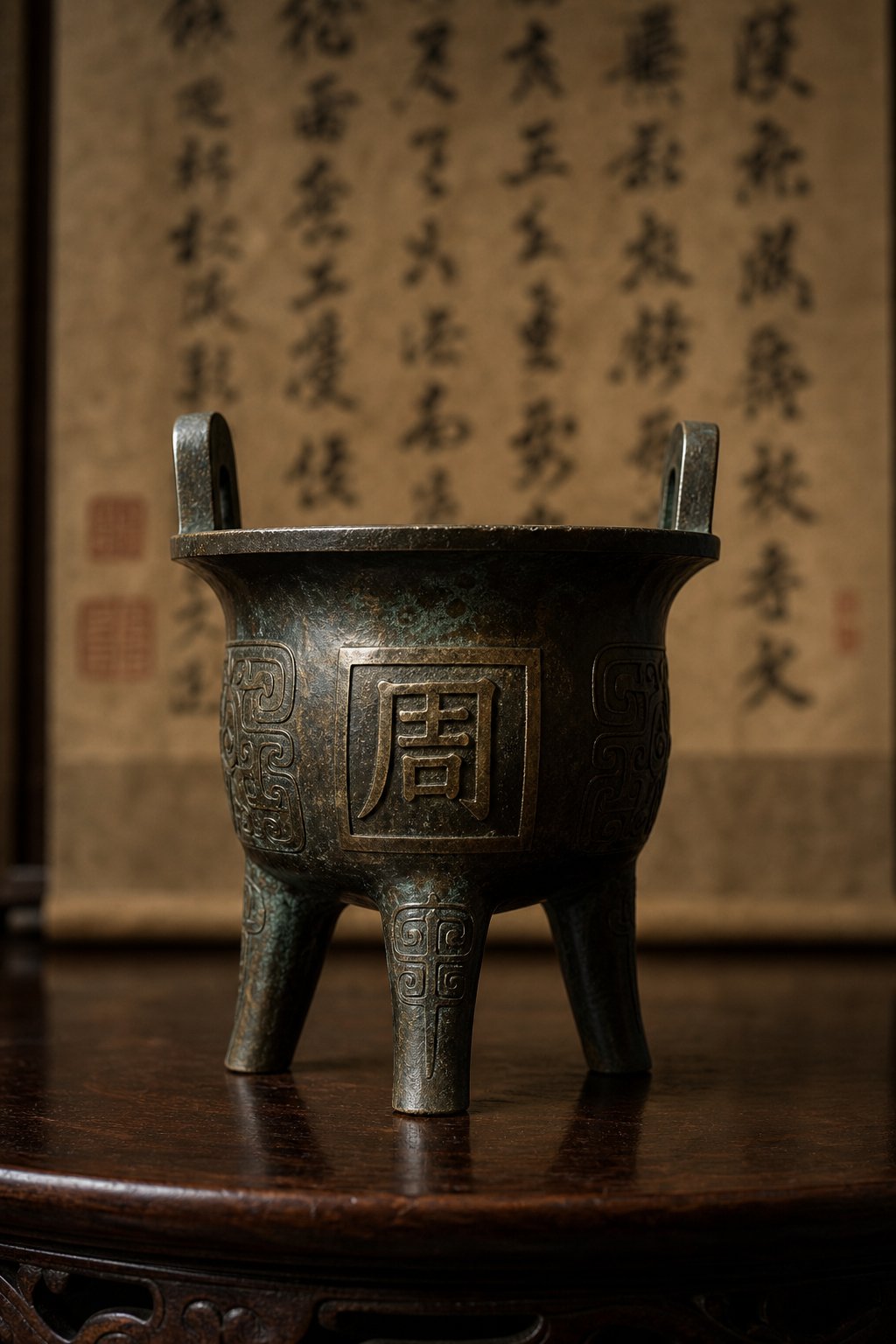
The character 周 itself offers a clue to the zhou meaning embedded in this surname. At its core, 周 conveys the idea of completeness, thoroughness, and cyclical wholeness. It also simply means "around" or "all-encompassing." This semantic richness made it a fitting name for the Zhou Dynasty (1046 BC - 256 BC), the longest-lasting dynasty in Chinese history and the era that produced Confucianism, Taoism, and the concept of the Mandate of Heaven.
Few surnames in any culture carry the dual identity of being both a family name and a dynasty name. The Zhou surname is inseparable from the civilization it helped build.
What makes the zhou surname origin particularly fascinating is its multiplicity. Most Chinese surnames trace back to a single ancestor or a single event. Zhou does not. Historical records document at least four distinct origin branches: royal descendants of the Zhou Dynasty who originally bore the Ji surname, earlier pre-dynastic figures, non-Han peoples who adopted the name during periods of cultural integration, and families who took the name from geographic locations. Each branch has its own story, its own migration pattern, and its own place in the broader tapestry of Chinese genealogy.
Understanding where the character 周 came from, how it evolved across thousands of years of written Chinese, and why it looks the way it does today requires a closer look at the ancient script forms that preceded the modern character.
The Character 周 and Its Ancient Evolution
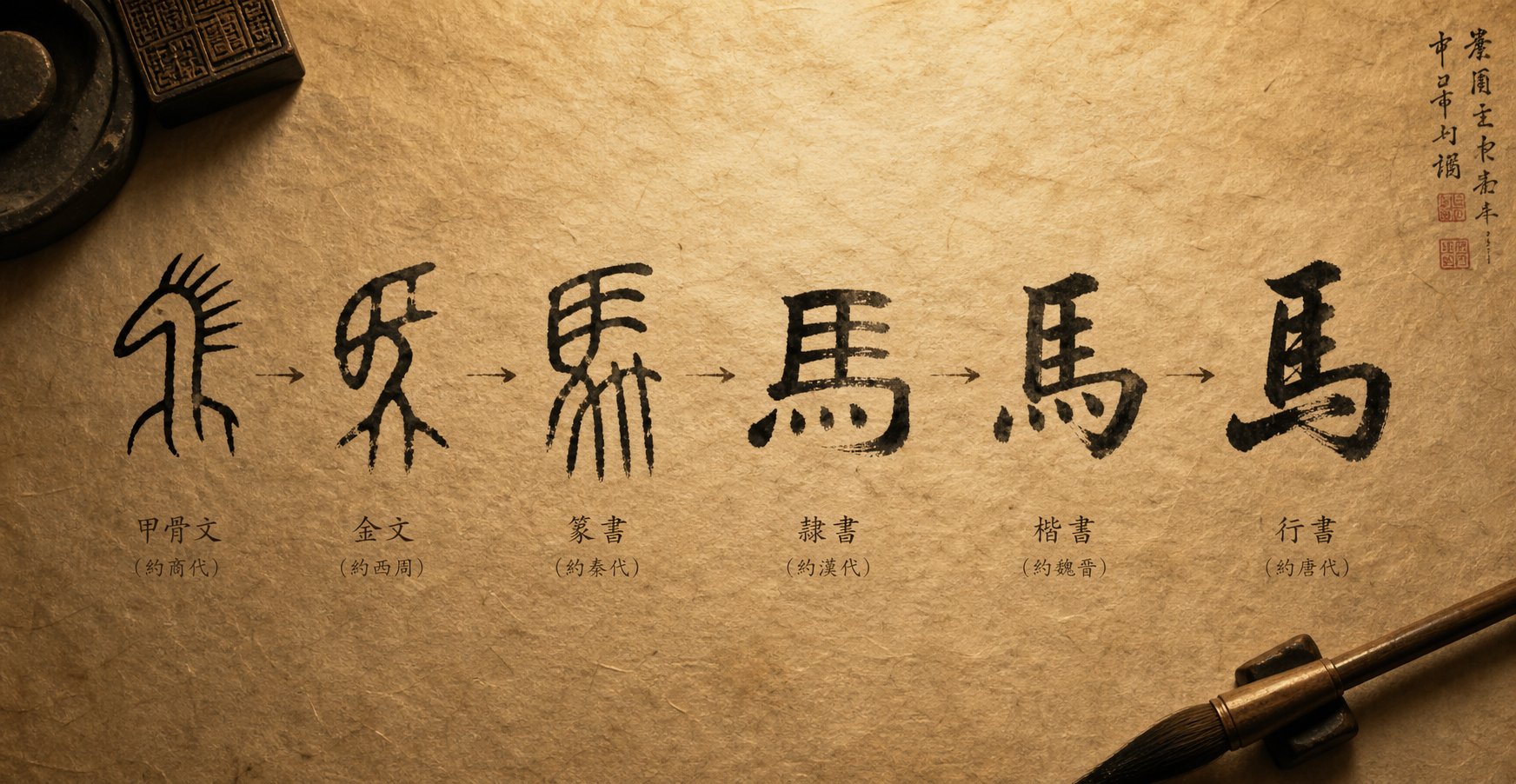
Every Chinese surname begins as a character, and every character has a visual history stretching back millennia. The zhou name meaning is locked inside the strokes of 周 itself, a char in chinese writing that has transformed dramatically since its earliest known appearance on oracle bones over three thousand years ago.
From Oracle Bones to Modern Script
The character 周 in its oldest form depicted a carved jade object, dense with intricate patterns. Over centuries, scribes reshaped it to suit new writing tools and surfaces. Here is how the character evolved across major script periods:
- Oracle bone script (~1250-1000 BC): A pictograph showing a carved jade piece with detailed markings, representing density and thoroughness.
- Bronze script (~1000 BC, Early Western Zhou): The form became more structured as it was cast into ritual vessels, with clearer internal patterning.
- Seal script (~100 AD, as recorded in the Shuowen dictionary): The components solidified into a more standardized shape, recognizable as a precursor to the modern form.
- Clerical script (Eastern Han dynasty, 25-220 AD): Angular strokes replaced curves, making the character faster to write with a brush.
- Regular script (modern): The form used today, with eight strokes arranged in the familiar square frame.
This progression from pictograph to abstract symbol mirrors the journey of hundreds of characters in the Chinese writing system, but few carry as much historical weight as this particular char in chinese culture.
The Semantic Meaning Behind the Character 周
What does zhou in chinese actually convey? The Shuowen Jiezi, China's earliest comprehensive dictionary, defines 周 as "mi" (密), meaning dense, thorough, or complete. The traditional analysis breaks the character into components suggesting all-encompassing coverage. The 口 (mouth) element was added later when 周 began functioning as a place name, indicating the character was being used phonetically rather than for its original meaning of carved jade.
This sense of completeness and thoroughness made 周 an ideal name for the dynasty that sought to bring order and ritual propriety to all of China. The meaning of zhou, encompassing cycles, wholeness, and circumference, gave the royal house a name that projected universal authority. When the dynasty fell, descendants who adopted Zhou as their surname inherited all of that semantic richness.
Distinguishing 周 from Homophone Surnames
When romanized, Zhou can create confusion because Mandarin has several characters pronounced "zhou" that occasionally function as surnames. The character 洲 (meaning continent or islet) and 舟 (meaning boat) share the same pinyin spelling. In English-language records, a person surnamed 洲 or 舟 might appear identical to someone surnamed 周. However, these are entirely different lineages with unrelated origins. The vast majority of people whose romanized surname is Zhou, Chow, Chou, or Chu trace back to 周, the character rooted in completeness and dynastic legacy, not to its rarer homophones.
The character's journey from carved jade to dynasty name to family name raises a natural question: who were the first people to actually bear 周 as a surname, and how did a royal house's identity become a personal one?
The Royal Dynasty Connection and the Ji Surname
The primary and best-documented zhou surname origin traces directly to the royal house of the Zhou Dynasty of China. These were not minor nobles or distant relatives of power. They were the ruling family itself, originally surnamed Ji (姬), one of the most ancient clan names in Chinese civilization. Their story begins not with politics or warfare, but with agriculture and a miraculous birth.
Hou Ji and the Legendary Founding of the Zhou People
Every great lineage needs a founding myth, and the Zhou people had one of the most vivid in Chinese tradition. Their legendary ancestor was Hou Ji (后稷), the "Lord of Millet," whose personal name was Qi (弃), meaning "the discarded one." According to the Records of the Grand Historian and the family hymns in the Classic of Poetry, his mother Jiang Yuan was the principal consort of Emperor Di Ku. She became pregnant after stepping on the footprint of a giant, a detail scholars interpret as a totemic origin myth. Because of this inauspicious conception, the baby was abandoned at birth, yet survived miraculously, and was eventually taken back and raised by his mother.
Even as a child, Qi showed an unusual passion for farming. He grew up to become a master of agriculture, and Emperor Yao appointed him Minister of Agriculture, tasking him with supervising the cultivation of millet across the land. It was at this point that he received the ancestral surname Ji (姬) and was invested with the territory of Tai. His descendants continued his agricultural work and gradually built a community in the western regions of what is now Shaanxi province.
The place that gave the Zhou dynasty its name was Zhouyuan (周原), the "Plain of Zhou," where Hou Ji's descendants settled and cultivated the land. Generations later, a leader named Gu Gong Dan Fu, fleeing attacks from nomadic Rong and Di tribes, migrated his people from the territory of Bin to the foot of Mount Qi. There he built a fortified town, established a government with five ministers, and laid the institutional foundations of what would become a dynasty. He is posthumously known as Zhou Taiwang, the "Great Ancestral King of Zhou."
From the Ji Surname to the Zhou Surname
For the entire duration of the Zhou Dynasty, from its founding around 1046 BC through its final collapse in 256 BC, the royal family bore the surname Ji. King Wen (Ji Chang) and King Wu (Ji Fa) conquered the Shang Dynasty and established nearly 800 years of Zhou rule. Thirty-nine Ji-surnamed kings governed China during this period, while dozens of Ji-surnamed lords ruled vassal states across the realm.
So when did Ji become Zhou? The transition happened after the dynasty fell.
In 256 BC, the Qin state conquered the last Zhou territories. Ji Yong, a descendant of King Ping of Zhou living in Rufen, changed his surname to Zhou to commemorate the merits and virtues of his ancestors. The descendants of the final Zhou king likewise adopted Zhou as their family name after the dynasty's destruction.
This was not a casual decision. By taking the dynastic name as a surname, these former royals preserved their identity and lineage in the only way still available to them. They could no longer rule as the house of Ji, but they could carry the Zhou name forward as a permanent marker of their heritage. The region of Runan became the earliest stronghold of the Zhou surname, and genealogical records identify it as the ancestral homeland for many Zhou lineage branches that spread outward in later centuries.
Duke Zhou and the Royal Lineage Branch
Among all the figures associated with the Zhou Dynasty, few carry as much cultural weight as Duke Zhou (周公), known in older romanization as the Duke of Chou. He was the brother of King Wu and served as regent for the young King Cheng after Wu's death. Duke Zhou is credited with consolidating the feudal system, composing ritual music, and establishing the governmental principles that Confucius would later idealize as the golden age of Chinese governance.
His son Bo Qin was enfeoffed as ruler of the state of Lu, which became the homeland of Confucius centuries later. The descendants of Duke Zhou formed one of the most prominent Zhou lineage branches, and their genealogical records are among the best preserved in Chinese history. When people today trace their Zhou ancestry back to the royal line, many identify specifically with the Duke Zhou branch rather than with the broader royal house.
Geographically, the original heartland of these royal-descended Zhou families centered on two regions. The Wei River valley in Shaanxi, where the pre-dynastic Zhou people built their power base around Qishan and the Zhouyuan plain, represents the oldest ancestral territory. Henan province, particularly the Runan area, became the secondary center after the dynasty's fall, as displaced royal descendants settled there and established the surname. Archaeological evidence confirms that the Zhou people lived in the Wei River valley in southern Shaanxi before their eastward expansion, and these two provinces remain significant in Zhou genealogical traditions today.
The royal Ji-to-Zhou transition accounts for the largest and most prestigious branch of the surname's family tree. But it is far from the only branch. Across different dynasties, entirely separate groups of people came to bear the Zhou name through mechanisms that had nothing to do with royal blood.
Multiple Origin Branches Beyond the Royal Line
Royal blood accounts for the most celebrated branch of the Zhou family tree, but it does not account for all of it. Across two thousand years of Chinese history, entirely unrelated groups adopted the Zhou surname through political reform, ethnic integration, imperial decree, and geographic association. These non-royal branches are often overlooked in popular accounts, yet they represent a significant portion of the zhou chinese population today.
How many distinct origin paths actually exist? Historical records document at least six, each arising through a different mechanism:
- The ancient Zhou state: Predating the dynasty itself, ministers of the Yellow Emperor named Zhou Chang and Zhou Shu belonged to an early Zhou tribe. Their descendants carried the name forward independently of the later royal line.
- Royal Ji-surname descendants: The primary branch discussed earlier, where members of the fallen Zhou Dynasty adopted Zhou as their surname after 256 BC.
- Xianbei adoption during the Northern Wei: The Tuoba clan's sinicization reforms converted Xianbei tribal names into Chinese surnames, creating a new Zhou lineage from non-Han peoples.
- Manchu banner families during the Qing: Families from Jianzhou and other Jurchen-Manchu communities adopted Zhou when transitioning to Chinese-style single-character surnames.
- Name taboo conversions: Political circumstances during the Tang Dynasty forced Ji-surnamed families to become Zhou, adding new members to the surname pool.
- Geographic place-name origins: Families living in areas named Zhou, particularly around Zhouyuan in Shaanxi, took the place name as their surname.
Xianbei and Manchu Adoptions of the Zhou Name
The most historically significant non-royal origin branch emerged during the Northern Wei Dynasty (386-535 AD). The Xianbei were a nomadic confederation that conquered northern China and established the Northern Wei. Under Emperor Xiaowen's sweeping sinicization reforms in the late 5th century, the imperial court decreed that Xianbei tribal names be replaced with Chinese surnames. The royal Tuoba clan itself became Yuan, and dozens of other clans received new Chinese identities.
Among these was the Pu clan (普氏), identified in the Book of Wei as the lineage of Emperor Xian's second elder brother. This entire clan branch was reassigned the surname Zhou. The conversion was not optional. It was state policy, backed by imperial authority, and it applied not just to the clan leader but to all people under his governance. A descendant of this Xianbei-to-Zhou conversion was Zhou Yao (c. 507-590), a prominent general who served across the Wei, Zhou, and Sui dynasties, rising to the rank of Pillar of State.
A parallel process occurred over a thousand years later during the Qing Dynasty (1644-1912). Manchu banner families from the Jianzhou Jurchen communities and other northeastern groups gradually adopted Chinese-style surnames. Families with multi-syllable Manchu names like Zhoushe and others compressed their identities into the single character 周. This was part of a broader pattern where Manchu, Mongol, and other ethnic groups assimilated into Han Chinese naming conventions, particularly after the mid-Qing period when cultural boundaries softened.
The Tang Dynasty also saw conversions from other ethnic groups. Historical records note that during the Shangyuan era, minorities bearing the three-character surname "Jizuoshi" changed it to Zhou. Similarly, the compound surname "Helu" from the Daibei region in northeastern Shanxi was converted to Zhou during this period.
Name Taboos and Forced Surname Changes
Imagine being forced to abandon your family name because it shared a character with the emperor's personal name. This was the reality of the Chinese naming taboo system (避讳), and it directly shaped the Zhou surname's population.
The most significant taboo-driven conversion happened during the Tang Dynasty. Emperor Xuanzong's personal name was Li Longji (李隆基). The character Ji (姬), the ancient royal surname of the Zhou Dynasty, was considered too close in sound and association to the emperor's name. During the Xiantian and Kaiyuan eras, families still bearing the Ji surname were compelled to change it. Many chose Zhou, the name of the dynasty their Ji ancestors had founded. This was a logical choice, but it created a new wave of Zhou-surnamed families whose conversion date was the 8th century AD rather than the 3rd century BC.
Taboo-driven changes also worked in reverse. During certain periods, families surnamed Zhou changed to other names to avoid political persecution or association with fallen regimes. In the late Yuan Dynasty, for example, the Su surname in Quanzhou, Fujian, changed to Zhou when fleeing government persecution over a grain tax dispute. And in the early Qing, descendants of the Ming Dynasty's Prince of Ji in Changsha fled to the Zhou family in Ningxiang and adopted the Zhou surname to escape retribution.
Geographic Place-Name Origins
The simplest origin mechanism was geographic. Families living in places named Zhou sometimes adopted the place name as their surname. The most notable example is Zhouyuan (周原), the fertile plain at the foot of Mount Qi in Shaanxi where the pre-dynastic Zhou people built their agricultural community. Families in this region who were not necessarily of royal descent but who identified with the locality took Zhou as their name.
Other geographic associations include areas like Jing Zhou (荆州), the ancient commandery in present-day Hubei, where Zhou families established prominent local clans during the Han and later dynasties. The commandery system of the Qin and Han periods gave surnames the opportunity to form regional concentrations, and the Zhou name took root in multiple commanderies across northern and central China. Historical records identify at least nineteen distinct commandery origins (郡望) for the Zhou surname, from Runan in Henan to Lujiang in Anhui to Jiangling in Hubei, each representing a localized branch with its own genealogical traditions.
These multiple origin branches mean that two people surnamed Zhou today may share no common ancestor at all. Their families may have entered the surname through entirely different doors, separated by centuries and thousands of miles. Tracing which branch a particular family belongs to requires understanding not just origins but migration patterns, and those patterns shifted dramatically across each major dynasty.

How the Zhou Surname Spread Across Dynasties
A surname does not stay in one place for three thousand years. People move, borders shift, wars displace entire populations, and economic opportunity pulls families toward new frontiers. The zhou family name followed a remarkably consistent geographic trajectory across Chinese history: westward origins, eastward expansion, then a dramatic push southward, and finally outward to the rest of the world. Each dynasty left its mark on where Zhous lived and how many of them there were.
From the Wei River Valley to All of China
The earliest concentration of Zhou-surnamed families sat in the Wei River valley of Shaanxi province, the ancestral homeland of the pre-dynastic Zhou people. During the Western Zhou period (1046-771 BC), the royal capital at Hao (near modern Xi'an) served as the political center, and Ji-surnamed nobles governed vassal states scattered across northern China. When the capital moved east to Luoyang in 770 BC, marking the start of the Eastern Zhou, the royal family's geographic influence shifted with it. Henan became the new center of gravity.
After the dynasty collapsed in 256 BC and descendants adopted Zhou as their surname, the Runan region of Henan emerged as the surname's genealogical heartland. During the Qin and Han dynasties, Zhou families consolidated in this area while gradually spreading into neighboring provinces. The general pattern of migration during this era, as historical records describe it, moved from west to east and from north to south.
By the Tang Dynasty (618-907 AD), the Zhou surname had achieved nationwide prominence. Tang-era census records and genealogical compilations show Zhou families established in virtually every major prefecture across zhou china. The Tang also added new members to the surname pool through the name-taboo conversions discussed earlier, swelling the population further. By this point, the surname had been among the most common in China for several centuries.
The Great Southward Migrations
The most transformative period for Zhou surname distribution came during the Song Dynasty (960-1279 AD). When Jurchen armies captured the Northern Song capital of Kaifeng in 1127 during the Jingkang Incident, millions of northern Chinese fled south across the Yangtze River. This mass displacement, one of the largest internal migrations in Chinese history, reshaped the demographic map permanently.
Zhou families from Henan, Shandong, and Anhui relocated to Jiangxi, Fujian, Guangdong, and Zhejiang. Southern provinces that had previously held small Zhou populations suddenly became major centers. Hunan, which today has the highest concentration of Zhous in all of China, received much of its Zhou population during this southward wave and the subsequent Ming-era migrations that followed.
The Ming Dynasty (1368-1644) saw further dispersal as government-sponsored resettlement programs moved families from densely populated Jiangxi into Hunan, Hubei, and Sichuan. The Qing Dynasty continued this pattern, with Zhou families pushing into frontier regions like Yunnan, Guizhou, and Taiwan. By the end of the imperial era, Zhous could be found in every province of China.
Here is a simplified timeline of the major migration periods that shaped where Zhou families live today:
| Period | Approximate Dates | Origin Regions | Destination Regions | Key Driver |
|---|---|---|---|---|
| Western Zhou | 1046-771 BC | Wei River valley, Shaanxi | Northern China vassal states | Feudal enfeoffment |
| Eastern Zhou / Qin | 770-206 BC | Shaanxi, Luoyang area | Henan (Runan), Shandong | Capital relocation, dynastic collapse |
| Han Dynasty | 206 BC - 220 AD | Henan, Shaanxi | Anhui, Jiangsu, Hubei | Administrative expansion |
| Tang Dynasty | 618-907 AD | Northern and central China | Nationwide distribution | Economic growth, taboo conversions |
| Song Dynasty (Jingkang) | 1127-1279 AD | Henan, Shandong, Anhui | Jiangxi, Fujian, Guangdong, Zhejiang | Jurchen invasion, mass flight south |
| Ming Dynasty | 1368-1644 AD | Jiangxi, Anhui | Hunan, Hubei, Sichuan | Government resettlement programs |
| Qing Dynasty | 1644-1912 AD | Southern coastal provinces | Taiwan, Yunnan, Southeast Asia | Frontier settlement, overseas trade |
| Modern Era | 1850s onward | Guangdong, Fujian | Southeast Asia, Americas, Oceania | Economic migration, political upheaval |
Zhou Families in the Global Diaspora
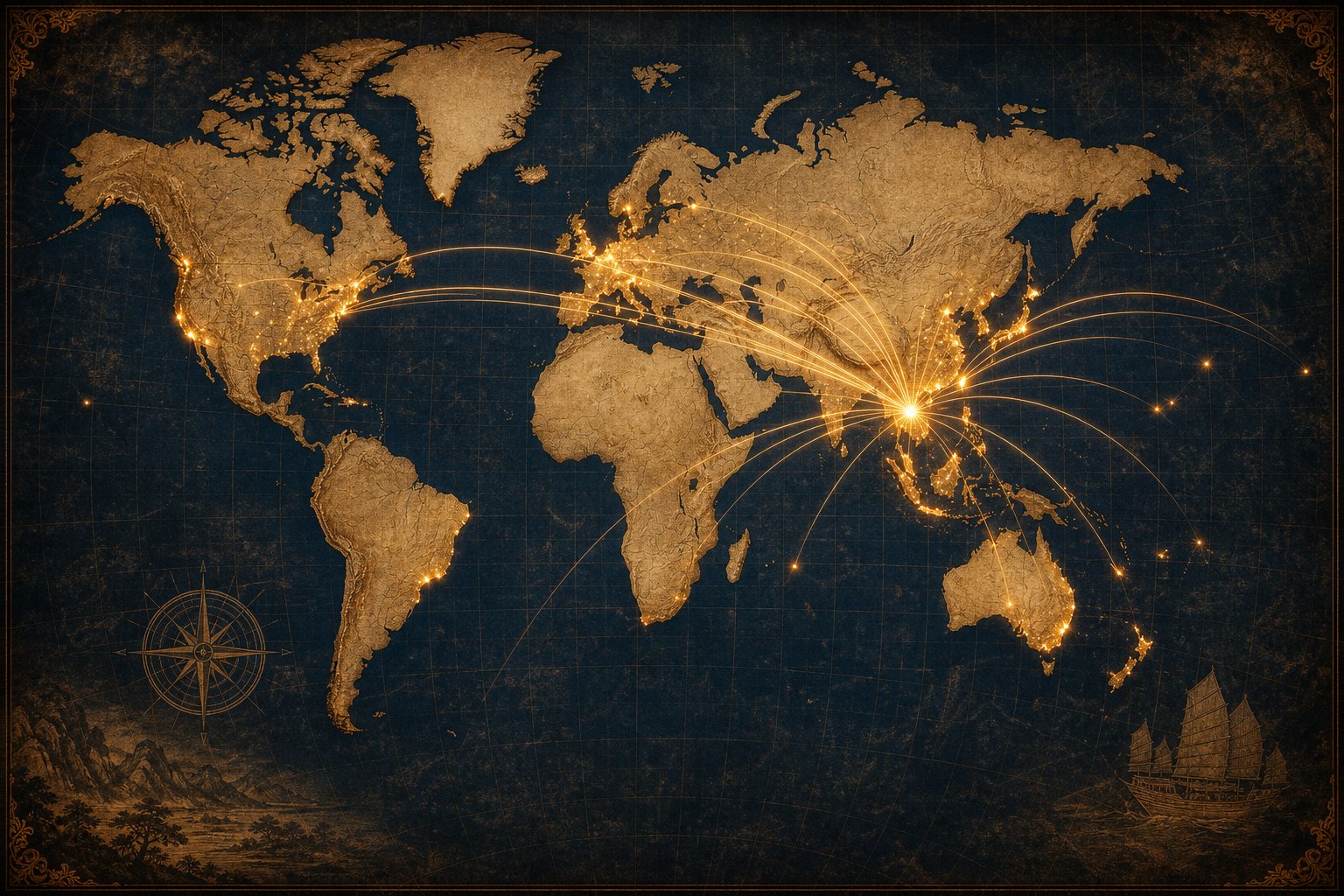
The overseas story of the Zhous begins primarily in the Qing Dynasty and accelerates through the 19th and 20th centuries. Most Zhous who settled overseas in the past 400 years came from Guangdong and Fujian, the two southern coastal provinces with the strongest traditions of maritime emigration. Hokkien-speaking Zhous from Fujian established communities across Southeast Asia, particularly in Malaysia, Singapore, Indonesia, and the Philippines. The Chew Clan Jetty in Penang, Malaysia, a UNESCO World Heritage site, stands as physical proof of this migration. The Zhou clan members who built it originated from Tong'An in Xiamen, Fujian.
Cantonese-speaking Zhous from Guangdong followed different routes, heading to Hong Kong, North America, Australia, and the Caribbean during the gold rush era and railroad-building period of the mid-1800s. These families typically romanized their name as Chow or Chau, creating the spelling variants that persist in diaspora communities today.
Tracking these migrations across so many centuries and so many branches would be impossible without documentation. This is where the zupu (族谱) tradition becomes essential. Zupus are privately compiled clan genealogy books that record family trees, migration histories, biographies of notable ancestors, and generation poems used for naming children. Some trace back hundreds of generations. Over 400 Zhou family zupus have been cataloged in modern databases, with records spanning China, Singapore, Malaysia, Thailand, Indonesia, and beyond.
The zupu tradition dates back over 2,000 years, initially reserved for royal and aristocratic families. By the late Ming and early Qing dynasties, local clans across China were compiling their own records. A 1616 editor's note in the Lanfang Zhou Zupu captures the challenge: the compiler Zhou Mengri lamented how difficult it was to trace every branch as "one multiplied to ten, ten to one hundred, one hundred to one thousand." Many zupus were destroyed during the Cultural Revolution, but families hid copies or shipped them to relatives abroad. The 1980s saw a revival, with elders reconstructing entire genealogies from memory and scattered notes.
For Zhous today, these records offer something remarkable: a paper trail connecting a family in Penang or San Francisco back through specific villages, specific ancestors, and specific migration dates to the broader story of how one surname traveled from a river valley in Shaanxi to every corner of the globe. The challenge, of course, is that a surname spelled "Chow" in Hong Kong, "Chou" in Taipei, and "Chu" in Ho Chi Minh City may all point back to the same character 周, and understanding why requires untangling the romanization systems that gave one name so many faces.
Romanization Variants from Chow to Chou to Chu
One Chinese character. One surname origin. Yet when you look at English-language records, you will find it spelled as Zhou, Chow, Chou, Chu, Chew, Chiu, Chau, Jau, Joo, and more. This is not a case of misspelling or inconsistency. Each variant reflects a specific dialect pronunciation, a particular romanization system, or a geographic community's linguistic identity. Understanding these spellings is the key to recognizing that millions of people across the globe share the same ancestral character: 周.
Mandarin Romanizations and Their Systems
In mainland China, the standard romanization is Zhou, produced by the Hanyu Pinyin system adopted in 1958. The "zh" represents a retroflex consonant and the "ou" a diphthong, combining to approximate the Mandarin pronunciation. Before Pinyin became the international standard, Taiwan and much of the Western academic world used the Wade-Giles system, which renders the same sound as Chou. This is why Taiwanese figures like Jay Chou and Chou Tzu-yu spell their surname differently from mainland Chinese counterparts like Zhou Enlai or Zhou Guanyu.
The chou last name origin is identical to the Zhou last name origin. They are the same character, the same family, and the same lineage. The only difference is which romanization system was in use when a family registered its English-language name. Other less common Mandarin-based spellings include Jou, Jhou, and Djou, which appear in older or non-standard transliteration schemes occasionally used in diplomatic and academic contexts.
Cantonese and Southern Dialect Variants
Southern Chinese dialects produce dramatically different pronunciations of 周, and these differences show up directly in surnames across Hong Kong, Macau, and Guangdong-origin diaspora communities. In Cantonese, 周 is pronounced roughly as "jau" (Jyutping: Zau1), which gets romanized as Chow, Chau, or Jau depending on the era and system used.
The chow last name is overwhelmingly Cantonese in origin. Hong Kong actors like Chow Yun-fat and Stephen Chow carry this spelling because Hong Kong's romanization conventions reflect Cantonese pronunciation. The chow surname was the 72nd most common Asian surname in the 2000 U.S. Census, with nearly nine-tenths of bearers identifying as Asian. Similarly, the chau last name appears frequently among Hong Kong and Macau families. The surname Chau traces to the same Cantonese pronunciation of 周, just rendered through a slightly different transliteration convention. You will notice figures like Osric Chau and Pakho Chau carrying this variant.
In Hokkien (Southern Min) and Teochew dialects spoken across Fujian, eastern Guangdong, and much of Southeast Asia, 周 is pronounced closer to "chiu" or "tsiu." This produces the spellings Chew, Chiu, and sometimes Chu. The famous Chew Clan Jetty in Penang, Malaysia, is named after Zhou families from Tong'An, Xiamen, who romanized their name according to Hokkien pronunciation. The chu last name origin in Southeast Asian Chinese communities frequently points back to this same Hokkien or Teochew rendering of 周.
Southeast Asian and International Spellings
Beyond China and its immediate neighbors, the Zhou surname takes on additional forms shaped by local languages and colonial-era transliteration practices. In Indonesia, Dutch-influenced romanization produced spellings like Ciu, Djioe, Tjio, Tjioe, and Tjoe. Many Chinese Indonesian families later adopted entirely new surnames under assimilation policies, making the connection to 周 invisible without genealogical research.
In Vietnam, the cognate surname is Chau (Châu), written with the same Chinese character 周 but pronounced according to Sino-Vietnamese phonology. The Korean cognate is Ju or Joo (주), again derived from the same character. These are not borrowed names but direct linguistic descendants of the original Chinese surname, carried into neighboring cultures through centuries of cultural exchange and migration.
Here is a comparative overview connecting each major spelling to its dialect, geographic concentration, and romanization system:
| Spelling | Dialect / Language | Geographic Concentration | Romanization System |
|---|---|---|---|
| Zhou | Mandarin | Mainland China | Hanyu Pinyin |
| Chou | Mandarin | Taiwan | Wade-Giles |
| Chow | Cantonese | Hong Kong, North America, Australia | Hong Kong Government / informal |
| Chau | Cantonese | Hong Kong, Macau | Hong Kong Government / informal |
| Chew | Hokkien (Min Nan) | Malaysia, Singapore, Penang | Local Hokkien romanization |
| Chiu | Hokkien / Teochew | Taiwan, Southeast Asia | Pe̍h-oe-ji / local convention |
| Chu | Hokkien / Teochew | Southeast Asia, Vietnam | Local convention |
| Châu | Vietnamese (Sino-Vietnamese) | Vietnam | Vietnamese orthography |
| Ju / Joo | Korean | South Korea | Revised Romanization / McCune-Reischauer |
| Tjio / Djioe | Hokkien (via Dutch) | Indonesia | Dutch colonial romanization |
| Tseu | Wu (Shanghainese) | Jiangsu, Zhejiang | Local Wu romanization |
What ties all of these spellings together is a single fact: they all represent the character 周, and they all trace back to the same zhou surname origin story. A person named Chow in San Francisco, someone with the surname Chau in London, and a family called Chew in Penang may discover through genealogical research that their ancestors left the same village in Guangdong or Fujian within a generation of each other. The romanization is different because the dialect is different, but the character on the ancestral tablet is the same.
Recognizing these connections is one thing. Actually saying the name correctly is another challenge entirely, especially for English speakers encountering the Mandarin "zh" sound for the first time.
How to Pronounce Zhou Correctly
You can trace the romanization variants, map the migration routes, and identify the origin branch, but at some point you need to actually say the name out loud. For English speakers, the zhou pronunciation trips people up more than almost any other common Chinese surname. The spelling looks unfamiliar, the "zh" combination has no direct English equivalent, and the vowel is not what most people guess. So how do you pronounce Zhou?
The short answer: it sounds close to the English name "Joe," but with a slightly different tongue position at the start. Linguistics professor Minglang Zhou at the University of Maryland describes his own surname as "pronounced closer to the common American name, Joe." That comparison gets you 90% of the way there. The remaining 10% is about the retroflex initial.
Pronouncing the Mandarin Zh- Initial
The "zh" in Pinyin is a retroflex consonant. To produce it, curl the tip of your tongue back toward the roof of your mouth, then release it with a brief stop, similar to the "j" in "jerk" but with that curled tongue position. There is no puff of air (linguists call this "unaspirated"), which distinguishes it from "ch" in Pinyin.
The final "-ou" is more straightforward. It sounds like the "o" in "cold" or the "oa" in "boat," a smooth glide from an open "o" toward a closed "u." Put the two together and you get a sound that lands somewhere between "Joe" and "djo," with the tongue curled back at the start.
Here are the most common mispronunciations and how to correct them:
- "Zoo" — This treats "zh" as a "z" sound. The tongue should be curled back, not pressed against the teeth.
- "Zoh" (rhyming with "doh") — This gets the initial wrong and misses the "-ou" glide. The vowel should end with lips slightly rounded.
- "Chow" — This is actually the Cantonese pronunciation, not Mandarin. In Mandarin, the vowel is "-ou" (like "go"), not "-ow" (like "cow").
- "Zhoo" (rhyming with "shoe") — The vowel is "-ou," not "-u." Think "Joe," not "shoe."
If you want a quick rule of thumb for the pronunciation of zhou: say "Joe" but start with your tongue curled slightly back. That is close enough to be respectful and recognizable in conversation. The pronunciation zhou uses in Mandarin carries a first tone (high and level), so the pitch stays flat and steady rather than rising or falling.
Regional Dialect Pronunciations
Mandarin is only one way to zhou pronounce this character. Across China's dialect regions, 周 sounds dramatically different, which is exactly why so many romanization variants exist.
In Cantonese, the standard pronunciation is "jau" (Jyutping: zau1), with a high-level tone. This sounds roughly like "joe" but with a more open vowel, closer to "jow" as in "jowl" without the "l." Hong Kong speakers saying their own surname will produce something quite different from what a Beijing speaker says, even though both are reading the same character.
In Hokkien (Southern Min), the pronunciation shifts further to "chiu" or "tsiu," depending on the sub-dialect. Teochew speakers produce a similar sound. These southern pronunciations explain why Malaysian and Singaporean families spell the name as Chew or Chiu rather than Zhou.
Many English speakers first encounter "Zhou" not as a surname but as a dynasty name in history class. The pronunciation is identical. Whether you are talking about the Zhou Dynasty, Premier Zhou Enlai, or a classmate named Zhou, the sound is the same: that retroflex "zh" followed by the "-ou" glide, in first tone. Getting comfortable with how to say zhou in one context means you have it for all contexts.
Cultural Legacy and the Weight of the Zhou Name
Knowing how to say a surname is one thing. Understanding what it represents culturally is something else entirely. The Zhou surname does not just identify a family line. It carries the intellectual DNA of an entire civilization. The Zhou Dynasty (1046-256 BC) was the era that gave China its philosophical foundations, its ritual traditions, and its political theory. Bearing this name means inheriting a cultural legacy that shaped East Asian thought for over two millennia.
The Zhou Dynasty's Philosophical Legacy
What makes zhou civilization unique among Chinese dynasties is not military conquest or territorial expansion. It is ideas. The roughly 800 years of Zhou rule, particularly the Eastern Zhou period, produced what historians call the "Hundred Schools of Thought," a philosophical explosion unmatched in Chinese history. Zhou culture gave the world systems of thought that billions of people still engage with today.
Here are the key cultural and intellectual contributions that emerged during the Zhou period and give the surname its prestige:
- Confucianism: Confucius (551-479 BC) developed his ethical philosophy during the late Zhou, drawing heavily on idealized Zhou-era institutions and rituals as his model for good governance.
- Daoism: Laozi, traditionally dated to the 6th century BC, composed the Dao De Jing during the Zhou period, establishing a philosophical tradition centered on naturalness and non-action.
- The I Ching (Yijing): The Book of Changes, one of the oldest Chinese texts still in use, was compiled and expanded during the Zhou Dynasty. King Wen of Zhou is traditionally credited with writing its judgments.
- The Mandate of Heaven (Tianming): The Zhou rulers introduced this political concept to justify their overthrow of the Shang, establishing the idea that heaven grants authority to virtuous rulers and withdraws it from corrupt ones.
- Ritual music and the feudal system: Duke Zhou codified the ritual and musical traditions that defined Chinese court culture for centuries.
- The Chinese writing system: While originating in the Shang period, Chinese writing matured into a functional administrative tool during the Zhou, as noted by Britannica.
Religion in zhou dynasty society was not a separate institution but woven into governance itself. The concept of Heaven (Tian) as a moral force, ancestor worship as civic duty, and ritual propriety as the foundation of social order all emerged from Zhou-era religious thought. This blend of zhou religion and statecraft became the template for Chinese imperial governance for the next two thousand years.
Notable Bearers of the Zhou Name
The surname's cultural weight is not purely historical. Across centuries, people named Zhou have shaped politics, literature, science, and popular culture. A few stand out:
Zhou Enlai (1898-1976) served as the first Premier of the People's Republic of China for 26 years, becoming one of the most recognized Chinese political figures of the 20th century. Lu Xun, born Zhou Shuren (1881-1936), is widely considered the father of modern Chinese literature. Zhou Youguang (1906-2017) created the Pinyin romanization system that made Chinese accessible to the world. In contemporary culture, Jay Chou (Zhou Jielun) became one of Asia's best-selling musicians, while Zhou Guanyu made history as the first Chinese driver in Formula 1. Jimmy Choo (Zhou Yangjie), the Malaysian-born shoe designer, built a global luxury brand. Shou Zi Chew (Zhou Shouzi), CEO of TikTok, leads one of the world's most influential technology platforms.
This range, from revolutionary premiers to pop stars to tech executives, reflects how widely the surname has dispersed across professions and geographies.
Zhou in the Hundred Family Surnames Tradition
Chinese surname studies have a long formal history, and the Zhou name occupies a distinctive position within that tradition. The Hundred Family Surnames (百家姓), a Song Dynasty text compiled around 960 AD, arranged surnames not by population but by political prestige. Its famous opening line, "Zhao Qian Sun Li" (赵钱孙李), placed the zhao surname first because Zhao was the imperial family name of the Song Dynasty. The zhao chinese imperial connection gave the last name Zhao pride of place in a text that every educated child memorized for centuries.
Zhou sits at position five in this classical ranking, immediately after the opening four. This placement reflects the surname's prestige during the Song era, when Zhou families held significant political and scholarly influence. The zhao last name leads the poem purely because of Song Dynasty politics, not because it was more common. In actual population terms, Zhou has consistently outranked Zhao across most modern surveys.
Modern census data tells a different story from the classical poem. According to China's 2010 national census, Zhou ranks 9th nationally with approximately 25.06 million people, representing 1.88% of the population. Zhao, by contrast, ranks 8th with 27.02 million. The gap between them is narrow, just 2 million people separating the two surnames. Both have maintained top-ten status since at least the Yuan Dynasty, making them among the most stable surnames in Chinese demographic history.
What separates Zhou from other top-ten surnames like Wang, Li, or Zhang is not population size but cultural resonance. No other common surname doubles as the name of a dynasty that produced the philosophical and political foundations of Chinese civilization. That dual identity, family name and civilizational marker, gives Zhou a weight that raw numbers alone cannot capture. For people researching their own connection to this name, the question becomes practical: which branch do I belong to, and how do I find out?
Tracing Your Zhou Family Roots Today
That question, which branch do I belong to, is where genealogical research begins. Whether your family spells it Zhou, Chow, or Chu, the path backward follows the same basic logic: gather what your living relatives know, locate written records, and work outward from there. The good news is that the surname Zhou has one of the richest genealogical traditions in Chinese culture. The challenge is knowing where to look and how to interpret what you find.
Using Zupu Records to Trace Your Zhou Lineage
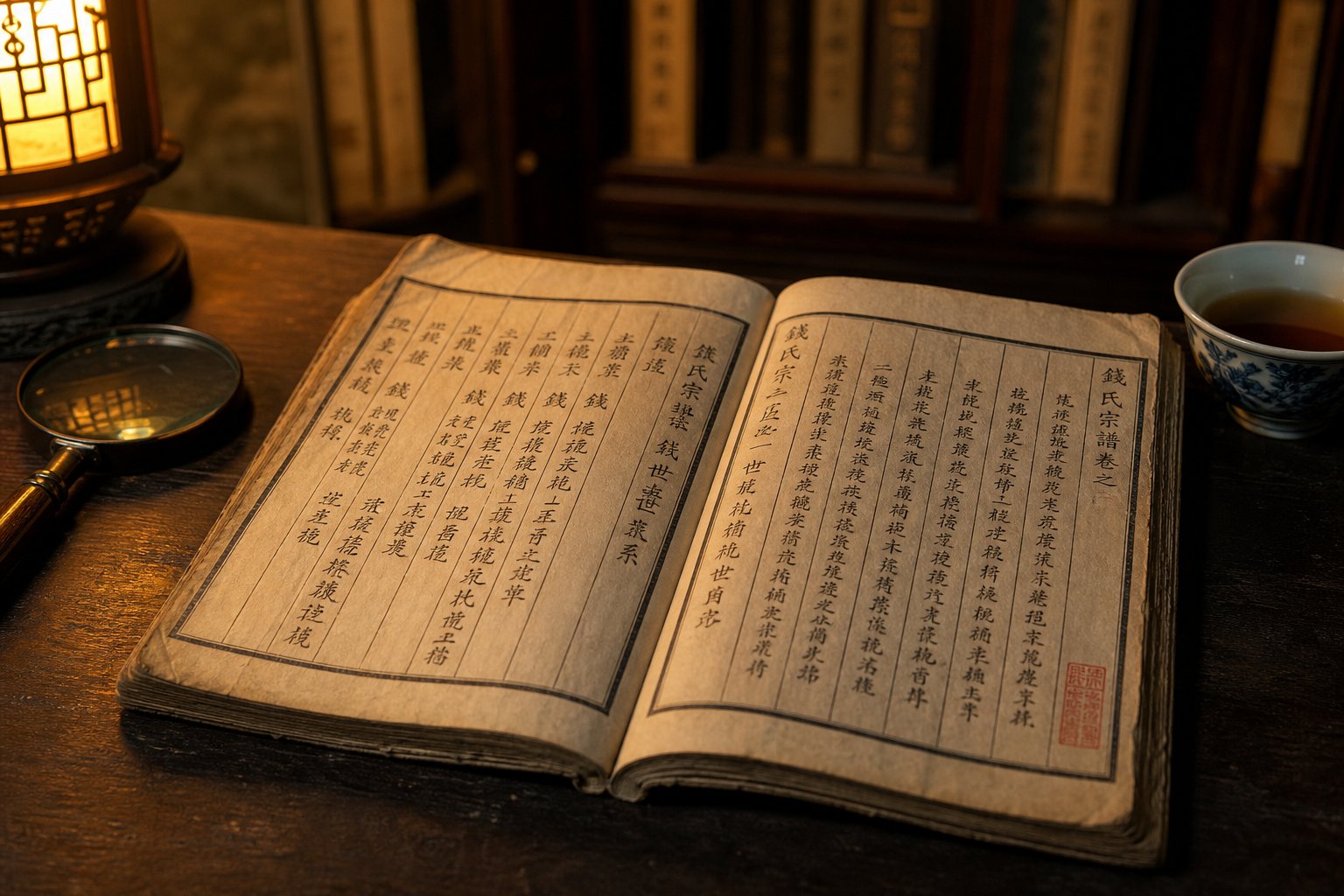
The single most valuable resource for anyone researching their zhou last name origin is the zupu (族谱), the clan genealogy book. A zupu is not just a family tree. It records one clan's generational heritage starting from a founding ancestor and continuing generation by generation, often spanning hundreds of years. Many include migration histories, ancestral portraits, cemetery maps, family rules, and generation poems that determined naming conventions across centuries.
Over 400 Zhou family zupus have been cataloged in modern databases. Some are printed multi-volume sets held in libraries; others are handwritten manuscripts kept by senior family members. The Cultural Revolution destroyed many, but copies survived with overseas relatives in Malaysia, Singapore, and the United States. Since the 1980s, families across China have been reconstructing and republishing their genealogies.
Here is a practical sequence for beginning your research into the surname zhou:
- Interview living relatives: Start with your oldest family members. Ask about ancestral villages, dialect spoken at home, and any naming patterns across generations. Even fragments like a province name or a grandparent's generation character can narrow your search dramatically.
- Identify your ancestral village: Chinese genealogy is village-based. If your family emigrated from Guangdong, Fujian, or Hunan, pinpointing the specific county or township is essential for locating relevant zupus.
- Search digitized zupu collections: FamilySearch hosts a large collection of digitized Chinese genealogies dating from 1239 to 2014. The Shanghai Library maintains another major database. Search by surname and ancestral location.
- Check for generation poems: If your family followed a generation poem (字辈), matching your generation character against known Zhou clan poems can identify your specific lineage branch and approximate generation number.
- Consider DNA testing: Genetic genealogy cannot tell you which historical branch you belong to with certainty, but Y-DNA testing (for male-line descent) can confirm or rule out connections to other Zhou families who have tested. Services like FamilyTreeDNA and 23Mofang (a Chinese platform) have growing databases of Chinese surname groups.
- Consult local gazetteers: County-level gazetteers (地方志) often record prominent local families, including their migration origins and notable members. These can supplement or substitute for a missing zupu.
Determining Your Zhou Origin Branch
With multiple unrelated origin branches producing the same last name zhou, how do you figure out which one your family belongs to? Three clues narrow it down: ancestral province, dialect group, and generation poem.
If your family's ancestral home is in Henan (particularly Runan) or Shaanxi, and your zupu traces back to the Ji surname, you likely belong to the primary royal-descent branch. Families from northeastern China whose records mention Manchu or banner affiliations probably entered the surname through Qing-era adoption. If your ancestors came from areas historically associated with Xianbei populations in Shanxi or Hebei, the Northern Wei conversion branch is a possibility.
Dialect offers another signal. A chow family name from Cantonese-speaking Guangdong has a different migration history than a chu family name from Hokkien-speaking Fujian, even though both trace to 周. The dialect your grandparents spoke at home points toward specific migration corridors and, by extension, specific zupu collections to search.
Generation poems are perhaps the most precise identifier. Each Zhou clan branch composed its own poem, and families sharing the same poem sequence are considered to share a common ancestor from a common geographic origin. If your grandfather's given name contains the character "de" (德) and your father's contains "cheng" (成), matching that sequence against published Zhou generation poems can pinpoint your branch, your ancestral village, and even your generation number within the lineage.
One important note: people sometimes confuse the surname Zhou (周) with the unrelated zhu last name (朱). The zhu last name origin traces to the imperial house of the Ming Dynasty, an entirely separate lineage with its own genealogical tradition. Similarly, Zhu (祝 or 竺) represents yet other distinct surnames. If your family records show 朱 rather than 周, your research path leads to Ming Dynasty genealogy rather than Zhou Dynasty heritage.
Connecting with Zhou Clan Associations
You do not have to do this alone. Zhou clan associations exist across China and throughout the diaspora, and many actively help members trace their roots. In Southeast Asia, organizations like the Chew (Zhou) clan associations in Penang, Singapore, and Bangkok maintain genealogical records, organize ancestral village visits, and connect members with researchers in China. Similar associations operate in North America, Australia, and Europe.
These organizations often hold copies of zupus that individual families lost during political upheavals. FamilySearch notes that even when someone says a family's zupu has been lost, copies are often preserved through distant relatives or clan members who emigrated overseas before the 1960s. Reaching out to a clan association in your ancestral dialect region is one of the most effective steps you can take.
For those just starting out, the journey can feel overwhelming. Thousands of years of history, multiple origin branches, dialect variations, and scattered records across continents make Zhou genealogy a puzzle with many pieces. But the pieces exist. Between digitized zupu collections, DNA databases, generation poem registries, and active clan networks, the tools for tracing your connection to this ancient surname have never been more accessible. The zhou surname origin story is not just history. For millions of people worldwide, it is a living, traceable family story waiting to be uncovered.
Frequently Asked Questions About the Zhou Surname Origin
1. Why is the Zhou surname spelled differently as Chow, Chou, Chu, and Chew?
These are all romanizations of the same Chinese character 周. The spelling varies based on dialect and romanization system. Zhou comes from Mandarin Pinyin, Chou from Taiwan's Wade-Giles system, Chow from Cantonese pronunciation used in Hong Kong, Chew from Hokkien dialect in Malaysia and Singapore, and Chu from Teochew or Hokkien speakers in Southeast Asia. Each reflects how 周 sounds in a specific Chinese dialect region rather than a different surname.
2. How common is the Zhou surname in China today?
Zhou ranks as the 9th or 10th most common surname in China, shared by approximately 25 million people, which represents about 1.88% of the national population. Hunan province has the highest concentration of Zhou families, followed by Jiangsu, Sichuan, and Hubei. In the classical Hundred Family Surnames poem from the Song Dynasty, Zhou holds the 5th position, reflecting its longstanding prestige.
3. Is the Zhou surname connected to the Zhou Dynasty?
Yes, the primary and most well-documented origin branch traces directly to the Zhou Dynasty royal family. The ruling house originally bore the Ji surname. After the dynasty fell in 256 BC, descendants adopted Zhou as their family name to honor their ancestral state. However, not all people surnamed Zhou descend from royalty. At least five other origin branches exist, including Xianbei and Manchu adoptions, geographic place-name origins, and name-taboo conversions during the Tang Dynasty.
4. How do you correctly pronounce the surname Zhou in Mandarin?
Zhou in Mandarin sounds close to the English name 'Joe' but with a retroflex tongue position at the start. Curl the tip of your tongue back toward the roof of your mouth for the 'zh' sound, then release it into the '-ou' vowel, which glides like the 'o' in 'cold.' The tone is first tone, meaning the pitch stays high and level. Common mistakes include saying 'zoo,' 'zoh,' or 'zhoo,' all of which use incorrect vowel sounds or tongue positions.
5. How can I trace my Zhou family ancestry and determine which origin branch I belong to?
Start by interviewing your oldest living relatives about ancestral villages, dialects spoken at home, and naming patterns across generations. Then search digitized zupu (clan genealogy) collections on platforms like FamilySearch or the Shanghai Library database. Three key clues narrow down your branch: ancestral province (Henan or Shaanxi suggests royal descent, northeastern China suggests Manchu adoption), dialect group (Cantonese, Hokkien, or Mandarin), and generation poems that match specific clan records. Zhou clan associations in Southeast Asia and worldwide also maintain genealogical records and can assist with research.