Understanding the Ancient Chinese Naming System
You're watching a Chinese historical drama. One character addresses a man as Kongming, another calls him Zhuge Liang, and a third refers to "the Crouching Dragon." Three names, one person. Sounds confusing? It gets deeper. Ancient Chinese names were not random labels stacked on top of each other. They formed a layered identity system where a single individual could carry five or more formal names across a lifetime, each one unlocked at a different stage and used by a specific circle of people.
This article breaks down every name type in that system, from birth names to posthumous titles. You'll learn the cultural logic behind each layer, the strict social rules governing who could use which name, and how to construct authentic names for your own creative projects.
Why One Person Had Many Names
The importance of names in ancient China went far beyond identification. Confucian philosophy treated naming as a moral act. Each name encoded a relationship: parent to child, ruler to subject, peer to peer. Speaking the wrong name in the wrong context was not a slip of the tongue. It was a violation of social order.
This belief had spiritual roots as well. A person's birth name was thought to carry metaphysical weight, a direct link between the individual and fate. Exposing it carelessly could invite harm. That is why families sometimes gave children deliberately humble or even ugly birth names, hoping to deflect the attention of malicious spirits. The layered naming system grew from this intersection of ritual propriety, social hierarchy, and cosmological caution.
What Makes Ancient Chinese Names Different From Western Names
In Western naming conventions, a person typically receives a first name, perhaps a middle name, and inherits a family name. These remain fixed from birth. The Chinese name system operated on an entirely different principle. A first name in Chinese culture was not something you introduced yourself with freely. It was private, reserved for elders and authority figures. Your public identity shifted as you matured, earned new roles, or chose to express a new philosophy.
The Book of Rites prescribes: "When a man reaches twenty, he is capped and given a style name. This is the way of adulthood, to show respect for his name."
Where Western names are given once and used universally, ancient Chinese names were earned, bestowed, and self-chosen at different life stages. The surname identified your clan. The given name belonged to your family. The courtesy name belonged to your peers. The art name belonged to yourself. And for rulers, posthumous titles belonged to history's judgment. Each layer served a distinct social function, and together they reveal a culture that saw personal identity not as a fixed label but as an evolving relationship between the individual and the world around them.
Every Name Type in the Ancient Chinese System
So how many name types existed in total? The answer depends on whether you count only personal names or include the titles reserved for rulers. A complete taxonomy of ancient china names includes eight distinct categories, each with its own rules for creation, bestowal, and usage. Think of it as a naming architecture where every layer was load-bearing. Remove one, and the social structure above it loses support.
Below is the full system in one reference. If you've ever been confused about chinese names first and last, or wondered why historical texts refer to the same emperor three different ways, this table is your decoder ring.
| Chinese Characters | Pinyin (Wade-Giles) | English Translation | When Bestowed | Who Used It |
|---|---|---|---|---|
| 姓 | xing (hsing) | Surname | Inherited at birth | Everyone; placed before all other names |
| 氏 | shi (shih) | Clan name | Inherited; indicated branch lineage | Used in Zhou dynasty to distinguish noble branches; merged with 姓 by Han dynasty |
| 名 | ming (ming) | Given name | Shortly after birth | Parents, elders, the emperor; taboo for peers |
| 字 | zi (tzu) | Courtesy name / style name | Age 20 (men) or 15 (women) at coming-of-age ceremony | Peers, colleagues, friends; the polite form of address |
| 號 | hao (hao) | Art name / sobriquet | Self-chosen at any point in adulthood | Literary circles, the public, self-reference |
| 謚號 | shi hao (shih hao) | Posthumous name | After death, by officials or disciples | Historical records; judged the person's legacy |
| 廟號 | miao hao (miao hao) | Temple name | After death, for emperors only | Ancestral worship tablets; historical reference |
| 年號 | nian hao (nien hao) | Reign name / era name | Upon ascending the throne | Calendar dating, official documents, historical reference |
You'll notice the first five types apply to ordinary scholars and officials, while the last three belong exclusively to rulers. A single emperor like the Ming dynasty founder carried all eight: surname Zhu, given name Yuanzhang, courtesy name Guorui, temple name Taizu, posthumous name Gaodi, and reign name Hongwu. That's six names for one man, and we haven't even counted informal sobriquets from his youth.
Surname and Clan Name Origins
The chinese name origins of surnames stretch back over four thousand years. Look at the character 姓 (xing) itself and you'll find a clue embedded in its structure: it combines 女 (woman) and 生 (birth). This etymology points to a matrilineal origin. The earliest surnames traced ancestry through the mother's line, marking membership in a noble clan.
During the Zhou dynasty, two parallel systems operated side by side. The 姓 (xing) identified your broad ancestral clan, often shared by thousands of people descended from a common matrilineal ancestor. The 氏 (shi) identified your specific branch, typically derived from a fief, an official title, or a place of origin. Imagine 姓 as your country and 氏 as your city. A man might share the xing surname Ji (姬) with the entire Zhou royal house, but his shi would specify which branch he belonged to, perhaps named after the territory he governed.
This distinction carried real social weight. Marriage rules in the Zhou period prohibited unions between people sharing the same xing, regardless of whether their shi differed. The logic was biological as well as ritual: shared xing implied shared blood through the maternal line.
By the Qin and Han dynasties, this dual system collapsed into one. The population had grown too large, social mobility had increased, and the old feudal clan structures no longer mapped neatly onto daily life. The terms xing and shi merged into the single hereditary surname system still used today. The chinese meaning of names like Wang (king), Li (plum tree, later associated with the Tang royal family), and Zhang (to draw a bow) often preserves traces of those ancient origins, whether from royal titles, nature, or occupations.
Given Name and Its Restrictions
The 名 (ming, given name) was bestowed shortly after birth, typically by the father or a senior family member. It functioned as the most intimate layer of identity. Here's what surprises most people: you almost never heard this name spoken aloud in public. Peers did not use it. Subordinates certainly did not use it. Only parents, grandparents, and the emperor had the social authority to call someone by their ming.
This restriction was not mere etiquette. It was enforced through the system of naming taboos known as 避諱 (bihui). The practice required that the given names of emperors, ancestors, and revered sages be avoided in speech and writing. If an emperor's name contained a common character, the entire population had to find alternatives. Emperor Xuan of Han, whose original given name Bingyi contained two extremely common characters, actually changed his own name to the rarer character Xun specifically to ease the burden on his subjects.
The consequences of violating these taboos were severe. During the Qing dynasty, a scholar named Wang Xihou wrote the Qianlong Emperor's name without omitting the required stroke. The result was execution for him and his family, plus confiscation of all property. These taboos reshaped the Chinese language itself. The Xuanwu Gate of the Forbidden City was renamed the Gate of Divine Might (Shenwu Gate) to avoid a character in the Kangxi Emperor's personal name, Xuanye. Pronunciations shifted, synonyms replaced common words, and entire texts were rewritten across generations.
Three methods existed to work around a taboo character: substituting a synonym or similar-sounding character, leaving a blank space, or omitting the final stroke when writing the character. These workarounds left fingerprints throughout Chinese literature, and scholars today use them to date ancient manuscripts based on which imperial names they avoid.
This elaborate system of restriction and reverence around the given name is precisely what made the courtesy name necessary. A society that forbids casual use of birth names needs an alternative for everyday interaction. That alternative, the 字 (zi), became the most distinctive feature of the entire naming tradition.
The Courtesy Name Explained in Full
What is a courtesy name, exactly? It is an additional formal name bestowed upon a person at adulthood, designed to replace the private given name in all peer-level interactions. In Chinese, the term is 字 (zi), sometimes translated as "style name." If the given name belonged to your parents and elders, the courtesy name belonged to the wider social world. It was the name your friends used, the name colleagues wrote in letters, and the name that appeared in formal introductions. Understanding what is a courtesy name in China means understanding a culture that drew sharp boundaries between private identity and public personhood.
When and How Courtesy Names Were Bestowed
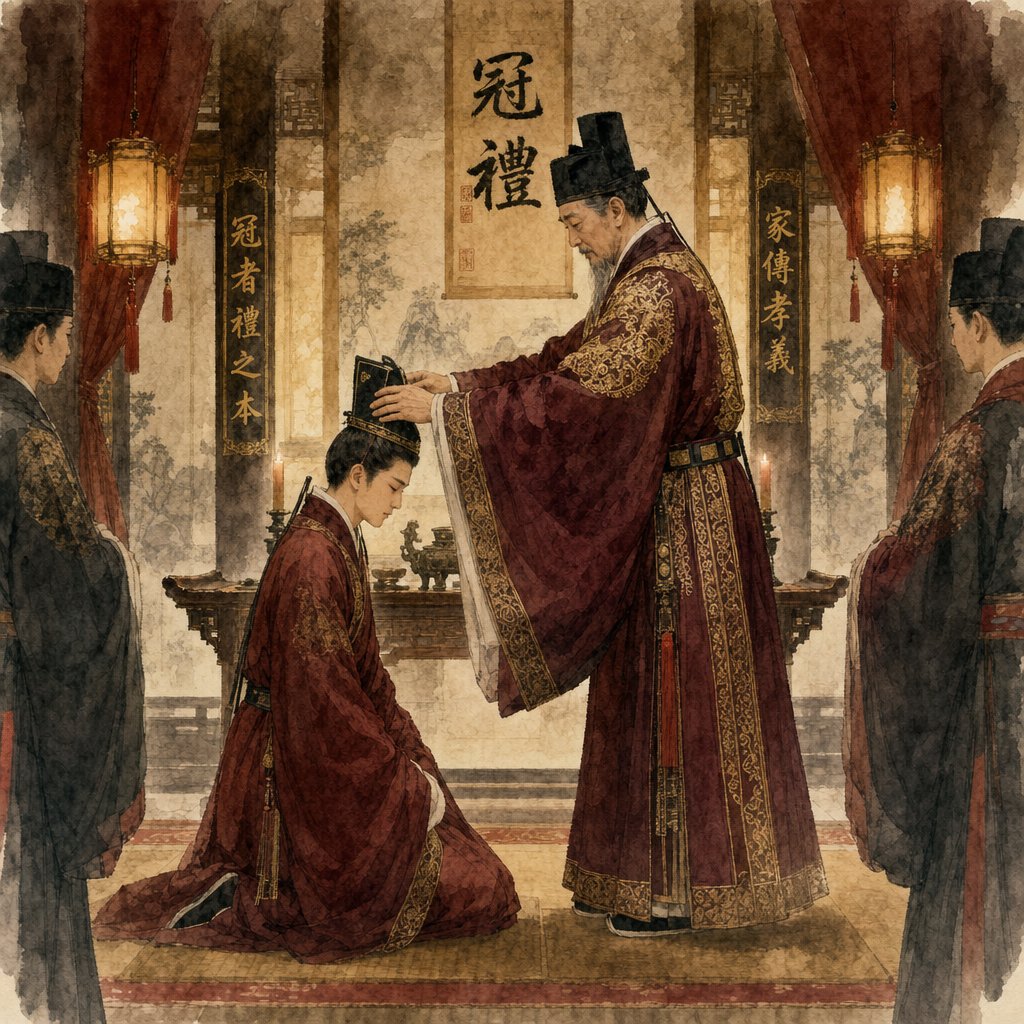
The chinese courtesy name was not chosen casually or adopted on a whim. It arrived through ceremony. For men, the moment came at age twenty during the capping ritual known as 冠禮 (guanli). The Book of Rites records the prescription clearly: "A son at twenty is capped, and receives his appellation." This was not a birthday party. It was a formal rite witnessed by family and community, marking the young man's transition from dependent child to responsible adult.
During the ceremony, a respected elder placed a cap on the young man's head three times, each cap representing a different social role he would now fill. At the conclusion, the elder bestowed the courtesy name. Who chose it varied by family and era. Sometimes the father selected it years in advance. Sometimes a revered teacher or senior clan member was invited to compose it, lending their prestige to the name's authority. In either case, the choice carried weight. A poorly constructed courtesy name reflected badly on the family's learning.
The social shift was immediate. From that day forward, peers who had called the young man by his given name during childhood were expected to switch to the new courtesy name. Continuing to use someone's ming after they received their zi was an act of disrespect, implying they had not truly entered adulthood. The courtesy name meaning, at its core, was a declaration: this person now participates in society as an equal among adults.
The Semantic Relationship Between Given Name and Courtesy Name
Here is where the system becomes genuinely elegant. A courtesy name could not be any random pair of characters. It had to relate meaningfully to the given name. This was not optional. Classical prescriptions demanded a semantic connection between the 名 and the 字, creating a paired identity where one name illuminated the other.
Yan Zhitui of the Northern Qi dynasty wrote that whereas the purpose of a given name was to distinguish one person from another, a courtesy name should express the bearer's moral integrity.
The relationship between given name and courtesy name followed several established patterns. If you search for courtesy中文 references in classical texts, you'll find these categories repeated across centuries of naming practice:
- Synonym (同義): The courtesy name echoes the given name's meaning. Zhuge Liang's given name 亮 means "bright"; his courtesy name Kongming (孔明) means "very bright." The poet Li Bai (白, "white") received the courtesy name Taibai (太白, "great white").
- Antonym (反義): The courtesy name opposes the given name, creating philosophical balance. A man named 黑 (hei, "black") might receive the courtesy name Shouwai (守白, "guarding whiteness").
- Complement (相成): The two names form a conceptual pair that completes a larger idea. Zhao Yun's given name 雲 ("cloud") pairs with his courtesy name Zilong (子龍, "young dragon"), since dragons and clouds belong together in Chinese cosmology.
- Classical allusion (典故): Both names draw from the same literary source. Chiang Kai-shek's given name 中正 and courtesy name 介石 both come from hexagram 16 of the Book of Changes, linking the two through a shared classical passage.
Another common construction method used birth-order markers as the first character. The characters 伯 (eldest), 仲 (second), 叔 (third), and 季 (youngest) immediately told listeners where someone fell among siblings. Confucius, named Kong Qiu, received the courtesy name Zhongni (仲尼), where 仲 signals he was the second son. General Sun Jian's four sons each carried the appropriate marker: Bofu, Zhongmou, Shubi, and Jizuo.
Before the Qin dynasty, courtesy names were typically one character. From the Qin onward, two-character names became standard. This shift gave name-makers more room to build layered meanings, embedding allusions that a literate audience would immediately recognize. The practice of searching courtesy中文 classical sources for the perfect pairing was itself a mark of scholarly refinement.
The result was a naming culture where every educated person carried a matched set: a private name encoding parental hopes, and a public name encoding intellectual identity. The courtesy name was not decoration. It was a statement of who you intended to be in the world, and the semantic thread connecting it to your given name revealed the logic of that intention to everyone who heard it.
Art Names and Sobriquets Beyond the Courtesy Name
Courtesy names followed strict semantic rules. Someone else chose them for you, and they had to connect logically to your given name. But what if you wanted a name that expressed who you believed yourself to be, on your own terms? That's where the 號 (hao) enters the picture. The hao meaning in English is variously translated as "art name," "pseudonym," or "sobriquet." By sobriquets definition, these are styled nicknames adopted voluntarily rather than assigned by authority. And unlike every other name in the system, the hao belonged entirely to you.
Art Names and Pen Names in Chinese Tradition
Imagine choosing a name that captures your philosophy, your aesthetic, or even the view from your window. That's exactly what Chinese scholars, poets, and painters did when they selected their hao. These names functioned as personal brands in literary circles, signaling artistic identity and intellectual allegiance without the constraints of family expectation or ritual protocol.
The practice began during the Six Dynasties period, with figures like Tao Yuanming and Ge Hong among the first literati to give themselves art names. By the Tang dynasty, the custom had become widespread, and by the Song dynasty, most educated people addressed each other by their hao rather than any other name.
Most art names fall into recognizable categories:
- Residence-based: Tao Yuanming called himself Wuliu Xiansheng ("Mister Five-Willows") after the trees outside his home. Su Shi became Dongpo Jushi ("Householder of the Eastern Slope") after his dwelling in exile at Huangzhou.
- Self-description: Ouyang Xiu styled himself Liuyi Jushi ("Householder of the Six Ones"), referencing his famous quip about owning "one myriad books, one thousand inscriptions, one qin, one game of chess, one flask of wine, and one old man."
- Poetic reputation: Li Bai earned the art name Zhe Xianren ("Banished Immortal") from admirers who saw his free-spirited behavior as otherworldly.
- Official posts or birthplace: Du Fu was called Du Gongbu ("Du of the Ministry of Works") after his brief government appointment.
Some individuals accumulated many styled nicknames over a lifetime. Tang Yin of the Ming dynasty held more than ten different hao. The Joseon dynasty scholar Kim Jeong-hui reportedly used as many as 503. Each new name marked a shift in mood, circumstance, or creative direction. Where the courtesy name was fixed at twenty and rarely changed, the art name was fluid, evolving alongside the person who wore it.
A person could also receive a hao from others. A high-ranking official or even the emperor might bestow one as an honor. But the default was self-selection, and that freedom made the hao the most personal layer in the entire naming architecture. It was the one name where you spoke for yourself rather than being spoken for.
Posthumous Names and Temple Names for Rulers
For emperors, the naming system extended even beyond death. Chinese royal names included three additional categories that ordinary people never received: posthumous names, temple names, and reign names. These are the titles you encounter when reading about royal chinese names in English-language histories, and the reason one emperor might appear under three different labels depending on which book you pick up.
Here's how each worked:
The posthumous name (謚號, shi hao) was bestowed after an emperor's death by his successor and court officials. Its purpose was evaluative. The chosen character judged the ruler's legacy. "Wen" (文) implied cultural achievement and benevolence. "Wu" (武) signaled military strength. "Li" (厲) meant cruel or tyrannical. Early posthumous names were short, often a single character, making them easy to use as forms of address. Emperor Jing of the Western Han received the character 景 ("successful, thoughtful") because he maintained low taxes and chose a capable successor.
The temple name (廟號, miao hao) was inscribed on the memorial tablet placed in the Imperial Ancestral Temple. It always ended in either 祖 (Zu, "founder") for dynasty founders or 宗 (Zong, "preserver") for successors. Tang Taizong, for example, was the second emperor of the Tang dynasty. His temple name Taizong (太宗) marks him as a successor who preserved and expanded what the founder built.
The reign name (年號, nian hao) was declared upon ascending the throne and used to date the calendar. Emperor Wu of the Western Han invented this system, and early emperors changed reign names frequently to mark auspicious events or fresh starts. Starting in the Ming dynasty, each emperor used only one reign name for the duration of his rule, making it the simplest identifier.
So why do English-language references call some emperors by temple name and others by reign name? The answer is practical. Conventions shifted across dynasties as certain title types became more useful than others:
| Period | Preferred Title Type | Example Emperor | Birth Name | Title Used in English | Why This Convention |
|---|---|---|---|---|---|
| Han dynasty | Posthumous name | Emperor Wu | Liu Che | Emperor Wu of Han | Posthumous names were short and evaluative; temple names were rare |
| Tang dynasty | Temple name | Tang Taizong | Li Shimin | Tang Taizong | Posthumous names grew too long; temple names stayed concise |
| Song dynasty | Temple name | Song Taizu | Zhao Kuangyin | Song Taizu | Same reason as Tang; temple names remained the standard short form |
| Ming dynasty | Reign name | Yongle Emperor | Zhu Di | Yongle Emperor | One reign name per emperor made it the simplest unique identifier |
| Qing dynasty | Reign name | Kangxi Emperor | Aisin Gioro Xuanye | Kangxi Emperor | Same as Ming; one reign name, universally recognized |
You'll notice the pattern: whichever title type was shortest and most unique in a given era became the default. Before the Tang, posthumous names were brief enough to serve. After the Tang inflated them with flattering characters, temple names took over. Once Ming emperors stopped changing reign names mid-rule, that single era title became the cleanest label.
The Kangxi Emperor illustrates the full stack. His birth name was Aisin Gioro Xuanye. His temple name was Shengzu. His posthumous name ran over twenty characters. His reign name, Kangxi, lasted sixty-one years and became the name the world remembers. During his lifetime, no one spoke any of these names to his face. He was simply "Your Majesty" or "the Lord of Ten Thousand Years."
These royal naming conventions reveal something deeper about how Chinese culture treated identity and legacy. A person's birth name was private. Their courtesy name was social. Their art name was personal. And for rulers, posthumous and temple names were historical verdicts, delivered by the next generation. The entire system moved from intimacy outward toward public judgment, each layer adding distance between the individual and the name.
How Naming Evolved From Zhou Through Qing
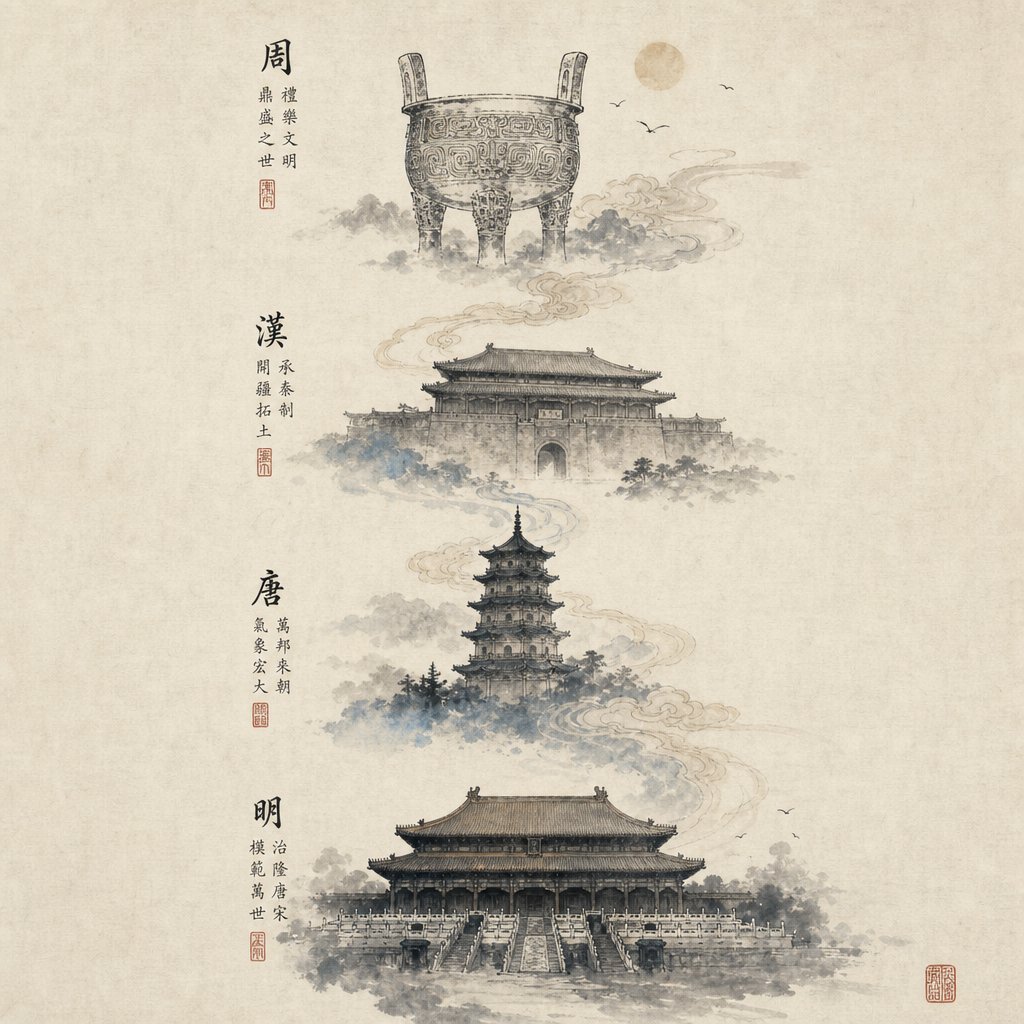
The naming system described so far did not appear fully formed overnight. It grew, shifted, and reorganized itself across more than two thousand years of political upheaval, philosophical movements, and demographic change. An ancient chinese name from the Zhou dynasty followed different conventions than one from the Tang, and a Ming-era name operated under rules that would have puzzled a Han scholar. Tracing these shifts dynasty by dynasty reveals how each era left its fingerprint on the way people identified themselves.
Zhou Through Han Dynasty Naming Practices
During the Zhou dynasty (1046-256 BCE), the naming system was at its most complex and its most stratified. The dual surname structure of 姓 (xing) and 氏 (shi) remained fully active. Noble families maintained both identifiers, and the distinction carried real legal weight. Marriage between people sharing the same xing was prohibited regardless of how many centuries separated their common ancestor. Meanwhile, the shi proliferated as new fiefs were granted, new offices created, and new branches of old clans established themselves in distant territories.
Courtesy names in this period were typically one character long. Confucius, born Kong Qiu (丘), received the single-character courtesy name Ni (尼), combined with the birth-order marker Zhong (仲) to form Zhongni. This brevity reflected the era's naming aesthetics: compact, symbolic, and tightly bound to clan identity. Old chinese names from this period often embedded information about feudal rank, territorial origin, or ancestral achievement directly into the name itself.
The Qin unification in 221 BCE shattered the old feudal order. Conquered states lost their independence, and the elaborate clan structures that had sustained the xing/shi distinction began to dissolve. The Qin government standardized records and reinforced a smaller, more manageable set of surnames for administrative efficiency. By the time the Han dynasty consolidated power, the merger was essentially complete. The terms xing and shi collapsed into a single hereditary surname, and the old aristocratic complexity gave way to a simpler system accessible to commoners as well as nobles.
Han dynasty naming also saw courtesy names expand to two characters as standard practice. This shift gave families more room to embed meaning, allusion, and aspiration into the name. The generation name practice also emerged toward the end of the Han dynasty. Liu Biao, a warlord of the late Han period, named his two sons Liu Qi (琦) and Liu Cong (琮), both sharing the jade radical 王 as a common component. This shared element marked them as belonging to the same generation within the clan, an early precursor to the formalized system that would develop centuries later.
Tang Song and Ming Qing Shifts in Convention
The Tang dynasty (618-907) transformed naming culture through its explosion of literary production. With poetry elevated to the highest art form and the imperial examination system rewarding literary brilliance, art names (號) became essential social currency. A scholar without a memorable hao was like a painter without a signature. Tang literary culture made the self-chosen name not just acceptable but expected among the educated class. Li Bai, Du Fu, Wang Wei, and their contemporaries were known as much by their sobriquets and literary epithets as by their formal names.
The Song dynasty (960-1279) brought two major shifts. First, Neo-Confucian philosophy infused naming with renewed moral seriousness. Parents chose given names drawn from the Analerta, the Book of Changes, and the Classic of Poetry, encoding ethical aspirations directly into their children's identities. Characters expressing virtue (德), benevolence (仁), righteousness (義), and wisdom (智) appeared with increasing frequency.
Second, and more structurally significant, the generation name system reached full maturity during the Song period. Earlier dynasties had experimented with shared character components among siblings. The Song formalized this into a predetermined sequence. Clan elders selected a chain of characters in advance, often composing them into a poem. Each generation received the next character in the sequence as their generation name (字辈, zibei). When a child was born, the father simply took the next character from the chain and paired it with a chosen given name.
Consider how this worked in practice. Emperor Song Taizu (927-976) established the generation name sequence for his descendants: De, Wei, Cong, Shi, Ling, Zi, Bo, Shi, Xi, Yu, Meng, You, Yi. His sons all carried De (德) as their generation name. His grandchildren all carried Wei (惟). If you knew the sequence and encountered a member of the clan, you could instantly determine their generational rank relative to your own.
The Ming and Qing dynasties (1368-1912) expanded this practice from royal families to ordinary clans across China. The chinese old name conventions of this era made the zibei system nearly universal among literate families. Clan genealogies (家谱, jiapu) recorded the predetermined character sequences, sometimes extending forty or more generations into the future. The Mao family of Shaoshan, Hunan Province, established their generation name poem in 1737. It contained forty characters arranged as verse, each line carrying five characters. The poem praised ancestral virtue and expressed hopes for future prosperity. Mao Zedong's generation name Ze (泽) stood as the fourteenth character in this sequence, marking him as the fourteenth generation since the poem's composition.
This system served multiple practical functions. It prevented name duplication within a clan. It made kinship relationships immediately legible. And it bound individuals to their lineage across centuries, creating what researchers describe as both a "horizontal" dimension (siblings and cousins sharing a generation name) and a "vertical" dimension (the full sequence revealing the clan's generational depth).
Here is the chronological arc of these shifts:
- Zhou dynasty (1046-256 BCE): Dual xing/shi surname system active. One-character courtesy names standard. Naming reflects feudal clan hierarchy. Marriage prohibitions based on shared xing.
- Qin dynasty (221-206 BCE): Administrative standardization begins collapsing xing and shi into a single surname. Feudal naming complexity starts to simplify.
- Han dynasty (206 BCE-220 CE): Xing/shi merger complete. Two-character courtesy names become standard. Early generation name patterns appear through shared character components among siblings.
- Three Kingdoms and Northern/Southern Dynasties (220-589): Generation names enter the formal naming system. Royal families and upper-class clans adopt shared generation characters systematically.
- Tang dynasty (618-907): Art names (號) become widespread among the literary class. Self-chosen names gain cultural prestige. Late Tang sees the first generation name poems composed as predetermined sequences.
- Song dynasty (960-1279): Generation name system reaches maturity with pre-composed character chains. Neo-Confucian philosophy shapes given name choices toward moral vocabulary.
- Ming dynasty (1368-1644): One reign name per emperor simplifies royal naming. Zibei system spreads to common families. The Ming imperial house itself used a famous generation name sequence with five-element radicals rotating through each generation.
- Qing dynasty (1644-1912): Generation name poems become nearly universal among literate clans. Manchu naming conventions coexist with Han traditions. Naming taboos reach peak strictness under emperors like Kangxi and Qianlong.
Each era's ancient chinese name conventions reflected its social priorities. The Zhou valued clan distinction above all. The Han valued administrative clarity. The Tang valued literary self-expression. The Song valued moral philosophy and genealogical order. And the Ming-Qing period valued continuity, binding families to their ancestors through naming sequences that stretched decades into the future before a single child was born.
What remained constant across all these shifts was the underlying principle: names were never just labels. They were social instruments, encoding relationships, marking transitions, and connecting individuals to something larger than themselves. The specific rules changed, but the conviction that naming mattered, that it carried real consequences for how a person moved through the world, persisted from the earliest bronze inscriptions to the final days of the imperial system.
Famous Figures and the Names They Carried
Rules and categories only go so far. The naming system truly comes alive when you trace how one person's full set of names operated in daily life, each name activated by a different speaker in a different context. No figure illustrates this better than Zhuge Liang, the legendary strategist of the Three Kingdoms period, whose multiple names still confuse viewers of historical dramas and players of strategy games today.
Zhuge Liang as a Complete Naming Case Study
Let's walk through his entire name stack, layer by layer.
Surname: 諸葛 (Zhuge) — A compound surname, relatively rare, tracing back to the state of Zhu during the Spring and Autumn period. The family later relocated to a place called Zhuge, and the two elements fused into a single hereditary surname. Everyone used this surname freely, as surnames carried no taboo restrictions.
Given name: 亮 (Liang) — Meaning "bright" or "luminous." This was the name his parents chose at birth. Only his father Zhuge Gui, his uncle Zhuge Xuan, and later the emperor Liu Shan had the social standing to call him by this name directly. In official historical records like the Sanguo zhi (Records of the Three Kingdoms), he appears as Zhuge Liang because historians wrote from a position of authority over their subjects.
Courtesy name: 孔明 (Kongming) — Meaning "very bright" or "exceedingly luminous." The character 孔 intensifies the meaning of 明 (bright/clear), creating a synonym relationship with his given name 亮. This was the name his peers used. When Liu Bei visited his thatched cottage three times to recruit him, he addressed the young scholar as Kongming, signaling respect between equals. Throughout the Romance of the Three Kingdoms, allies and fellow officials consistently use this courtesy name in conversation.
Art name / nickname: 臥龍 (Wolong, "Sleeping Dragon") — Unlike the previous names, this one was bestowed by the scholar Pang Degong, who recognized Zhuge Liang's hidden potential. The metaphor was vivid: a dragon at rest, coiled and waiting for the right moment to rise. Later generations, storytellers, and literary admirers preferred this name because it carried narrative power. When Sima Hui recommended Zhuge Liang to Liu Bei, he used the art name Wolong rather than the courtesy name, building mystique around a figure Liu Bei had never met.
In practice, this meant the same man was addressed differently depending on who was speaking:
- His lord Liu Bei called him Kongming (courtesy name between peers who shared mutual respect)
- Subordinate generals referred to him as 丞相 (Chancellor) or Zhuge Chengxiang, attaching his surname to his official title
- The young emperor Liu Shan called him 相父 ("Father Chancellor"), a unique honorific reflecting their quasi-familial bond
- Admirers and later generations called him Wolong Xiansheng (Master Sleeping Dragon), combining his art name with the honorific 先生
- Historical texts record him as Zhuge Liang, using surname plus given name as historians had the authority to do
Five different forms of address, one person. Each form instantly revealed the speaker's relationship to him, their relative social position, and the formality of the context. This is what the nickname chinese tradition looked like in full operation: not a casual shortening of a name, but a carefully calibrated social signal.
Social Etiquette of Name Usage
The rules governing who could use which name were not suggestions. They were enforced social law, and violating them carried real consequences ranging from public humiliation to political danger.
The core principle was simple: the more intimate the name, the higher the authority required to speak it. Given names sat at the top of the intimacy hierarchy. Only parents, grandparents, and the sovereign could use them. Courtesy names occupied the middle ground, appropriate among peers, colleagues, and social equals. Art names and titles sat at the most public level, available to anyone.
Chinese honorifics attached to names made these relationships even more explicit. The suffix 先生 (xiansheng, "master" or "mister") elevated the named person above the speaker. The suffix 公 (gong, "lord" or "duke") conveyed deep reverence, often used for senior statesmen. The prefix 子 (zi, "master") appeared before the surnames of great thinkers: Kongzi (Confucius), Mengzi (Mencius), Laozi. Each honorific encoded a precise social geometry between speaker and subject.
When you encountered someone for the first time in classical China, the polite question was 您貴姓 (nin gui xing), literally "what is your noble surname?" The ni gui xing chinese characters embedded deference directly into the act of asking someone's name. You did not ask for their given name. You did not presume to know their courtesy name. You asked only for the surname, the most public and least intimate layer, and waited for them to offer more.
What happened when someone broke these rules? Consider this famous episode from the Three Kingdoms period:
Ma Chao's entire family was slaughtered by Cao Cao. Despite his consuming hatred, when Ma Chao recounted the tragedy publicly, he said "Mengde killed my entire family," using Cao Cao's courtesy name rather than his given name. Even in rage, he maintained the etiquette of address, demonstrating that his noble character remained intact despite his grief.
This anecdote reveals something profound. Using someone's given name in public was not merely rude. It was a declaration that the named person deserved no respect whatsoever. The Chinese idiom 指名道姓 (zhi ming dao xing, "to point out someone's name and surname") still carries this meaning today: to publicly criticize or call someone out. In ancient contexts, shouting a person's full name, surname plus given name, was essentially a challenge to combat or a formal declaration of enmity.
The consequences scaled with the target's status. Misaddressing a peer might earn you a cold shoulder and damaged reputation. Misaddressing a superior could end a career. And misaddressing the emperor, using a taboo character from his given name in writing or speech, could result in execution during the strictest periods of the Qing dynasty.
Even the nickname chinese culture operated within these boundaries. Informal names like 小名 (xiaoming, "small name" or childhood nickname) existed, but they belonged exclusively to the family sphere. Using someone's childhood nickname in a formal setting was as jarring as using their given name. The social architecture of naming left no room for casual boundary-crossing.
This etiquette system explains why historical dramas can feel so confusing to modern viewers. Characters shift between names constantly, and each shift signals a change in emotional register, social context, or power dynamic. When a character suddenly uses someone's given name instead of their courtesy name, that is not sloppy writing. It is a deliberate dramatic choice, the equivalent of a slap across the face delivered through language alone.
Female Naming Conventions in Ancient China
Everything discussed so far, the capping ceremony, the courtesy names, the art names chosen by scholars, applies overwhelmingly to men. The examples are male. The historical records are male. Even the long-tail keyword searches lean toward ancient chinese names male. So where were the women in this system? They were there, but the naming architecture treated them very differently, and the historical record preserved far less of their identity.
The Hairpin Ceremony and Women's Courtesy Names
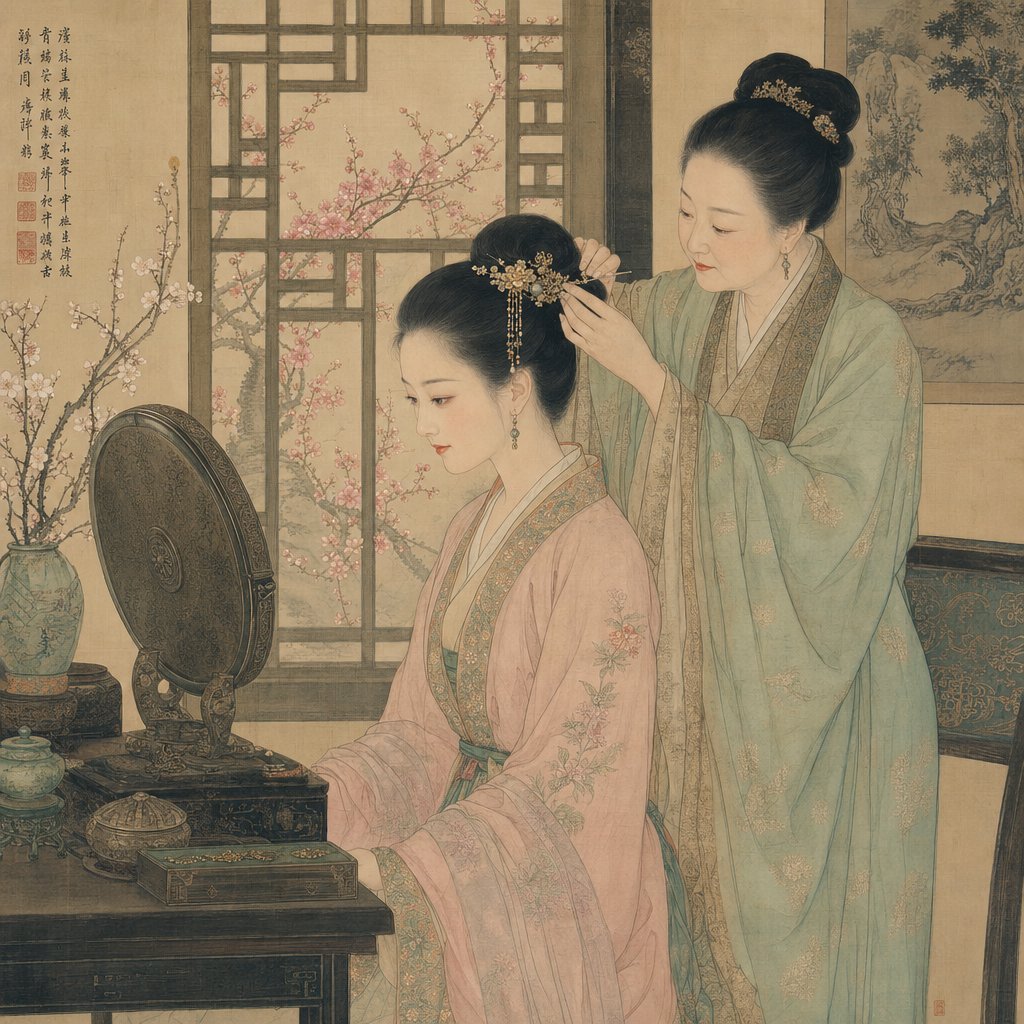
Women did receive courtesy names. The mechanism was the 笄禮 (jili, hairpin ceremony), a coming-of-age ritual parallel to the male capping ceremony but held earlier and with different social implications. Where men were capped at twenty to mark their entry into public life, women underwent the hairpin ceremony at fifteen to mark their eligibility for marriage.
The ceremony itself was elaborate. According to the Zhou Li, a girl's hairstyle was changed from a child's style to an adult bun, wrapped with black cloth and secured with a hairpin. A respected female guest of honor presided, adding additional pins that symbolized readiness for marriage. The ritual typically occurred on the third day of the third lunar month, also known as the Daughter Festival. If a girl was not yet engaged by fifteen, the ceremony could be postponed as late as age twenty.
At the conclusion of the ceremony, the guest of honor bestowed a courtesy name upon the young woman. This moment mirrored the male tradition exactly: the new name signaled chinese adulthood, a transition from childhood dependency to a new social role. After receiving her courtesy name, the girl would be tutored in the ethics and responsibilities expected of an adult woman.
But here is the critical difference. A man's courtesy name launched him into public society. A woman's courtesy name prepared her for marriage. The male ceremony opened doors outward. The female ceremony opened a door inward, toward domestic life. Both rituals bestowed courtesy names, but the social trajectories those names enabled diverged sharply.
How Women Were Named and Referenced Across Dynasties
After marriage, a woman's individual identity often disappeared from the written record entirely. The dominant convention was to refer to married women by their husband's surname followed by their natal surname and the character 氏 (shi). As genealogist Linda Yip explains, 氏 functioned not as a name but as a title meaning "from the family of." A woman born into the Wong family who married into the Lee family became "Lee Wong Shi" in all official records. Her given name vanished.
This convention meant that census records, genealogies, and official documents across centuries are filled with women identified only as "Shi" or "Shee" in romanized form. No personal name. No courtesy name. Just a marker of clan origin attached to a husband's lineage.
Historical texts referenced women in several distinct ways, depending on their status and the context:
- Husband's surname + natal surname + 氏: The standard for married commoners and most gentry women (e.g., "Li Zhang Shi" meaning a woman from the Zhang family married into the Li family)
- Title or rank alone: Empresses and consorts were often recorded only by their rank, such as 皇后 (Empress) or 貴妃 (Noble Consort), with their personal names omitted from official histories
- Father's surname + 氏: Unmarried women in genealogies, identified only by their clan of origin
- Full given name preserved: Poets like Li Qingzhao, female rulers like Wu Zetian, and certain courtesans whose literary fame ensured their names survived independently
- Childhood nickname only: Some women appear in family records by a 小字 (small name) given in girlhood, with no formal adult name recorded
The exceptions are telling. Wu Zetian's name survived because she became emperor. Li Qingzhao's survived because her poetry made her impossible to erase. Ban Zhao's survived because she completed her brother's historical masterwork. Xue Tao's survived because she was a celebrated courtesan-poet whose literary reputation demanded individual recognition. In each case, extraordinary achievement or extraordinary power was required to break through the default silence.
This erasure was not accidental. It reflected a deliberate philosophy: a virtuous woman's name should not be known outside her household. The Confucian ideal of female modesty extended to naming itself. A woman whose name circulated publicly had, by that very fact, violated propriety. The naming system did not merely reflect gender hierarchy. It actively enforced it, making women's individual identities structurally invisible in the historical record.
For modern researchers, writers, and game designers working with ancient Chinese style names, this gap creates both a challenge and a responsibility. The system existed for women. They had given names, courtesy names, and sometimes art names. But recovering those names requires looking beyond official histories into poetry collections, personal letters, and the margins of clan genealogies where fragments of female identity occasionally survived.
Constructing a Style Name Step by Step
Knowing the categories and history is one thing. Actually building a courtesy name that follows classical conventions is another. Whether you're crafting ancient chinese male names for a novel, designing a character for a tabletop RPG, or simply satisfying your curiosity about how the system worked in practice, you need concrete rules. The previous sections explained what stylenames were and who used them. This section shows you how they were made.
The core principle is straightforward: the courtesy name (字) must relate semantically to the given name (名). It cannot be random. It cannot be unconnected. The two names form a paired unit, and any educated person encountering both should be able to trace the logic linking them. Think of it as a puzzle with a visible solution, elegant but never obscure.
Rules for Building a Courtesy Name From a Given Name
Classical naming practice recognized four primary strategies for constructing this semantic link. Each strategy produced a different flavor of relationship between the given name and the courtesy name, and each drew on different intellectual traditions.
Strategy 1: Synonym Pairs (同義)
The most common approach. The courtesy name restates or amplifies the meaning of the given name using different characters. The logic is reinforcement: if your given name means "bright," your courtesy name says "bright" again, louder.
Here's the step-by-step construction:
- Start with the given name's core meaning. Take 亮 (Liang), meaning "bright" or "luminous."
- Find a synonym or intensifier. 明 (ming) also means "bright" or "clear."
- Add a modifier to create a two-character courtesy name. 孔 (kong) means "very" or "exceedingly."
- Result: 孔明 (Kongming), "exceedingly bright." The courtesy name echoes and amplifies the given name.
Another example: Li Bai's given name 白 means "white" or "pure." His courtesy name Taibai (太白) uses 太 ("great") as an intensifier, producing "great whiteness." Same meaning, elevated register.
Strategy 2: Antonym Pairs (反義)
Less common but philosophically rich. The courtesy name opposes the given name, creating a dialectical tension that reflects Daoist or Confucian ideas about balance. The logic is complementary opposition: if your name pushes in one direction, your courtesy name pulls back, suggesting that wisdom lies in equilibrium.
The construction process:
- Identify the given name's directional meaning. Take 愈 (Yu), meaning "to advance" or "to surpass."
- Find its conceptual opposite. 退 (tui) means "to retreat" or "to withdraw."
- Add a grammatical particle or complement. 之 (zhi) functions as a classical particle meaning "it" or serving as a connector.
- Result: 退之 (Tuizhi), "retreating from it." This was Han Yu's courtesy name, and the pairing expressed the Confucian ideal that one who advances must also know when to step back.
Strategy 3: Complementary Concepts (相成)
The given name and courtesy name form two halves of a natural or literary pair. Neither is a synonym nor an antonym. Instead, they belong together the way thunder belongs with lightning, or clouds belong with dragons. The logic is association: the two names complete a larger image.
Construction example:
- Start with the given name. 雲 (Yun) means "cloud."
- Ask: what naturally accompanies clouds in Chinese cosmology? Dragons ride clouds. Clouds herald dragons.
- Build the courtesy name from the associated concept. 子龍 (Zilong), "young dragon."
- Result: Zhao Yun, courtesy name Zilong. Cloud and dragon form an inseparable pair in classical imagery, and the 子 prefix adds the respectful "young master" connotation.
Similarly, Yue Fei's given name 飛 ("to fly") paired with his courtesy name 鵬舉 (Pengju, "the great roc rises"). A bird that flies and the mythical Peng bird soaring upward, two expressions of the same aspiration toward greatness, linked through the shared domain of flight.
Strategy 4: Classical Allusions (典故)
The most intellectually demanding approach. Both the given name and the courtesy name draw from the same passage in a canonical text, typically the Book of Changes (I Ching), the Analerta, or the Classic of Poetry. The logic is shared source: anyone who recognizes the allusion immediately understands the connection.
Construction example:
- Select a classical passage. Hexagram 16 (豫) of the Book of Changes contains the line: "介于石,不終日,貞吉" ("Firm as stone, not waiting all day, correct and fortunate").
- Extract the given name from one part of the passage. 中正 (Zhongzheng), meaning "centered and correct," captures the hexagram's theme of proper conduct.
- Extract the courtesy name from another part. 介石 (Jieshi), meaning "firm as stone," comes from the same line.
- Result: Chiang Kai-shek's given name and courtesy name both anchor in hexagram 16, creating a bond visible to anyone familiar with the I Ching.
Beyond these four strategies, a common structural technique used birth-order markers as the first character of the courtesy name. The characters 伯 (eldest), 仲 (second), 叔 (third), and 季 (youngest) immediately communicated sibling rank. This was not a semantic strategy in itself but a framing device that could combine with any of the four approaches above. Ancient chinese boy names constructed this way gave listeners two pieces of information at once: the person's intellectual identity and their position within the family.
| Given Name | Courtesy Name | Semantic Relationship | Classical Source | Logic of Connection |
|---|---|---|---|---|
| 亮 (Liang, "bright") | 孔明 (Kongming, "exceedingly bright") | Synonym | General literary vocabulary | 孔 intensifies 明, which restates 亮 |
| 愈 (Yu, "to advance") | 退之 (Tuizhi, "to retreat") | Antonym | Confucian philosophy of moderation | Advance and retreat form a balanced pair |
| 雲 (Yun, "cloud") | 子龍 (Zilong, "young dragon") | Complement | Chinese cosmology (dragons ride clouds) | Cloud and dragon are an inseparable natural pair |
| 中正 (Zhongzheng, "centered and correct") | 介石 (Jieshi, "firm as stone") | Classical allusion | Book of Changes, Hexagram 16 (豫) | Both names drawn from the same hexagram line |
| 飛 (Fei, "to fly") | 鵬舉 (Pengju, "the roc rises") | Complement | Zhuangzi, "Xiaoyao You" (Free and Easy Wandering) | Flying and the mythical Peng bird share the domain of soaring ambition |
Common Mistakes to Avoid When Creating Names
If you're constructing ancient chinese names for men in a creative project, knowing the rules is only half the work. You also need to know what breaks them. Historical naming culture had clear boundaries, and crossing them produced names that would strike a knowledgeable reader as jarring, comical, or offensive.
Anachronistic character choices. Not every character existed in every dynasty. Some characters entered common usage only during the Tang or Song periods. If you're building a name for a Zhou-era character, using a character that only appeared in Ming-dynasty texts creates an immediate authenticity problem. The character 鑫 (xin, triple gold, meaning "prosperous"), for example, is a later invention rarely seen in pre-Tang names. Stick to characters attested in the period you're writing about.
Accidentally invoking naming taboos. If your fictional character lives during a specific emperor's reign, their name cannot contain any character from that emperor's given name. A character named 玄 (xuan) during the Kangxi Emperor's reign would be impossible, since Kangxi's personal name was Xuanye. This rule applied retroactively to existing texts and names, so even historical figures had their names altered in documents produced during later reigns.
Gender mismatches. Certain characters carried strong gender associations. Characters referencing jade (瑜, 瑾, 琳), flowers (芳, 蘭, 蓮), and gentle beauty (婉, 嫻, 淑) were overwhelmingly feminine. Characters referencing weapons, mountains, and martial virtues (武, 剛, 峰) were masculine. Mixing these without awareness produces names that would have confused contemporaries. Ancient chinese boy names drew from a distinct character pool compared to female names, and the courtesy name needed to match.
Tonal clashes and awkward phonetics. Classical Chinese was tonal, and name-makers paid attention to how the full name sounded when spoken aloud. A courtesy name where both characters shared the same tone (especially the flat first tone repeated twice) could sound monotonous. The ideal was tonal variety, typically pairing a level tone with a departing or rising tone. Similarly, characters whose pronunciations created unintended homophones with vulgar or unlucky words were avoided. The name 思死 (si si) might look meaningful on paper ("contemplating mortality"), but it sounds identical to "thinking of death" and would never be chosen.
Single-character vs. two-character courtesy names. Before the Qin dynasty, one-character courtesy names were standard. Confucius's courtesy name was effectively Ni (尼), with the birth-order marker Zhong (仲) added as a prefix. From the Qin dynasty onward, two-character courtesy names became the norm. If you're building stylized personal names for a pre-Qin setting, a single character is historically appropriate. For any period after 221 BCE, two characters are expected. Using a one-character courtesy name in a Tang dynasty setting would be as conspicuous as wearing Zhou-era robes to a Song dynasty banquet.
Overly obscure allusions. The best courtesy names balanced erudition with accessibility. A name whose classical source was so obscure that even educated peers couldn't trace the connection defeated the purpose. The allusion should reward recognition without requiring a research project. Names drawn from the most widely studied texts, the Book of Changes, the Analects, and the Classic of Poetry, hit this sweet spot because every literate person knew them.
One final caution for modern creators: check that your character combinations don't accidentally form modern Chinese words with unintended meanings. Language evolves, and two characters that were perfectly dignified in the Tang dynasty might form a slang term or brand name in contemporary Mandarin. A quick dictionary check saves embarrassment.
With these construction rules and pitfalls mapped out, you have the technical foundation to build names that would pass scrutiny in any historical setting. The next question is practical: how do you actually apply this knowledge when creating characters for fiction, games, or other creative projects?
Creating Authentic Names for Writing and Games
You've got the rules. You understand the semantic strategies, the taboos, and the historical shifts. But sitting down to actually name a character for your novel, your tabletop campaign, or your game mod is a different challenge. The gap between knowing the system and applying it is where most creators stall. What follows is a practical workflow that turns all that historical knowledge into names that feel lived-in rather than assembled from a nobility name generator.
Choosing Names for Fiction and Game Characters
The single most important decision comes first: pick your dynasty. Every other choice flows from this anchor. A Tang-era poet and a Ming-era general drew from different character pools, followed different conventions, and carried names of different styles. Mixing periods produces the naming equivalent of putting a Victorian gentleman in sneakers. Once your era is locked, follow this sequence:
- Select a historically appropriate surname. Not every surname existed in every period. The Hundred Family Surnames (百家姓) compiled during the Song dynasty lists common options, but for earlier settings, cross-reference with historical records from your chosen era. Compound surnames like Zhuge or Sima were rarer and carried aristocratic weight.
- Build a given name from period-appropriate characters. Use characters attested in texts from your target dynasty. Avoid modern coinages. For male characters, draw from nature, virtue, or ambition. For female characters, classical poetry offers the richest source of era-appropriate imagery. As native Chinese writer Yj recommends, every character should carry positive or intentional meaning, and the total name should be two to three characters maximum.
- Construct a courtesy name using one of the four semantic strategies. Decide whether synonym, antonym, complement, or classical allusion best fits your character's personality. The courtesy name should reveal something about who this person aspires to be.
- Optionally add an art name (號) that reflects philosophy or circumstance. This works especially well for scholars, hermits, or artists. Reference a dwelling, a landscape, or a Daoist concept.
- Verify your combinations. Check that the characters don't form unintended modern words, violate the naming taboos of your chosen era's emperor, or clash tonally when spoken aloud. A resource like Zi.Tools lets you explore individual character etymology, historical usage, and component breakdowns for free, helping you confirm that your choices are grounded in real linguistic history rather than guesswork.
One common question from creators: why do chinese people have english names in modern contexts? The short answer is practical convenience in international settings, but this convention is entirely modern. Your historical characters would never have carried a Western name alongside their Chinese ones. If your story involves cross-cultural contact, a character might receive a foreign name from traders or missionaries, but it would sit outside the traditional naming architecture entirely.
Resources for Researching Authentic Name Elements
Finding historically attested characters doesn't require a university library. Classical poetry collections, particularly the Complete Tang Poems (全唐詩) and the Classic of Poetry (詩經), offer thousands of elegant character combinations already vetted by centuries of literary tradition. For surname research, dynasty-specific historical records like the Book of Han or New Book of Tang list prominent families of each period. Character dictionaries that show historical usage, such as Zi.Tools with its etymology sections and evolution timelines, help you confirm whether a character existed in your target era and what it meant at that time.
For writers building ancient asian names more broadly, it helps to understand that the Chinese courtesy name tradition was not unique to China. It spread throughout East Asia along Confucian cultural lines. Korean scholars adopted the practice as 자 (ja), using the same semantic pairing rules to link given names and style names. If you've ever used a random korean name generator for a historical Korean character, the output likely misses this layer entirely, because the courtesy name tradition requires intentional construction rather than random assembly. Vietnamese literati used tự, their equivalent of the Chinese 字, following identical Confucian logic about adult identity. And in Japan, the practice existed as 字 (azana), particularly among samurai and scholars during the medieval period.
Understanding how do vietnamese names work in the classical period reveals the same underlying structure: family name first, given name private, and a style name for public use among peers. The shared Confucian root meant that a Chinese scholar, a Korean yangban, a Vietnamese mandarin, and a Japanese samurai all operated within recognizably similar naming architectures, even as local conventions diverged in detail.
This cross-cultural dimension matters for creators working in fantasy settings inspired by East Asian traditions. If your world draws from multiple cultures simultaneously, knowing where the systems overlap and where they diverge helps you build naming conventions that feel coherent rather than patchwork. The courtesy name tradition, in all its regional variants, offers a rich framework for giving characters layered identities that reward attentive readers and players alike.
Frequently Asked Questions About Ancient Chinese Style Names
1. Why did ancient Chinese people have so many names?
Ancient Chinese naming was rooted in Confucian philosophy, which treated each name as encoding a specific social relationship. A person's birth name was private and reserved for elders, the courtesy name was used by peers after a coming-of-age ceremony, and art names were self-chosen to express personal philosophy. Additional layers like posthumous names and temple names applied to rulers. Each name served a distinct function in maintaining social hierarchy, spiritual protection, and public identity, meaning a single individual could carry five or more formal names across their lifetime.
2. What is the difference between a courtesy name and an art name in Chinese culture?
A courtesy name (字, zi) was formally bestowed during a coming-of-age ceremony at age 20 for men or 15 for women, and it had to relate semantically to the given name through synonym, antonym, complement, or classical allusion. It was used by peers and colleagues as the standard polite form of address. An art name (號, hao) was freely self-chosen at any point in adulthood, had no required connection to the given name, and typically expressed personal philosophy, artistic identity, or life circumstances. The courtesy name followed strict rules while the art name offered creative freedom.
3. How do you create an authentic ancient Chinese courtesy name?
Building an authentic courtesy name requires linking it semantically to the given name using one of four classical strategies: synonym pairs (restating the meaning with different characters), antonym pairs (creating philosophical balance through opposition), complementary concepts (forming a natural pair like clouds and dragons), or classical allusions (drawing both names from the same canonical text passage). The courtesy name should be two characters for any period after 221 BCE, avoid imperial naming taboos of the chosen era, use gender-appropriate characters, and sound harmonious when spoken aloud.
4. Why are Chinese emperors called by different names in different history books?
English-language references use whichever imperial title type was shortest and most unique in a given era. Han dynasty emperors are known by their brief posthumous names (like Emperor Wu) because temple names were rarely given then. Tang and Song emperors are known by temple names (like Tang Taizong) because posthumous names had grown excessively long. Ming and Qing emperors are known by reign names (like Kangxi) because the one-reign-name-per-emperor rule made it the simplest unique identifier. The same emperor always had multiple title types, but convention favors the most practical one for each period.
5. Did women in ancient China have courtesy names?
Yes, women received courtesy names through the hairpin ceremony (笄礼) held at age 15, parallel to the male capping ceremony at age 20. A respected female elder presided over the ritual and bestowed the courtesy name, marking the young woman's transition to adulthood and eligibility for marriage. However, after marriage, women's individual names often disappeared from official records, replaced by their husband's surname plus their natal surname and the marker 氏 (shi). Full given names survived primarily for women of extraordinary achievement like poet Li Qingzhao or empress Wu Zetian.